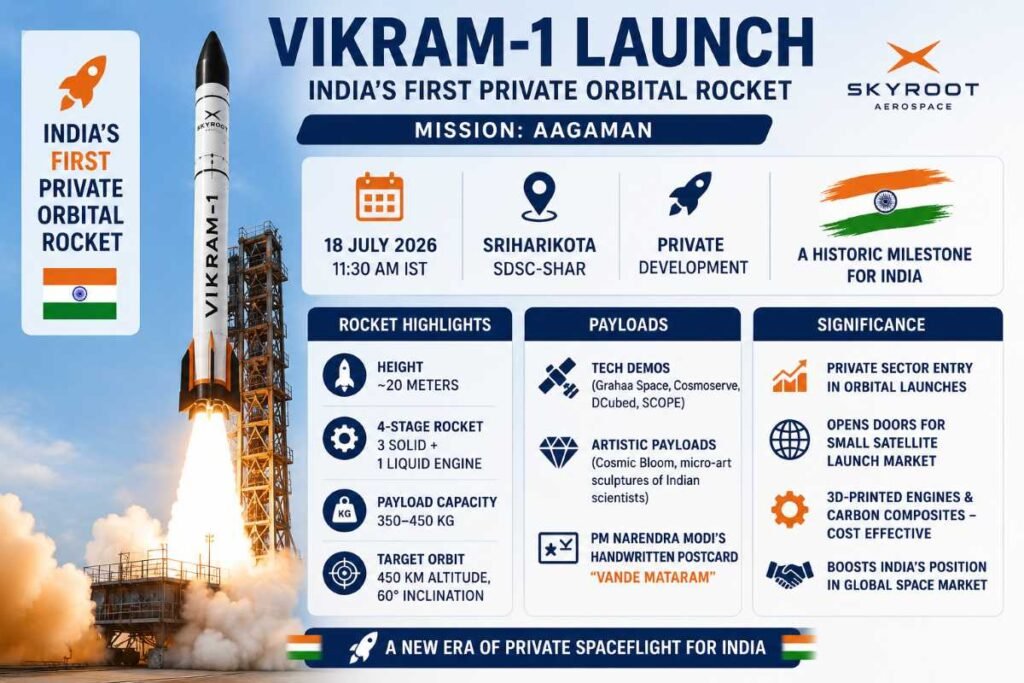
India achieved a historic milestone on 18 July 2026 with the successful launch of Vikram-1, the country’s first privately developed orbital rocket, from the Satish Dhawan Space Centre (SDSC-SHAR), Sriharikota. Developed by Hyderabad-based Skyroot Aerospace, the launch mission, named “Aagaman”, marks India’s entry into the private orbital launch era.
The 20-metre-tall, four-stage rocket is capable of placing 350–450 kg payloads into Low Earth Orbit (LEO). It carried several technology demonstration payloads and artistic payloads, including a handwritten postcard by Prime Minister Narendra Modi with the words “Vande Mataram”.
Vikram-1 is India’s first orbital-class rocket developed by a private company, ending ISRO’s exclusive role in orbital launches. The mission showcases advanced technologies such as 3D-printed engines and lightweight carbon composite structures, strengthening India’s position in the global commercial space industry and opening new opportunities for small satellite launches.
Key Points
- Mission: Aagaman
- Rocket: Vikram-1
- Developer: Skyroot Aerospace (Hyderabad)
- Launch Date: 18 July 2026
- Launch Site: Satish Dhawan Space Centre (SDSC-SHAR), Sriharikota
- Achievement: India’s first privately developed orbital rocket
- Payload Capacity: 350–450 kg to Low Earth Orbit (LEO)
- Significance: Marks the beginning of India’s private orbital launch capability and boosts the country’s commercial space ambitions.