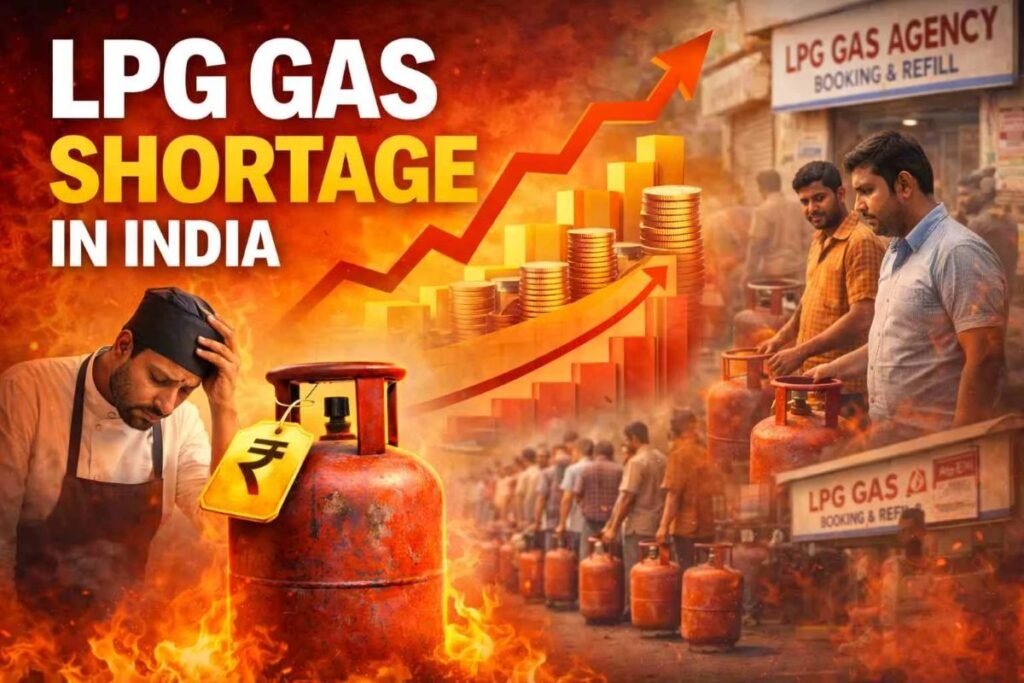
India is facing a severe shortage of domestic LPG cylinders in March 2026, with long queues, delivery delays of up to 25 days, and rising black-market activity. The crisis is linked to disruptions in energy shipments through the Strait of Hormuz following the Iran–US–Israel conflict, causing supply constraints and price hikes.
🔑 Key Facts About the LPG Shortage
- Consumption: India consumed 3.08 crore metric tonnes of LPG between April 2025 and February 2026.
- Imports: 1.87 crore metric tonnes imported, mostly via the Strait of Hormuz.
- Domestic Production: 1.06 crore metric tonnes produced locally.
- Distribution: LPG supplied through 25,566 distribution centres nationwide.
📍 Current Situation (March 2026)
- Delays: Cylinder deliveries delayed by 15–25 days.
- Queues: Long lines outside gas agencies; panic buying worsened shortages.
- Restaurants & households: Many eateries forced to shut or switch to firewood; households struggling for daily cooking needs.
💰 Price Hikes
- Domestic LPG (14.2 kg): Increased by ₹60 per cylinder on March 7, 2026.
- Commercial LPG (19 kg): Increased by ₹144 per cylinder.
- In states like Bihar, domestic LPG prices crossed ₹1,002 per cylinder.
⚠️ Causes of the Shortage
- Geopolitical Conflict: Iran’s closure of the Strait of Hormuz disrupted global energy shipments.
- Supply Chain Disruption: Tankers delayed or rerouted, reducing India’s import capacity.
- Panic Buying: Consumers rushed to book cylinders, overwhelming distribution systems.
- Rising Global Prices: Spot cargo costs surged to $800–850 per tonne, increasing losses for Indian Oil Marketing Companies (OMCs).
🏛 Government Response
- Essential Commodities Act invoked to prioritize household LPG supply.
- 25-day mandatory inter-booking period introduced to prevent hoarding.
- States and UTs directed to monitor supplies daily and act against black-marketing.
- PM Modi urged citizens not to panic, assuring that supply stabilization measures are underway.