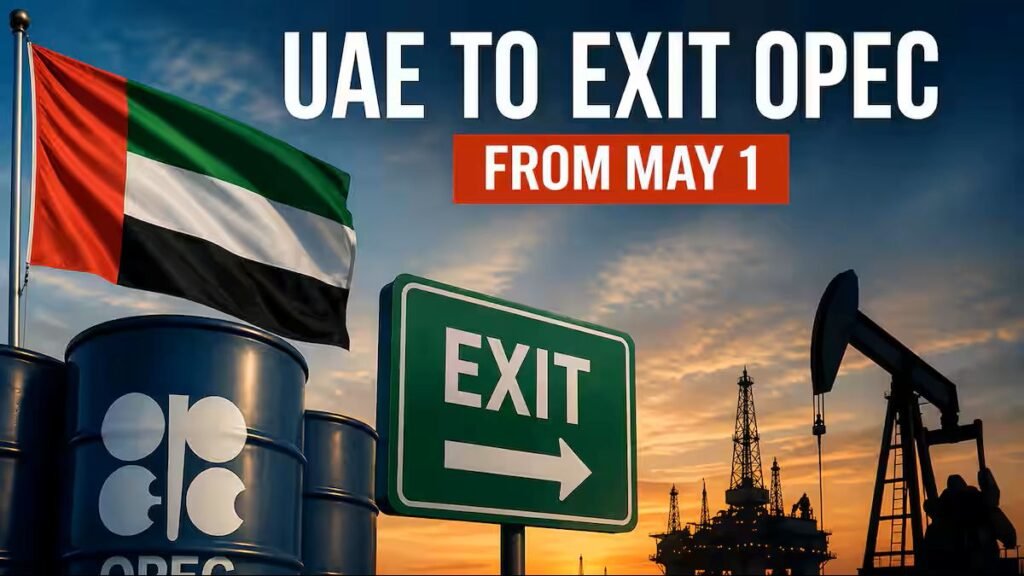
On 28 April 2026, the United Arab Emirates (UAE) announced that it will exit the Organisation of the Petroleum Exporting Countries (OPEC) and the broader OPEC+ alliance, with effect from 1 May 2026. The decision follows a review of its energy strategy, production capacity, and long-term economic priorities, aiming to gain greater flexibility in oil production and respond better to global market dynamics.
The UAE, a member since 1967, has been one of OPEC’s largest oil producers, with a production capacity close to 5 million barrels per day. However, OPEC+ production quotas had limited its output, prompting the move to independently align production with market demand and national interests. The country emphasized it will continue to support global energy stability while investing in oil, gas, and renewable energy sectors.
The exit comes amid global energy market volatility, including tensions around the Strait of Hormuz, and ongoing differences over production policies within OPEC+. This move is seen as a significant shift in global oil geopolitics, raising questions about OPEC’s unity and influence.
🛢️ About OPEC:
- Full Form: Organisation of the Petroleum Exporting Countries
- Established: 1960 (Baghdad Conference)
- Headquarters: Vienna, Austria
- Objective: To coordinate and unify petroleum policies among member countries and ensure stable oil prices in global markets
- Key Members: Saudi Arabia, Iraq, Iran, Kuwait, Venezuela, etc.
- OPEC+: An extended group including non-OPEC producers like Russia, formed to manage global oil supply