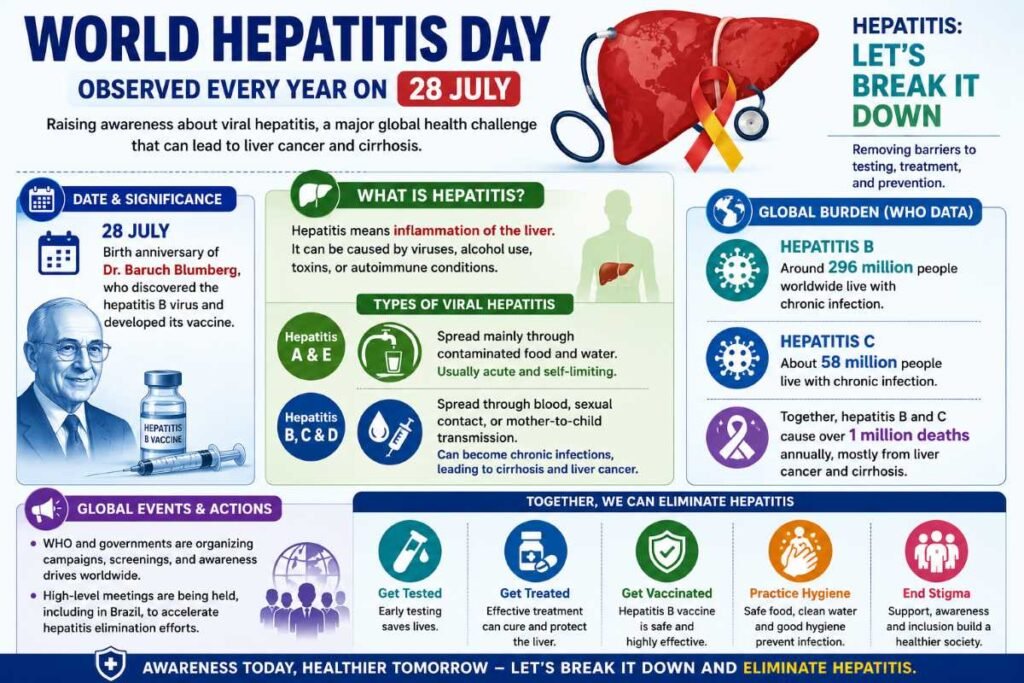
World Hepatitis Day is observed every year on 28 July by the World Health Organization (WHO) to raise awareness about viral hepatitis, a major global health challenge that can lead to liver cancer and cirrhosis. The 2026 theme is “Hepatitis: Let’s Break It Down”, focusing on removing barriers to testing, treatment, and prevention.
🌍 What is Hepatitis?
- Definition: Hepatitis means inflammation of the liver. It can be caused by viruses, alcohol use, toxins, or autoimmune conditions.
- Types of Viral Hepatitis:
- Hepatitis A & E: Spread mainly through contaminated food and water. Usually acute and self-limiting.
- Hepatitis B, C & D: Spread through blood, sexual contact, or mother-to-child transmission. These can become chronic infections, leading to cirrhosis and liver cancer.
📊 Global Burden (WHO Data)
- Hepatitis B: Around 296 million people worldwide live with chronic infection.
- Hepatitis C: About 58 million people live with chronic infection.
- Together, hepatitis B and C cause over 1 million deaths annually, mostly from liver cancer and cirrhosis.
📌 World Hepatitis Day 2026 Highlights
- Theme: “Hepatitis: Let’s Break It Down” – simplifying conversations, fighting stigma, and promoting access to care.
- Date: 28 July (birthday of Dr. Baruch Blumberg, who discovered the hepatitis B virus and developed its vaccine).
- Global Events: WHO and governments are hosting campaigns, screenings, and awareness drives worldwide, including high-level meetings in Brazil to accelerate elimination efforts.