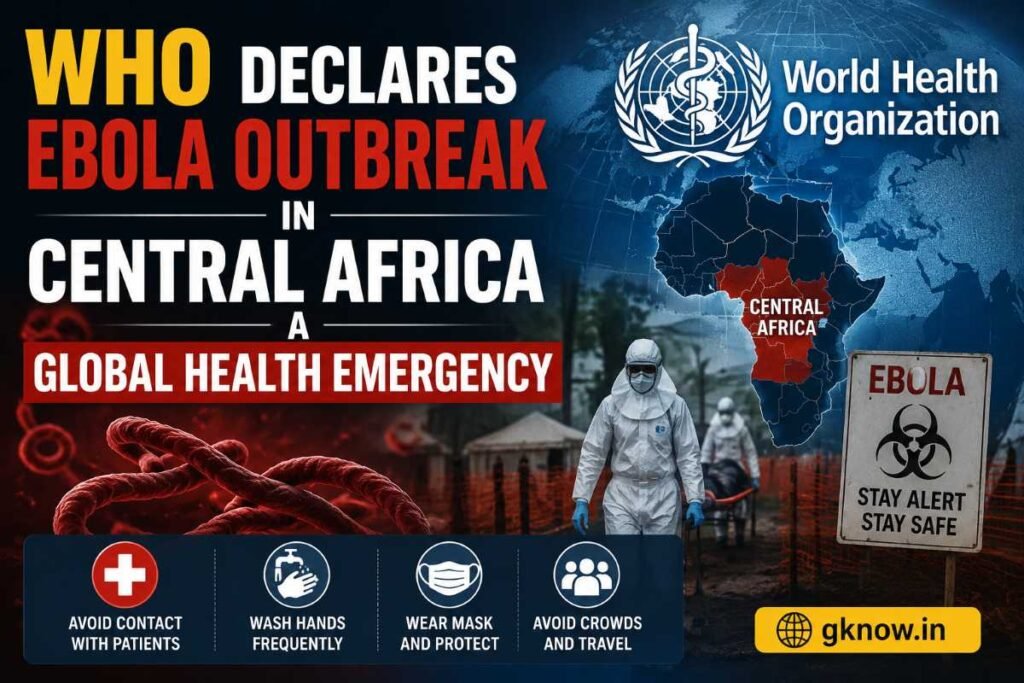
The World Health Organization (WHO) declared the Ebola outbreak in Central Africa a Public Health Emergency of International Concern (PHEIC) on 17 May 2026 following a rapid rise in cases and cross-border spread between the Democratic Republic of the Congo (DRC) and Uganda.
The outbreak is caused by the rare Bundibugyo strain of Ebola, for which no licensed vaccine or specific treatment is currently available. As of 16 May 2026, authorities reported 8 confirmed cases, 246 suspected cases, and 80 suspected deaths in eastern DRC’s Ituri Province. Several healthcare workers were also infected.
The virus spread internationally after two Ebola cases were detected in Kampala, Uganda, linked to travel from the DRC. Ongoing violence and displacement in eastern DRC have further increased the risk of transmission.
WHO advised countries to strengthen border screening, contact tracing, and laboratory preparedness, while recommending against international travel or trade restrictions.