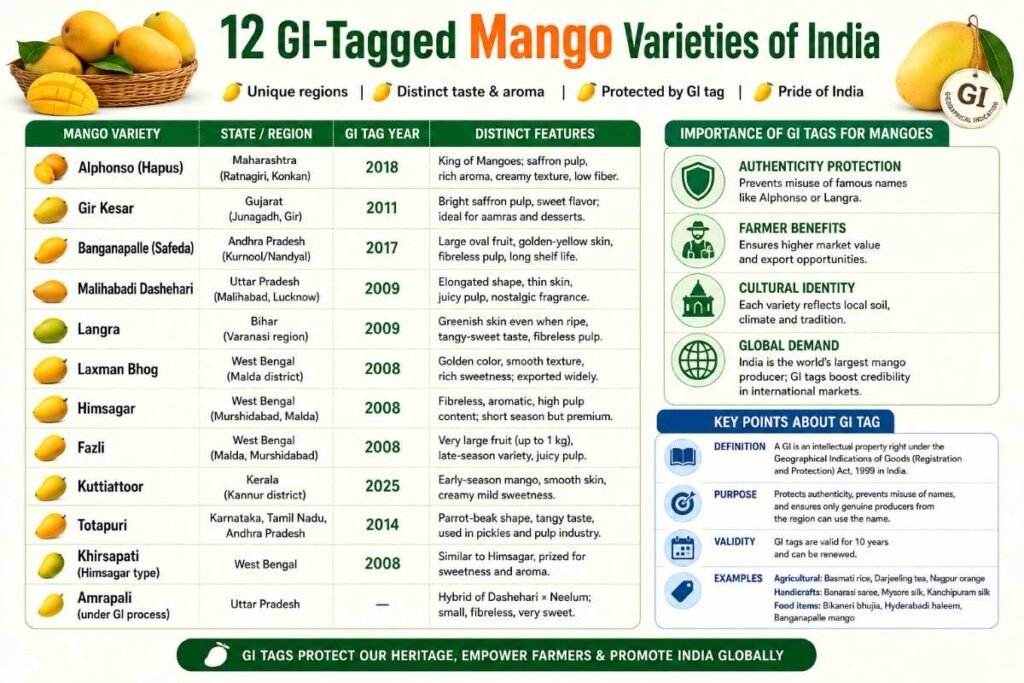
India has 12 mango varieties registered with Geographical Indication (GI) tags, each linked to a specific region known for its unique taste, quality, and heritage.
🏷️ GI-Tagged Mango Varieties of India
| Mango Variety | State/Region | GI Tag Year | Distinct Features |
|---|---|---|---|
| Alphonso (Hapus) | Maharashtra (Ratnagiri, Sindhudurg, Raigad, Konkan) | 2018 | Known as King of Mangoes; saffron-colored pulp, rich aroma, creamy texture, low fiber. |
| Gir Kesar | Gujarat (Junagadh, Gir forest region) | 2011 | Bright saffron pulp, sweet flavor; ideal for aamras and desserts. |
| Banganapalle (Safeda) | Andhra Pradesh (Kurnool/Nandyal) | 2017 | Large oval fruit, golden-yellow skin, fibreless pulp, long shelf life. |
| Malihabadi Dashehari | Uttar Pradesh (Malihabad, Lucknow) | 2009 | Elongated shape, thin skin, juicy pulp, nostalgic fragrance. |
| Langra | Bihar (Varanasi region) | 2009 | Greenish skin even when ripe, tangy-sweet taste, fibreless pulp. |
| Laxman Bhog | West Bengal (Malda district) | 2008 | Golden color, smooth texture, rich sweetness; exported widely. |
| Himsagar | West Bengal (Murshidabad, Malda) | 2008 | Fibreless, aromatic, high pulp content; short season but premium demand. |
| Fazli | West Bengal (Malda, Murshidabad) | 2008 | Very large fruit (up to 1 kg), late-season variety, juicy pulp. |
| Kuttiattoor | Kerala (Kannur district) | 2025 | Early-season mango, smooth skin, creamy mild sweetness. |
| Totapuri | Karnataka, Tamil Nadu, Andhra Pradesh | 2014 | Parrot-beak shape, tangy taste, used in pickles and pulp industry. |
| Khirsapati (Himsagar type) | West Bengal | 2008 | Similar to Himsagar, prized for sweetness and aroma. |
| Amrapali (under GI process) | Uttar Pradesh | — | Hybrid of Dashehari × Neelum; small, fibreless, very sweet. |
Why is a GI Tag Important?
A Geographical Indication (GI) tag is an intellectual property right granted under the Geographical Indications of Goods (Registration and Protection) Act, 1999. It is given to products whose quality or reputation is closely linked to a particular geographical area. A GI tag protects authenticity, prevents misuse of product names, supports farmers by increasing market value, and improves export opportunities. In India, a GI registration is valid for 10 years and can be renewed. Besides mangoes, famous GI products include Darjeeling Tea, Basmati Rice, Banarasi Saree, Mysore Silk, and Bikaneri Bhujia.