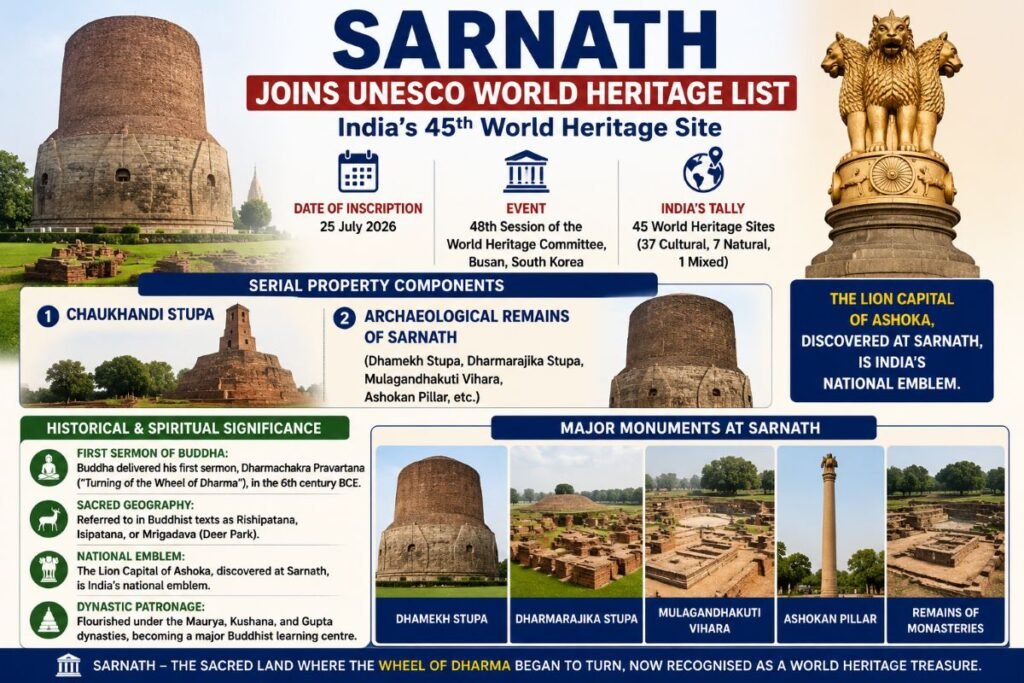
The ancient Buddhist site of Sarnath in Uttar Pradesh was officially inscribed on the UNESCO World Heritage List on 25 July 2026 during the 48th session of the World Heritage Committee in Busan, South Korea, becoming India’s 45th World Heritage Site. This recognition highlights Sarnath’s global significance as the place where Lord Buddha delivered his first sermon after enlightenment.
📜 Key Facts about Sarnath’s UNESCO Inscription
- Date of Inscription: 25 July 2026
- Event: 48th Session of the UNESCO World Heritage Committee, Busan, South Korea
- India’s Tally: 45 World Heritage Sites (37 cultural, 7 natural, 1 mixed)
- Serial Property Components:
- Chaukhandi Stupa
- Archaeological Remains of Sarnath (Dhamekh Stupa, Dharmarajika Stupa, Mulagandhakuti Vihara, Ashokan Pillar, etc.)
🏛 Historical & Spiritual Significance
- First Sermon of Buddha: Known as Dharmachakra Pravartana (“Turning of the Wheel of Dharma”), delivered in the 6th century BCE.
- Sacred Geography: Referred to in Buddhist texts as Rishipatana, Isipatana, or Mrigadava (Deer Park).
- National Emblem: The Lion Capital of Ashoka, discovered at Sarnath, is India’s national emblem.
- Dynastic Patronage: Flourished under Maurya, Kushana, and Gupta dynasties, becoming a major Buddhist learning centre.