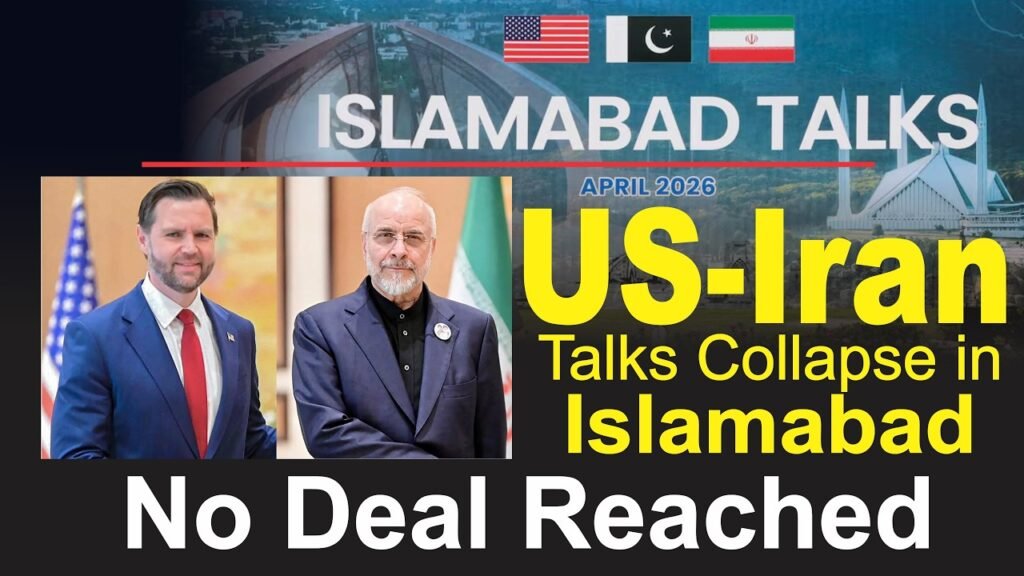
The US–Iran conflict remains unresolved despite a temporary ceasefire mediated by Pakistan in April 2026. Talks held in Islamabad ended without any agreement, increasing the risk of renewed hostilities after the truce expires on April 22.
🔑 Key Points
- A two-week ceasefire began on April 8, 2026, but failed to produce a long-term peace deal.
- Negotiations between the US (led by JD Vance) and Iran lasted 21 hours but ended in deadlock.
- Major disagreements included ceasefire duration, Iran’s regional role, Strait of Hormuz access, and verification mechanisms.
⚠️ Significance
- This was the first direct US–Iran dialogue since the Iranian Revolution, making it historically important.
- The fragile truce raises concerns about renewed conflict and instability in West Asia, potentially impacting global oil supply and trade.
- Pakistan’s role as mediator highlights its growing diplomatic importance, though success remains uncertain.
📌 Conclusion
While the ceasefire offers short-term relief, the failure of talks means the situation remains tense, with the possibility of conflict escalating again if diplomacy does not succeed.