Polity


Indian Polity and Constitution Current Affairs, Important for competitive Exams.

Parliament Budget Session concludes, both houses adjourned sine die

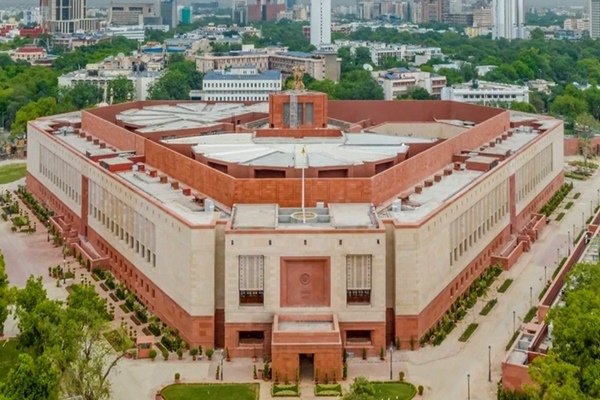
The Budget Session of Parliament, which began on January 31, 2025, officially concluded on April 5, 2025, with both Lok Sabha and Rajya Sabha adjourned sine die. The Monsoon Session will be scheduled later.

In his valedictory remarks for the 267th Rajya Sabha session, Chairman Jagdeep Dhankhar praised members for their active participation. The Upper House sat for 159 hours, achieving 119% productivity, including a historic longest sitting on April 3–4 from 11 AM to 4:02 AM. A record 49 private members’ bills were introduced.

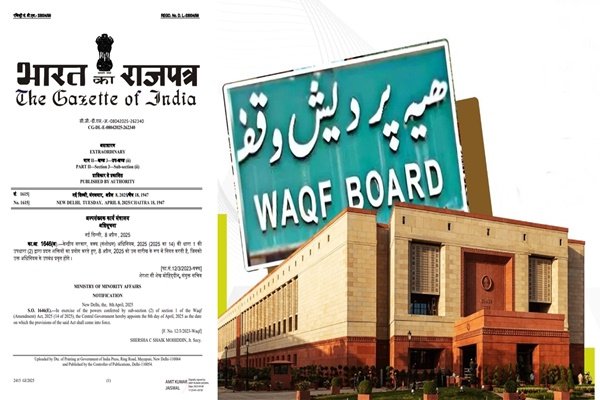
Lok Sabha Speaker Om Birla reported 26 sittings and a 118% productivity rate. During the session, 10 government bills were introduced and 16 were passed, including the key Waqf (Amendment) Bill, 2025, which passed after midnight following an intense debate. The bill received 128 votes in favor and 95 against.

The Waqf (Amendment) Bill, revised based on recommendations from a Joint Parliamentary Committee, aims to modernize the 1995 Act by improving the efficiency of Waqf Boards, simplifying the registration process, and integrating technology for better management of waqf properties.

The Budget Session was split into two parts: Jan 31–Feb 13 and from March 10 onwards.

Parliament Passes Waqf (Amendment) Bill, 2025

The Waqf (Amendment) Bill, 2025 was passed by Parliament after the Rajya Sabha approved it on April 3, 2025, with 128 votes in favor and 95 against, following a 12-hour debate. The Lok Sabha had already approved the Bill.

The Bill aims to streamline the management of Waqf properties, ensure transparency and accountability, and promote heritage protection and social welfare, particularly improving the status of Muslim women, including widows and divorcees. It proposes an inclusive Waqf Board, with representation from different Muslim sects and a limited number of non-Muslim members to preserve its secular nature.

Minority Affairs Minister Kiren Rijiju stated the Bill would benefit crores of poor Muslims without interfering with Waqf properties, aligning with the government’s “Sabka Saath, Sabka Vikas” vision. The Bill was drafted after consultations with stakeholders and the Joint Parliamentary Committee.

Opposition leaders, including Mallikarjun Kharge, Dr. Syed Naseer Hussain, and others, opposed the Bill, calling it anti-secular, unconstitutional, and politically motivated. However, several leaders like HD Devegowda supported the Bill, citing misuse of Waqf properties.

Parliament also passed the Mussalman Wakf (Repeal) Bill, 2025, repealing the Mussalman Wakf Act of 1923.

Lok Sabha Passes Waqf (Amendment) Bill 2025 Amid Heated Debate

The Lok Sabha passed the Waqf (Amendment) Bill 2025 on April 2, 2025, with 288 votes in favor and 232 against. The House also approved the Mussalman Wakf (Repeal) Bill 2024, repealing the Mussalman Wakf Act 1923.

Key Provisions and Government’s Stand:

  • Union Minority Affairs Minister Kiren Rijiju moved the bill, stating that it focuses solely on Waqf properties and aims to make Waqf Boards more inclusive and transparent.
  • The bill mandates representation from different Muslim sects and women in Waqf Boards.
  • Rijiju criticized the 2013 amendments under the UPA government for allowing misuse of Waqf laws and questioned why, despite India having the highest number of Waqf properties globally, Indian Muslims remain economically disadvantaged.

Opposition’s Criticism:

  • Congress MP Gaurav Gogoi called the bill unconstitutional and alleged it was an attempt to defame minorities and divide society.
  • Samajwadi Party’s Akhilesh Yadav accused the government of using the bill to divert attention from economic issues like unemployment and inflation.
  • TMC’s Kalyan Banerjee, DMK’s A Raja, and other opposition leaders criticized the bill, calling it anti-minority and an attack on Muslim rights.

Government’s Response:

  • Union Home Minister Amit Shah clarified that non-Muslims will not manage Waqf properties, dismissing fears of interference in religious practices.
  • He argued that the bill aims to prevent land mismanagement and enhance transparency, blaming the Congress for past misuses of Waqf-related laws.
  • BJP’s Ravi Shankar Prasad emphasized that the bill promotes gender justice by ensuring women’s representation in Waqf Boards.

Support from Other Parties:

  • TDP’s Krishna Prasad Tenneti supported the bill, highlighting the mismanagement of Waqf properties worth ₹1.2 lakh crore.
  • JD(U) leader Rajiv Ranjan Singh asserted that the bill ensures justice for all sections of Muslims while curbing misuse of Waqf properties.
  • Shiv Sena MP Shrikant Shinde referred to the legislation as “UMEED” (Unified Waqf Management Empowerment, Efficiency, and Development), aimed at uplifting minorities.

The bill’s passage marks a significant move in reforming Waqf property management, though controversy and political opposition remain strong.

Parliament Passes Disaster Management (Amendment) Bill 2024

The Disaster Management (Amendment) Bill 2024 has been passed by both houses of Parliament, with the Rajya Sabha approving it on 25 March 2025. It amends the Disaster Management Act, 2005, aiming to enhance the efficiency of the National and State Disaster Management Authorities (NDMA and SDMA).

Key highlights:

  • The NDMA and SDMA will now prepare disaster plans at national and state levels, replacing the role of executive committees.
  • States can establish Urban Disaster Management Authorities for capitals and cities with municipal corporations.
  • A disaster database will be created at both national and state levels.

Centre Approves Salary and Allowance Hike for MPs, Effective April 2023

The Centre has officially announced a significant revision in the salaries, allowances, and pensions of Members of Parliament (MPs), effective from April 1, 2023. The Ministry of Parliamentary Affairs issued a gazette notification on March 24, 2025, confirming the changes.

Key highlights of the revision:

  • Monthly Salary: Increased from ₹1 lakh to ₹1.24 lakh.
  • Daily Allowance: Raised from ₹2,000 to ₹2,500.
  • Pensions for Former MPs: Revised from ₹25,000 to ₹31,000 per month, with additional pensions for extended service increasing from ₹2,000 to ₹2,500 per year of service beyond five years.

This comprehensive adjustment ensures MPs’ compensation keeps pace with inflation and supports their legislative duties effectively. MPs also receive enhanced allowances for constituency-related work, office maintenance, and other perks such as free flights, train travel, and accommodations.

The last revision took place in 2018, making this a timely update to address rising living costs and economic shifts.

Election Commission Initiates Voter ID-Aadhaar Linking Consultations

On March 18, 2025, the Election Commission announced major steps to enhance electoral process!

Voter ID & Aadhaar Linking: 🤝 The EC will soon begin technical consultations with UIDAI to explore linking Voter IDs with Aadhaar, ensuring a more robust and accurate voter database. This will be done in accordance with Article 326, the Representation of the People Act, 1950, and Supreme Court judgments.

Duplicate Voter IDs Resolved: 🔍 Say goodbye to duplicate voter ID issues! The EC is committed to resolving these problems within the next three months.

Empowering Political Agents: 📚 Field-level political agents (booth, polling, counting, and election agents) will receive comprehensive training to better understand their vital roles.

Shorter Polling Queues: ⏳ To reduce waiting times, future polling booths will be limited to a maximum of 1,200 electors.

Second part of the Budget Session of Parliament commenced on March 10, 2025

The second part of the Budget Session of the Indian Parliament commenced on March 10, 2025, and is scheduled to run until April 4, 2025. This session follows the adjournment of the first part on February 13, 2025. The government has prioritized the passage of the Waqf Amendment Bill, which is expected to be a significant point of contention between the ruling party and the Opposition.

The session has already witnessed heated debates, particularly over the National Education Policy (NEP) in Tamil Nadu. The Opposition, led by Rahul Gandhi, has raised concerns about alleged discrepancies in voter lists and the recent violence in Manipur. The government is also keen on discussing the imposition of President’s Rule in Manipur, with Union Home Minister Amit Shah expected to address the issue.

In addition to these key issues, the session will see the introduction of the Immigration and Foreigners Bill, 2025, aimed at enhancing national security and standardizing immigration procedures. The Lok Sabha will also discuss the Manipur budget, presented by Union Finance Minister Nirmala Sitharaman.

The second part of the Budget Session is crucial for the passage of several important bills and addressing pressing national issues. The proceedings are being closely watched as the government and the Opposition engage in intense debates and discussions.

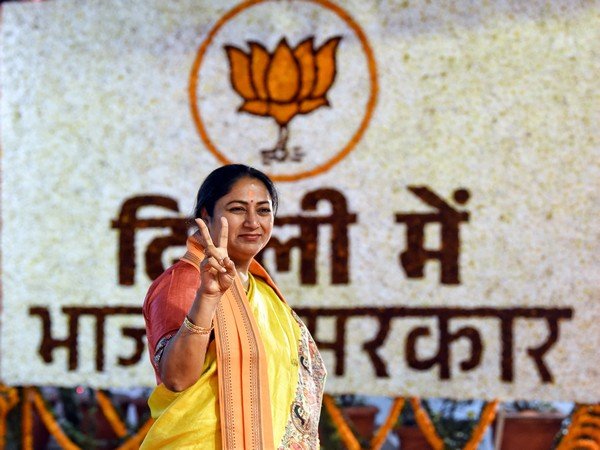
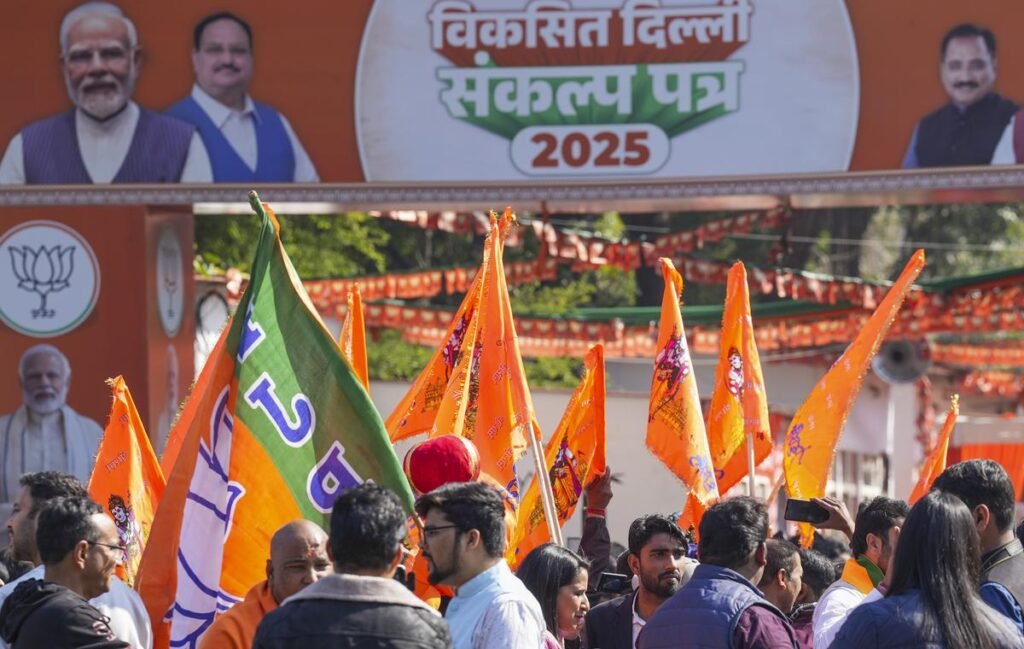
Rekha Gupta Becomes Delhi’s New CM as BJP Returns to Power After 27 Years

Rekha Gupta has been announced as the new Chief Minister of Delhi after the BJP legislative party meeting on 19 Feb 2025. She won from Shalimar Bagh in the recent Delhi Assembly elections. Gupta began her political career with ABVP in 1992 at Daulat Ram College and later became the President of Delhi University Students’ Union. She has also served as General Secretary of BJP Mahila Morcha in Delhi.

She will take oath as CM tomorrow at Ramlila Maidan, with LG VK Saxena administering the oath at 12:35 PM. Prime Minister Narendra Modi, Home Minister Amit Shah, Defence Minister Rajnath Singh, and leaders from 20 states are expected to attend. Delhi Police has issued a traffic advisory for the event.

The BJP, returning to power in Delhi after 27 years, secured 48 out of 70 seats, reducing AAP to 22.

BJP Returns to Power in Delhi After 27 Years, Defeats AAP in Assembly Elections

The Bharatiya Janata Party (BJP) secured a decisive victory in the Delhi Assembly Election on 8 February 2025, returning to power after 27 years by defeating the Aam Aadmi Party (AAP).

  • BJP won 48 seats in the 70-member assembly, while AAP secured 22 seats.
  • Congress failed to win a single seat, getting wiped out from the polls.
  • A party needs 35 seats to form the government in Delhi.

Key Winners:

BJP: Parvesh Sahib Singh (New Delhi), Vijender Gupta (Rohini), Kapil Misra (Karawal Nagar), Manjinder Singh Sirsa (Rajouri Garden), and others.
AAP: Atishi (Kalkaji), Gopal Rai (Babarpur), Imran Hussain (Ballimaran), Sahi Ram (Tughlakabad), and others.

Notable Defeats:

AAP: Arvind Kejriwal, Manish Sisodia, Saurabh Bhardwaj.
Congress: Sandeep Dikshit.
BJP: Ramesh Bidhuri, Raaj Kumar Anand.

Budget session of Parliament to begin on Jan 31

The Budget session of Parliament began on January 31, 2025, with President Droupadi Murmu addressing a joint sitting of both Houses. Following this, Union Finance Minister Nirmala Sitharaman will present the Economic Survey when both Lok Sabha and Rajya Sabha meet briefly. On February 1, 2025, she will present the Union Budget for 2025-26. The Lok Sabha and Rajya Sabha will then discuss the Motion of Thanks on the President’s Address on February 3, 2025.

During this session, 16 bills will be discussed, including the Finance Bill 2025, the Waqf (Amendment) Bill 2024, the Immigration and Foreigners Bill 2025, the Banking Laws (Amendment) Bill 2024, and the Railways (Amendment) Bill 2024. The first part of the Budget session will run until February 13, 2025, and the second part will take place from March 10 to April 4, 2025.

Uttarakhand Cabinet approves Uniform Civil Code (UCC) manual

The Uttarakhand State Cabinet approved the Uniform Civil Code (UCC) manual on 20 January 205, marking a step toward its implementation. Chief Minister Pushkar Singh Dhami expressed optimism, stating that Uttarakhand’s adoption of the UCC could inspire the rest of India.

The UCC aims to establish a common set of laws for personal relationships, promoting equality and justice among all citizens.

Govt releases draft of Digital Personal Data Protection Rules 2025

The Ministry of Electronics and Information Technology (MeitY) released the draft Digital Personal Data Protection (DPDP) Rules, 2025, on January 3, 2025, to implement the Digital Personal Data Protection Act, 2023. These rules aim to strengthen the legal framework for protecting digital personal data and provide a detailed implementation framework.

Key Provisions

  1. Notice Requirement: Data fiduciaries must provide clear notices to individuals about the data they collect, the purpose of collection, and obtain specific and informed consent.
  2. Consent Managers: The rules introduce the concept of consent managers who will work with data fiduciaries to collect and manage user consent.
  3. Data Protection for Minors: Verifiable parental consent is required for processing the personal data of children.
  4. Data Breach Notification: Data fiduciaries must inform the Data Protection Board of India (DPBI) within 72 hours of a data breach.
  5. Data Deletion: Users who stop using e-commerce, social media, or online gaming services for an extended period must be given 48 hours’ notice before their data is deleted.
  6. Data Localisation: Significant data fiduciaries must ensure that certain personal data is processed within India.
  7. Data Protection Impact Assessment: Significant data fiduciaries must conduct regular assessments and audits to ensure compliance with the DPDP Act.

Public Consultation

The draft rules are open for public feedback until February 18, 2025. Stakeholders are encouraged to submit their comments and suggestions to help refine the final version of the rules.

Scroll to Top