Polity


Indian Polity and Constitution Current Affairs, Important for competitive Exams.

Budget Session of Parliament 2026: Economic Survey & Union Budget Timeline

The Budget Session of Parliament 2026 began on January 28, 2026, and will continue until April 2, 2026, conducted in two phases. It is one of India’s most important parliamentary sessions, featuring the President’s address, the Economic Survey, and the presentation of the Union Budget.

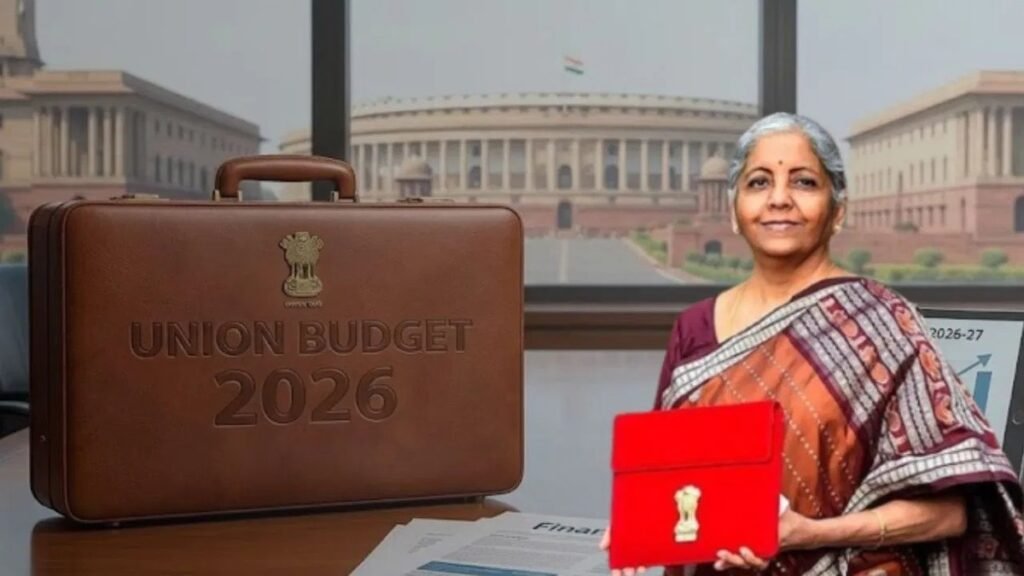
In Phase 1 (January 28 – February 13), President Droupadi Murmu addressed the joint sitting of Parliament, followed by the presentation of the Economic Survey 2025–26 on January 29, and the Union Budget 2026–27 on February 1 by Finance Minister Nirmala Sitharaman. After a recess, Phase 2 (March 9 – April 2) will focus on discussions, departmental scrutiny, and passage of budget-related bills.

The session holds major significance as it sets the nation’s fiscal priorities, outlines economic policy direction, enables legislative business, and provides space for opposition scrutiny. Key issues include balancing fiscal targets with welfare spending, managing global economic uncertainties, and advancing reforms in infrastructure, digitalization, and social welfare.
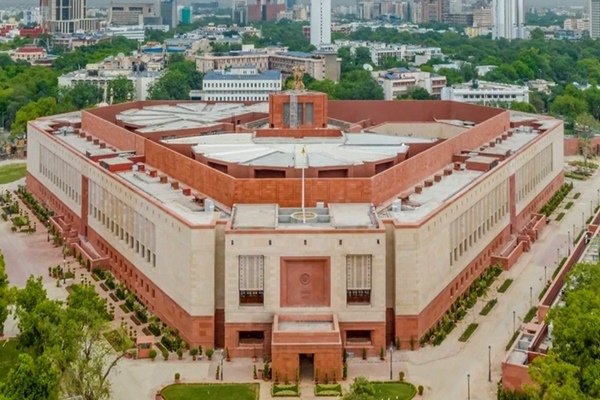
Winter Session of Parliament 2025 Concludes with Passage of Landmark Bills

Both Houses of Parliament were adjourned sine die on 19 December 2025, marking the conclusion of the 19-day Winter Session, which began on 1 December 2025.

In his valedictory address, Lok Sabha Speaker Om Birla said the Lower House held 15 sittings and recorded 111% productivity, thanking members for their cooperation. Rajya Sabha Chairman C.P. Radhakrishnan noted that the Upper House functioned for about 92 hours with 121% productivity, highlighting high-quality debates on issues of democratic and historical importance. Special discussions were held on the 150th anniversary of the national song Vande Mataram and electoral reforms, with wide participation by members.

Key legislations passed included the Viksit Bharat–G RAM G Bill 2025, the SHANTI Bill, and major insurance and health-related bills. The session also witnessed the first-ever dedicated discussion on electoral reforms in Parliament.

SHANTI Bill 2025: Major Reform in India’s Civil Nuclear Energy Sector

The Sustainable Harnessing and Advancement of Nuclear Energy for Transforming India Bill, 2025 (SHANTI Bill) represents a major reform in India’s civil nuclear sector, positioning nuclear power as a key component of the country’s clean energy transition. Passed by both Houses of Parliament in December 2025, the bill replaces outdated laws such as the Atomic Energy Act, 1962 and the Civil Liability for Nuclear Damage Act, 2010.

Despite India’s nuclear power capacity doubling since 2014, it still forms a small share of the overall energy mix. The SHANTI Bill aims to scale up nuclear energy to meet climate commitments and reduce dependence on fossil fuels.

A landmark feature of the bill is the opening of the nuclear sector to private participation, allowing private companies and joint ventures to construct, own, operate, and decommission nuclear power plants. It grants statutory authority to the Atomic Energy Regulatory Board (AERB) to strengthen safety oversight and licensing.

The bill also consolidates safety, liability, and compensation provisions into a single legal framework, reforms liability rules to attract investment while ensuring public safety, and encourages research and innovation by easing licensing for certain R&D activities.

Winter Session of Parliament Begins on December 1, 2025

The Winter Session of the Indian Parliament began on 1 December 2025, with 15 sittings scheduled over 19 days. A total of 13 bills are expected to be taken up, including the National Highways (Amendment) Bill, Atomic Energy Bill, Corporate Laws (Amendment) Bill, Insurance Laws (Amendment) Bill, and the Higher Education Commission of India Bill, 2025.

In the Lok Sabha, Finance Minister Nirmala Sitharaman will introduce the Central Excise (Amendment) Bill and the Health Security and National Security Cess Bill, 2025. The session will also include discussion and voting on the first batch of Supplementary Demands for Grants for 2025–26.

Samvidhan Diwas (Constitution Day) – 26 November

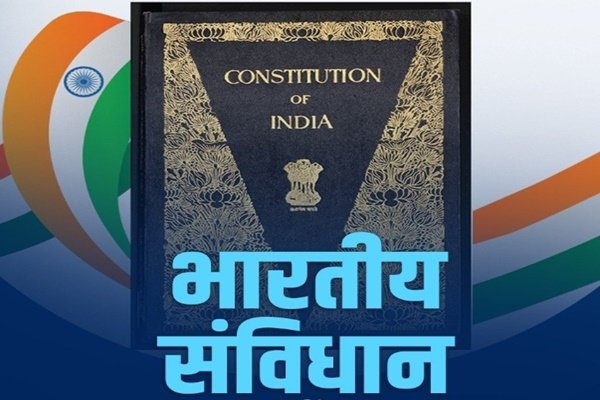
Samvidhan Diwas is observed every year on 26 November to commemorate the adoption of the Indian Constitution in 1949. Although the Constitution came into force on 26 January 1950, this day marks its official acceptance by the Constituent Assembly. The Government of India declared it Constitution Day in 2015.

Historically, the Constitution was drafted by the Constituent Assembly formed in 1946, with Dr. Rajendra Prasad as its President and Dr. B.R. Ambedkar as the Chairman of the Drafting Committee. The day honours their contributions and highlights the core constitutional values of Justice, Liberty, Equality, and Fraternity.

In 2025, India is celebrating the 75th Constitution Day with the theme “Hamara Samvidhan – Hamara Swabhiman”. Events across the country include Preamble reading, awareness campaigns, debates, and special sessions in institutions and Parliament.

Overall, Samvidhan Diwas reminds citizens to uphold democratic values and remain committed to the principles laid out in the Constitution.

Implementation of Four New Labour Codes in India

On 21 November 2025, the Central Government announced the implementation of four new labour codes to simplify and modernize India’s labour laws. Labour and Employment Minister Dr. Mansukh Mandaviya stated that these reforms aim to ensure better wages, safety, social security, and welfare for workers, calling them the Government’s Guarantee of Dignity for Every Worker.

The Four Labour Codes Implemented

  • Code on Wages, 2019
  • Industrial Relations Code, 2020
  • Code on Social Security, 2020
  • Occupational Safety, Health and Working Conditions Code, 2020

Key Benefits

  • Guaranteed timely minimum wages for all workers
  • Appointment letters for young employees
  • Equal pay for women
  • Social security for 40 crore workers
  • Gratuity after 1 year for fixed-term employees
  • Overtime wages doubled
  • Free annual health check-ups for workers above 40 years
  • Full health coverage for hazardous sector employees

Social Security Expansion

Over the last decade, India’s workforce under social-security coverage increased from 19% in 2015 to over 64% in 2025. The ministry said the new codes strengthen portability of benefits nationwide.

Nitish Kumar Takes Oath as Bihar Chief Minister for a Record 10th Time

Nitish Kumar was sworn in as the Chief Minister of Bihar for a record 10th time on 20 November 2025 at Gandhi Maidan, Patna.
The ceremony was attended by PM Narendra Modi, Union ministers, and several NDA Chief Ministers. Governor Arif Mohammad Khan administered the oath.

A total of 26 NDA ministers were sworn in — 14 BJP, 8 JD(U), 2 LJP (Ram Vilas), and 1 each from HAM(S) and Rashtriya Lok Morcha.

Kumar was unanimously chosen as leader of both the JD(U) Legislature Party and the NDA Legislature Party. The BJP named Samrat Choudhary and Vijay Kumar Sinha as its Legislature Party leader and deputy leader.

The 2025 Assembly elections saw the NDA win 202 of 243 seats, its second time crossing 200 seats. Among them, BJP won 89, JD(U) 85, LJP(R) 19, HAM(S) 5, and RLM 4. The opposition secured far fewer seats: RJD 25, Congress 6, CPI(ML)L 2, CPI(M) 1, and AIMIM 5, BSP 1, IIP 1.

Voting took place in two phases (6 & 11 November) and recorded a historic 67.13% turnout, with women voting more (71.6%) than men (62.8%).

Bihar Assembly Election 2025: NDA Secures Three-Fourth Majority

The Bihar Assembly Election 2025 results declared on 14 November. National Democratic Alliance (NDA), which returned to power with a three-fourth majority, winning 202 out of 243 seats. The Mahagathbandhan (INDIA bloc) faced a major collapse, securing only 35 seats, marking a dramatic shift in Bihar’s political landscape.

The BJP became the single-largest party with 89 seats, while JD(U) reaffirmed its strength with 85 seats. Voter turnout saw a historic trend, with women voters (71.78%) outperforming men (62.98%).

With a 46.7% vote share, the NDA’s strong mandate reflects a public preference for governance continuity and stability, while the opposition is left to reassess its strategy after a steep decline.

Winter Session of the Parliament from 1 to 19 December 2025

The Winter Session of the Indian Parliament will be held from December 1 to December 19, 2025, focusing on crucial constitutional, electoral, and economic reforms amid a tense political climate. The session, convened under Article 85 of the Constitution, will include 15 sittings — one of the shortest in recent years.

Approved by President Droupadi Murmu and announced by Parliamentary Affairs Minister Kiren Rijiju, the agenda includes discussions on electoral roll revisions, constitutional amendments, and economic legislation ahead of the 2026 elections.

Speaker Om Birla has appealed for discipline and cooperation, urging MPs to avoid disruptions after previous sessions’ low productivity. Meanwhile, the Opposition has criticized the short duration and is expected to focus on vote fraud allegations and governance transparency.

Bihar Assembly Elections 2025: First Phase Voting Underway in 18 Districts

The first phase of Bihar Assembly Elections 2025 is underway today, 6 November, across 121 constituencies in 18 districts including Patna, Nalanda, and Muzaffarpur. Polling runs from 7 AM to 6 PM under tight security, with webcasting at all 45,341 booths.

Over 3.75 crore voters will decide the fate of 1,314 candidates, including 122 women. The NDA (JD(U), BJP, LJP-R, RLM) and Mahagathbandhan (RJD, Congress, Left parties, VIP) are the main contenders, while Jan Suraj Party is contesting 119 seats.

Prominent candidates include Tejashwi Yadav (Raghopur), Deputy CMs Samrat Choudhary and Vijay Sinha, Ram Kripal Yadav (Danapur), and newcomers Maithili Thakur and Kheshari Lal Yadav.

Bihar Assembly Elections 2025 Announcement

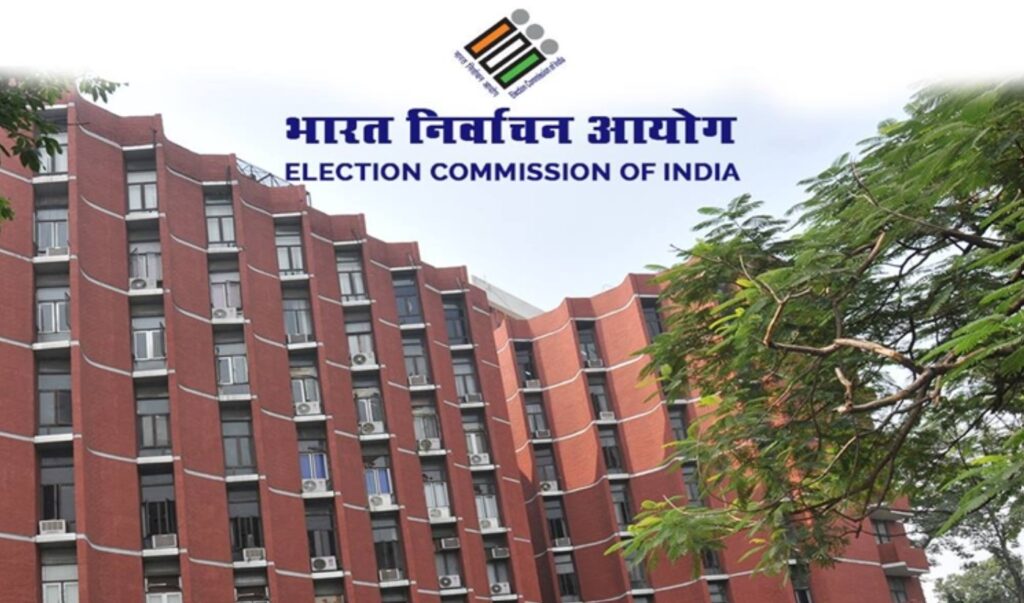
The Election Commission of India has announced that the Bihar Assembly Elections will be held in two phases — on 6th November and 11th November 2025, with vote counting on 14th November. The election will cover 243 assembly seats, with 121 constituencies voting in the first phase and 122 in the second.

Chief Election Commissioner Gyanesh Kumar said that over 90,712 polling booths will be set up for 7.43 crore voters.

  • First phase notification: 10th October; nominations open till 17th October.
  • Second phase notification: 13th October; nominations open till 20th October.

CP Radhakrishnan Elected as 15th Vice President of India

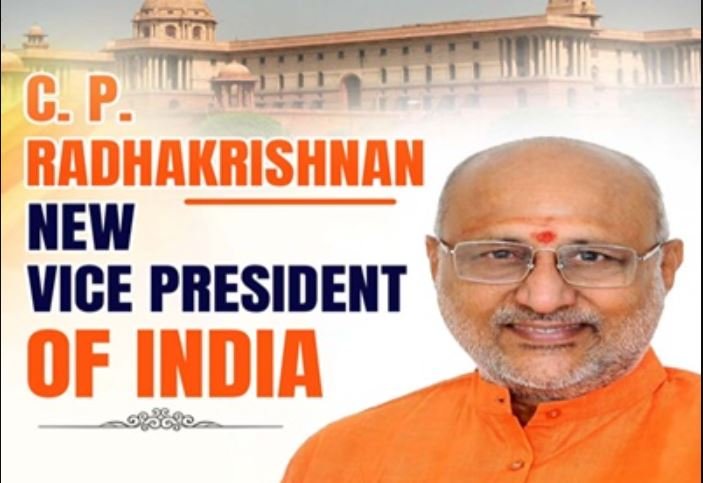
On 9 Sept 2025, NDA nominee CP Radhakrishnan was elected as the 15th Vice President of India, defeating INDIA bloc candidate Justice B. Sudershan Reddy. Radhakrishnan secured 452 first preference votes against Reddy’s 300, while 15 votes were declared invalid. The election witnessed a 98.2% turnout, with 767 MPs voting out of 781. The Vice President’s post had been vacant since July 21, following the resignation of Jagdeep Dhankhar due to health reasons.

Born in 1957 in Tiruppur, Tamil Nadu, Radhakrishnan has served as Governor of Maharashtra, Jharkhand, Telangana, and Puducherry, besides being a two-time MP from Coimbatore and a former BJP Tamil Nadu president.

Parliament Passes Online Gaming Bill 2025: Real-Money Games Banned

On 21 August 2025, Parliament passed the Promotion and Regulation of Online Gaming Bill, 2025, creating a national framework for India’s gaming sector.

Objectives: Promote skill-based gaming & esports, regulate the industry, ban real-money betting/wagering games, and protect users from addiction & financial harm.

  • Prohibitions: Ban on money games, their advertisements, and related financial transactions.
  • Penalties: Up to 5 years jail, fines up to ₹2 crore for repeat offences.
  • Impact: Real-money platforms like Dream11, MPL, PokerBaazi face bans; esports & social gaming expected to grow.

INDIA Bloc Names Justice B. Sudershan Reddy as Vice Presidential Candidate

The INDIA bloc on 19 August 2025 named Justice B. Sudershan Reddy (former Supreme Court Judge) as its candidate for the Vice Presidential election on September 9.

The announcement was made by Congress president Mallikarjun Kharge in New Delhi. Justice Reddy will file his nomination on August 21. All opposition parties, including TMC and AAP, are supporting him.

He will contest against NDA nominee CP Radhakrishnan. The VP post fell vacant after Jagdeep Dhankhar resigned (21 July).

CP Radhakrishnan Named NDA Candidate for Vice Presidential Election 2025

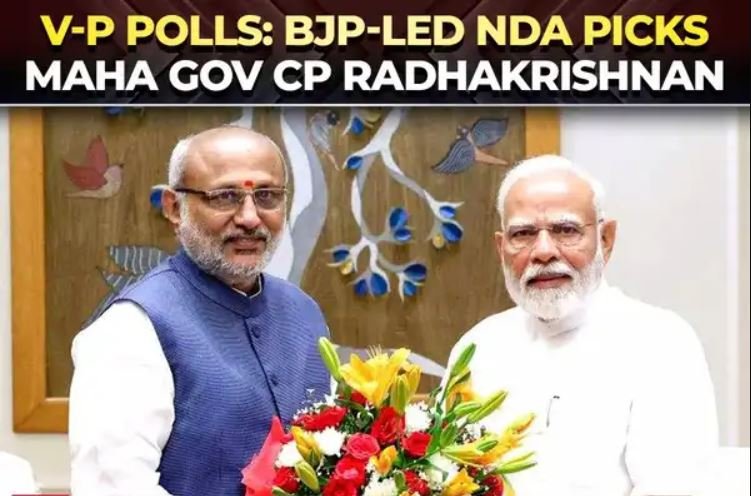
On 17 August 2025, BJP President JP Nadda announced that Maharashtra Governor CP Radhakrishnan will be the NDA’s candidate for the upcoming Vice Presidential Election.

  • The decision was taken at the BJP parliamentary board meeting in New Delhi, attended by PM Modi, Amit Shah, Rajnath Singh, and others.
  • All NDA allies supported the decision; efforts are being made to seek consensus with opposition parties.
  • The Vice Presidential Election will be held on 9 September 2025.
  • The election was necessitated by the resignation of Jagdeep Dhankhar.

Parliament Passes Income-Tax Bill, 2025 – Major Overhaul of 1961 Act

On 12 August 2025, Parliament passed the Income-Tax Bill, 2025, replacing the Income Tax Act of 1961. The new law, effective from 1 April 2026, aims to simplify tax administration by reducing sections from 819 to 536, cutting chapters from 47 to 23, and introducing a single “tax year.”

It provides taxpayer reliefs such as late refunds, shorter TDS correction limits, and clearer pension/gratuity deductions, without changing tax rates. Drafted in six months and reviewed by a Parliamentary Select Committee chaired by Baijayant Panda, the bill was passed by voice vote despite an Opposition walkout.

Merchant Shipping Bill 2024 Passed by Parliament

The Merchant Shipping Bill 2024 received Rajya Sabha approval on 11 August 2025, completing its passage in Parliament. It will replace the Merchant Shipping Act 1958 to align India’s laws with obligations under maritime treaties and international instruments to which India is a party.

The Bill aims to:

  • Promote the development of Indian shipping.
  • Ensure efficient maintenance of Indian mercantile marine.
  • Serve the national interest in maritime affairs.

Parliament Passes Coastal Shipping Bill, 2025 to Boost India’s Maritime Economy

The Coastal Shipping Bill, 2025 was passed by the Rajya Sabha on 7 August 2025, after clearance from the Lok Sabha on April 3, 2025.

  • The bill replaces Part XIV of the Merchant Shipping Act, 1958 with a modern legal framework aligned with global cabotage norms.
  • Union Minister Sarbananda Sonowal, who introduced the bill, stated it will help increase India’s coastal cargo share to 230 million metric tonnes by 2030.
  • Key Features:
    • Introduces a simplified licensing system for coastal shipping.
    • Provides a framework for regulating foreign vessels in coastal trade.
    • Mandates a National Coastal and Inland Shipping Strategic Plan to guide future policy and infrastructure.
    • Proposes a National Database for Coastal Shipping to support transparency and investment.
  • The bill aims to enhance supply-chain security, promote Indian vessel usage, reduce foreign dependence, and generate local employment.
  • With its passage, all three key maritime laws are now approved:
    1. Merchant Shipping Bill, 2025
    2. Carriage of Goods by Sea Bill, 2025
    3. Coastal Shipping Act, 2025

Vice-Presidential Election 2025: EC Announce Schedule

The Election Commission of India has notified the schedule for the Vice-Presidential Election 2025 on August 7, 2025.

📅 Key Dates:

  • Last date for nominations: August 21, 2025
  • Scrutiny of nominations: August 22, 2025
  • Last date for withdrawal: August 25, 2025
  • Voting date (if required): September 9, 2025

PM Narendra Modi Becomes India’s Second-Longest Serving Prime Minister in Consecutive Terms

On 25 July 2025, Prime Minister Narendra Modi became India’s second-longest-serving PM in consecutive terms, surpassing Indira Gandhi’s 4,077 days with 4,078 days in office. He first took office on 26 May 2014 and has served 11 years and 60 days.

PM Modi is the first non-Congress PM to complete two full terms and win a third with a majority. He is also the longest-serving PM from a non-Hindi-speaking state and the only post-Independence-born PM to achieve this milestone. His leadership marks six consecutive election wins — three in Gujarat and three in Lok Sabha polls.

Vice President Jagdeep Dhankhar Resigns Due to Health Reasons

Vice President Jagdeep Dhankhar Resigns Due to Health Reasons on 21 July 2025.

  • Reason: Health concerns and medical advice
  • Constitutional Provision: Resigned under Article 67(a) of the Constitution
  • Addressed to: President Droupadi Murmu
  • Role: Also served as Chairman of the Rajya Sabha
  • The resignation took effect immediately and coincided with the first day of the Monsoon Session of Parliament.

Monsoon Session of Parliament 2025 from 21 July to 21 August 2025

Monsoon Session of Parliament 2025

  • Dates: 21 July to 21 August 2025 (21 sittings)
  • Bills to be Taken Up: 17, including
    • Jan Vishwas Bill 2025
    • National Sports Governance Bill 2025
    • Merchant Shipping Bill 2024
    • Income-tax Bill 2025
    • Indian Ports Bill 2025

🗣️ Key Highlights:

  • All-party meeting held for smooth conduct
  • Govt open to discussions on Operation Sindoor, Pahalgam attack, and Trump’s remarks
  • Over 100 MPs signed motion for Justice Varma’s removal
  • Opposition demands PM’s statement in the House

President Droupadi Murmu Nominates 4 Eminent Personalities to Rajya Sabha

On 11 July 2025, President Droupadi Murmu nominated four distinguished individuals to the Rajya Sabha under Article 80(1)(a) and Clause (3) of the Constitution for their excellence in law, diplomacy, education, and history.

  • Ujjwal Nikam, noted public prosecutor, known for the 26/11 Mumbai trial
  • Harsh Vardhan Shringla, former Foreign Secretary and G20 Chief Coordinator
  • C. Sadanandan Master, educationist and social worker from Kerala
  • Dr. Meenakshi Jain, historian and author, recipient of the Padma Shri

Rajya Sabha Composition

Total Members: Maximum strength is 250Currently: 245 members (as of 2025)

  • Elected Members: 233 (from States and Union Territories)
  • Nominated Members: 12, appointed by the President of India for their expertise in art, literature, science, and social service

Monsoon Session 2025 Announced: Key Bills, Opposition Demands, and Operation Sindoor on Agenda

Union Minister Kiren Rijiju has announced that the Monsoon Session of Parliament will be held from July 21 to August 12, 2025, with both houses convening at 11 a.m. on the first day.

The session is expected to be intense due to Opposition demands for a special session to discuss the terror attack in Pahalgam and India’s retaliatory Operation Sindoor against terror bases in Pakistan and PoK.

Waqf (Amendment) Act 2025 Comes into Effect to Ensure Transparent Property Management

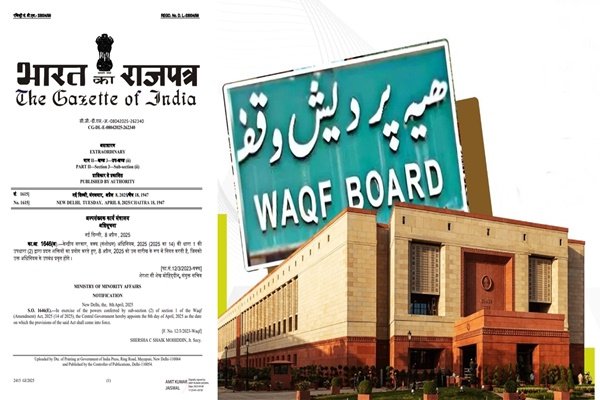
The Waqf (Amendment) Act 2025 officially came into force on April 8, 2025, following President Droupadi Murmu’s assent. The legislation had been passed by both Houses of Parliament the previous week.

The amended law focuses on:

  • Improving the management of Waqf properties
  • Safeguarding heritage sites
  • Promoting social welfare initiatives

Key objectives include:

  • Enhancing transparency and accountability in Waqf property administration
  • Better coordination between Waqf Boards and local authorities
  • Protecting the rights of stakeholders

The Act aims to build a secular and well-governed system for Waqf affairs, ensuring public trust and effective use of assets for community benefit.

Parliament Budget Session concludes, both houses adjourned sine die

The Budget Session of Parliament, which began on January 31, 2025, officially concluded on April 5, 2025, with both Lok Sabha and Rajya Sabha adjourned sine die. The Monsoon Session will be scheduled later.

In his valedictory remarks for the 267th Rajya Sabha session, Chairman Jagdeep Dhankhar praised members for their active participation. The Upper House sat for 159 hours, achieving 119% productivity, including a historic longest sitting on April 3–4 from 11 AM to 4:02 AM. A record 49 private members’ bills were introduced.

Lok Sabha Speaker Om Birla reported 26 sittings and a 118% productivity rate. During the session, 10 government bills were introduced and 16 were passed, including the key Waqf (Amendment) Bill, 2025, which passed after midnight following an intense debate. The bill received 128 votes in favor and 95 against.

The Waqf (Amendment) Bill, revised based on recommendations from a Joint Parliamentary Committee, aims to modernize the 1995 Act by improving the efficiency of Waqf Boards, simplifying the registration process, and integrating technology for better management of waqf properties.

The Budget Session was split into two parts: Jan 31–Feb 13 and from March 10 onwards.

Parliament Passes Waqf (Amendment) Bill, 2025

The Waqf (Amendment) Bill, 2025 was passed by Parliament after the Rajya Sabha approved it on April 3, 2025, with 128 votes in favor and 95 against, following a 12-hour debate. The Lok Sabha had already approved the Bill.

The Bill aims to streamline the management of Waqf properties, ensure transparency and accountability, and promote heritage protection and social welfare, particularly improving the status of Muslim women, including widows and divorcees. It proposes an inclusive Waqf Board, with representation from different Muslim sects and a limited number of non-Muslim members to preserve its secular nature.

Minority Affairs Minister Kiren Rijiju stated the Bill would benefit crores of poor Muslims without interfering with Waqf properties, aligning with the government’s “Sabka Saath, Sabka Vikas” vision. The Bill was drafted after consultations with stakeholders and the Joint Parliamentary Committee.

Opposition leaders, including Mallikarjun Kharge, Dr. Syed Naseer Hussain, and others, opposed the Bill, calling it anti-secular, unconstitutional, and politically motivated. However, several leaders like HD Devegowda supported the Bill, citing misuse of Waqf properties.

Parliament also passed the Mussalman Wakf (Repeal) Bill, 2025, repealing the Mussalman Wakf Act of 1923.

Lok Sabha Passes Waqf (Amendment) Bill 2025 Amid Heated Debate

The Lok Sabha passed the Waqf (Amendment) Bill 2025 on April 2, 2025, with 288 votes in favor and 232 against. The House also approved the Mussalman Wakf (Repeal) Bill 2024, repealing the Mussalman Wakf Act 1923.

Key Provisions and Government’s Stand:

  • Union Minority Affairs Minister Kiren Rijiju moved the bill, stating that it focuses solely on Waqf properties and aims to make Waqf Boards more inclusive and transparent.
  • The bill mandates representation from different Muslim sects and women in Waqf Boards.
  • Rijiju criticized the 2013 amendments under the UPA government for allowing misuse of Waqf laws and questioned why, despite India having the highest number of Waqf properties globally, Indian Muslims remain economically disadvantaged.

Opposition’s Criticism:

  • Congress MP Gaurav Gogoi called the bill unconstitutional and alleged it was an attempt to defame minorities and divide society.
  • Samajwadi Party’s Akhilesh Yadav accused the government of using the bill to divert attention from economic issues like unemployment and inflation.
  • TMC’s Kalyan Banerjee, DMK’s A Raja, and other opposition leaders criticized the bill, calling it anti-minority and an attack on Muslim rights.

Government’s Response:

  • Union Home Minister Amit Shah clarified that non-Muslims will not manage Waqf properties, dismissing fears of interference in religious practices.
  • He argued that the bill aims to prevent land mismanagement and enhance transparency, blaming the Congress for past misuses of Waqf-related laws.
  • BJP’s Ravi Shankar Prasad emphasized that the bill promotes gender justice by ensuring women’s representation in Waqf Boards.

Support from Other Parties:

  • TDP’s Krishna Prasad Tenneti supported the bill, highlighting the mismanagement of Waqf properties worth ₹1.2 lakh crore.
  • JD(U) leader Rajiv Ranjan Singh asserted that the bill ensures justice for all sections of Muslims while curbing misuse of Waqf properties.
  • Shiv Sena MP Shrikant Shinde referred to the legislation as “UMEED” (Unified Waqf Management Empowerment, Efficiency, and Development), aimed at uplifting minorities.

The bill’s passage marks a significant move in reforming Waqf property management, though controversy and political opposition remain strong.

Parliament Passes Disaster Management (Amendment) Bill 2024

The Disaster Management (Amendment) Bill 2024 has been passed by both houses of Parliament, with the Rajya Sabha approving it on 25 March 2025. It amends the Disaster Management Act, 2005, aiming to enhance the efficiency of the National and State Disaster Management Authorities (NDMA and SDMA).

Key highlights:

  • The NDMA and SDMA will now prepare disaster plans at national and state levels, replacing the role of executive committees.
  • States can establish Urban Disaster Management Authorities for capitals and cities with municipal corporations.
  • A disaster database will be created at both national and state levels.

Centre Approves Salary and Allowance Hike for MPs, Effective April 2023

The Centre has officially announced a significant revision in the salaries, allowances, and pensions of Members of Parliament (MPs), effective from April 1, 2023. The Ministry of Parliamentary Affairs issued a gazette notification on March 24, 2025, confirming the changes.

Key highlights of the revision:

  • Monthly Salary: Increased from ₹1 lakh to ₹1.24 lakh.
  • Daily Allowance: Raised from ₹2,000 to ₹2,500.
  • Pensions for Former MPs: Revised from ₹25,000 to ₹31,000 per month, with additional pensions for extended service increasing from ₹2,000 to ₹2,500 per year of service beyond five years.

This comprehensive adjustment ensures MPs’ compensation keeps pace with inflation and supports their legislative duties effectively. MPs also receive enhanced allowances for constituency-related work, office maintenance, and other perks such as free flights, train travel, and accommodations.

The last revision took place in 2018, making this a timely update to address rising living costs and economic shifts.

Scroll to Top