International


International Current Affairs for competitive Exams.

Marco Rubio Begins Four-Day India Visit Ahead of QUAD Meeting 2026

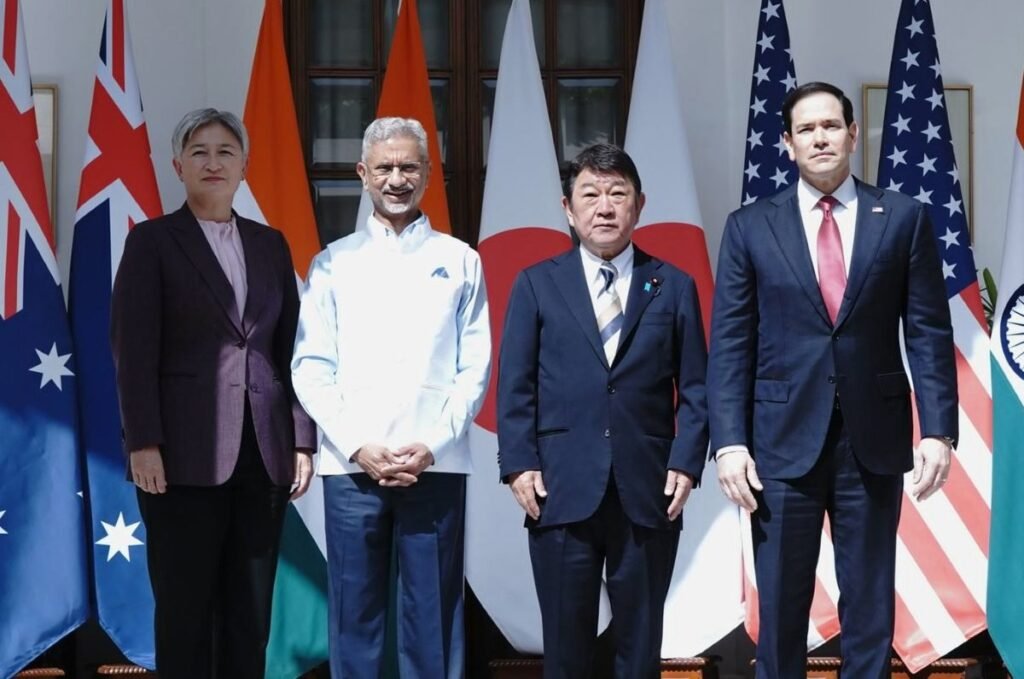
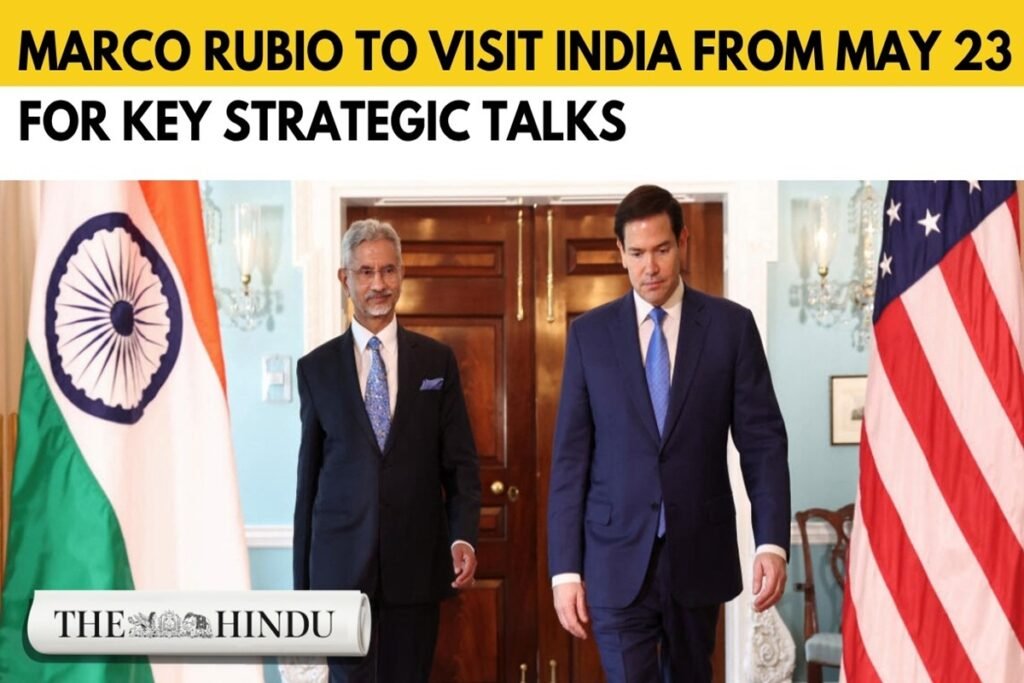
US Secretary of State Marco Rubio began his first official four-day visit to India on 23 May 2026, covering Kolkata, Agra, Jaipur, and New Delhi. The visit focuses on strengthening India–US strategic relations through discussions on trade, energy security, defense cooperation, and Indo-Pacific stability. Rubio is scheduled to meet Prime Minister Narendra Modi and External Affairs Minister S. Jaishankar, and participate in the Quad Foreign Ministers’ Meeting in New Delhi on 26 May 2026.

The visit comes at a crucial time amid global energy concerns and growing regional tensions in the Indo-Pacific. The United States is seeking stronger energy partnerships with India and discussing trade issues, including tariff exemptions and Section 301 investigations. Defense cooperation and maritime security under the QUAD framework are also major agenda items, especially in response to China’s increasing influence in the region.

Apart from diplomatic meetings, Rubio’s visit includes symbolic cultural engagements such as visiting the Missionaries of Charity headquarters in Kolkata. The tour highlights both strategic and civilizational ties between India and the United States. The visit is considered highly important for competitive exams due to its relevance to international relations, QUAD cooperation, trade policy, and Indo-Pacific geopolitics.

FAO Agricola Medal Awarded to PM Modi During Italy Visit 2026

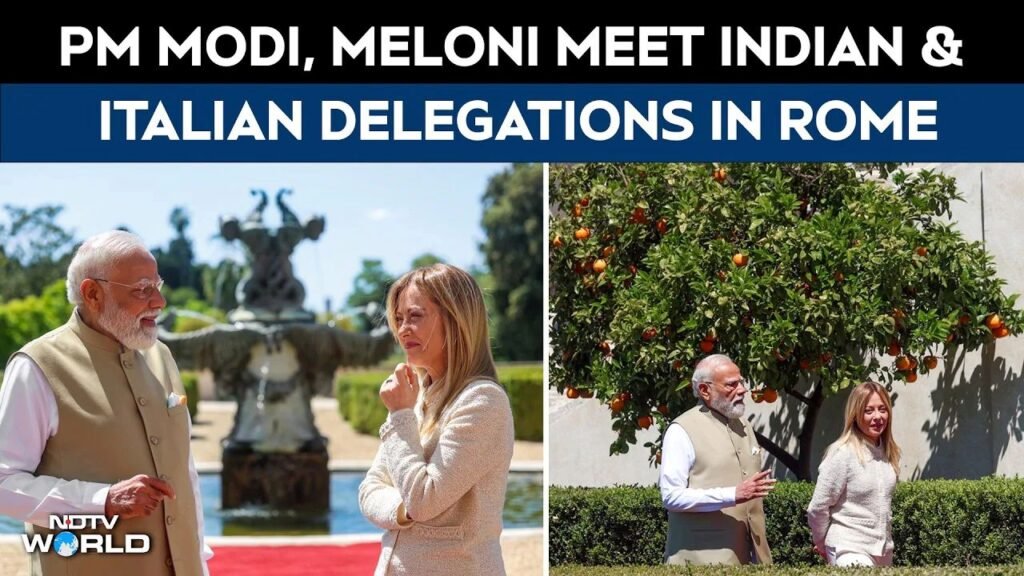
Prime Minister Narendra Modi visited Italy on 19–20 May 2026, where India and Italy elevated their ties to a Special Strategic Partnership, signed a defence industrial roadmap, and set a target to expand bilateral trade to €20 billion by 2029. PM Modi was also awarded the prestigious FAO Agricola Medal for his contribution to food security and sustainable agriculture.

📌 Key Highlights of the Visit

  • Dates: 19–20 May 2026 (final leg of Modi’s five-nation tour).
  • Meetings:
    • With Italian PM Giorgia Meloni – talks on trade, defence, clean energy, AI, critical minerals, space, and nuclear energy.
    • With President Sergio Mattarella – discussions on investment, technology, and cultural linkages.
  • Special Strategic Partnership: Relations upgraded to the highest level of cooperation, ensuring annual leader-level meetings and ministerial exchanges.
  • Defence Roadmap: Joint declaration for co-design, co-development, and co-production of defence products.
  • Trade Target: Expand bilateral trade to €20 billion by 2029 (from €14.25 billion in 2025).
  • FAO Honour: Modi received the Agricola Medal, FAO’s highest award, for promoting food security and sustainable agriculture.

WHO Declares Ebola Outbreak in Central Africa a Global Health Emergency

The World Health Organization (WHO) declared the Ebola outbreak in Central Africa a Public Health Emergency of International Concern (PHEIC) on 17 May 2026 following a rapid rise in cases and cross-border spread between the Democratic Republic of the Congo (DRC) and Uganda.

The outbreak is caused by the rare Bundibugyo strain of Ebola, for which no licensed vaccine or specific treatment is currently available. As of 16 May 2026, authorities reported 8 confirmed cases, 246 suspected cases, and 80 suspected deaths in eastern DRC’s Ituri Province. Several healthcare workers were also infected.

The virus spread internationally after two Ebola cases were detected in Kampala, Uganda, linked to travel from the DRC. Ongoing violence and displacement in eastern DRC have further increased the risk of transmission.

WHO advised countries to strengthen border screening, contact tracing, and laboratory preparedness, while recommending against international travel or trade restrictions.

Indus Waters Treaty 2026: India Rejects Hague Court Ruling as “Null and Void”

On 15 May 2026, the Court of Arbitration (CoA) at The Hague issued a ruling on “maximum pondage” in India’s Indus river hydroelectric projects. India categorically rejected the award on 16 May 2026, calling it “null and void” and reaffirming that the Indus Waters Treaty (IWT) remains in abeyance since April 2025.


📌 Key Facts

  • Treaty Signed: 19 September 1960, mediated by the World Bank between India (PM Jawaharlal Nehru) and Pakistan (President Ayub Khan).
  • Allocation:
    • India: Ravi, Beas, Sutlej (Eastern rivers).
    • Pakistan: Indus, Jhelum, Chenab (Western rivers).
  • Projects in Dispute: Kishanganga (J&K) and Ratle (Chenab basin).
  • CoA Ruling Date: 15 May 2026 (supplemental award on pondage).
  • India’s Response: 16 May 2026 – MEA Spokesperson Randhir Jaiswal declared the ruling “null and void.”
  • Treaty Status: India placed IWT in abeyance in April 2025 after the Pahalgam terror attack that killed 26 civilians.

PM Modi’s Five-Nation Foreign Tour (15–20 May 2026)

PM Narendra Modi is on a six-day, five-nation foreign tour (15–20 May 2026) covering the UAE, Netherlands, Sweden, Norway, and Italy. The visit focuses on energy security, trade, technology, and strategic partnerships, marking India’s most significant diplomatic outreach of the year.


🌍 Tour Overview (15–20 May 2026)

  • Countries visited: United Arab Emirates, Netherlands, Sweden, Norway, Italy
  • Purpose: Strengthen energy security, boost trade & investment, deepen technology cooperation, and expand strategic partnerships.
  • Context: Comes amid global energy price shocks and geopolitical tensions in West Asia and Europe.

🏛 Country-wise Highlights

CountryKey EngagementsFocus Areas
UAE (15 May)Met President Mohamed bin Zayed Al NahyanEnergy security, crude oil & LNG supplies, investment, regional security
Netherlands (15–17 May)Talks with PM Rob Jetten, met King Willem-Alexander & Queen MáximaTrade, semiconductors, water management, clean energy, India–EU trade pact
Sweden (17–18 May)Met PM Ulf Kristersson, EU Chief Ursula von der LeyenInnovation, clean energy, investment, conferred with Royal Order of Polar Star
Norway (18–19 May)Met PM Jonas Gahr Støre, King Harald VGreen Strategic Partnership, Indo-Pacific Oceans Initiative, India–Nordic Summit
Italy (19–20 May)Scheduled talks with PM Giorgia MeloniDefence, mobility, maritime cooperation, manufacturing partnerships

India-UAE Sign Major Agreements on Energy and Defence Cooperation

On 15 May 2026, India and the UAE signed important agreements during Prime Minister Narendra Modi’s visit to Abu Dhabi. UAE President Sheikh Mohamed bin Zayed Al Nahyan held talks with PM Modi amid the ongoing West Asia conflict.

Key Points

  • UAE pledged investments worth 5 billion US dollars in India.
  • India and UAE signed agreements on:
    • Strategic petroleum reserves
    • Long-term LPG supply
    • Defence cooperation
  • ADNOC and ISPRL signed a pact to enhance India’s energy security.
  • UAE participation in India’s strategic petroleum reserves will increase to 30 million barrels.
  • Both countries will cooperate in LNG and LPG storage facilities.
  • A strategic defence partnership framework was also signed for technology sharing, defence production, and regional security.
  • PM Modi condemned recent attacks on the UAE and reaffirmed India’s support.

US–China Summit 2026: Trump–Xi Talks in Beijing on Global Issues

The US–China Summit (14–15 May 2026 in Beijing) brought President Donald Trump and President Xi Jinping together for high-stakes talks amid global tensions. The summit focused on trade, Taiwan, and the Iran conflict, with both leaders stressing cooperation.


📌 Key Highlights of the Summit

  • Dates & Venue: 14–15 May 2026, Great Hall of the People, Beijing.
  • Leaders: US President Donald Trump and Chinese President Xi Jinping.

🌍 Strategic & Political Issues

  • Taiwan:
    • Xi warned that mishandling Taiwan could lead to “clashes and even conflicts.”
    • Trump had earlier approved a major arms package for Taiwan, which remains a sensitive flashpoint.
  • Iran Conflict:
    • Both leaders agreed Iran must never be allowed to obtain nuclear weapons.
    • They stressed the importance of keeping the Strait of Hormuz open for global energy supplies.
    • Xi pledged China would not provide military equipment to Iran.

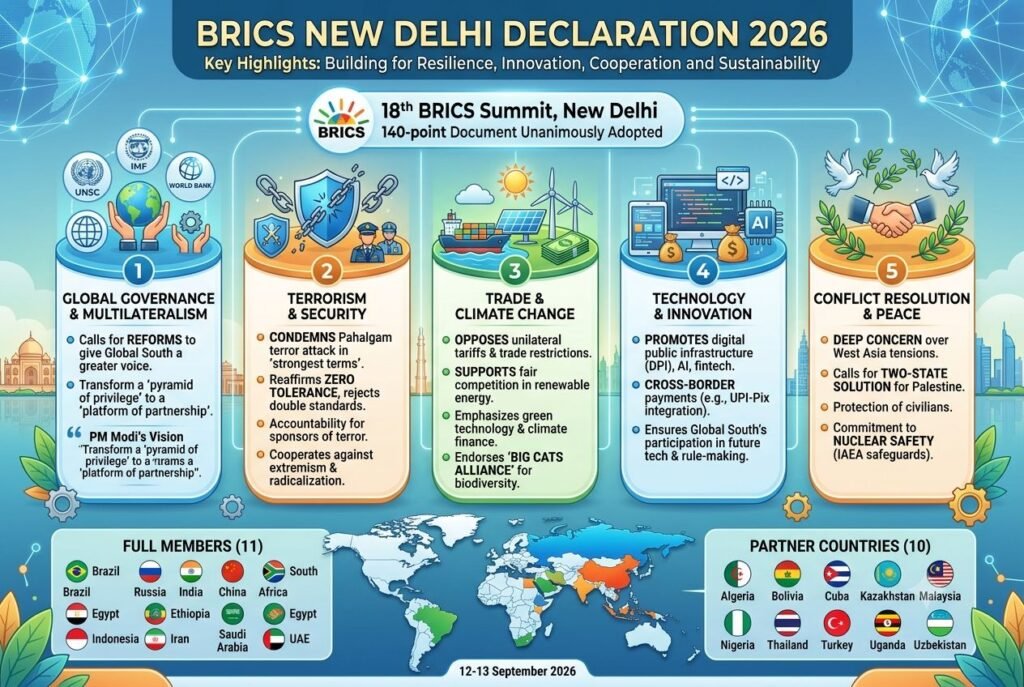
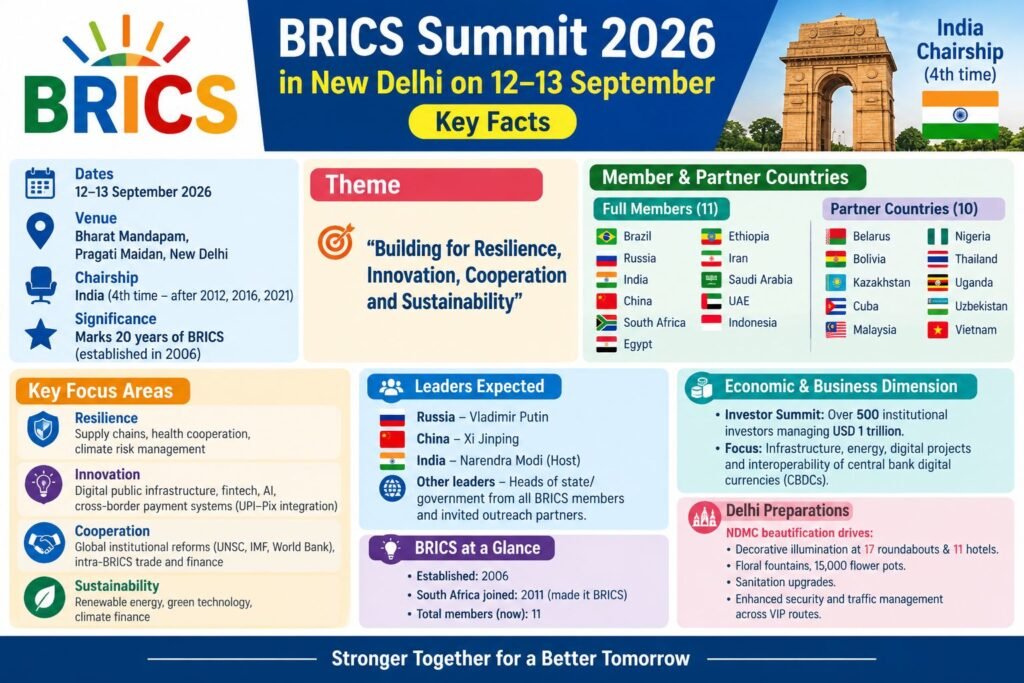
BRICS Foreign Ministers’ Meeting in New Delhi

A two-day BRICS Foreign Ministers’ Meeting began in New Delhi on 14 May 2026 under the chairmanship of External Affairs Minister S. Jaishankar. Foreign Ministers and representatives from BRICS member and partner countries are participating in the meeting and will also meet Prime Minister Narendra Modi.

The ministers will discuss important global and regional issues. Sessions during the meeting include themes such as “BRICS@20: Building for Resilience, Innovation, Cooperation and Sustainability” and reforms of global governance and the multilateral system.

India is chairing BRICS in 2026. Several international leaders, including representatives from Iran, Thailand, Cuba, Vietnam, Malaysia, and the UAE, arrived in New Delhi to attend the meeting.

Vietnam President To Lam Visits India (May 2026)

Vietnam’s President To Lam is on his first State Visit to India from 5–7 May 2026 to mark the 10th anniversary of the India–Vietnam Comprehensive Strategic Partnership, established in 2016. During the visit, he held talks with Prime Minister Narendra Modi, President Droupadi Murmu, and NSA Ajit Doval on strengthening cooperation in defence, trade, maritime security, critical technologies, and regional issues.

A major focus of the discussions was enhancing maritime cooperation and ensuring peace in the South China Sea, with both countries reaffirming their commitment to UNCLOS and peaceful dispute resolution. The visit also aimed at boosting bilateral trade and strategic partnerships through a strong business delegation accompanying the Vietnamese President.

As part of the cultural engagements, President To Lam visited Bodh Gaya, highlighting the shared Buddhist heritage between India and Vietnam, and also visited Mumbai to interact with business leaders. The visit reflects the growing strategic, economic, and cultural ties between the two nations in the Indo-Pacific region.

UAE Exit from OPEC and OPEC+ from May 1, 2026

On 28 April 2026, the United Arab Emirates (UAE) announced that it will exit the Organisation of the Petroleum Exporting Countries (OPEC) and the broader OPEC+ alliance, with effect from 1 May 2026. The decision follows a review of its energy strategy, production capacity, and long-term economic priorities, aiming to gain greater flexibility in oil production and respond better to global market dynamics.

The UAE, a member since 1967, has been one of OPEC’s largest oil producers, with a production capacity close to 5 million barrels per day. However, OPEC+ production quotas had limited its output, prompting the move to independently align production with market demand and national interests. The country emphasized it will continue to support global energy stability while investing in oil, gas, and renewable energy sectors.

The exit comes amid global energy market volatility, including tensions around the Strait of Hormuz, and ongoing differences over production policies within OPEC+. This move is seen as a significant shift in global oil geopolitics, raising questions about OPEC’s unity and influence.


🛢️ About OPEC:

  • Full Form: Organisation of the Petroleum Exporting Countries
  • Established: 1960 (Baghdad Conference)
  • Headquarters: Vienna, Austria
  • Objective: To coordinate and unify petroleum policies among member countries and ensure stable oil prices in global markets
  • Key Members: Saudi Arabia, Iraq, Iran, Kuwait, Venezuela, etc.
  • OPEC+: An extended group including non-OPEC producers like Russia, formed to manage global oil supply

India–New Zealand FTA 2026: 100% Duty-Free Access for Indian Exports

On 27 April 2026, India and New Zealand signed a landmark Free Trade Agreement (FTA) in New Delhi, granting 100% duty-free access to Indian exports in the New Zealand market. The agreement also includes a $20 billion investment commitment from New Zealand over 15 years and is expected to double bilateral trade within a decade.

The FTA covers 8,284 Indian export products such as textiles, leather, automobiles, and ceramics, while New Zealand will receive tariff elimination on 95% of its exports to India, including dairy and wine. It also provides a mobility pathway with 5,000 annual visas for professionals.

Strategically, the deal strengthens India’s Indo-Pacific trade presence and helps New Zealand diversify its markets. However, concerns remain over agricultural competition, especially in the dairy sector, and the agreement requires final ratification before implementation.

Austrian Chancellor Christian Stocker’s India Visit (April 14–17, 2026)

Austrian Chancellor Christian Stocker’s first official visit to India (April 14–17, 2026) marked a major step in Indo-Austrian relations, with key discussions with Narendra Modi on trade, technology, renewable energy, and education.

Important outcomes included an Audiovisual Co-production Agreement, a Fast Track Mechanism for businesses, and enhanced cooperation in AI, green hydrogen, and digital infrastructure. The visit also boosted business ties, cultural exchange, and India’s access to EU markets, positioning Austria as a strategic partner in Europe.

Hungary Election 2026: Péter Magyar and his Tisza Party won

The Hungary Parliamentary Election 2026 marked a historic political shift as opposition leader Péter Magyar and his Tisza Party won a decisive victory, ending Viktor Orbán’s 16-year rule.

🔑 Key Points
  • The Tisza Party secured a supermajority with about 53% votes and 138 out of 199 seats.
  • Orbán’s Fidesz party dropped to 55 seats with around 38% vote share.
  • Voter turnout reached ~78%, one of the highest in Hungary’s history.
📌 Significance
  • Marks the first major power transition in over 15 years in Hungary.
  • Gives Péter Magyar strong legislative control to implement reforms.
  • Signals a likely shift toward closer European Union relations, contrasting Orbán’s earlier stance.

US–Iran War 2026 Update: No Deal After Islamabad Talks

The US–Iran conflict remains unresolved despite a temporary ceasefire mediated by Pakistan in April 2026. Talks held in Islamabad ended without any agreement, increasing the risk of renewed hostilities after the truce expires on April 22.

🔑 Key Points
  • A two-week ceasefire began on April 8, 2026, but failed to produce a long-term peace deal.
  • Negotiations between the US (led by JD Vance) and Iran lasted 21 hours but ended in deadlock.
  • Major disagreements included ceasefire duration, Iran’s regional role, Strait of Hormuz access, and verification mechanisms.
⚠️ Significance
  • This was the first direct US–Iran dialogue since the Iranian Revolution, making it historically important.
  • The fragile truce raises concerns about renewed conflict and instability in West Asia, potentially impacting global oil supply and trade.
  • Pakistan’s role as mediator highlights its growing diplomatic importance, though success remains uncertain.
📌 Conclusion

While the ceasefire offers short-term relief, the failure of talks means the situation remains tense, with the possibility of conflict escalating again if diplomacy does not succeed.

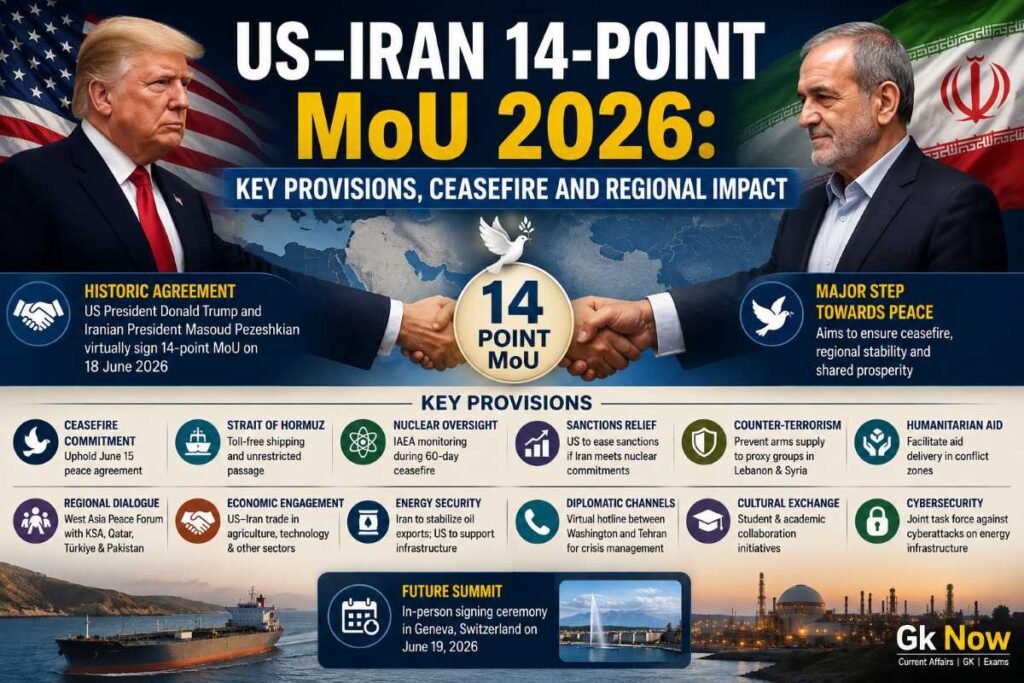
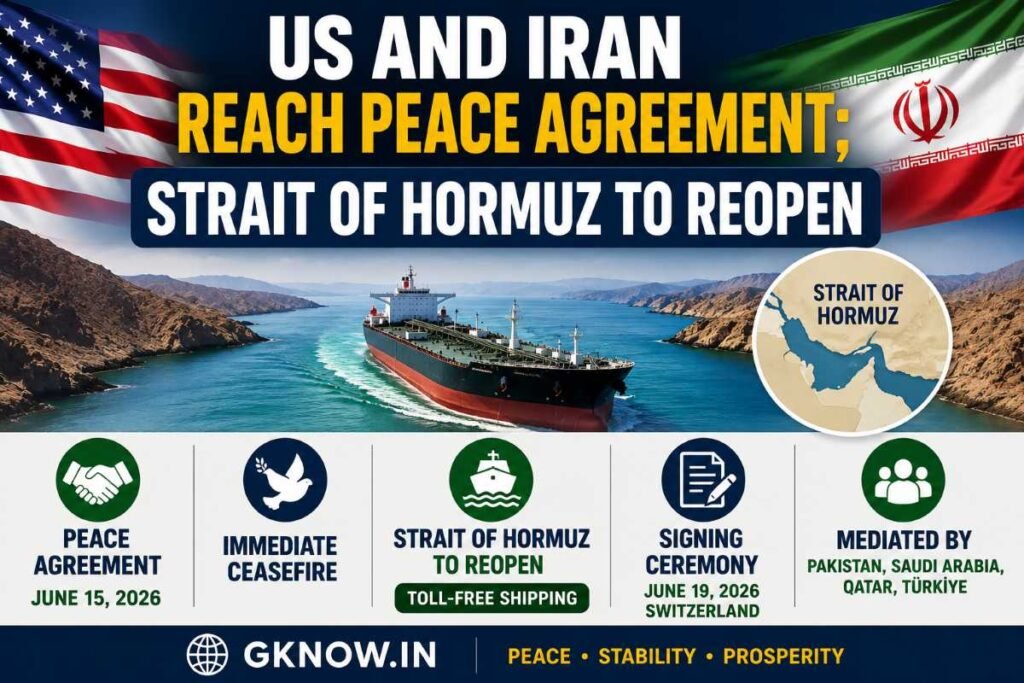
US–Iran Ceasefire 2026: Two-Week Truce, Strait of Hormuz Reopening

On 7 April 2026, US President Donald Trump announced a proposed two-week ceasefire between the US and Iran, conditional on the free movement of shipping through the Strait of Hormuz.

  • Trump stated that the US has largely achieved its military objectives and called for a “two-sided ceasefire.”
  • Iran, through Foreign Minister Abbas Araghchi, agreed to the ceasefire if attacks against Iran are stopped and confirmed safe passage in the Strait during this period.
  • Both sides signaled willingness for de-escalation and possible direct talks, with US Vice President JD Vance likely to lead negotiations.

📊 Global Impact

  • Oil prices dropped sharply (Brent crude fell below $100, down ~16%).
  • Stock markets surged, reflecting reduced geopolitical tensions.

Balendra Shah Sworn in as Nepal Prime Minister

Balendra Shah was sworn in as the Prime Minister of Nepal on 27 March 2026 at the President’s Office, Sheetal Niwas, Kathmandu. He is the leader of the Rastriya Swatantra Party (RSP) and was elected as the party’s parliamentary leader before assuming office. At 35 years, he became Nepal’s youngest elected Prime Minister and the first from the Madhes region to hold the post.

His party, RSP, achieved a landslide victory in the March 5, 2026 parliamentary elections, winning 182 out of 275 seats in the House of Representatives. The elections marked a major political shift, with voters favoring new leadership after Gen Z-led protests demanding change and anti-corruption reforms.

Balendra Shah, a rapper-turned-politician and former Kathmandu mayor, defeated former PM K. P. Sharma Oli in Jhapa-5 constituency, a traditional stronghold of the Communist Party of Nepal (UML).

Sweden Joins NATO as 32nd Member, Ending 200 Years of Military Neutrality

Sweden officially joined North Atlantic Treaty Organization (NATO) on 7 March 2024, becoming the 32nd member of the military alliance. This historic move ended Sweden’s over 200-year policy of military non-alignment, which had been in place since the Napoleonic Wars.

Sweden formally completed the process by depositing its instrument of accession in Washington, D.C., thereby gaining the protection of NATO’s collective defense clause, Article 5, which states that an attack on one member is considered an attack on all members.

Founded on 4 April 1949, NATO is a military alliance headquartered in Brussels, Belgium, aimed at ensuring collective security among its member states. With Sweden’s accession, the alliance now includes 32 countries.

Sweden brings advanced armed forces, strong defense industries, and strategic expertise in the Arctic and Baltic regions, strengthening NATO’s northern flank. However, the expansion has also increased tensions with Russia, which has opposed NATO’s enlargement.

Overall, Sweden’s membership marks a major shift in European security policy and reinforces NATO’s position as the largest military alliance in the world.

Strait of Hormuz: Location, Global Oil Trade & Iran’s 2026 Closure

The Strait of Hormuz is a narrow but vital waterway connecting the Persian Gulf to the Gulf of Oman and the Arabian Sea. It is in the news in 2026 because Iran has closed it following US–Israel strikes, triggering a global oil and gas price surge. Iran controls the strait through its geographic position, military presence, and the ability of its Revolutionary Guard Corps (IRGC) to block or disrupt shipping.


🌍 What is the Strait of Hormuz?

  • Location: Between Oman and Iran, linking the Persian Gulf with the Gulf of Oman and Arabian Sea.
  • Width: Narrowest point is about 33 km wide.
  • Importance: Around 20% of global oil trade passes through it daily, making it the world’s most critical energy chokepoint.
  • Users: Oil tankers from Saudi Arabia, UAE, Iraq, Kuwait, and Qatar rely on it to reach global markets.

📰 Why is it in the News (2026)?

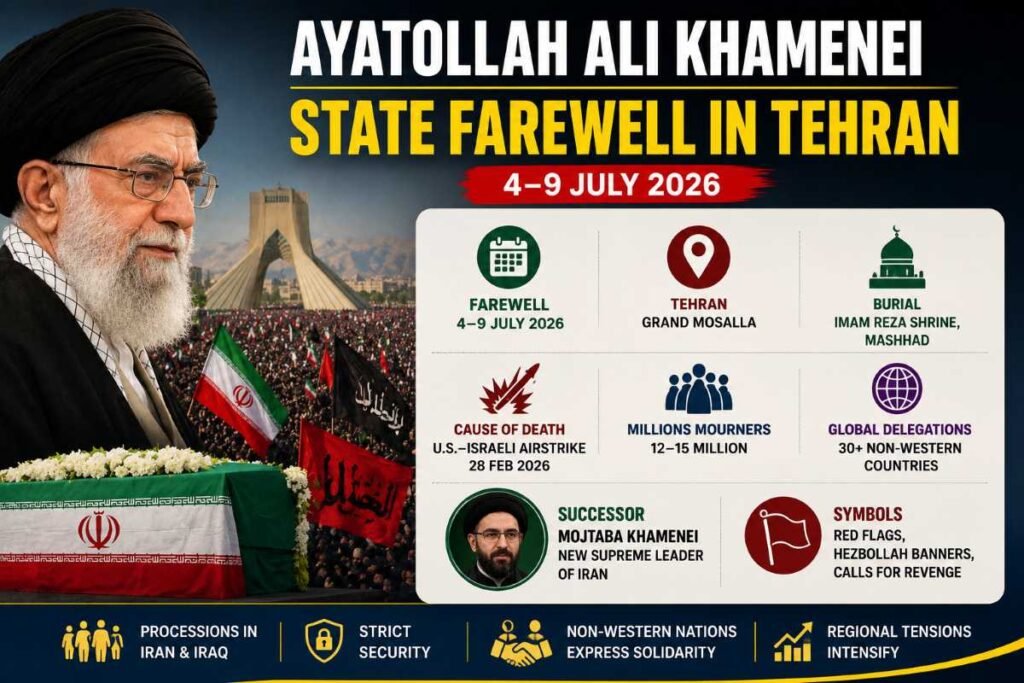
  • On 28 February 2026, US–Israel carried out strikes on Iran, killing Iran’s Supreme Leader Ali Khamenei.
  • In retaliation, Iran announced closure of the Strait of Hormuz on 2 March 2026.
  • Consequences:
    • Global oil and gas prices surged sharply.
    • Shipping disruptions: At least 11 merchant ships damaged, one tug sunk, and multiple casualties reported.
    • Regional spillover: Conflict spread into the Indian Ocean, forcing ships to reroute through longer, riskier paths.

🇮🇷 How Iran Controls the Strait

  • Geographic Advantage: Iran borders the entire northern side of the strait, giving it natural dominance.
  • Military Presence:
    • The IRGC Navy deploys fast attack boats, mines, and anti-ship missiles.
    • Over 150 tankers were anchored along the strait under Iranian orders in March 2026.
  • Tactics Used:
    • Closure announcements backed by military enforcement.
    • GPS jamming and electronic warfare to disrupt navigation.
    • Threat of mining and missile strikes deters commercial shipping.
  • Strategic Leverage: Iran uses control of the strait as a bargaining chip in geopolitical conflicts, knowing its closure impacts global energy markets.

Mojtaba Khamenei becomes new Supreme Leader of Iran

TEHRAN — Iran’s Assembly of Experts has officially named Mojtaba Khamenei as the country’s new Supreme Leader. The 56-year-old cleric succeeds his father, Ayatollah Ali Khamenei, who was killed on February 28, 2026, during joint United States and Israeli airstrikes targeting his compound in Tehran.

The appointment, announced shortly after midnight on March 9, marks the first time in the history of the Islamic Republic that power has passed from father to son.

  • Assembly Decision: The 88-member Assembly of Experts selected Mojtaba following a “decisive vote”.
  • Military Backing: The Islamic Revolutionary Guard Corps (IRGC) immediately pledged “complete obedience and self-sacrifice” to the new leader.
  • Immediate Action: Hours after the announcement, the IRGC launched a new wave of missiles toward Israel, with projectiles reportedly bearing the slogan “At Your Command, Sayyid Mojtaba”.

Nepal General Elections 2026: Rastriya Swatantra Party Led by Balen Shah Heads Toward Major Victory

Early results of Nepal’s general elections held on 5 March 2026 indicate a major political shift, with Balen Shah’s Rastriya Swatantra Party (RSP) heading toward a historic victory. According to the Election Commission of Nepal, the RSP has already won 18 seats and is leading in 99 of the 165 directly elected constituencies. If this trend continues, 35-year-old Balen Shah, a rapper-turned-politician and former Kathmandu mayor, could become Nepal’s youngest Prime Minister and lead the country’s first majority government in 27 years.

The elections were conducted for 275 parliamentary seats (165 First-Past-the-Post and 110 proportional representation), with a voter turnout of around 60%, the lowest since 1991. The polls were triggered by Gen Z protests in September 2025, which forced the resignation of Prime Minister K.P. Sharma Oli.

Traditional parties such as the Nepali Congress and CPN-UML are trailing significantly, each leading in only about 11 constituencies. Key campaign issues included anti-corruption measures, youth employment, and political reforms. The results are also being closely watched internationally, especially by India and China, due to Nepal’s strategic importance in the region.

India–Canada Relations Reset: PM Mark Carney’s Historic Visit to India

Canadian Prime Minister Mark Carney’s four-day visit to India (27 February–2 March 2026) marked a historic reset in India–Canada relations, ending nearly eight years without a bilateral PM-level visit. The trip signaled a clear move past years of diplomatic strain and laid the foundation for a more ambitious partnership.

The visit delivered major outcomes, led by a USD 2.6 billion, 10-year uranium supply agreement to support India’s civil nuclear energy program. Both sides agreed to fast-track CEPA negotiations, targeting completion by end-2026 and aiming to raise bilateral trade to USD 50 billion by 2030. A Strategic Energy Partnership was launched to boost cooperation in clean energy, including solar, wind, and hydrogen.

In education and innovation, 13 university-level agreements were signed in areas such as AI, healthcare, and agriculture, with Canadian universities planning hybrid campuses in India. On security, a new Defence Dialogue was established, along with a trilateral MoU with Australia on technology and innovation.

Diplomatically, the visit marked a shift from the 2023 Nijjar-related crisis, with Canadian officials indicating no current linkage of the Indian government to violent acts in Canada. For Canada, the visit also supports economic diversification beyond the U.S. and aligns with its Indo-Pacific strategy, alongside stops in Australia and Japan.

Both leaders framed the trip as transformative—PM Carney calling it the start of a “new, more ambitious partnership,” and PM Modi describing bilateral ties as having made a “light-year leap.”

Iran’s Supreme Leader Ayatollah Ali Khamenei killed in joint U.S.–Israel military operation

On March 1, 2026, Iranian state media confirmed that Supreme Leader Ayatollah Ali Khamenei was killed in a carried out on February 28, 2026. The strikes targeted his compound in central Tehran and other strategic locations across Iran.

The operation—called “Roaring Lion” by Israel and “Operation Epic Fury” by the U.S.—involved precision aerial bombardment. Along with Khamenei, several senior Iranian officials, including the IRGC chief and the Defence Minister, and members of his family were reportedly killed. After initial denials, Iran officially declared his death as “martyrdom” and announced 40 days of national mourning.

Global reactions were sharply divided. The U.S. and Israel publicly defended the strike as a justified blow against Iran’s leadership, while protests and mourning were reported among Shia communities in parts of India, including Lucknow, Kashmir, and Kargil.

Regionally, the situation escalated rapidly. Iran launched retaliatory missile and drone attacks on Israeli and U.S. targets across the Middle East. Global oil markets surged amid fears of disruption in the Strait of Hormuz. Politically, Iran formed an interim leadership council to govern until a new Supreme Leader is chosen by the Assembly of Experts.

Pakistan–Afghanistan Relations Escalate into Open War (2026)

The Pakistan–Afghanistan relationship has historically been tense, shaped by border disputes, militant activity, and shifting alliances. In 2026, these tensions escalated into what is now being described as an “open war” between the two neighbors.

Historical Background

  • Durand Line Dispute: The border drawn in 1893 by the British (Durand Line) has never been formally recognized by Afghanistan. This has been a persistent source of friction.
  • Taliban Factor: Pakistan was once accused of supporting the Taliban during the U.S. war in Afghanistan. Now, the Taliban-led Afghan government is accused by Pakistan of harboring militants who attack Pakistani territory.
  • Cross-border Militancy: Groups like the Tehrik-i-Taliban Pakistan (TTP) have used Afghan soil to launch attacks, worsening relations.

Current Escalation (2026)

  • Pakistan’s Declaration of “Open War”: On February 28, 2026, Pakistan officially declared open war against Taliban-ruled Afghanistan after cross-border attacks intensified.
  • Airstrikes: Pakistan launched Operation Ghazab lil-Haq, striking Kabul and provinces like Nangarhar and Kandahar in retaliation for Afghan attacks on Pakistani border posts.
  • Afghan Retaliation: Afghanistan responded with artillery and rocket fire across the Durand Line, claiming to have inflicted heavy losses on Pakistani forces.
  • Civilian Impact: Reports show destruction of homes and civilian casualties in Afghan provinces following Pakistani airstrikes.
  • International Reactions:
    • The U.S. expressed support for Pakistan’s “right to defend itself.”
    • Iran offered to mediate between the two countries.
    • Former U.S. President Donald Trump commented that Pakistan was “doing terrifically well” in the conflict.

India and Israel Sign 16 MoUs to Strengthen Strategic Partnership

During Prime Minister Narendra Modi’s state visit to Israel on 25–26 February 2026, India and Israel elevated their ties to a Special Strategic Partnership and signed 16 Memoranda of Understanding (MoUs) across diverse sectors. This marks a significant expansion of cooperation between the two nations.


Key Areas of Collaboration

SectorDetails of MoUs
Artificial Intelligence & CybersecurityJoint research, innovation hubs, and cybersecurity frameworks to protect digital infrastructure.
AgricultureTechnology transfer for water-efficient farming, precision agriculture, and desert farming techniques.
Fintech & Digital PaymentsUPI linkage pact enabling smoother cross-border transactions and financial cooperation.
Education & ResearchExchange programs, joint academic research, and scholarships to strengthen knowledge partnerships.
Defense & TechnologyAgreements on co-development and manufacturing of advanced weapons systems through technology transfer.
Trade & CommerceSteps toward finalizing a bilateral trade deal, enhancing market access and investment opportunities.
Maritime Heritage & InnovationCollaboration on maritime archaeology, heritage preservation, and innovation-driven projects.

Strategic Significance

  • Defense Cooperation: Joint development of weapons and technology transfer strengthens India’s defense modernization.
  • Economic Growth: The trade deal and fintech collaboration open new avenues for bilateral commerce.
  • Innovation Partnership: AI, cybersecurity, and education MoUs highlight a shared vision of technological leadership.
  • Agricultural Sustainability: Israel’s expertise in desert farming and water management will support India’s food security goals.

India and Israel’s latest agreements reflect a deepening partnership rooted in innovation, security, and shared prosperity. This builds on earlier milestones—Modi’s 2017 visit to Israel and Netanyahu’s 2018 visit to India—which laid the foundation for today’s expanded cooperation.

PM Narendra Modi’s State Visit to Israel (25–26 February 2026)

Prime Minister Narendra Modi’s state visit to Israel on 25–26 February 2026 marked a major step in strengthening the India–Israel Special Strategic Partnership, coming nine years after his historic 2017 visit. The trip took place amid a sensitive geopolitical situation in West Asia and focused on security, technology, and economic cooperation.

A key highlight was PM Modi’s historic address to the Knesset, making him the first Indian Prime Minister to do so. In his speech, he strongly condemned the October 7, 2023 terror attacks and reiterated India’s zero-tolerance policy against terrorism. He was later honored with the Speaker of the Knesset Medal, the highest parliamentary honor of Israel.

The visit gave major impetus to defence and high-technology collaboration, including discussions on integrating Israeli systems with India’s Sudarshan Chakra air defence shield and cooperation on the Iron Beam laser-based defence platform. Economically, both sides pushed forward negotiations on a proposed India–Israel Free Trade Agreement (FTA), with bilateral trade standing at USD 3.62 billion (FY 2024–25).

Several MoUs were exchanged, covering cybersecurity, artificial intelligence, quantum computing, investment, water management, and agriculture, including expansion of Centres of Excellence in India. On the regional front, discussions covered Israel’s proposed “Hexagon” alliance framework, India’s support for the Gaza Peace Initiative, and the strategic importance of the India–Middle East–Europe Economic Corridor (IMEC).

India AI Impact Summit 2026 Adopts Leaders’ Declaration

The India AI Impact Summit 2026, hosted at Bharat Mandapam in New Delhi, reached a landmark moment on February 20, 2026 with the formal adoption of the Leaders’ Declaration. The declaration outlines a collective vision for global AI governance, responsible innovation, and inclusive collaboration.

Key Highlights

  • The Leaders’ Declaration affirms commitments to:
    • Strengthening multilateral cooperation on AI.
    • Promoting responsible and ethical AI development.
    • Ensuring inclusive access to AI benefits, especially for developing nations.
    • Advancing global competitiveness and shared prosperity through AI.
  • The declaration was adopted during high-level GPAI (Global Partnership on Artificial Intelligence) Council meetings, where member countries reviewed progress and set priorities for the future.
  • Prime Minister Narendra Modi, who inaugurated the summit earlier, emphasized India’s vision of AI as a tool for democratization, empowerment, and inclusion, particularly for the Global South.
  • The summit witnessed participation from over 500 AI leaders, including 100+ CEOs and founders, 150 academicians and researchers, and nearly 400 chief technologists from across the world.

Global Context

The India AI Impact Summit 2026 is anchored in the principles of People, Planet, and Progress, reflecting India’s approach to AI cooperation. Leaders from multiple countries, including Brazil, France, Finland, Bhutan, and Estonia, joined discussions on shaping the future of AI for humanity.

Bangladesh Nationalist Party Secures Victory in 2026 General Election

The Bangladesh Nationalist Party (BNP), led by Tarique Rahman, has secured a decisive victory in the country’s 2026 general elections, marking a historic political shift after nearly two decades out of power.

Key Highlights

  • Majority Secured: BNP won 200+ seats in the 300-member Jatiya Sangsad (parliament), giving it a clear majority to form the government independently.
  • Leadership: Tarique Rahman, son of former Prime Minister Khaleda Zia, returned to Bangladesh in December 2025 after 17 years of self-exile in London. He is expected to be sworn in as Prime Minister.
  • Historic Context: This was the first election since the 2024 student-led uprising that ousted Sheikh Hasina. The BNP’s victory represents a major realignment in Bangladeshi politics.
  • Women’s Representation: Out of 78 women candidates, 7 won seats, with 6 belonging to BNP, highlighting the party’s growing inclusivity.
  • International Reactions: Leaders from neighboring countries, including India’s Prime Minister Narendra Modi, congratulated Tarique Rahman, signaling regional interest in Bangladesh’s new political chapter.

Japan Prime Minister Sanae Takaichi’s Election Victory

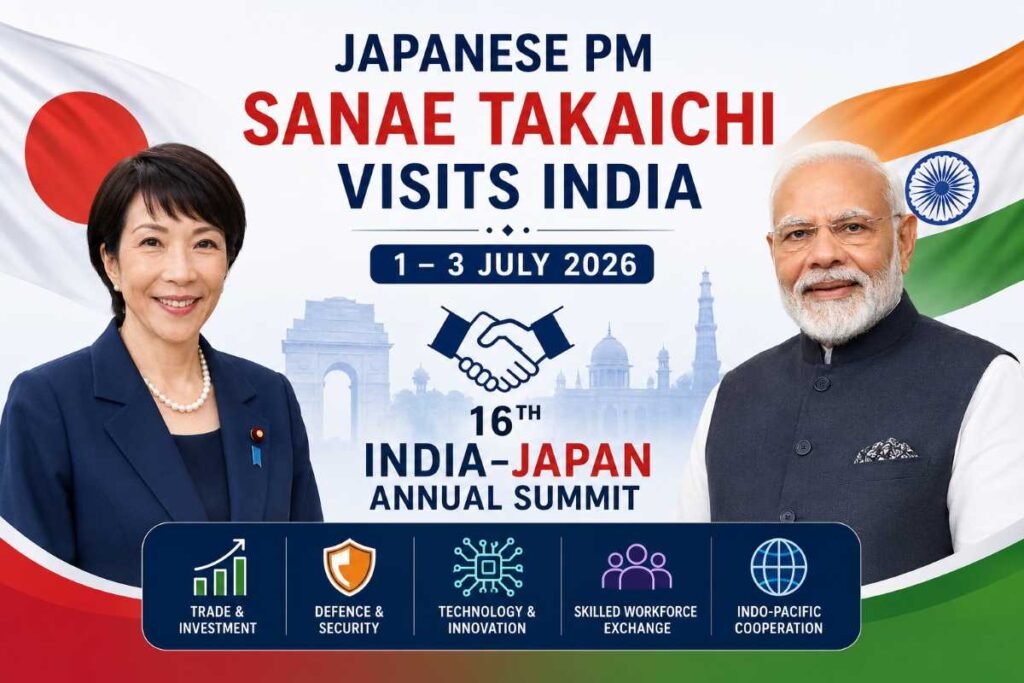
Sanae Takaichi, Japan’s first female prime minister, led the Liberal Democratic Party (LDP) and its coalition partners to a landslide victory in the snap elections held on February 8, 2026.

Her coalition secured over two-thirds of the seats in the House of Representatives, a supermajority not achieved since World War II.

This victory cements her position as a powerful leader, often compared to Margaret Thatcher and nicknamed Japan’s “Iron Lady.” The supermajority gives her government the ability to push through major reforms without significant opposition.

World Economic Forum (WEF) in Davos : January 19–23, 2026

The World Economic Forum (WEF) in Davos, Switzerland is a global gathering where leaders from politics, business, academia, and civil society meet annually to discuss pressing global challenges and shape future solutions.

🌍 Overview

  • Location: Davos, Switzerland, in the Swiss Alps.
  • Event: Annual Meeting of the World Economic Forum.
  • Participants: Around 2,500–3,000 leaders from over 130 countries.
  • Theme (2026): “A Spirit of Dialogue” – emphasizing collaboration, trust, and innovation.
  • Dates: January 19–23, 2026.

🎯 Purpose

  • Global Cooperation: Provides a neutral platform for dialogue on geopolitics, trade, technology, and sustainability.
  • Problem-Solving: Tackles issues like climate change, economic inequality, technological disruption, and global security.
  • Networking: Encourages partnerships between governments, businesses, and NGOs.
  • Agenda Setting: Influences international policy directions and corporate strategies.

👥 Key Attendees

  • Political Leaders: Presidents, prime ministers, and ministers from major economies.
  • Business Executives: CEOs of multinational corporations.
  • Civil Society: NGOs, academics, and cultural leaders.
  • Notable 2026 Speakers: French President Emmanuel Macron, EU Commission President Ursula von der Leyen, U.S. Treasury Secretary Scott Bessent, and Chinese Vice Premier He Lifeng.

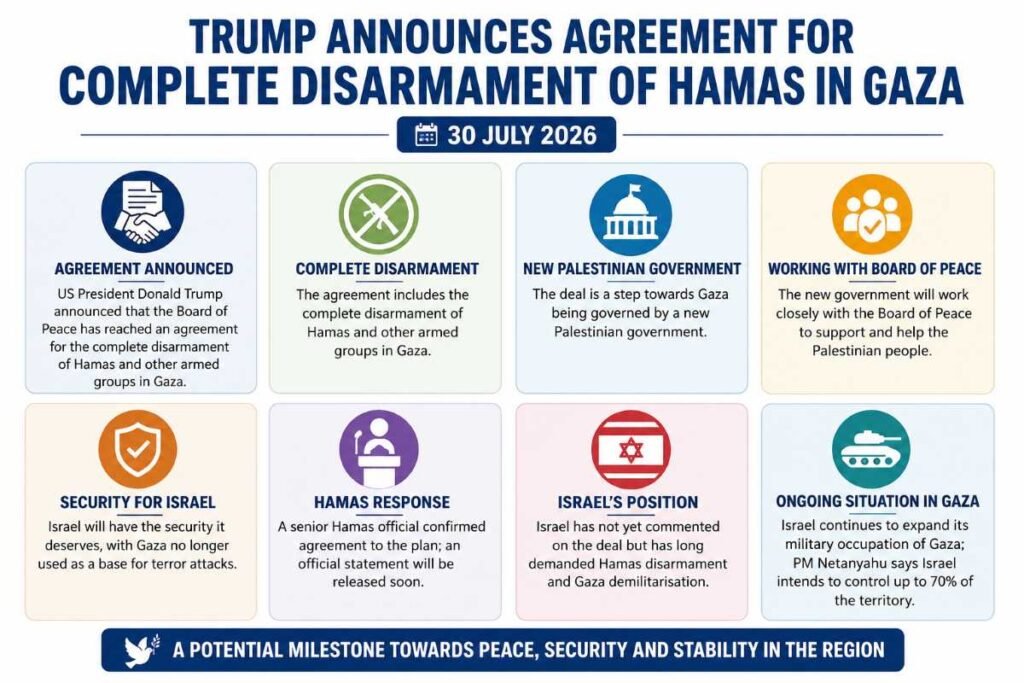
Trump Announces “Board of Peace” for Gaza Plan’s Second Phase

Donald Trump has announced the creation of a new international “Board of Peace” as part of Phase Two of his Gaza Peace Plan, shifting focus from ceasefire arrangements to demilitarisation, technocratic governance, and reconstruction.

🌍 Background of the Gaza Peace Plan

  • Origin: The Gaza Peace Plan was first unveiled in September 2025 as a 20-point roadmap aimed at ending the prolonged conflict in Gaza.
  • Phase One: Focused on achieving a ceasefire and stabilizing immediate hostilities.
  • Phase Two: Moves towards long-term governance, reconstruction, and demilitarisation, with the newly formed Board of Peace at its core.

🏛️ The Board of Peace

  • Announcement: On 15 January 2026, Trump declared the formation of the Board of Peace, calling it “the greatest and most prestigious board ever assembled.”
  • Leadership: Trump himself is expected to serve as Chairman of the Board.
  • Membership: Countries including Egypt, Turkey, Qatar, and potentially India have been invited to join. India has received an official invitation but has yet to respond.
  • Mandate: The Board will supervise a Palestinian technocratic committee tasked with managing day-to-day governance in Gaza, ensuring neutrality and efficiency.

⚖️ Objectives of Phase Two

  • Demilitarisation: Secure agreements with Hamas to relinquish military control.
  • Governance: Support a technocratic Palestinian government free from factional politics.
  • Reconstruction: Oversee rebuilding of infrastructure, civil institutions, and public services.
  • International Oversight: Provide legitimacy and global backing through participation of multiple nations.

Scroll to Top