National


National Current Affairs of India, Important for competitive Exams.

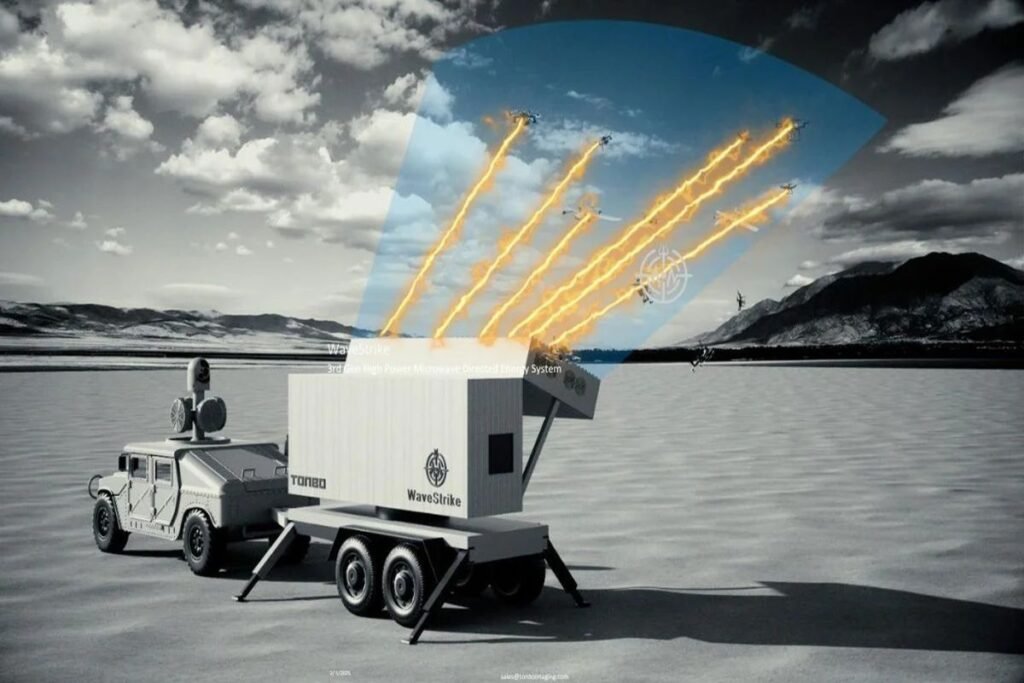
BEL to Supply High Power Microwave Systems to Indian Navy for Neutralizing Drone Threats

The Indian Navy has awarded a major contract under the ADITI 3.0 framework to Bengaluru-based defence technology firm Tonbo Imaging for the integration and commissioning of High Power Microwave (HPM) systems on naval platforms. These directed-energy weapons will help India counter drone swarms and disable adversary electronics, marking a significant step in indigenous defence modernization.

What is ADITI 3.0?

  • ADITI (Advanced Defence Technology Incubation) is a Government of India initiative under the Ministry of Defence.
  • It supports iDEX (Innovations for Defence Excellence) and the Defence Innovation Organisation (DIO) to incubate and validate advanced defence technologies before induction.

About High Power Microwave (HPM) Systems

  • Directed-energy weapons that use concentrated electromagnetic pulses instead of ammunition.
  • Can disable or degrade enemy electronics, sensors, and unmanned systems without kinetic damage.
  • Considered one of the most effective counters to drone swarms and asymmetric threats in maritime warfare.

Role of Tonbo Imaging

  • Selected for its indigenous expertise in vacuum tube technologies, critical for generating high peak power in HPM systems.
  • Will handle system integration, commissioning, and production supply after validation.
  • Already has a portfolio of advanced defence electronics, electro-optics, and missile seeker technologies.

PRAGATI 2026: India Hosts 12-Nation Military Exercise in Meghalaya

PRAGATI 2026 is a major multilateral military exercise hosted by India at Umroi Military Station, Meghalaya, from 18–31 May 2026, with participation from 12 friendly nations. It focuses on counter-terrorism operations in semi-mountainous and jungle terrain, strengthening defence cooperation in the Indian Ocean Region.

📌 Key Details

  • Name: PRAGATI (Partnership of Regional Armies for Growth and Transformation in the Indian Ocean Region).
  • Year: 2026.
  • Location: Umroi Military Station, Meghalaya, India.
  • Dates: 18–31 May 2026.
  • Participants: 12 nations — Bhutan, Cambodia, Indonesia, Laos, Malaysia, Maldives, Myanmar, Nepal, Philippines, Seychelles, Sri Lanka, and Vietnam.
  • Objective: Enhance regional cooperation, share best practices, and strengthen military-to-military ties.

India Declared Completely Free from Naxalism

Union Home Minister Amit Shah announced on 19 May 2026 that India has become completely free from Naxalism (Left-Wing Extremism), achieving the government’s March 31, 2026 target. The declaration was made in Bastar, Chhattisgarh, marking the end of a 55-year Maoist insurgency that began in 1971.

The success was credited to joint anti-Naxal operations such as Operation Black Forest and Operation Prahar conducted by CAPF, CRPF CoBRA commandos, and local security forces.

To promote development in tribal areas, 70 former security camps in Bastar will be converted into “Sewa Deras” for delivery of government welfare schemes, banking, healthcare, and education services. The government has also launched a ₹20 crore rehabilitation plan for surrendered Naxal cadres through education and skill development.

CBSE Makes Three-Language Study Mandatory for Classes 9–10 From July 1

The Central Board of Secondary Education (CBSE) has announced that from July 1, 2026, students of Classes 9 and 10 will be required to study three languages. Under the revised policy, at least two of these must be Indian languages, while the third may be a foreign language.

The third language (R3) will be assessed internally by schools and will not form part of the Class 10 Board examination. CBSE has directed schools to use Class 6-level textbooks for R3 temporarily, supplemented with regional literary material, until dedicated secondary-level books are introduced.

This move aligns with the National Education Policy (NEP) 2020 and aims to strengthen multilingual learning while reducing exam pressure. Schools have been advised to adopt flexible measures, including resource sharing and virtual teaching, to address possible teacher shortages.

Possible Combination for a Hindi Speaking States Student:

  • R1: Hindi (Indian language, compulsory)
  • R2: English (global language, compulsory in CBSE schools)
  • R3: Sanskrit or Urdu (Indian language, chosen by student/school)

Cabinet Approves MSP for Kharif Crops for Marketing Season 2026-27

The Cabinet Committee on Economic Affairs (CCEA), chaired by Prime Minister Narendra Modi, approved an increase in the Minimum Support Prices (MSP) for 14 Kharif crops for the 2026-27 marketing season on 13 May 2026.

Important MSP Rates for 2026-27

  • Paddy (Common): ₹2441 per quintal
  • Bajra: ₹2900 per quintal
  • Maize: ₹2410 per quintal
  • Tur/Arhar: ₹8450 per quintal
  • Moong: ₹8780 per quintal
  • Groundnut: ₹7517 per quintal
  • Sunflower Seed: ₹8343 per quintal
  • Cotton (Medium Staple): ₹8267 per quintal

NEET-UG 2026 Cancelled After Paper Leak; CBI Probe Ordered

The National Testing Agency (NTA) has officially cancelled the NEET-UG 2026 examination conducted on 3 May 2026 after confirmation of a paper leak and malpractice. The decision, announced on 10 May 2026, has affected more than 22 lakh students who appeared for the exam across 5,400 centres in 551 Indian cities and 14 international locations.

The cancellation was approved following inputs from law enforcement and central agencies confirming irregularities in the examination process. The Government of India has ordered a CBI probe into the paper leak case.

Investigations by the Rajasthan SOG found that question papers had been circulated before the exam, and the leaked sets matched the actual NEET paper. Two alleged masterminds, Manish Yadav and Rakesh Mandavriya, were arrested in connection with the case.

The NTA announced that a re-examination will be conducted soon, and students will not need to register again or pay any additional fee. The agency also confirmed that the exam fees will be refunded.

South Coast Railway Becomes India’s 18th Railway Zone with HQ at Visakhapatnam

On 4 May 2026, the Ministry of Railways issued a Gazette notification formally constituting the South Coast Railway (SCoR) Zone with headquarters at Visakhapatnam. It will become India’s 18th railway zone and will start operations from 1 June 2026, fulfilling a statutory commitment under the Andhra Pradesh Reorganisation Act, 2014.

Divisions under South Coast Railway (SCoR):

  • Guntakal Division
  • Guntur Division
  • Vijayawada Division
  • Newly created Visakhapatnam Division (carved out of Waltair Division)

🚆 List of All Railway Zones in India (as of May 2026)

S. No.Railway ZoneHeadquartersYear of Formation
1Northern Railway (NR)New Delhi1952
2North Eastern Railway (NER)Gorakhpur1952
3North Central Railway (NCR)Prayagraj2003
4North Western Railway (NWR)Jaipur2002
5North Frontier Railway (NFR)Guwahati1958
6Eastern Railway (ER)Kolkata1952
7East Central Railway (ECR)Hajipur2002
8East Coast Railway (ECoR)Bhubaneswar2003
9South Eastern Railway (SER)Kolkata1955
10South East Central Railway (SECR)Bilaspur2003
11Southern Railway (SR)Chennai1951
12South Central Railway (SCR)Secunderabad1966
13South Western Railway (SWR)Hubballi2003
14Western Railway (WR)Mumbai1951
15West Central Railway (WCR)Jabalpur2002
16Central Railway (CR)Mumbai1951
17Konkan Railway (KRCL – Corporation)Navi Mumbai1990
18South Coast Railway (SCoR)Visakhapatnam2026

Sikkim Becomes India’s First Paperless Judiciary State (2026)

Sikkim has officially become India’s first state with a fully paperless judiciary, marking a historic milestone in judicial reforms. Chief Justice of India Surya Kant announced this on May 1, 2026, during the National Conclave on Technology and Judicial Education in Gangtok.


📌 Key Highlights of the Declaration

  • Date & Occasion: Declared on May 1, 2026, at the National Conclave on Technology and Judicial Education in Gangtok.
  • By: Chief Justice of India Surya Kant.
  • Significance: Sikkim becomes the first state judiciary in India to go fully paperless.
  • Context: Announcement coincided with Sikkim’s 50th Statehood anniversary, adding symbolic importance.

⚖️ What “Paperless Judiciary” Means
  • E-filing of cases: All petitions and documents are filed digitally.
  • Virtual hearings: Litigants and lawyers can attend proceedings online.
  • Digital case tracking: Real-time updates on case status.
  • Automated workflows: Court processes streamlined through technology.
  • Digitised archives: Complete migration from physical records to electronic storage.

West Bengal Assembly Elections 2026 Record 92.47% Voter Turnout – Highest Since Independence

West Bengal recorded a historic voter turnout of 92.47% in the two-phase Assembly elections (April 2026), the highest since Independence.

  • Phase 1 (23 April): 93.19% turnout
  • Phase 2 (30 April): 91.66% turnout

The state has a voter base of 6.81 crore, with women voters (92.28%) slightly outnumbering men (91.07%) in participation.

This surpasses the previous state record of 84.72% in 2011 Assembly elections. At the national level, Tripura holds the highest turnout record (93.61% in 2013).

Chief Election Commissioner Gyanesh Kumar praised the high participation. The Election Commission also noted record turnout in Assam and Puducherry.

🗓️ Vote counting for West Bengal, Kerala, Tamil Nadu, Assam, and Puducherry will be held on 4 May 2026, along with by-elections in several states.

Women and Men in India 2025 Report: Key Highlights

The Ministry of Statistics and Programme Implementation (MoSPI) released the 27th edition of “Women and Men in India 2025” on 29 April 2026 at the Data for Development Summit in Bhubaneswar.

The report provides gender-based data on key areas such as population, education, health, employment, and decision-making, using data from multiple government sources.

Key Highlights:

  • 👶 Sex Ratio at Birth improved from 904 (2017–19) to 917 (2021–23), showing better female survival.
  • 🏥 Infant Mortality Rate declined for both boys and girls between 2008–2023.
  • 🎓 Education: Gender parity achieved from primary to higher secondary levels.
    • Higher education enrolment increased, especially for females.
  • 👩‍🌾 Employment: Female labour force participation rose significantly, especially in rural areas
    • Rural women: 37.5% → 45.9% (2022–2025)
  • 🧑‍💼 Leadership Roles: Women in managerial positions increased by 102.54% (2017–2025), higher than men’s growth.
  • 📑 The report includes 50 key indicators with metadata to aid policymakers and researchers.
  • 🌍 Provides state-wise and rural-urban analysis to track gender development trends.

Ganga Expressway: PM Modi Inaugurates 594 km Meerut–Prayagraj Highway

The Ganga Expressway is one of India’s largest greenfield expressway projects, developed in Uttar Pradesh to enhance high-speed connectivity and economic growth. Spanning approximately 594 km, it connects Meerut in western UP to Prayagraj in eastern UP, passing through 12 districts and significantly improving regional transport infrastructure.

The expressway was inaugurated by Prime Minister Narendra Modi on 29 April 2026 in Hardoi district. It has been constructed at an estimated cost of around ₹36,000+ crore and is designed as a 6-lane access-controlled highway (expandable to 8 lanes).

🔑 Key Features:

  • Length: ~594 km (longest expressway in Uttar Pradesh)
  • Route: Meerut → Prayagraj
  • Travel Time: Reduced from 10–12 hours to about 6–7 hours
  • Special Feature: Includes an airstrip for emergency aircraft landing
  • Industrial Corridor: Planned development of manufacturing and logistics hubs along the route

Indian Railways Allows Persons with Disabilities (PwDs) to Travel in Divyangjan Coaches

On 20 April 2026, Indian Railways announced that Persons with Disabilities (PwDs) holding a valid UDID (Unique Disability ID) card can now travel in unreserved coaches reserved for Divyangjan in Mail and Express trains. PwDs with a valid UDID or concession eligibility will be treated as bona fide passengers and allowed in designated compartments such as SLRD and LSLRD coaches, provided they have valid travel authority. Strict action under the Railway Act, 1989 will be taken against unauthorized passengers to ensure facilities reaches genuine beneficiaries. All Zonal Railways have been instructed to ensure proper implementation.

The Divyangjan Card (EPICS) enables PwDs to avail travel concessions and can be obtained through official portals based on a valid disability certificate.

India–Uzbekistan Joint Military Exercise “Dustlik 2026″

The 7th edition of the India–Uzbekistan joint military exercise “Dustlik” began on 15 April 2026 at Gurumsaray Field Training Area, Namangan in Uzbekistan. The exercise will continue until 25 April 2026.

🔑 Objective:
  • To enhance operational synergy between the Indian Army and the Uzbekistan Army.
  • Focus on joint special operations, especially targeting the neutralisation of unlawful armed groups.
🤝 Significance:
  • Strengthens defence cooperation, mutual trust, and camaraderie between India and Uzbekistan.
  • Reflects a shared commitment to global peace and security.

Delhi–Dehradun Economic Corridor Inaugurated

The Delhi–Dehradun Economic Corridor was inaugurated on 14 April 2026 by Narendra Modi. Built at a cost of ₹11,868 crore, the expressway reduces travel time between Delhi and Dehradun from 6 hours to just 2.5 hours.

🔑 Key Features:
  • Length: ~212–213 km
  • Type: Six-lane, access-controlled expressway
  • Wildlife Corridor: Elevated sections to protect biodiversity near forest areas

Census 2027: India’s First Digital Census from 1 April 2026

India will begin its first fully digital population census with Phase I starting on April 1, 2026. Announced by Mritunjay Kumar Narayan, this will be India’s 16th Census and the largest enumeration exercise globally, involving over 3 million officials.

Key Highlights:

  • Digital Census: Data will be collected through mobile apps for the first time.
  • Self-Enumeration: Citizens can fill their details online via a secure portal (in 16 languages) and generate a Self-Enumeration ID (SE ID) for verification.
  • Legal Framework: Conducted under the Census Act, 1948 and Census Rules, 1990.

Timeline:

  • Reference Date: March 1, 2027
    (October 1, 2026 for snow-bound regions like Ladakh, J&K, Himachal Pradesh, Uttarakhand)

Two Phases:

  1. Phase I (April–September 2026):
    House listing, housing conditions, amenities, and assets
  2. Phase II (February 2027):
    Population data including demographic, socio-economic, education, and caste enumeration

Scale & Infrastructure:

  • Budget: ₹11,718 crore
  • Coverage: 36 States/UTs, ~6.4 lakh villages, 5,000+ towns
  • Digital tools: Mobile apps, self-enumeration portal, real-time monitoring dashboards
  • Extensive training system for 31 lakh enumerators and supervisors

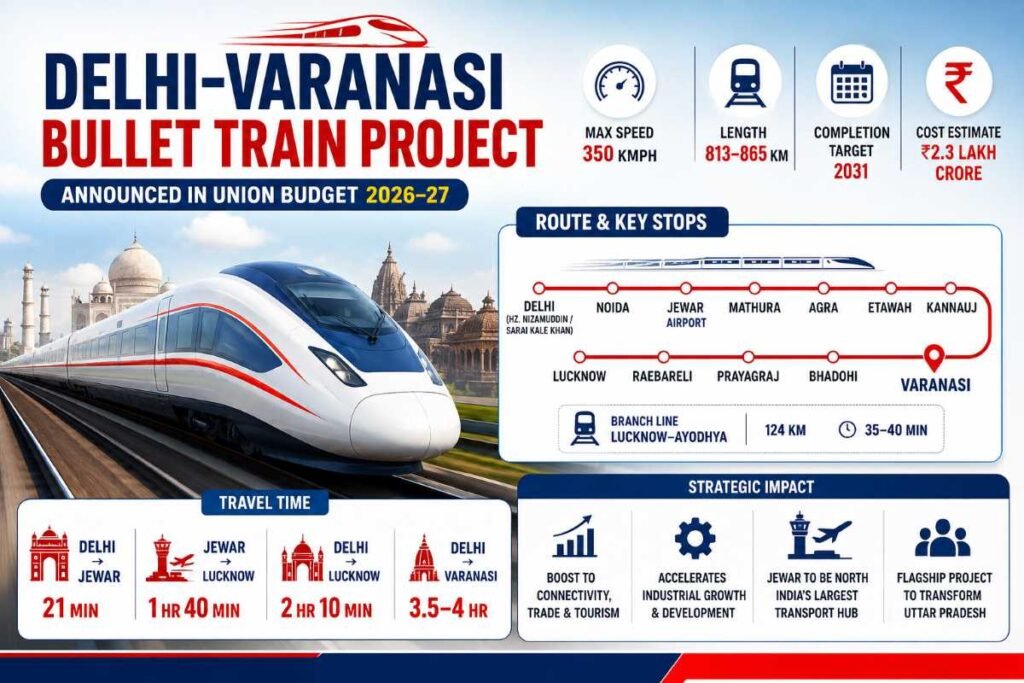
Noida International Airport Inaugurated

Narendra Modi inaugurated Phase I of the Noida International Airport at Jewar, Gautam Buddha Nagar on 28 March 2026. Built at an estimated cost of ₹11,200 crore under the PPP model, the airport is set to emerge as a major international gateway for the NCR, with an initial capacity of 12 million passengers annually and future expansion up to 70 million.


📊 Key Highlights

  • The inauguration ceremony took place around 11:30 AM at Jewar, Uttar Pradesh.
  • The Prime Minister conducted a walkthrough of the terminal and addressed a public gathering.
  • The airport has been developed as a modern aviation hub with advanced infrastructure.

🏗️ Project Features

  • Phase I capacity: 12 million passengers per annum, scalable to 70 million.
  • Cargo handling: Initially 2.5 lakh metric tonnes, expandable to 18 lakh metric tonnes.
  • Developed as a multi-modal transport hub integrating road, rail, metro, and regional transit.

PM Modi Announces 7 Empowered Groups to Address West Asia Conflict Impact

On 24 March 2025, Prime Minister Narendra Modi announced the formation of seven empowered groups to tackle the potential long-term impacts of the West Asia conflict on India. The move aims to address challenges related to fuel, fertilisers, gas supply, supply chains, and inflation.

Speaking in the Rajya Sabha, the Prime Minister emphasized a “Team India” approach, urging both the Centre and states to work together to manage the crisis effectively. He highlighted the serious side effects of the conflict, particularly on the availability of essential commodities such as crude oil, gas, and fertilisers.

Key Focus Areas

  • Ensuring stable supply of energy resources like crude oil and gas
  • Managing fertiliser availability for agriculture
  • Strengthening supply chains
  • Controlling inflation and price rise

Government’s Strategy

PM Modi reiterated that dialogue and diplomacy are the only solutions for restoring peace in West Asia. He stated that India is in constant contact with major global players, including Iran, Israel, and the United States, to promote de-escalation.

The government is also working to diversify energy sources and ensure uninterrupted supply to protect citizens from the crisis. At the same time, states have been directed to prevent black marketing and hoarding of essential goods.

PM Narendra Modi Becomes Longest-Serving Head of Elected Government in India

On 22 March 2026, Prime Minister Narendra Modi achieved a historic milestone by becoming the longest-serving head of an elected government in India. He completed 8,931 days in office, surpassing Pawan Kumar Chamling, the former Chief Minister of Sikkim, who held the record with 8,930 days.

This achievement combines PM Modi’s tenure as Chief Minister of Gujarat (2001–2014) and as Prime Minister of India (since 2014), marking his entry into the 25th year of continuous leadership. The milestone reflects his long-standing political career and sustained public mandate.

PM Modi was sworn in as the 14th Prime Minister of India on 26 May 2014, becoming the first non-Congress leader to secure a full majority. He later became the first non-Congress PM to complete two full terms and return for a third consecutive term.

Strait of Hormuz Crisis: Nanda Devi LPG Tanker Reaches Gujarat

The Indian-flagged LPG tanker Nanda Devi safely reached Kandla and Vadinar ports in Gujarat on 17 March 2026, carrying around 46,500 metric tons of LPG from Qatar via the Strait of Hormuz, despite ongoing tensions in West Asia.

This marks the second successful LPG shipment (after Shivalik) within a week, highlighting India’s ability to maintain energy supplies during geopolitical uncertainty.


🔑 Key Points

  • Safe navigation through the conflict-prone Strait of Hormuz
  • Strengthens India’s energy security
  • Helps ease domestic LPG shortages
  • Reflects effective diplomacy and logistics coordination

🌍 Significance

  • The Strait of Hormuz is a vital global energy route, handling about 20% of oil and gas trade
  • Ensures continuous LPG supply for households in India
  • Demonstrates India’s resilience in managing energy imports during crises

LPG Cylinder Shortage in India 2026: Causes, Impact & Government Response

India is facing a severe shortage of domestic LPG cylinders in March 2026, with long queues, delivery delays of up to 25 days, and rising black-market activity. The crisis is linked to disruptions in energy shipments through the Strait of Hormuz following the Iran–US–Israel conflict, causing supply constraints and price hikes.


🔑 Key Facts About the LPG Shortage

  • Consumption: India consumed 3.08 crore metric tonnes of LPG between April 2025 and February 2026.
  • Imports: 1.87 crore metric tonnes imported, mostly via the Strait of Hormuz.
  • Domestic Production: 1.06 crore metric tonnes produced locally.
  • Distribution: LPG supplied through 25,566 distribution centres nationwide.

📍 Current Situation (March 2026)

  • Delays: Cylinder deliveries delayed by 15–25 days.
  • Queues: Long lines outside gas agencies; panic buying worsened shortages.
  • Restaurants & households: Many eateries forced to shut or switch to firewood; households struggling for daily cooking needs.

💰 Price Hikes

  • Domestic LPG (14.2 kg): Increased by ₹60 per cylinder on March 7, 2026.
  • Commercial LPG (19 kg): Increased by ₹144 per cylinder.
  • In states like Bihar, domestic LPG prices crossed ₹1,002 per cylinder.

⚠️ Causes of the Shortage

  1. Geopolitical Conflict: Iran’s closure of the Strait of Hormuz disrupted global energy shipments.
  2. Supply Chain Disruption: Tankers delayed or rerouted, reducing India’s import capacity.
  3. Panic Buying: Consumers rushed to book cylinders, overwhelming distribution systems.
  4. Rising Global Prices: Spot cargo costs surged to $800–850 per tonne, increasing losses for Indian Oil Marketing Companies (OMCs).

🏛 Government Response

  • Essential Commodities Act invoked to prioritize household LPG supply.
  • 25-day mandatory inter-booking period introduced to prevent hoarding.
  • States and UTs directed to monitor supplies daily and act against black-marketing.
  • PM Modi urged citizens not to panic, assuring that supply stabilization measures are underway.

Zojila Pass Remains Open in Winter 2025–26 for the First Time, Ensuring Connectivity to Ladakh

In a historic achievement, Zojila Pass remained operational during the winter of 2025–26 for the first time, ensuring uninterrupted connectivity between Ladakh and the rest of India. The development allowed the continuous supply of essential goods to Kargil and Ladakh, even during the holy month of Ramadan.

The achievement was made possible by the efforts of the Border Roads Organisation (BRO), which used advanced snow-clearance equipment, avalanche monitoring systems, and improved operational planning to keep the pass open despite heavy snowfall.

Located at an altitude of about 11,649 feet, Zojila Pass is a crucial route on the Srinagar–Kargil–Leh highway, with significant strategic importance for civilian supplies, tourism, and military logistics. The milestone also highlights progress toward year-round connectivity in the region, which will be further strengthened by the upcoming Zojila Tunnel.

Exercise Lamitiye 2026: 11th India–Seychelles Joint Military Exercise

Lamitiye 2026 is the 11th edition of the joint military exercise between India and Seychelles, conducted from 9–20 March 2026 at the Seychelles Defence Academy. The exercise involves tri-service participation from the Indian Armed Forces along with the Seychelles Defence Forces.

The exercise aims to enhance interoperability, peacekeeping capabilities, and defence cooperation between the two countries. The term “Lamitiye”, meaning “Friendship” in Creole, reflects the strong bilateral ties between India and Seychelles.

Lamitiye has been conducted biennially since 2001, and the 2026 edition marks the first full tri-service participation from India, including the Assam Regiment, INS Trikand, and a Lockheed Martin C-130J Super Hercules of the Indian Air Force.

The exercise focuses on sub-conventional operations, peacekeeping missions, humanitarian assistance, and joint training, strengthening security cooperation in the Indian Ocean Region (IOR).

UPSC Civil Services Examination 2025 Final Result Declared: Anuj Agnihotri Secures AIR 1

The Union Public Service Commission (UPSC) declared the final results of the Civil Services Examination (CSE) 2025 on 6 March 2026, recommending 958 candidates for appointment to services such as the IAS, IFS, and IPS.

Top Rank Holders

  • Anuj Agnihotri secured AIR 1. He is an MBBS graduate from AIIMS Jodhpur and chose Medical Science as his optional subject.
  • Rajeshwari Suve M secured AIR 2 with Sociology as optional; she is a B.E. graduate from Anna University, Chennai.
  • Akansh Dhull secured AIR 3, a B.Com graduate from the University of Delhi, with Commerce and Accountancy as optional.
  • Raghav Jhunjhunwala secured AIR 4, with Economics as optional.
  • Ishan Bhatnagar secured AIR 5, a B.A. LL.B. (Hons.) graduate from National Law University, Delhi, with Sociology as optional.

Among the top five candidates, four are men and one is a woman.

Top 25 Candidates
The top 25 list includes 11 women and 14 men. Their academic backgrounds cover fields such as engineering, humanities, science, commerce, law, medical science, and mass media. Many candidates studied at leading institutions like IITs, AIIMS, National Law Universities, Delhi Technological University, Anna University, the University of Delhi, and the University of Mumbai.
Optional subjects among the top candidates included Anthropology, Commerce & Accountancy, Chemistry, Economics, Electrical Engineering, History, Mathematics, Medical Science, Philosophy, Political Science & International Relations, Public Administration, and Sociology.

Examination Statistics

  • Preliminary Exam: 25 May 2025
  • Applications received: 9,37,876
  • Candidates appeared: 5,76,793
  • Qualified for Mains: 14,161
  • Qualified for Interview (Personality Test): 2,736
  • Final recommended candidates: 958 (659 men and 299 women)

India–US Joint Special Forces Exercise Vajra Prahar (16th Edition)

The 16th edition of the India–US Joint Special Forces Exercise “Vajra Prahar” held from 24 February to 16 March at the Special Forces Training School, Bakloh, Himachal Pradesh.

The bilateral exercise aims to enhance interoperability, cooperation, and joint operational capabilities between the Special Forces of India and the United States. The Indian Army will be represented by 45 Special Forces personnel, while the United States will field 12 soldiers from the Green Berets. The previous edition of the exercise was conducted in November 2024 at the Orchard Combat Training Centre, Idaho (USA).

The exercise focuses on the exchange of special operations tactics, techniques, and procedures, with training specifically designed for Special Forces operations in mountainous terrain. Key activities include intensive physical conditioning, joint mission planning, and tactical drills under simulated operational conditions.

Overall, Exercise Vajra Prahar is expected to strengthen professional camaraderie, mutual trust, and operational synergy, further reinforcing the growing defence partnership between India and the United States.

7th Edition of Joint Military Exercise DHARMA GUARDIAN

The 7th edition of the annual India–Japan Joint Military Exercise DHARMA GUARDIAN commenced on 24 February 2026 at the Foreign Training Node, Chaubattia, Uttarakhand. The exercise will continue until 9 March 2026, marking another milestone in the growing defence partnership between the two nations.

Key Highlights

  • Participants:
    • Indian Army: Ladakh Scouts regiment.
    • Japan Ground Self-Defense Force (JGSDF): 32nd Infantry Regiment.
    • Each side has contributed a 120-member contingent.
  • Objectives:
    • Enhance interoperability between the two forces.
    • Strengthen military collaboration for joint operations in semi-urban and urban environments.
    • Focus on counter-terrorism drills, urban warfare tactics, ISR (Intelligence, Surveillance, Reconnaissance) grid development, heliborne missions, and cordon-and-search operations.
  • Significance:
    • Conducted alternately in India and Japan, DHARMA GUARDIAN is a pillar of defence cooperation.
    • Reinforces the special strategic and global partnership between India and Japan.
    • Contributes to peace and stability in the Indo-Pacific region.

PRAHAAR Counter-Terrorism Strategy 2026: India’s New National Policy

On 23 February 2026, the Ministry of Home Affairs (MHA) unveiled India’s new national counter-terrorism policy and strategy, titled PRAHAAR. The policy provides a comprehensive and proactive framework to prevent, deter and respond to evolving terrorist threats, while firmly upholding human rights and the rule of law.

PRAHAAR is an acronym that represents a multi-dimensional approach:

  • P – Prevention of terror attacks to protect Indian citizens and interests
  • R – Swift and proportionate Responses to threats
  • A – Aggregating internal capacities through a whole-of-government approach
  • H – Human rights and Rule of Law-based processes
  • A – Attenuating conditions enabling terrorism, including radicalisation
  • A – Aligning international efforts to counter terrorism
  • R – Recovery and resilience through a whole-of-society approach

The Ministry reiterated India’s zero-tolerance policy against terrorism and stressed that there can be no justification for violence under any circumstances. The strategy aims to criminalise all terrorist acts and deny terrorists, their financiers and supporters access to funds, weapons and safe havens.

India will continue to work with the international community to counter terrorism, including addressing the misuse of Information and Communication Technology (ICT) for terror activities. The policy also highlights investments in advanced technology and private sector partnerships to tackle future threats. Importantly, PRAHAAR rejects any attempt to link terrorism with religion, ethnicity, nationality or civilisation, while emphasising support for victims of terrorism.

PM Modi Flags Off India’s First Namo Bharat RRTS

Prime Minister Narendra Modi inaugurated India’s first Namo Bharat Regional Rapid Transit System (RRTS) on February 22, 2026, dedicating the Delhi–Meerut Namo Bharat Corridor to the nation. The launch took place at Shatabdi Nagar Namo Bharat Station in Meerut, where he also flagged off the Meerut Metro services.


Key Highlights

  • Corridor Length: 82 km, connecting Delhi to Meerut.
  • Stations: 16 stations including Sahibabad, Ghaziabad, Modinagar, and Meerut.
  • Speed: Designed for 180 km/h, making it India’s fastest metro and RRTS.
  • Travel Time: Reduces Delhi–Meerut journey to less than 1 hour.
  • Cost: Developed at an estimated ₹30,000 crore.
  • Development Boost: PM Modi also inaugurated projects worth ₹12,930 crore in Meerut.

Significance

  • Urban Connectivity: Seamless travel between Delhi NCR and Meerut, easing congestion and improving daily commutes.
  • Economic Impact: Expected to boost trade, education, and employment opportunities in the region.
  • Sustainability: Promotes eco-friendly, high-speed public transport, reducing reliance on private vehicles.
  • Symbol of Modernization: Marks a new era of world-class infrastructure in India, aligning with the vision of a “Developed Bharat.”

Cashless Toll Collection from April 2026: NHAI to End Cash Payments at National Highway Toll Plazas from April 2026

The Government has proposed to end cash payments at all National Highway toll plazas from 1 April 2026, moving towards a fully digital tolling system. As per the National Highways Authority of India (NHAI), toll charges will be collected only through digital modes such as FASTag and UPI.

This initiative aims to improve operational efficiency, increase lane throughput, reduce traffic congestion, and ensure greater transparency and uniformity in toll collection. The transition is expected to enhance traffic management and commuter convenience at over 1,150 toll plazas across National Highways and Expressways, leading to a smoother and faster travel experience.

Exercise MILAN 2026: Indian Navy’s Multilateral Naval Exercise from 18–25 February

Exercise MILAN 2026 is the 13th edition of the Indian Navy’s flagship multilateral naval exercise, scheduled from 18–25 February 2026 at Visakhapatnam and the Bay of Bengal. With invitations to 135+ countries and participation from over 70 navies, it is one of the largest naval gatherings in the world.

The exercise aims to strengthen naval diplomacy, enhance interoperability through multi-domain operations, and promote the sharing of best practices in maritime security and disaster response, while highlighting India’s MAHASAGAR vision of collective maritime cooperation.

Key highlights include the International Fleet Review (IFR) 2026, the MILAN Naval Exercise, and the IONS Conclave of Chiefs, making Visakhapatnam a major global naval hub. The MILAN Village adds a cultural dimension, blending professional engagement with cultural diplomacy.

Strategically, MILAN 2026 reinforces India’s role as a key Indo-Pacific maritime power, strengthens regional and global naval partnerships, and demonstrates collective preparedness against emerging maritime threats.

Inauguration of Seva Teerth and Kartavya Bhavan 1 & 2

The inauguration of Seva Teerth and Kartavya Bhavan 1 & 2 on 13th February 2026 by Prime Minister Narendra Modi marked a historic milestone in India’s governance and administrative architecture.


🏛 Significance of Seva Teerth

  • New Prime Minister’s Office (PMO): Seva Teerth is now the official address of the PMO, moving from the colonial-era South Block for the first time since Independence.
  • Integrated Governance Hub: It also houses the National Security Council Secretariat and the Cabinet Secretariat, bringing key decision-making bodies under one roof.
  • Symbolism: The name Seva Teerth reflects the spirit of service (Seva) as the soul of India. The walls bear the motto “Nagriko Devo Bhava” (Citizens akin to God), emphasizing citizen-centric governance.

🏢 Kartavya Bhavan 1 & 2

  • These two buildings accommodate several crucial ministries, including Finance, Defence, Health & Family Welfare, and Education.
  • Designed to replace fragmented, ageing infrastructure, they ensure efficiency, accessibility, and modern facilities for governance.
  • The name Kartavya (duty) highlights the responsibility of public service and national progress.

Scroll to Top