Famous Books and Authors is an important topic for SSC, UPSC, Railway, Banking, State PCS, UPSSSC PET, Police and other competitive exams. This page provides a comprehensive list of important books and their authors, including ancient and medieval Indian literature, modern Indian books, freedom-fighter writings, Hindi and English literature, autobiographies, political books and famous world classics.
A PDF of the Famous Books and Authors list is also available for quick revision and offline study.
1. Ancient Indian Books and Authors
Book / Work
Author
Rigveda
Traditionally attributed to ancient Vedic sages
Ramayana
Valmiki
Mahabharata
Ved Vyasa
Bhagavad Gita
Part of Mahabharata, traditionally attributed to Ved Vyasa
Arthashastra
Kautilya / Chanakya / Vishnugupta
Indica
Megasthenes
Mudrarakshasa
Vishakhadatta
Ashtadhyayi
Panini
Mahabhashya
Patanjali
Buddhacharita
Ashvaghosha
Harshacharita
Banabhatta
Kadambari
Banabhatta
Panchatantra
Vishnu Sharma
Rajatarangini
Kalhana
Abhijnanasakuntalam
Kalidasa
Meghaduta
Kalidasa
Raghuvamsa
Kalidasa
Kumarasambhavam
Kalidasa
Malavikagnimitram
Kalidasa
Vikramorvashiyam
Kalidasa
Charaka Samhita
Charaka
Sushruta Samhita
Sushruta
Natyashastra
Bharata Muni
Gita Govinda
Jayadeva
2. Medieval Indian Books and Authors
Book / Work
Author
Akbarnama
Abul Fazl
Ain-i-Akbari
Abul Fazl
Baburnama / Tuzuk-i-Baburi
Babur
Humayun-nama
Gulbadan Begum
Tuzuk-i-Jahangiri
Jahangir
Padmavat
Malik Muhammad Jayasi
Prithviraj Raso
Chand Bardai
Ramcharitmanas
Tulsidas
Vinay Patrika
Tulsidas
Sur Sagar
Surdas
Sursaravali
Surdas
Bijak
Kabir
Guru Granth Sahib
Sikh Gurus
Padshahnama
Abdul Hamid Lahori
Tarikh-i-Firoz Shahi
Ziauddin Barani
Kitab-ul-Hind
Al-Biruni
Tabaqat-i-Nasiri
Minhaj-us-Siraj
Tarikh-i-Firoz Shahi
Shams-i-Siraj Afif
Important travellers and their books/accounts
Traveller
Work / Account
Al-Biruni
Kitab-ul-Hind
Ibn Battuta
Rihla
Marco Polo
Travels of Marco Polo
François Bernier
Travels in the Mughal Empire
Niccolao Manucci
Storia do Mogor
3. Modern Indian History: Books and Authors
Book
Author
Discovery of India
Jawaharlal Nehru
Glimpses of World History
Jawaharlal Nehru
An Autobiography / Toward Freedom
Jawaharlal Nehru
My Experiments with Truth
Mahatma Gandhi
Hind Swaraj
Mahatma Gandhi
India Wins Freedom
Maulana Abul Kalam Azad
Book
Author
India Divided
Rajendra Prasad
Why I Am an Atheist
Bhagat Singh
The Indian Struggle
Subhas Chandra Bose
An Indian Pilgrim
Subhas Chandra Bose
India Since Independence
Bipan Chandra and others
Poverty and Un-British Rule in India
Dadabhai Naoroji
Gulamgiri
Jyotiba Phule
Annihilation of Caste
B. R. Ambedkar
The Problem of the Rupee
B. R. Ambedkar
Pakistan or the Partition of India
B. R. Ambedkar
Thoughts on Pakistan
B. R. Ambedkar
Discovery of India
Jawaharlal Nehru
Unhappy India
Lala Lajpat Rai
Young India
Lala Lajpat Rai
Bandi Jeevan
Sachindra Nath Sanyal
4. Books by Mahatma Gandhi
These are frequently asked in exams:
Book
Author
My Experiments with Truth
Mahatma Gandhi
Hind Swaraj
Mahatma Gandhi
Satyagraha in South Africa
Mahatma Gandhi
Key to Health
Mahatma Gandhi
Constructive Programme
Mahatma Gandhi
From Yeravda Mandir
Mahatma Gandhi
5. Books by Jawaharlal Nehru
Book
Discovery of India
Glimpses of World History
An Autobiography
Letters from a Father to His Daughter
Author: Jawaharlal Nehru
6. Books Related to Indian Politics and Constitution
Book
Author
The Constitution of India
Constituent Assembly / Government of India
India After Gandhi
Ramachandra Guha
Our Constitution
Subhash C. Kashyap
The Argumentative Indian
Amartya Sen
The Idea of Justice
Amartya Sen
Why I Am a Hindu
Shashi Tharoor
An Era of Darkness
Shashi Tharoor
The Case for India
Will Durant
7. Famous Indian Autobiographies and Biographies
Book
Author / Subject
Wings of Fire
A. P. J. Abdul Kalam
My Journey
A. P. J. Abdul Kalam
Turning Points
A. P. J. Abdul Kalam
Playing It My Way
Sachin Tendulkar
Unbreakable
M. C. Mary Kom
Ace Against Odds
Sania Mirza
Straight from the Heart
Kapil Dev
The Race of My Life
Milkha Singh
I Am Malala
Malala Yousafzai
Long Walk to Freedom
Nelson Mandela
My Story
Kamala Das
The Story of My Experiments with Truth
Mahatma Gandhi
Freedom in Exile
Dalai Lama
8. Famous Indian English Literature
Rabindranath Tagore
Book / Work
Gitanjali
Gora
Ghare-Baire
Chokher Bali
The Home and the World
Gitanjali won the Nobel Prize in Literature for Rabindranath Tagore in 1913.
Other Important Authors
Book
Author
God of Small Things
Arundhati Roy
Train to Pakistan
Khushwant Singh
Midnight’s Children
Salman Rushdie
A Suitable Boy
Vikram Seth
The White Tiger
Aravind Adiga
The Guide
R. K. Narayan
Malgudi Days
R. K. Narayan
Untouchable
Mulk Raj Anand
Coolie
Mulk Raj Anand
Kanthapura
Raja Rao
The Inheritance of Loss
Kiran Desai
The Palace of Illusions
Chitra Banerjee Divakaruni
9. Famous Hindi Literature
Book
Author
Godan
Munshi Premchand
Gaban
Munshi Premchand
Nirmala
Munshi Premchand
Karmabhoomi
Munshi Premchand
Rangbhoomi
Munshi Premchand
Kamayani
Jaishankar Prasad
Madhushala
Harivansh Rai Bachchan
Rashmirathi
Ramdhari Singh Dinkar
Urvashi
Ramdhari Singh Dinkar
Yama
Mahadevi Verma
Bharat Bharati
Maithili Sharan Gupt
Gunahon Ka Devta
Dharamvir Bharati
Andha Yug
Dharamvir Bharati
Raag Darbari
Shrilal Shukla
Maila Anchal
Phanishwar Nath Renu
Aapka Bunty
Mannu Bhandari
Tamas
Bhisham Sahni
10. Famous English Literature and World Classics
Book
Author
Hamlet
William Shakespeare
Macbeth
William Shakespeare
Othello
William Shakespeare
Romeo and Juliet
William Shakespeare
Merchant of Venice
William Shakespeare
Paradise Lost
John Milton
Pride and Prejudice
Jane Austen
Oliver Twist
Charles Dickens
David Copperfield
Charles Dickens
A Tale of Two Cities
Charles Dickens
The Old Man and the Sea
Ernest Hemingway
The Great Gatsby
F. Scott Fitzgerald
War and Peace
Leo Tolstoy
Anna Karenina
Leo Tolstoy
Crime and Punishment
Fyodor Dostoevsky
The Brothers Karamazov
Fyodor Dostoevsky
The Adventures of Tom Sawyer
Mark Twain
Robinson Crusoe
Daniel Defoe
Gulliver’s Travels
Jonathan Swift
The Jungle Book
Rudyard Kipling
1984
George Orwell
Animal Farm
George Orwell
The Alchemist
Paulo Coelho
Don Quixote
Miguel de Cervantes
11. Famous Political and Economic Books
Book
Author
The Communist Manifesto
Karl Marx and Friedrich Engels
Das Kapital
Karl Marx
The Wealth of Nations
Adam Smith
The Republic
Plato
Politics
Aristotle
The Prince
Niccolò Machiavelli
Leviathan
Thomas Hobbes
The Social Contract
Jean-Jacques Rousseau
On the Origin of Species
Charles Darwin
A Brief History of Time
Stephen Hawking
12. Nobel Prize and Famous International Books
Book
Author
The Diary of a Young Girl
Anne Frank
The Story of My Life
Helen Keller
The Old Man and the Sea
Ernest Hemingway
One Hundred Years of Solitude
Gabriel García Márquez
Things Fall Apart
Chinua Achebe
The Kite Runner
Khaled Hosseini
Harry Potter series
J. K. Rowling
The Lord of the Rings
J. R. R. Tolkien
13. Books by Famous Indian Leaders – Quick Revision List
This is particularly useful for SSC, UPSSSC PET, UPSI, UPPCS, Railway, Banking and other competitive exams.
Author
Important Book
Mahatma Gandhi
My Experiments with Truth
Jawaharlal Nehru
Discovery of India
B. R. Ambedkar
Annihilation of Caste
Subhas Chandra Bose
The Indian Struggle
Maulana Azad
India Wins Freedom
Dadabhai Naoroji
Poverty and Un-British Rule in India
Rajendra Prasad
India Divided
Bal Gangadhar Tilak
Gita Rahasya
Lala Lajpat Rai
Unhappy India
Vinayak Damodar Savarkar
The Indian War of Independence
Jyotiba Phule
Gulamgiri
Sachindra Nath Sanyal
Bandi Jeevan
A. P. J. Abdul Kalam
Wings of Fire
Most Important 25 Books and Authors for Quick GK Revision
If you want to focus only on the most frequently useful exam list, learn these first:
Arthashastra — Kautilya
Indica — Megasthenes
Abhijnanasakuntalam — Kalidasa
Panchatantra — Vishnu Sharma
Rajatarangini — Kalhana
Akbarnama — Abul Fazl
Ain-i-Akbari — Abul Fazl
Baburnama — Babur
Humayun-nama — Gulbadan Begum
Kitab-ul-Hind — Al-Biruni
Gitanjali — Rabindranath Tagore
Godan — Munshi Premchand
Madhushala — Harivansh Rai Bachchan
Rashmirathi — Ramdhari Singh Dinkar
My Experiments with Truth — Mahatma Gandhi
Discovery of India — Jawaharlal Nehru
India Wins Freedom — Maulana Abul Kalam Azad
The Indian Struggle — Subhas Chandra Bose
Annihilation of Caste — B. R. Ambedkar
Poverty and Un-British Rule in India — Dadabhai Naoroji
Wings of Fire — A. P. J. Abdul Kalam
The Wealth of Nations — Adam Smith
The Republic — Plato
The Communist Manifesto — Karl Marx & Friedrich Engels
Complete list of Nobel Prize winners from India with year, category and major contributions. Download PDF and learn important Nobel Prize facts for competitive exams.
India has produced some of the world’s most distinguished Nobel laureates in the fields of Literature, Physics, Medicine, Economics and Peace. The achievements of these personalities are important for UPSC, SSC, UPPSC, UPSSSC, Banking, Railway and other competitive examinations.
A common exam question is: Who was the first Indian to win a Nobel Prize? The answer is Rabindranath Tagore, who received the Nobel Prize in Literature in 1913.
Nobel Prize Winners from India at a Glance
Nobel Laureate
Year
Category
Main Contribution
Rabindranath Tagore
1913
Literature
Gitanjali
C. V. Raman
1930
Physics
Raman Effect
Har Gobind Khorana
1968
Physiology or Medicine
Interpretation of the genetic code
Mother Teresa
1979
Peace
Humanitarian work for the poor
Subrahmanyan Chandrasekhar
1983
Physics
Structure and evolution of stars
Amartya Sen
1998
Economic Sciences
Welfare economics
Venkatraman Ramakrishnan
2009
Chemistry
Structure and function of the ribosome
Kailash Satyarthi
2014
Peace
Campaign against child labour and exploitation
Abhijit Banerjee
2019
Economic Sciences
Experimental approach to reducing global poverty
Note: This list includes Nobel laureates who were born in India or are widely associated with India/Indian origin. Therefore, competitive examinations may sometimes distinguish between Indian citizens and persons of Indian origin.
1. Rabindranath Tagore – Nobel Prize in Literature, 1913
Rabindranath Tagore was the first Indian and the first Asian Nobel laureate. He received the Nobel Prize in Literature in 1913, mainly associated with his celebrated collection of poems, Gitanjali.
His Nobel recognition made him one of the most internationally known Indian literary figures of his time.
Important Facts:
Nobel Prize: Literature
Year: 1913
Famous work: Gitanjali
First Indian Nobel laureate
First Asian Nobel laureate
The Nobel Prize records list his residence at the time of the award as India. (Nobel Prize)
2. Sir C. V. Raman – Nobel Prize in Physics, 1930
C. V. Raman, whose full name was Chandrasekhara Venkata Raman, received the Nobel Prize in Physics in 1930.
He was awarded for his work on the scattering of light and for the discovery of the phenomenon later known as the Raman Effect.
Important Facts:
Nobel Prize: Physics
Year: 1930
Discovery: Raman Effect
First Indian Nobel laureate in Science
28 February, the date associated with the discovery of the Raman Effect in 1928, is celebrated in India as National Science Day. The Nobel Prize was awarded while Raman was affiliated with Calcutta University. (Nobel Prize)
3. Har Gobind Khorana – Nobel Prize in Physiology or Medicine, 1968
Har Gobind Khorana was awarded the Nobel Prize in Physiology or Medicine in 1968.
He shared the prize with Robert W. Holley and Marshall W. Nirenberg for work relating to the interpretation of the genetic code and its role in protein synthesis.
Important Facts:
Nobel Prize: Physiology or Medicine
Year: 1968
Field: Genetics and molecular biology
Known for: Work on the genetic code
4. Mother Teresa – Nobel Peace Prize, 1979
Mother Teresa received the Nobel Peace Prize in 1979 for her humanitarian work and service to people suffering from poverty and hardship.
She founded the Missionaries of Charity and became internationally known for her work among the poor and destitute in Kolkata.
Important Facts:
Nobel Prize: Peace
Year: 1979
Founded: Missionaries of Charity
Worked extensively in: Kolkata, India
5. Subrahmanyan Chandrasekhar – Nobel Prize in Physics, 1983
Subrahmanyan Chandrasekhar received the Nobel Prize in Physics in 1983.
He shared the prize with William A. Fowler. Chandrasekhar was recognised for theoretical studies concerning the structure and evolution of stars.
The famous Chandrasekhar Limit, an important concept in astrophysics, is named after him.
Important Facts:
Nobel Prize: Physics
Year: 1983
Field: Astrophysics
Famous concept: Chandrasekhar Limit
The Nobel Prize citation recognises his theoretical studies of physical processes important to the structure and evolution of stars. (Nobel Prize)
6. Amartya Sen – Nobel Prize in Economic Sciences, 1998
Amartya Sen received the Sveriges Riksbank Prize in Economic Sciences in Memory of Alfred Nobel in 1998.
He was recognised for his contributions to welfare economics. His research has also made important contributions to the understanding of poverty, famine, inequality and social welfare.
Important Facts:
Nobel Prize: Economic Sciences
Year: 1998
Main field: Welfare economics
Born in: Santiniketan, India
Sen’s Nobel citation specifically recognised his contributions to welfare economics. (Nobel Prize)
7. Venkatraman Ramakrishnan – Nobel Prize in Chemistry, 2009
Venkatraman Ramakrishnan received the Nobel Prize in Chemistry in 2009.
He shared the award with Thomas A. Steitz and Ada E. Yonath for studies of the structure and function of the ribosome.
The ribosome is an essential cellular structure involved in the production of proteins.
Important Facts:
Nobel Prize: Chemistry
Year: 2009
Field: Structural biology
Known for: Research on the ribosome
Born in: Chidambaram, Tamil Nadu, India
His Nobel biography records his birth in Chidambaram, Tamil Nadu. (Nobel Prize)
8. Kailash Satyarthi – Nobel Peace Prize, 2014
Kailash Satyarthi received the Nobel Peace Prize in 2014 jointly with Malala Yousafzai.
He was recognised for his struggle against the exploitation of children and for the right of children to education.
Important Facts:
Nobel Prize: Peace
Year: 2014
Shared with: Malala Yousafzai
Known for: Campaign against child labour and child exploitation
Founder: Bachpan Bachao Andolan
The Nobel Prize biography describes his long campaign for children’s rights and his work against child labour and exploitation. (Nobel Prize)
9. Abhijit Banerjee – Nobel Prize in Economic Sciences, 2019
Abhijit Banerjee received the Nobel Prize in Economic Sciences in 2019.
He shared the award with Esther Duflo and Michael Kremer for their experimental approach to alleviating global poverty.
Their work used field experiments to study practical methods for addressing problems related to poverty, education and health.
Important Facts:
Nobel Prize: Economic Sciences
Year: 2019
Shared with: Esther Duflo and Michael Kremer
Born in: Mumbai, India
Known for: Experimental approach to reducing global poverty
The Nobel Prize records list Banerjee as born in Mumbai and recognise the trio’s experimental approach to alleviating global poverty. (Nobel Prize)
Nobel Prize Winners from India by Category
Nobel Prize in Literature
Rabindranath Tagore – 1913
Nobel Prize in Physics
C. V. Raman – 1930
Subrahmanyan Chandrasekhar – 1983
Nobel Prize in Chemistry
Venkatraman Ramakrishnan – 2009
Nobel Prize in Physiology or Medicine
Har Gobind Khorana – 1968
Nobel Peace Prize
Mother Teresa – 1979
Kailash Satyarthi – 2014
Nobel Prize in Economic Sciences
Amartya Sen – 1998
Abhijit Banerjee – 2019
Important Nobel Prize Facts for Competitive Exams
First Indian Nobel Prize winner: Rabindranath Tagore
First Asian Nobel laureate: Rabindranath Tagore
First Indian Nobel laureate in Science: C. V. Raman
First Indian to win Nobel Prize in Physics: C. V. Raman
First Indian Nobel laureate in Economics: Amartya Sen
First Indian Nobel Peace Prize winner: Mother Teresa
Indian Nobel Peace Prize winner in 2014: Kailash Satyarthi
Nobel Prize winner associated with the Raman Effect: C. V. Raman
Nobel laureate associated with the Chandrasekhar Limit: Subrahmanyan Chandrasekhar
Nobel laureate associated with Gitanjali: Rabindranath Tagore
Nobel laureate known for work on the genetic code: Har Gobind Khorana
Nobel laureate known for ribosome research: Venkatraman Ramakrishnan
Nobel laureate associated with welfare economics: Amartya Sen
Nobel laureate associated with experimental research on poverty: Abhijit Banerjee
Indian Nobel Peace Prize winner known for Bachpan Bachao Andolan: Kailash Satyarthi
Conclusion
The Nobel laureates connected with India have made remarkable contributions to literature, science, economics, medicine and peace. From Rabindranath Tagore’s historic achievement in 1913 to Abhijit Banerjee’s work on global poverty, their achievements form an important part of Indian general knowledge.
For competitive examinations, candidates should particularly remember the combination of Name + Year + Nobel Prize Category + Major Contribution.
Nicknames of Famous Indian Personalities GK PDF in Hindi and English for free download.
प्रसिद्ध भारतीय व्यक्तित्वों और उनके उपनाम – PDF डाउनलोड करें (Hindi & English)
📚 पुस्तक का नाम: प्रसिद्ध भारतीय व्यक्तित्वों और उनके उपनामों की सूची 📝 Source: GK Now 🗣️ माध्यम: हिंदी व अंग्रेज़ी (Hindi & English) 📄 कुल पृष्ठ: 9 🎯 उपयोगिता: UPSC, SSC, रेलवे, बैंकिंग, और अन्य सभी प्रतियोगी परीक्षाओं के लिए अत्यंत उपयोगी सामान्य ज्ञान जानकारी
📖 इस PDF में क्या मिलेगा?
🇮🇳 प्रसिद्ध भारतीय नेता और उनके उपनाम
🏏 प्रसिद्ध खिलाड़ी और उनकी उपाधियाँ
🎨 साहित्य, कला, और विज्ञान से जुड़े महान व्यक्तित्व
💡 परीक्षा में पूछे गए उपनामों की सूची (Past Year Based)
हिंदी और अंग्रेज़ी दोनों भाषाओं में सरल और स्पष्ट प्रस्तुति
📥 डाउनलोड करें: Nicknames of Famous Personalities PDF
Who is Who GK 2026– updated for Competitive Exams. Who, What, Where List of Heads of Important Offices in India and World, latest General Knowledge with PDF for free download.
Updated – Monthly Last Updated – 31 August 2026
Constitutional Head
Post
Name
President
Smt. Droupadi Murmu (15th)
Vice President
CP Radhakrishnan
Prime Minister
Shri Narendra Modi (15th)
Judicial Head
Post
Name
Chief Justice, Supreme Court
Justice Suryakant
Attomey General of India
R. Vankataramani (16th)
Solicitor General of India
Tushar Mehta
Chairperson, National Green Tribunal
Justice Prakash Shrivastava
Parliamentary Head
Post
Name
Speaker, Rajya Sabha
CP Radhakrishnan- (Vice President of India )
Deputy Speaker, Rajya Sabha
Harivansh Narayan Singh
Secretary General, Rajya Sabha
Pramod Chandra Mody
Leader of Opposition, Rajya Sabha
Mallikarjun Kharge
Leader of ruling party, Rajya Sabha
J.P Nadda
Speaker, Lok Sabha (18th)
Om Birla (18th)
Leader of Opposition, Lok Sabha
Rahul Gandhi
Secretary General, Lok Sabha
Utpal Kumar Singh
Election Commission
Post
Name
Chief Election Commissioner
Gyanesh Kumar (26th)
Election Commissioners
Vivek Joshi, Sukhbir Sandhu
Comptroller and Auditor General
Post
Name
Comptroller and Auditor General (CAG)
K. Sanjay Murthy
Comptroller General of Accounts (CGA)
Ms TCA Kalyani
Armed Forces Head
Post
Name
Supreme Commander of Indian Armed Forces
President Smt. Droupadi Murmu
Chief of Defence Staff (CDS)
Lieutenant General NS Raja Subramani
Chief of Air Staff
Amar Preet Singh (28th)
Chief of Naval Staff
Vice Admiral Krishna Swaminathan
Chief of Army Staff
General Dhiraj Seth
Secretaries and Advisors
Post
Name
Cabinet Secretary
T.V Somnathan
Adviser, Prime Minister
Traun kapoor, Amit Khare
Principal Secretary, Prime Minister
Pramod Kumar Mishra, Shaktikanta Das
Foreign Secretary
Vikram Misri (35th)
Home Secretary
Givind Mohan
Finance Secretary
Ajay Seth
Defence Secretary
Rajesh Kumar Singh
Revenue Secretary
Shri Arvind Shrivastava
National Security Adviser (NSA)
Ajit Doval
Chief Economic Advisor
Anantha Nageswaram
Principal Scientific Adviser
Ajay kumar Sood
Intelligence and Investigation Organizations Head
Post
Name
Central Vigilance Commissioner, CVC
A S Rajeev
Director, CBI
Praveen Sood
Chief Information Commissioner
Raj Kumar Goyal
Head, Intelligence Bureau (IB)
Mahesh Dixit
Head, Research and Analysis Wing (RAW)
Parag Jain
DG, National Investigation Agency (NIA)
Rakesh Agarwal
Director, Enforcement Directorate (ED)
Rahul Navin
DG, Narcotics Control Bureau (NCB)
Anurag Garg
Paramilitary Forces Head
Post
Name
DG, Sashastra Seema Bal (SSB)
Shri Sanjay Singhal, IPS
DG, Border Security Force (BSF)
Parveen Kumar
DG, CRPF
Shri G P Singh
DG, Central Industrial Security Force (CISF)
Praveer Ranjan
DG, National Security Guard (NSG)
B. Srinivasan
Director, Special Protection Group (SPG)
Alok Sharma
Director General, ITBP
Shatrujeet Singh Kapoor
DG, National Cadet Crops (NCC)
Lt Gen Virendra Vats
Director General, Indian Coast Gurad (ICG)
S. Paramesh
DG, National Disaster Relief Force (NDRF)
Piyush Anand
DG, Assam Rifles
Vikas Lakhera
DG, Railway Protection Force (RPF)
Ms. Sonali Mishra
Chairman and Secretary of Commissions
Post
Name
Chairman, NITI Ayog
Prime Minister Narendra Modi
Deputy Chairman, NITI Ayog
Ashok Kumar Lahiri
CEO, NITI Ayog
Anurag Jain
Chairperson, UPSC
Ajay Kumar
Chairman, 22nd Law Commission
Rituraj Awasthi
Chairperson, National Commission for women
Vijaya Rahatkar
Chairman, National Backward Classes Commission
Sadhvi Niranjan Jyoti
Chairman, Staff Selection Commission
S. Gopalakrishnan
Chairman, 7th Pay Commission
Ashok Kumar Mathur
Chairperson, Lokpal
Ajay Manikrao Khanwilkar
Chairman, 16th Finance Commission
Arvind Panagariya
Chairman, Competition Commission of India
Ravneet Kaur
Chairman, National Commission for ST
Antar Singh Arya
Chairman, National Commission for SC
Kishor Makwana
Chairman, National Human Rights Commission (NHRC)
V. Ramasubramanian (9th)
Chairman, National Commission for Minorities
Harjit Singh Grewal
Indian Boards/ Committees/Authorities and Chairman
Post
Name
Chairman and CEO of the Railway Board
Satish Kumar
Chairman, SEBI
Tuhin Kanata Pandey
CEO, Central Board of Films Certification
Shri. Rajendra Singh
Chairman, Bureau of Civil Aviation Security
Rajesh Nirwan
Chairman, CBDT
Ravi Agarwal
Chairman, Central Board of Indirect taxes and Customs (CBIC)
Vivek Chaturvedi
Chairman, National Dairy Development Board
Meenesh Shah
Chairman, Petroleum and Natural Gas Regulatory Board
Anil Kumar Jain
Chairman, TRAI
Anil Kumar Lahoti
CEO, UIDAI
Saurabh Vijay
Registrar General & Census Commissioner of India
MK Narayan
Chairman, Public Accounts Committee
K.C. Venugopal
Chairman, Estimates Committee
Dr. Sanjay Jaiswal
Chairman, National Highway Authority of India (NHAI)
Santosh Kumar Yadav
Head of Educational and Academic Institutions
Post
Name
Chairman, UGC
Deepti Gaur Mukherjee,
VC, University of Delhi
Yogesh Singh
Vice Chancellor, JNU
Prof. Santishree Dhulipudi Pandit
Vice Chancellor, BHU
Prof. Ajit Kumar Chaturvedi
Chancellor, Nalanda University
Arvind Pangariya
Chancellor, Gatishakti University
Ashwini Vaishnav
Director, NCERT
Dinesh Prasad Saklani
Chairman, CBSE
Lokhande Prashant Sitaram
President, Sahitya Akademi
Madhav Kaushik
President, Sangeet Natak Akademi
Dr. Sandhya Purecha
President, Lalit Kala Akademi
Prof. V. Nagdas
Head of Scientific Research Organizations
Post
Name
Chairman, ISRO
Dr. V. Narayanan
Chairman, Atomic Energy Commission (AEC)
A.K Mohanty
Director, Bhabha Atomic Research Center (BARC)
Vivek Bhasin
Chairman, Defence Research Development Organization (DRDO)
Rajesh Kumar Singh
Director General, Council of Scientific and Industrial Research
Nallathamby Kalasielvi
Director, Vikram Sarabhai Space Center
Dr. U.P. Rajeev
Head of the Sports Organizations
Post
Name
Chairman, ICC
Jay Shah (India)
President, International Athletic Federation
Sebastian Coe (UK)
President, Indian Weightlifting Federation
Sahdev Yadav
President, International Hockey Federation (FIH)
Mohammad Tayyab Ikram
President, FIFA
Gianni Infantino (Italy-Switzerland)
President, BCCI
Mithun Manhas
Test Captain, Board of Control for Cricket in India
Shubman Gill
Head Coach, Indian Cricket Men Team
Gautam Gambhir
Director General, Sports Authority of India
Hari Ranjan Rao
President, Wrestling Federation of India (WFI)
Sanjay Singh
Chief, All India Football Confederation (AIFF)
Kalyan Chaubey
President, Hockey India
Dilip Tirkey
President, Indian Olympic Association (IOA)
PT Usha
Officials of Banks
Post
Name
Governor, Reserve Bank of India (RBI)
Sanjay Malhotra (26th)
Deputy Governor, RBI
Dr. Poonam Gupta, Swaminathan J., Shirish Chandra Murmu, and Rohit Jain
India has 45 UNESCO World Heritage Sites (as of August 2026): 37 Cultural, 7 Natural, and 1 Mixed. Download as PDF.
With the inscription of the Ancient Buddhist Site of Sarnath (2026), India continues to rank among the top six countries in the world by the number of UNESCO World Heritage Sites.
🏛 Cultural World Heritage Sites (37)
Site
Location
Year of Inscription
Significance
Agra Fort
Uttar Pradesh
1983
Mughal palace fort with crucial historical legacy
Ajanta Caves
Maharashtra
1983
Ancient Buddhist cave paintings & rock-cut architecture
Ellora Caves
Maharashtra
1983
Rock-cut architecture representing Buddhist, Hindu & Jain faiths
Taj Mahal
Uttar Pradesh
1983
Mughal architectural masterpiece
Sun Temple, Konark
Odisha
1984
13th-century temple dedicated to Surya
Group of Monuments at Mahabalipuram
Tamil Nadu
1984
Pallava dynasty port city architecture
Churches & Convents of Goa
Goa
1986
Portuguese colonial architecture & Christian heritage
Fatehpur Sikri
Uttar Pradesh
1986
Mughal capital blending Indo-Islamic styles
Group of Monuments at Hampi
Karnataka
1986
Vijayanagara Empire capital with temple architecture
Khajuraho Group of Monuments
Madhya Pradesh
1986
Temples famed for intricate sculptures
Elephanta Caves
Maharashtra
1987
Rock-cut Shaivite shrines (6th century CE)
Great Living Chola Temples
Tamil Nadu
1987, 2004
Chola dynasty temple complexes
Group of Monuments at Pattadakal
Karnataka
1987
Blend of northern & southern temple styles
Buddhist Monuments at Sanchi
Madhya Pradesh
1989
Oldest Buddhist stone structures (3rd century BCE)
Humayun’s Tomb
Delhi
1993
First Mughal garden-tomb
Qutb Minar & Monuments
Delhi
1993
Indo-Islamic minaret complex
Mountain Railways of India
Darjeeling, Nilgiri, Kalka–Shimla
1999
Historic mountain railway engineering
Mahabodhi Temple Complex
Bihar
2002
Site of Buddha’s enlightenment
Rock Shelters of Bhimbetka
Madhya Pradesh
2003
Prehistoric rock paintings
Champaner-Pavagadh Archaeological Park
Gujarat
2004
Pre-Mughal Islamic city and fort
Chhatrapati Shivaji Maharaj Terminus
Maharashtra
2004
Victorian Gothic railway station
Red Fort Complex
Delhi
2007
Mughal palace fort
Jantar Mantar, Jaipur
Rajasthan
2010
18th-century astronomical observatory
Hill Forts of Rajasthan
Rajasthan
2013
Rajput military architecture
Rani-ki-Vav
Gujarat
2014
11th-century stepwell
Nalanda Mahavihara
Bihar
2016
Ancient Buddhist monastic university
Le Corbusier’s Architectural Work
Chandigarh
2016
Modernist architecture
Historic City of Ahmedabad
Gujarat
2017
India’s first UNESCO World Heritage City
Victorian Gothic & Art Deco Ensemble
Maharashtra
2018
Colonial-era architecture in Mumbai
Jaipur City
Rajasthan
2019
Planned capital of the Amber kingdom
Dholavira: A Harappan City
Gujarat
2021
Major Indus Valley Civilization site
Kakatiya Rudreshwara (Ramappa) Temple
Telangana
2021
Kakatiya dynasty temple architecture
Santiniketan
West Bengal
2023
Rabindranath Tagore’s cultural and educational centre
Sacred Ensembles of the Hoysalas
Karnataka
2023
Hoysala temple architecture
Moidams of Assam
Assam
2024
Royal burial mounds of the Ahom dynasty
Maratha Military Landscapes
Maharashtra & Tamil Nadu
2025
Network of 12 historic Maratha forts
Ancient Buddhist Site of Sarnath
Uttar Pradesh
2026
The site where Gautama Buddha delivered his first sermon (Dhammacakkappavattana Sutta), marking the beginning of the Buddhist Sangha.
🌿 Natural World Heritage Sites (7)
Site
Location
Year
Significance
Kaziranga National Park
Assam
1985
Largest population of one-horned rhinoceros
Keoladeo National Park
Rajasthan
1985
Internationally important wetland for migratory birds
Get your hands on the Static General Knowledge (GK) Book PDF 2026 in English and Hindi – specially curated for students and aspirants preparing for competitive exams like UPSC, SSC, Banking, Railway, Defence, and more. This PDF covers topic-wise Static GK and General Awareness, making it easier to study and revise key subjects.
✅ What’s Inside the Static GK Book PDF 2026?
Here’s a quick look at the topics included in the PDF:
Superlatives of India
Superlatives of the World
First in the World
Wildlife Sanctuaries and National Parks in India
Sports Terminology
State-wise Indian Dances
Rivers of India
Dams in India (with River and State)
Stadiums in India
Mountain Peaks in India
Thermal Power Plants in India
Famous Museums in India
Major Sea Ports of India
Waterfalls in India
International Airports in India
Biosphere Reserves in India
50 Famous Temples in India
Major Crops and Producing States
Famous Indian Personalities and their Nicknames
Nicknames of Sports Personalities
Space Centres and Agencies in India
Important Full Forms
International Boundary Lines
Important Institutions in India
Countries and their Parliaments
Major Awards and their Fields
Inventions and Inventors List
Famous Books and Authors
Famous Gardens in India
Important Forts of India
Bilateral Military Exercises of Indian Armed Forces
Nobel Prize Winners 2025
📥 Download Your Free Static GK PDF E-Book.
PDF : Static General Knowledge 2026 Pages: 128 Medium: English Prepared by : GK Now
Central Government Schemes List, important for competitive exams with PDF, updated up to 2025 are compiled below. The GK information about Govt Scheme, launch date, purpose is useful for preparation of upcoming exams.
List of Central Government Schemes
Scheme Name
Launched
Purpose
Remarks
Pradhan Mantri Jan-Dhan Yojana
August 28, 2014 by Ministry of Finance
at least one bank account in all households
Accident insurance of Rs.2 Lakh
Make in India
25 September
Promotion of manufacturing in the country
–
Beti Bachao, Beti Padhao Yojana
22nd January, 2015 by Ministry of Women and Child Development
To Promote gender equality and increase sex ratio
–
Prime Minister ‘MUDRA’ Scheme (Micro Unit Development and Refinance Agency)
April 8, 2015
To Provide financial and to provide loans (types-Shishu, Kishor and Tarun) for micro enterprises sector. There is a provision to give loans up to Rs 50 thousands under Shishu, Rs 5 Lakh under Kishor and Rs 10 lakh under Tarun.
–
Atal Pension Yojana
9th May, 2015 by Ministry of Finance
Under this scheme, any person in the age groups of 18 to 40 years can get a pension of I thousands on the basis of the amount deposited by him in the bank.
–
Digital India Mission
1st July, 2015
To make all government services available t o the public electronically
–
Deendayal Upadhyaya Gram Jyoti Yojana
25th July, 2015
to electrify all the villages, improve the financial condition of the distribution companies and do proper monitoring
–
Pradhan Mantri Uijwala Yojana
1st May, 2016
to provide free LPG connection to BPL families
–
Varistha Pension Bima Yojana
January 1, 2017 by Life Corporation of India (LIC)
Guaranteed interest rate for 10 years to senior citizens aged 60 years and above will be 8%
–
Pradhan Mantri Jan Arogya Yojana- Ayushman Bharat
23rd September, 2018 From Ranchi (Jharkhand)
To provide free cashless health facility up to 5 Lac.
–
PM-Kisa Samman Nidhi Scheme
February 1, 2019 by Piyush Goyal
Rs. 6000 direct income support to all farmers.
This assistance will be transferred directly to the account of farmers in three equal installments of Rs. 2000 each.
Agneepath Announcment
Jue 14, 2022
Qualification- 10th-12th pass (Age-17.5 to 23 years) Under this, youth will be recruited in all the three services (land, water, air) for 4 years, which will be called ‘Agniveer’.
On Completion of four years, Agniveer will be paid Rs 11.71 Lakh under the service, Agniveers Rifles. Also 25% of Agniveers will be selected permanently on the basics of merit. 4600 thousands Agniveers will be recruited will be recruited in the first year.
Agneepath Announcement
June 14, 2022
–
On Completion of four years, Agniveer will be paid Rs. 11.71 Lakh under the service, Agniveer Riffles. Also 25%of Agniveer will be selected permanently on the basics of merit. 4500 thousands Agniveers will be recruited the first year.
PM Surya Ghar: Muft Bijli Yojana
February 13, 2024 (by PM Modi)
Under this, solar panels will be installed on the rooftops of 1 crore houses, from which up to 300 unites of free electricity will be available every month.
Under this, there is also a provision of subsidy up to Rs 78000.
Complete List of Prime Minister Narendra Modi, Cabinet Ministers, and Ministers of State in the Indian Government (May 2026 Update) – Download free PDF. The list of Ministers with photo and portfolio is useful for upcoming competitive exams.
✅ Prime Minister of India
Shri Narendra Modi
Ministry of Personnel, Public Grievances and Pensions
Department of Atomic Energy
Department of Space
All important policy issues and all other portfolios not allocated
✅ Cabinet Ministers of India
Shri Rajnath Singh – Ministry of Defence
Shri Amit Shah – Ministry of Home Affairs; Ministry of Cooperation
Shri Nitin Jairam Gadkari – Ministry of Road Transport and Highways
Shri Jagat Prakash Nadda – Ministry of Health and Family Welfare; Ministry of Chemicals and Fertilizers
Shri Shivraj Singh Chouhan – Ministry of Agriculture & Farmers Welfare; Ministry of Rural Development
Smt. Nirmala Sitharaman – Ministry of Finance; Ministry of Corporate Affairs
Dr. Subrahmanyam Jaishankar – Ministry of External Affairs
Shri Manohar Lal – Ministry of Housing and Urban Affairs; Ministry of Power
Shri H. D. Kumaraswamy – Ministry of Heavy Industries; Ministry of Steel
Shri Piyush Goyal – Ministry of Commerce and Industry
Shri Pralhad Joshi – Ministry of Education
Shri Jitan Ram Manjhi – Ministry of Micro, Small and Medium Enterprises
Shri Rajiv Ranjan Singh (Lalan Singh) – Ministry of Panchayati Raj; Ministry of Fisheries, Animal Husbandry and Dairying
Shri Sarbananda Sonowal – Ministry of Ports, Shipping and Waterways
Dr. Virendra Kumar – Ministry of Social Justice and Empowerment
Shri Kinjarapu Rammohan Naidu – Ministry of Civil Aviation
Shri Pralhad Joshi – Ministry of Consumer Affairs, Food and Public Distribution; Ministry of New and Renewable Energy
Shri Jual Oram – Ministry of Tribal Affairs
Shri Giriraj Singh – Ministry of Textiles
Shri Ashwini Vaishnaw – Ministry of Railways; Ministry of Information and Broadcasting; Ministry of Electronics and Information Technology
Shri Jyotiraditya M. Scindia – Ministry of Communications; Ministry of Development of North Eastern Region
Shri Bhupender Yadav – Ministry of Environment, Forest and Climate Change
Shri Gajendra Singh Shekhawat – Ministry of Culture; Ministry of Tourism
Smt. Annpurna Devi – Ministry of Women and Child Development
Shri Kiren Rijiju – Ministry of Parliamentary Affairs; Ministry of Minority Affairs
Shri Hardeep Singh Puri – Ministry of Petroleum and Natural Gas
Shri Mansukh L. Mandaviya – Ministry of Labour and Employment; Ministry of Youth Affairs and Sports
Shri G. Kishan Reddy – Ministry of Coal; Ministry of Mines
Shri Chirag Paswan – Ministry of Food Processing Industries
Shri C. R. Patil – Ministry of Jal Shakti
✅ Ministers of State (Independent Charge)
Shri Rao Inderjit Singh – Ministry of Statistics and Programme Implementation; Ministry of Planning
Dr. Jitendra Singh – Ministry of Science and Technology; Ministry of Earth Sciences
Shri Arjun Ram Meghwal – Ministry of Law and Justice
Shri Jadhav Prataprao Ganpatrao – Ministry of AYUSH
Shri Jayant Chaudhary – Ministry of Skill Development and Entrepreneurship
✅ Ministers of State
Shri Rao Inderjit Singh – Ministry of Culture
Dr. Jitendra Singh – Prime Minister’s Office; Personnel, Public Grievances and Pensions; Atomic Energy; Space
Shri Arjun Ram Meghwal – Ministry of Parliamentary Affairs
Shri Jadhav Prataprao Ganpatrao – Ministry of Health and Family Welfare
Shri Jayant Chaudhary – Ministry of Education
Shri Jitin Prasada – Ministry of Commerce and Industry; Ministry of Electronics and Information Technology
Shri Shripad Yesso Naik – Ministry of Power; Ministry of New and Renewable Energy
Shri Pankaj Chaudhary – Ministry of Finance
Shri Krishan Pal – Ministry of Cooperation
Shri Ramdas Athawale – Ministry of Social Justice and Empowerment
Country, Capital, Currency and Current President / Prime Minister List in for General Knowledge of Competitive Exams. Download PDF for offline prepartion.
List of Countries with Capital, Currency and Political Leader
Indian Polity and Constitution GK PDF – Notes, MCQs Questions, One Liners Question Answer in Hindi & English
Prepare for UPSC, SSC, and other competitive exams with the best study materials on Indian Polity and Constitution. This collection includes bilingual PDFs (Hindi & English), covering notes, multiple choice questions (MCQs), one-liners, and detailed explanations from top publishers like Ghatna Chakra and Disha Publication.
🌍 UNESCO World Heritage Sites in India GK PDF with picture and brief description in Hindi and English – Free Download. List updated as on August 2026.
Are you preparing for competitive exams like UPSC, SSC, Railway, Banking, or State PCS? If yes, then World Heritage Sites in India is a must-know topic in General Knowledge (GK). To help you in your preparation, we’re providing free downloadable PDFs in both English and Hindi.
These PDFs cover all UNESCO World Heritage Sites in India, including their locations, historical significance, and year of inclusion.
📘 What Are World Heritage Sites?
Total UNESCO World Heritage Sites:45
Cultural Sites:37
Natural Sites:7
Mixed Sites:1
World Heritage Sites are landmarks or areas recognized by UNESCO for their cultural, historical, scientific, or natural significance. India, rich in heritage and culture, has 45 sites on the UNESCO World Heritage List (as of 2025), including:
Taj Mahal – Agra, Uttar Pradesh
Ajanta & Ellora Caves – Maharashtra
Kaziranga National Park – Assam
Qutub Minar – Delhi
Group of Monuments at Hampi – Karnataka
…and many more.
📥 Free Download – World Heritage Sites in India PDF
Download the complete list of World Heritage Sites in India with important details such as location, year of recognition, and category (Cultural/Natural/Mixed).
The Bharat Ratna is India’s highest civilian award. Here is a comprehensive list of Bharat Ratna awardees from 1954 to 2024, including their names, years of conferment, categories, and brief descriptions of their notable contributions:
List of Bharat Ratna Award Winners (1954 to 2024)
Year
Name
Category
Brief Description
1954
C. Rajagopalachari
Public Affairs
Last Governor-General of India; freedom fighter and statesman
1954
Sarvepalli Radhakrishnan
Education
First Vice-President and second President of India
1954
C. V. Raman
Science
Nobel Laureate in Physics; discovered the Raman Effect
1955
Bhagwan Das
Literature & Education
Philosopher and educationist; co-founder of Kashi Vidyapith
1955
M. Visvesvaraya
Engineering
Eminent engineer; Diwan of Mysore; contributed to India’s infrastructure development
1955
Jawaharlal Nehru
Public Affairs
First Prime Minister of independent India
1957
Govind Ballabh Pant
Public Affairs
First Chief Minister of Uttar Pradesh; Home Minister of India
1958
Dhondo Keshav Karve
Social Work
Social reformer; advocated women’s education and widow remarriage
1961
Bidhan Chandra Roy
Medicine & Public Affairs
Physician and second Chief Minister of West Bengal
1961
Purushottam Das Tandon
Public Affairs
Freedom fighter; advocate for Hindi as the national language
1962
Rajendra Prasad
Public Affairs
First President of India; freedom fighter
1963
Zakir Husain
Education & Public Affairs
Third President of India; educationist and scholar
1963
Pandurang Vaman Kane
Literature
Indologist and Sanskrit scholar; authored “History of Dharmaśāstra”
1966
Lal Bahadur Shastri
Public Affairs
Second Prime Minister of India; known for promoting the White Revolution
1971
Indira Gandhi
Public Affairs
First and only female Prime Minister of India
1975
V. V. Giri
Public Affairs
Fourth President of India; trade union leader
1976
K. Kamaraj
Public Affairs
Chief Minister of Tamil Nadu; known for educational reforms
1980
Mother Teresa
Social Work
Catholic nun; founded the Missionaries of Charity
1983
Vinoba Bhave
Social Work
Advocate of nonviolence and human rights; leader of the Bhoodan Movement
1987
Khan Abdul Ghaffar Khan
Social Work
Freedom fighter; known as the “Frontier Gandhi”
1988
M. G. Ramachandran
Public Affairs
Actor and Chief Minister of Tamil Nadu
1990
B. R. Ambedkar
Public Affairs
Architect of the Indian Constitution; social reformer
1990
Nelson Mandela
Public Affairs
Anti-apartheid revolutionary; President of South Africa
1991
Rajiv Gandhi
Public Affairs
Sixth Prime Minister of India
1991
Vallabhbhai Patel
Public Affairs
First Deputy Prime Minister; known as the “Iron Man of India”
1991
Morarji Desai
Public Affairs
Fourth Prime Minister of India
1992
Abul Kalam Azad
Education & Public Affairs
First Minister of Education; freedom fighter
1992
J. R. D. Tata
Industry
Industrialist and philanthropist; pioneer of Indian aviation
1992
Satyajit Ray
Arts
Renowned filmmaker and author
1997
Gulzarilal Nanda
Public Affairs
Interim Prime Minister of India; labor leader
1997
Aruna Asaf Ali
Social Work
Freedom fighter; prominent in the Quit India Movement
1997
A. P. J. Abdul Kalam
Science & Engineering
Aerospace scientist; later became the 11th President of India
1998
M. S. Subbulakshmi
Arts
Renowned Carnatic vocalist
1998
Chidambaram Subramaniam
Public Affairs
Architect of India’s Green Revolution
1999
Jayaprakash Narayan
Public Affairs
Freedom fighter; leader of the Total Revolution movement
1999
Amartya Sen
Economics
Economist and philosopher; Nobel Laureate
1999
Gopinath Bordoloi
Public Affairs
First Chief Minister of Assam; freedom fighter
1999
Ravi Shankar
Arts
Sitar virtuoso and composer
2001
Lata Mangeshkar
Arts
Legendary playback singer
2001
Bismillah Khan
Arts
Shehnai maestro
2009
Bhimsen Joshi
Arts
Hindustani classical vocalist
2014
C. N. R. Rao
Science
Chemist; known for work in solid-state and structural chemistry
2014
Sachin Tendulkar
Sports
Cricketer; first sportsperson to receive Bharat Ratna
2015
Madan Mohan Malaviya
Education & Public Affairs
Founder of Banaras Hindu University; freedom fighter
2015
Atal Bihari Vajpayee
Public Affairs
Former Prime Minister; poet and orator
2019
Pranab Mukherjee
Public Affairs
Former President; held various key ministerial portfolios
2019
Nanaji Deshmukh
Social Work
Social activist; worked in education and rural development
2019
Bhupen Hazarika
Arts
Singer, composer, and filmmaker from Assam
2024
Karpoori Thakur (Posthumous)
Public Affairs
Former Chief Minister of Bihar; champion of social justice
2024
Lal Krishna Advani
Public Affairs
Senior leader of Bharatiya Janata Party; former Deputy Prime Minister
2024
P. V. Narasimha Rao
Public Affairs
Former Prime Minister; initiated economic liberalization
2024
Chaudhary Charan Singh
Public Affairs
Former Prime Minister; advocated for farmers’ rights
2024
M. S. Swaminathan
Science & Agriculture
Agricultural scientist; known as the father of India’s Green Revolution
🌱 Free Download: Environment and Ecology GK Book PDF in Hindi for UPSC, SSC & Other Exams
Are you preparing for UPSC, SSC, State PCS, or any other government job exam? Then mastering Environment and Ecology is a must! This free Hindi PDF book is specially designed to help you revise key concepts quickly and effectively.
📘 Khan Sir Pocket GK Book PDF in Hindi Free Download | General Knowledge (Samanya Gyan) in Hindi
Are you preparing for competitive exams like SSC, UPSC, Railway, or Banking? Then Khan Sir’s Pocket GK Book is a must-have for you! This compact yet powerful book covers General Knowledge (Samanya Gyan) in Hindi, specially designed to help students quickly revise important topics.
In this post, you’ll find the Khan Sir Pocket GK Samanya Gyan PDF absolutely free to download via Google Drive. Scroll down to access the direct link!
✍️ Useful For: SSC, UPSC, Railway, Group D, Banking, NDA, CDS, and other competitive exams
📱 Format: PDF (Easily viewable on mobile, tablet, or PC)
🕐 Updated Edition: Contains the latest current affairs and exam-relevant facts
✅ Why Choose Khan Sir’s GK Book?
Khan Sir from Patna is widely respected for his unique teaching style and simplified explanations. This Pocket GK Book is:
Easy to understand and memorize
Well-organized by topic
Designed for quick last-minute revision
Written in lucid Hindi for better grasp
📥 Khan Sir Pocket GK Book PDF Free Download
File Name: Khan Sir Pocket GK Samanya Gyan PDF Number of PDF Pages: 274 Google Drive Download Link: 👉 Click Here to Download PDF (Make sure you’re logged into your Google account to access the file.)
We are only sharing publicly available links for educational purposes. If you are the copyright owner and want this file to be removed, please contact us immediately.
Looking for the Nobel Prize 2024 winners list in Hindi and English in a quick, easy-to-download format? You’ve landed at the right place! This blog gives you the complete list of Nobel Prize Winners 2024 along with a free downloadable PDF – perfect for your current affairs and general awareness prep.
Whether you’re preparing for UPSC, SSC, Banking, Railway, Defence, or any other competitive exam, knowing the latest Nobel Prize winners is a must.
🏅 What are the Nobel Prizes?
The Nobel Prizes are among the world’s most prestigious international awards, given annually in recognition of outstanding achievements in:
Peace
Literature
Physics
Chemistry
Medicine (Physiology)
Economic Sciences
These awards are announced by different Nobel Committees based in Sweden and Norway.
📝 Nobel Prize Winners 2024 – Category-wise List
Here’s a quick overview of the 2024 Nobel Prize winners by category:
Category
Winner(s)
Peace
Japanese atomic bomb survivors’ group Nihon Hidankyo
Literature
Han Kang
Physics
John H. Hopfield and Geoffrey E. Hinton
Chemistry
David Baker, John Jumper, and Demis Hassabis
Medicine
Victor Ambros and Gary Ruvkun
Economics
Daron Acemoglu, Simon Johnson, and James A. Robinson
👉 Note: Full details with descriptions are available in the downloadable PDF below.
📥 Download Nobel Prize Winners 2024 PDF
For your convenience, we’ve compiled the entire list in a well-formatted PDF that you can download, print, or save for future reference.
PDF : Nobel Prize Winners 2024 List with Photo and Brief description Medium : Hindi and English Pages: 13
Stay updated with major international awards, especially Nobel Prizes, as they often feature in exam papers. Keep revising with the latest PDFs and follow reliable sources for monthly current affairs.
General Knowledge Book PDF 2025 – Free Download for Competitive Exams
Download the latest GK Book PDF designed specifically for aspirants preparing for SSC, UPSC, Railways, Banking, Defence, and other competitive exams. This comprehensive General Knowledge guide covers essential topics like Indian History, Geography, Polity, Economy, General Science, Art & Culture, and the latest Current Affairs in an easy-to-read format.
Whether you’re a beginner or revising for exams, this GK book provides accurate, up-to-date information and is a must-have for smart exam preparation.
Arihant GK 2025 : General Knowledge book PDF – Free Download (English & Hindi)
Are you preparing for competitive exams like UPSC, SSC, Banking, Railway, State PCS, NDA, CDS, or other government jobs? One of the most recommended books for general awareness is the Arihant General Knowledge Book 2025.
This book is trusted by lakhs of aspirants every year for its updated content, easy language, and exam-relevant topics. It covers almost every section you need for static and current GK.
If you’re searching for a free PDF version of Arihant GK Book 2025, your search ends here!
🔍 About Arihant General Knowledge Book
Published by Arihant Publications, this book has become a go-to resource for competitive exam aspirants due to its:
Comprehensive coverage of important topics.
Concise theory and factual data.
Regular updates as per latest exam patterns.
Availability in both English and Hindi mediums.
📚 Book Details
Book Name
Arihant General Knowledge 2025
Language
English & Hindi
Format
PDF
Useful for
SSC, UPSC, Bank, Railways, Defence, etc.
Publisher
Arihant Experts
Edition
2025 and 2020
Pages
160 and 303
📖 Contents / Syllabus Covered
The Arihant GK 2025 book includes the following sections:
Indian History
Geography (India & World)
Indian Polity & Constitution
Indian Economy
General Science (Physics, Chemistry, Biology)
Environment & Ecology
Computer Knowledge
General Knowledge (Miscellaneous facts, important dates, books, awards)
Current Affairs (up to date till 2025)
These sections are tailored to match the latest trends of government examinations.
🌟 Key Features
🧠 Clear and concise theory for quick understanding
📊 Updated data and facts relevant to 2025 exams
📝 Practice questions after every topic
🌐 Available in both English and Hindi
🔍 Ideal for quick revision and long-term preparation
📥 Download Arihant General Knowledge 2025 PDF
Get your free copy of the book in your preferred language below:
⚠️ Disclaimer: This PDF is provided only for educational purposes. We highly encourage students to purchase the official copy to support the publisher.
🎯 Who Should Use This Book?
This book is perfect for aspirants of:
UPSC Civil Services (Prelims & Mains)
SSC CGL, CHSL, MTS, GD
Bank PO, Clerk (IBPS, SBI, RBI)
Railways (RRB NTPC, Group D)
NDA, CDS, CAPF
State PCS & other competitive exams
📌 Final Words
The Arihant General Knowledge Book 2025 is a must-have resource to strengthen your general awareness section. Whether you’re just starting your preparation or revising key topics, this book serves as a reliable companion.
Wildlife Sanctuaries & National Parks GK MCQ PDF – भारत के राष्ट्रीय उद्यान और वन्यजीव अभयारण्य प्रश्नोत्तरी (Hindi & English) | Free Download
Looking to master questions related to Wildlife Sanctuaries and National Parks in India? This MCQ PDF, available in Hindi and English, is a must-have for candidates preparing for competitive exams like SSC, UPSC, BPSC, Railways, Defence, and State PSCs.
🌿 What’s Included in the Wildlife & National Parks GK PDF?
This PDF includes a rich collection of Multiple Choice Questions (MCQs) based on:
Important National Parks and Wildlife Sanctuaries in India
Location-based questions (State-wise)
Famous animals associated with parks
UNESCO World Heritage Sites in India related to wildlife
Latest additions and changes in protected areas
Questions from previous year competitive exams
✅ Features of this PDF:
🗂️ Bilingual format – English and Hindi
📘 100+ MCQs with answers and explanations
📅 Based on latest exam trends and previous year papers
🎯 Ideal for SSC CGL, UPSC, BPSC, NDA, CDS, RRB, and other competitive exams
🆓 Absolutely FREE to download
📥 Download Wildlife Sanctuaries & National Parks MCQ PDF – English
Get access to exam-relevant questions on India’s National Parks and Sanctuaries in English.
Games and Sports GK MCQ PDF – खेलकूद सामान्य ज्ञान प्रश्न उत्तर (Hindi & English) | Free Download. Static Sports General Knowledge – Cups and Trophies and terminologies.
Are you preparing for competitive exams like SSC, Railways, Defence, Banking, or State-level exams? Strengthen your General Knowledge section with our Games and Sports GK MCQ PDF – available in Hindi and English, absolutely FREE!
🏆 What’s Inside the Sports & Games GK PDF?
This PDF contains a wide collection of Multiple Choice Questions (MCQs) based on:
Major international and national sports events
Olympic Games and their history
Asian and Commonwealth Games
Famous players and records
National sports of countries
Sports awards in India (Arjuna, Dronacharya, Khel Ratna, etc.)
✅ Key Features:
✔️ Bilingual content – Hindi & English
✔️ Questions from previous year exam papers
✔️ Correct answers with detailed explanations
✔️ Useful for SSC CGL, CHSL, RRB NTPC, Group D, NDA, CDS, UPSC, and more
✔️ Easy-to-read format for better understanding
📥 Download Sports and Games GK MCQ PDF – English
Get your hands on important Sports GK questions in English. Perfect for all major competitive exams.
Geography GK MCQ PDF in Hindi & English for Competitive Exams (SSC, UPSC, UPSSSC)
Looking to boost your preparation for competitive exams? Download free Geography GK MCQ PDFs in both Hindi and English – ideal for SSC, UPSC, UPSSSC, and other state-level exams. These PDFs contain a collection of important questions with answers from previous year papers, covering both Indian Geography and World Geography.
Whether you’re preparing for general studies or targeting geography-specific sections, these PDFs will help you practice effectively and strengthen your knowledge.
Looking for reliable Environment General Knowledge MCQs for competitive exams? Download our free PDF containing important questions and answers in both Hindi and English, specially selected from previous year SSC, UPSSSC, and other competitive exams.
📘 What’s Included:
Most important Environment-related GK questions
Collected from previous year exam papers
Useful for SSC, UPSSSC, UPSC, State PCS, Banking, Railway, and other exams
Available in Hindi and English
Includes answers with explanations for better understanding
Famous Books and Authors GK MCQ Question Answer PDF (Hindi & English) – Free Download
Preparing for competitive exams? Master the Famous Books and Authors section with our specially curated MCQ Question Answer PDF, available in both Hindi and English – absolutely free!
✅ What’s Inside:
Handpicked Important MCQs on Books and Authors
Based on General Knowledge previous year exam papers
Useful for all major competitive exams: SSC, UPSC, Banking, Railways, Defence, State PCS, and more
Available in Hindi and English
Includes correct answers and explanations for easy revision
These questions are frequently asked in exams and are a must for anyone looking to boost their General Awareness and Current Affairs score.
Indian History GK MCQ PDF – Hindi & English | Ancient, Medieval, Modern & World History
Get ready for your competitive exams with our History General Knowledge MCQ PDF covering Ancient, Medieval, Modern, and World History – available in both Hindi and English!
✅ Includes important questions from previous year exams like SSC, UPSSSC, and more ✅ Perfect for upcoming exams – stay ahead in your preparation ✅ Designed for quick revision and practice
📥 Download Now and boost your score with well-structured multiple choice questions!
Indian History MCQ PDF
Modern History MCQs Number of Questions: 130 Download PDF from below button:
This list includes some of the most widely recognized days and events celebrated internationally and in India. The list of Important International and National Days in India, organized month-wise are given below:
List of International and National Days in 2025
January
January 1: New Year’s Day
January 4: World Braille Day
January 6: World Day of War Orphans
January 9: Pravasi Bharatiya Divas
January 10: World Hindi Day
January 12: National Youth Day (Birth Anniversary of Swami Vivekananda)
January 15: Army Day
January 26: Republic Day of India
January 30: Martyrs’ Day (Mahatma Gandhi’s Martyrdom Day)
February
February 2: World Wetlands Day
February 4: World Cancer Day
February 6: International Day of Zero Tolerance for Female Genital Mutilation
February 14: Valentine’s Day
February 21: International Mother Language Day
February 28: National Science Day
March
March 8: International Women’s Day
March 14: World Sleep Day
March 21: World Poetry Day
March 23: Martyrs’ Day (Shaheed Bhagat Singh, Rajguru, and Sukhdev’s Martyrdom Day)
March 24: World Tuberculosis Day
April
April 2: World Autism Awareness Day
April 7: World Health Day
April 22: Earth Day
May
May 1: International Workers’ Day
May 3: World Press Freedom Day
May 12: Mother’s Day
May 18: International Museum Day
May 23: World Turtle Day
June
June 5: World Environment Day
June 8: World Oceans Day
June 16: Father’s Day
June 21: International Yoga Day
June 23: World Bicycle Day
July
July 1: Canada Day
July 4: Independence Day (United States)
July 6: World Zoonoses Day
July 11: World Population Day
July 14: Bastille Day (France)
August
August 9: International Day of the World’s Indigenous Peoples
August 15: Independence Day (India)
August 19: World Humanitarian Day
August 23: International Day for the Remembrance of the Slave Trade and its Abolition
September
September 5: Teachers’ Day (India)
September 8: International Literacy Day
September 10: World Suicide Prevention Day
September 16: International Day for the Preservation of the Ozone Layer
September 21: International Day of Peace
October
October 2: Gandhi Jayanti (Mahatma Gandhi’s Birth Anniversary)
October 5: World Teachers’ Day
October 9: World Post Day
October 16: World Food Day
October 31: Halloween
November
November 1: All Saints’ Day
November 2: All Souls’ Day
November 14: Children’s Day (India)
November 16: International Day for Tolerance
November 19: World Toilet Day
December
December 1: World AIDS Day
December 3: International Day of Persons with Disabilities
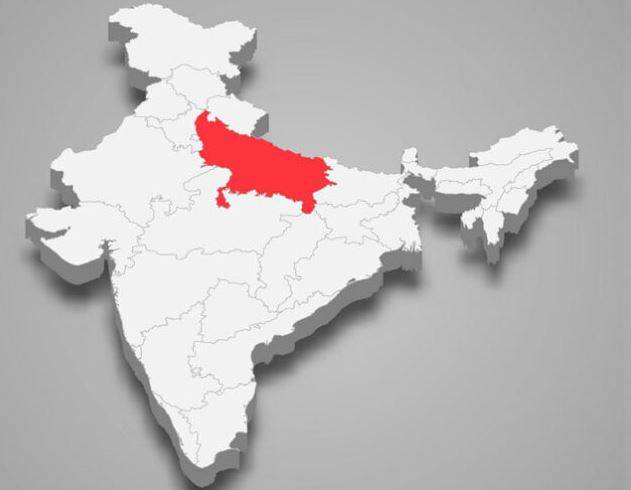
The important points of Uttar Pradesh (UP) History during different rule, has been provided in this blog, with option to download as PDF. These points are very useful for the students preparing for Uttar Pradesh Civil Services Exam – UPPSC PCS and UPSC IAS.
Uttar Pradesh history :
The Uttar Pradesh History is divided into following period :
Prehistory and Mythology (up to c. 600 BCE)
The Buddhist- Hindu Period (c. 600 BCE to c. 1200 CE)
The Muslim Period (c. 1200 to c. 1775)
The British Period (c. 1775 to 1947)
The Post-Independence Period (1947 to the present)
Prehistory and Mythology (up to c. 600 BCE)
Archaeological findings reveal insights in modern-day Uttar Pradesh, dating back to around 10,000 BCE.
Vedic literature and ancient Indian epics like the Ramayana and Mahabharata are providing crucial knowledge about the region before the 7th century BCE.
The Mahabharata is set around Hastinapur, whereas the Ramayana is centered on Ayodhya, the birthplace of Lord Rama.
Mathura and Vrindavan are mythological sites associated with the birth of Krishna, another incarnation of Vishnu.
The Buddhist- Hindu Period (c. 600 BCE to c. 1200 CE)
The history of India and Uttar Pradesh trace back to the end of the 7th century BCE, which is marked by the dominance of 16 great states in northern India, from which seven were falling within the boundaries of present-day Uttar Pradesh.
From the 5th century BCE to the 6th century CE, the region was under the control of Magadha in Bihar and later Ujjain in Madhya Pradesh. Rulers included Chandragupta , Ashoka , Samudra Gupta, Chandra Gupta II , and Harsha.
Harsha, a ruler who reigned from around 606 to 647 CE, controlled Uttar Pradesh from capital at Kanyakubja (modern Kannauj) and extending his rule over the parts of present-day Bihar, Madhya Pradesh, Punjab, and Rajasthan.
The evolution of religion saw Brahmanism emerge from the ancient Vedic religion by the 6th century BCE, later it evolved into classical Hinduism by the 2nd century BCE. Buddhism, founded by Buddha, is spread across India, including Uttar Pradesh, with significant sites such as Sarnath and Kushinagara.
In the beginning , Buddhism and Brahmanic or Hindu culture coexisted, the Buddhist art was flourishing under Ashoka’s reign and Hindu art reached its peak during the Gupta dynasty (4th to 6th century CE).
After Harsha’s death, around 647 CE, there was a decline in Buddhism and a revival of Hinduism, which was led by philosopher Shankara, whom believed to have established the famous Badrinath temple in the Himalayas after visiting Varanasi and traveling through the plains of Uttar Pradesh.
The Muslim Period (c. 1200 to c. 1775)
Muslim incursions began around 1000–30 CE, but Muslim rule over northern India, was established at late 12th century by Muʿizz al-Dīn Muḥammad ibn Sām (Muḥammad Ghūrī).
For almost 600 years, Uttar Pradesh was ruled by various Muslim dynasties, which was centered in or near Delhi, starting with the Delhi Sultanate.
In 1526, Bābur, a descendant of Genghis Khan and Timur, defeated Sultan Ibrāhīm Lodī and then founded the Mughal dynasty, which was dominated the subcontinent for over 200 years, centered in Uttar Pradesh.
Under Akbar’s reign (1556–1605), the Mughal Empire promoted a new composite culture that blended elements of Hinduism and Islam. Akbar’s court was full of eminent figures in architecture, literature, painting, and music, regardless of caste or creed.
The Mughal era saw the rise , such as Ramananda’s bhakti sect and Kabīr’s teachings marking the importance of the unity of religions.
Decline of the Mughal Empire in the 18th century led to shift of cultural centers from Delhi to Lucknow, where under the nawab of Oudh, art, literature, music, and poetry flourished in an environment of communal harmony.
The British Period (c. 1775 to 1947)
The East India Company acquired present-day Uttar Pradesh over 75 years, which is from the late 18th century to the mid-19th century, by taking territories from various powers including nawabs, the Sindhias of Gwalior, and the Gurkhas of Nepal.
Uttar Pradesh then part of the Bengal Presidency, these territories were separated in 1833 to form North-Western Provinces (later the Agra Presidency), which included annexed kingdom of Oudh in 1856, forming United Provinces in 1877.
The Indian Mutiny of 1857–58, which was in the United Provinces, it was a widespread revolt against the East India Company, leading to the transfer of administration from the Company to British crown in 1858.
The United Provinces played a significant role in the rise of Indian nationalism, producing important leaders like Motilal Nehru, Pandit Madan Mohan Malaviya, Jawaharlal Nehru, and Purushottam Das Tandon.
Mohandas (Mahatma) Gandhi’s noncooperation movement of 1920–22 had found strong support in the United Provinces but suspended after mob violence in Chauri Chaura.
The United Provinces witnessed extensive development, including establishment of canals, railways, and modern education institutions.
Uttar Pradesh history : The Post-Independence Period (1947 to the present)
In 1947, the United Provinces became part of independent India and was renamed Uttar Pradesh in 1950 under the new Indian constitution.
Uttar Pradesh played a significant role in Indian politics, producing several prime ministers like Jawaharlal Nehru, Indira Gandhi, and Atal Bihari Vajpayee, along leaders of national opposition parties like Acharya Narendra Dev and Mulayam Singh Yadav.
State-level politics in Uttar Pradesh characterized by frequent shifts in government control between parties like the BJP, SP, and BSP since the early 1990s.
Instances of direct central government control occurred, notably in 1992–93 following rioting after the destruction of Babri Masjid in Ayodhya.
Unrest in Himalayan regions of Uttar Pradesh led to demands for a separate state. This culminated in the formation of Uttaranchal (now Uttarakhand) in November 2000, carving the northwestern part of Uttar Pradesh.
Jharkhand GK PDF in Hindi : General Knowledge, General Awareness and Static GK PDF for free download. PDF Books, Notes are useful for JPSC, and all competitive exams.
झारखंड सामान्य ज्ञान
अध्याय – 1 झारखण्ड का इतिहास परिचय प्राचीन इतिहास पूर्व मध्य काल सल्तनतकालीन झारखंड मुगलकालीन झारखंड उत्तर मुगलकालीन झारखंड झारखंड में अंग्रेजों का प्रवेश अंग्रेजों के विरूद्ध कुछ प्रारंभिक विद्रोह
अध्याय – 2 झारखंड तथा भारतीय स्वतंत्रता आंदोलन झारखंड में 1857 के विद्रोह का प्रभाव झारखंड में राष्ट्रीय चेतना का प्रसार गाँधी युग तथा झारखंड प्रांतो में कांग्रेसी मंत्रीमंडल का गठन अंतरिम सरकार का गठन स्वतंत्रता की प्राप्ति : 15 अगस्त, 1947 झारखंड में पृथक राज्य के लिए आंदोलन झारखंड का राज्य के रूप में गठन
अध्याय – 3 झारखंड का भूगोल स्थिति तथा विस्तार भूगर्भिक संरचना धरातलीय स्वरूप अपवाह तंत्र झारखंड की महत्वपूर्ण नदियाँ प्रमुख जलप्रपात मिट्टी जलवायु
अध्याय – 4 वन तथा राष्ट्रीय उद्यान वन उत्पाद राष्ट्रीय उद्यान पक्षी विहार
अध्याय – 5 कृषि एंव सिंचाई झारखंड का कृषि प्रदेश (प्रक्षेत्र) सिंचाई परियोजनाएं
अध्याय – 6 ऊर्जा संसाधन जल विद्युत परियोजना
अध्याय – 7 खनिज संसाधन झारखंड में खनिज की उपलब्धता
अध्याय – 8 उद्योग खनिज आधारित उद्योग कृषि पर आधारित उद्योग वन पर आधारित उद्योग झारखंड की नयी औद्योगिक नीति – 2012 झारखंड में उद्योगों का स्वामित्व
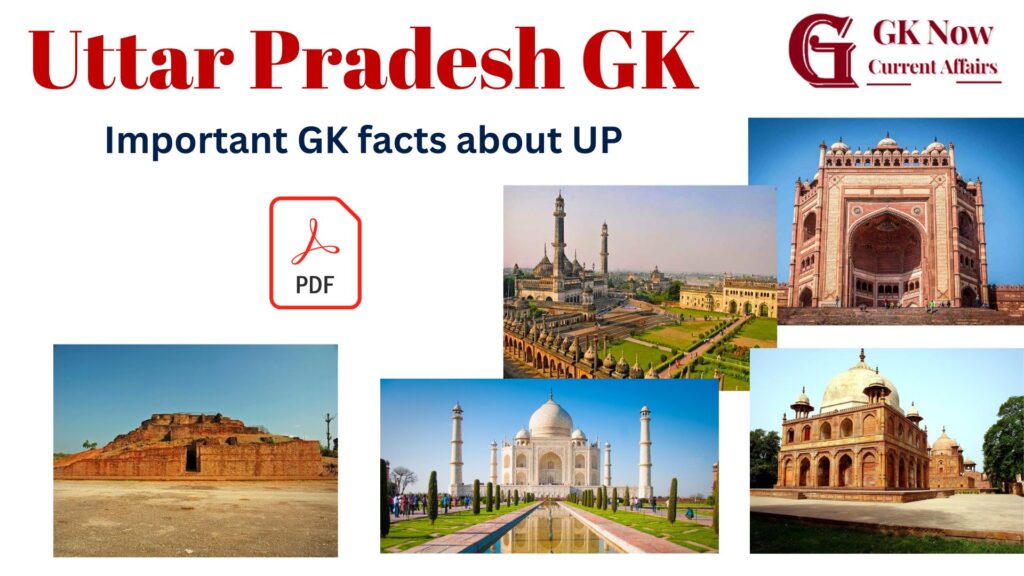
UP GK PDF : Book, Notes PDF in Hindi for free download. Uttar Pradesh General Knowledge and General Studies PDF for the preparation of UPSC, UPPSC, UPSSSC PET, UP Police and all competitive exams.
उत्तर प्रदेश की स्थापना कब हुई थी? – 24 जनवरी 1950
उत्तर प्रदेश के इतिहास में सुल्तान गरीब नवाज कौन थे? – इल्तुतमिश
उत्तर प्रदेश के अवध क्षेत्र में स्थित हैं, जहां भगवान श्रीराम का जन्म हुआ था? – अयोध्या
उत्तर प्रदेश में स्थित है, जहां भगवान श्रीकृष्ण ने अपने बाल्यकाल काटा था? – मथुरा
उत्तर प्रदेश के वाराणसी में स्थित है, जहां आदि कवि महर्षि वाल्मीकि ने रामायण रची थी? – वाल्मीकि आश्रम
उत्तर प्रदेश की प्रमुख लोकनृत्य कौन-कौन से हैं? – रसलीला, नृत्य उत्सव, ठारी
उत्तर प्रदेश में स्थित है, जहां प्रसिद्ध कवि सूरदास ने अपनी रचनाएं लिखी थीं? – काशी
उत्तर प्रदेश की प्रमुख लोककला कौन-कौन सी हैं? – तुलसी संगीत, लखनवी चिकंगरी, वाराणसी बांस उद्योग
उत्तर प्रदेश के किस शहर में नवाब असफ़ उद्दौला ने शानदार भव्य इमारतें बनवाई थीं? – लखनऊ
उत्तर प्रदेश में स्थित सरस्वती शिखर वन्यजीव अभयारण्य किस जिले में स्थित है? – लखनऊ
उत्तर प्रदेश में किस धर्म से सबसे अधिक लोग हैं? – हिंदू धर्म
उत्तर प्रदेश की सबसे बड़ी नदी कौन सी है? – यमुना
उत्तर प्रदेश में कुल कितने जिले हैं? – 75
उत्तर प्रदेश का सबसे बड़ा जिला कौन सा है? – प्रयागराज
उत्तर प्रदेश की राष्ट्रीय उद्यान की संख्या कितनी है? – 9
उत्तर प्रदेश की प्रमुख सांस्कृतिक धरोहर कौन-कौन सी हैं? – ताज महल, वाराणसी के घाट, अयोध्या के राम जन्मभूमि मंदिर
उत्तर प्रदेश का राष्ट्रीय उद्यान कहां स्थित है? – डुडवा राष्ट्रीय उद्यान
उत्तर प्रदेश में स्थित जीतेंद्र महास्कंद पुरस्कार किसके लिए प्रदान किया जाता है? – विज्ञान और साहित्य
उत्तर प्रदेश में स्थित सरस्वती महानदी किस नदी का संगम स्थल है? – यमुना
उत्तर प्रदेश के पश्चिमी हिमालयी भाग में स्थित राष्ट्रीय उद्यान का नाम क्या है? – वनविहार राष्ट्रीय उद्यान
उत्तर प्रदेश की सबसे ऊँची चोटी कौन सी है? – नंदा देवी
उत्तर प्रदेश में किस खनिज को सबसे अधिक उत्पादित किया जाता है? – गंगा बालु
उत्तर प्रदेश की अंतर्राष्ट्रीय हवाई अड्डा का नाम क्या है? – चौधरी चरण सिंह अंतर्राष्ट्रीय हवाई अड्डा, लखनऊ
उत्तर प्रदेश की आधिकारिक भाषा क्या है? – हिंदी
उत्तर प्रदेश की सबसे बड़ी बांध कौन सी है? – राजघाट सागर बांध
उत्तर प्रदेश की प्रमुख पुरातत्व स्थल कौन-कौन से हैं? – वाराणसी के घाट, फतेहपुर सिकरी, सरनाथ, लखनऊ के इमामबाड़ा
Download : UP GK Book and Notes PDF
Name : UP GK PDF in Hindi -1 Medium : Hindi Number of pages : 6
GK PDF Download in Hindi for Competitive Exams. In this post we have compiled General Knowledge many PDF includes GK Questions, 1000+ MCQs, One Liner, Previous year GK Question, Last 15 Year SSC Questions, and 4000+ MCQ book PDF. The study material is very useful for upcoming UPSC, SSC, Delhi Police, UPSSSC, Bank, CUET, and all type of Government jobs examination.
GK in Hindi PDF Free Download
GK Questions in Hindi
5000 Samanya Gyan Questions Includes from topics : Eithish, Bhogal, Rajvayavastha, Arthvayavstha, Khel and Vigyan Curtsy : sscstudy.com Number of Pages : 250
Download 5000 + GK questions PDF from the below google drive link: