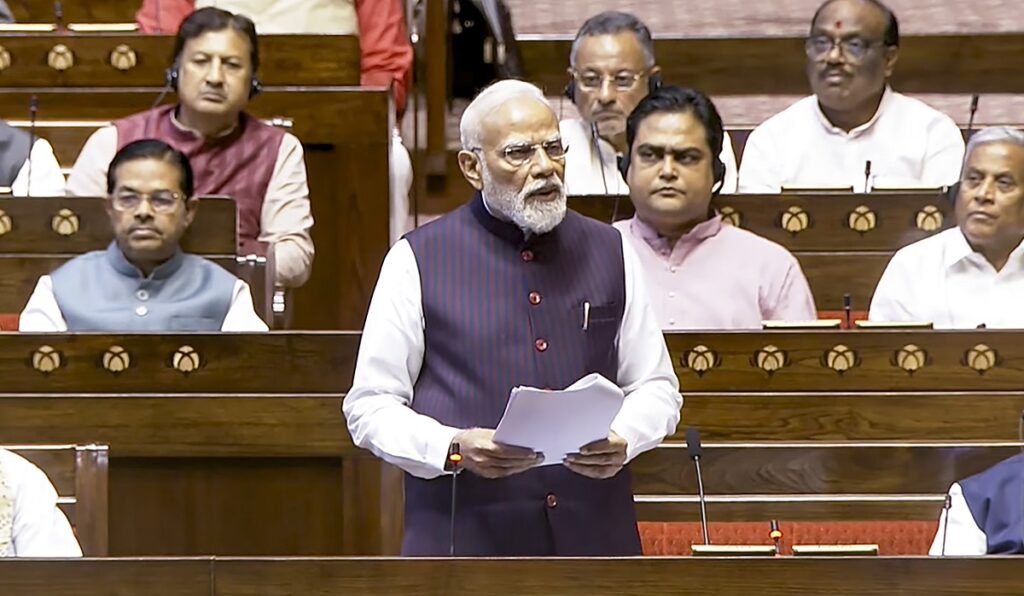
- On 25 March 2026, the Finance Bill, 2026 was passed in the Lok Sabha with 32 amendments.
- It is a Money Bill that gives legal effect to the Union Budget 2026–27.
- The Bill will now go to the Rajya Sabha, which can only recommend changes, after which it becomes the Finance Act.
📖 What is the Finance Bill?
- Annual Money Bill presented with the Union Budget.
- Provides legal backing to taxation and expenditure proposals.
- Covers direct & indirect taxes and amendments to tax laws.
🔑 Key Highlights
- Budget Size: ₹53.47 lakh crore
- Capital Expenditure: ₹12.2 lakh crore
- Fiscal Deficit Target: 4.3% of GDP
- Focus on:
- MSMEs, farmers, cooperatives
- Digital infrastructure & manufacturing sectors
- Job creation & inclusive growth
- No major new taxes; promotes trust-based tax system
⚖️ Constitutional Features
- Defined as a Money Bill under Article 110.
- Introduced only in Lok Sabha.
- Rajya Sabha cannot amend or reject, only recommend.
- Must be passed within 75 days.
- Essential for legal tax collection and government spending.