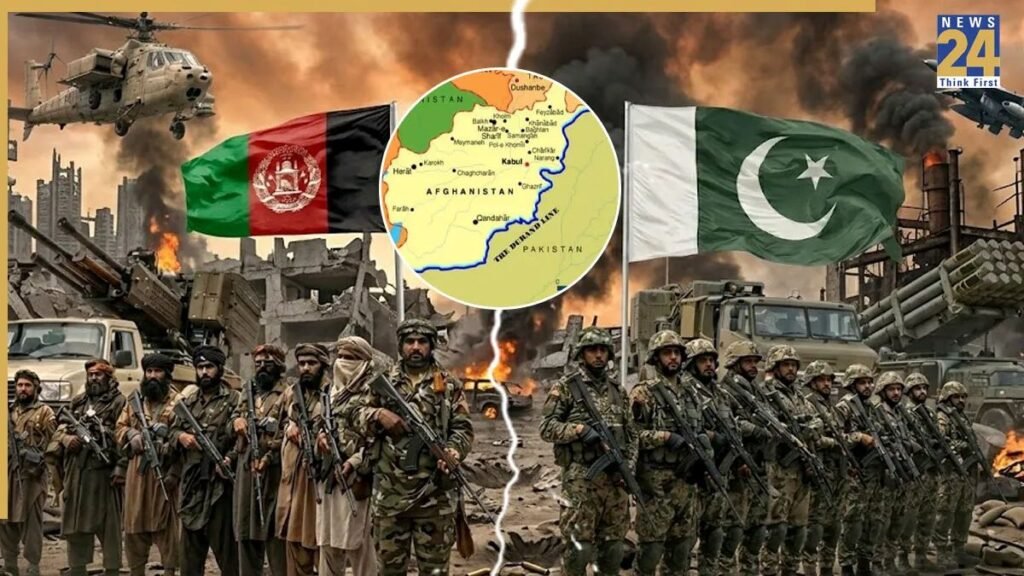
The Pakistan–Afghanistan relationship has historically been tense, shaped by border disputes, militant activity, and shifting alliances. In 2026, these tensions escalated into what is now being described as an “open war” between the two neighbors.
Historical Background
- Durand Line Dispute: The border drawn in 1893 by the British (Durand Line) has never been formally recognized by Afghanistan. This has been a persistent source of friction.
- Taliban Factor: Pakistan was once accused of supporting the Taliban during the U.S. war in Afghanistan. Now, the Taliban-led Afghan government is accused by Pakistan of harboring militants who attack Pakistani territory.
- Cross-border Militancy: Groups like the Tehrik-i-Taliban Pakistan (TTP) have used Afghan soil to launch attacks, worsening relations.
Current Escalation (2026)
- Pakistan’s Declaration of “Open War”: On February 28, 2026, Pakistan officially declared open war against Taliban-ruled Afghanistan after cross-border attacks intensified.
- Airstrikes: Pakistan launched Operation Ghazab lil-Haq, striking Kabul and provinces like Nangarhar and Kandahar in retaliation for Afghan attacks on Pakistani border posts.
- Afghan Retaliation: Afghanistan responded with artillery and rocket fire across the Durand Line, claiming to have inflicted heavy losses on Pakistani forces.
- Civilian Impact: Reports show destruction of homes and civilian casualties in Afghan provinces following Pakistani airstrikes.
- International Reactions:
- The U.S. expressed support for Pakistan’s “right to defend itself.”
- Iran offered to mediate between the two countries.
- Former U.S. President Donald Trump commented that Pakistan was “doing terrifically well” in the conflict.