The Somnath Swabhiman Parv is being observed from January 8 to January 11, 2026, to commemorate a significant civilizational milestone. The festival marks exactly 1,000 years since the first major documented attack on the Somnath Temple by Mahmud of Ghazni in January 1026.
Beyond the historical reflection, the Parv (festival) celebrates the “indomitable spirit” of India, highlighting how the temple was rebuilt time and again as a symbol of national self-respect (Swabhiman).
Key Highlights of the Celebration
- 72-Hour Omkar Naad: The event commenced on January 8 with an uninterrupted 72-hour chanting of the ‘Omkar’ mantra by over 2,500 Rishi Kumars.
- Shaurya Yatra: A grand “Valour March” featuring 108 horses and cultural tableaux is scheduled for January 11.
- Drone Show & Cultural Events: Nightly drone shows and light-and-sound programs narrate the history of the temple’s destruction and its subsequent “Phoenix-like” rebirth.
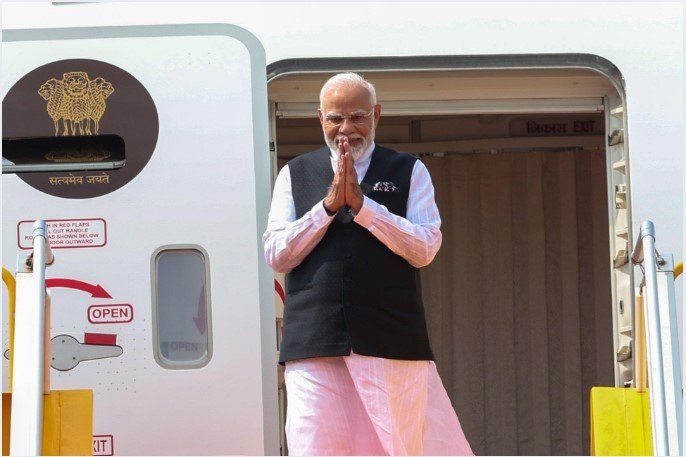
- PM’s Participation: Prime Minister Narendra Modi is scheduled to address the nation and offer prayers at the temple on the final day, January 11.
Historical Significance: The 1,000-Year Timeline
The history of Somnath is a saga of “Creation over Destruction.”
| Era/Year | Event |
| Ancient | Mentioned in the Rig Veda and Puranas; revered as the first of the 12 Jyotirlingas. |
| 1026 CE | First major invasion and looting by Mahmud of Ghazni. |
| 1297–1706 | Multiple destructions by Alauddin Khilji, Zafar Khan, and finally Aurangzeb. |
| 1947–1951 | Post-independence reconstruction initiated by Sardar Vallabhbhai Patel and K.M. Munshi. |
| May 11, 1951 | Consecration (Pran-Pratistha) performed by Dr. Rajendra Prasad, the first President of India. |
| 2026 | Somnath Swabhiman Parv marks 1,000 years of the first attack and 75 years of the 1951 rededication. |
Architectural & Scientific Wonders
1. The Baanstambh (Arrow Pillar)
A major focus during the Parv is the Baanstambh located on the temple’s sea-facing side.
- It contains a Sanskrit inscription: “Aasamudrant Dakshin Dhruv Paryant Abadhit Jyotirmarg.”
- Meaning: There is no landmass in a straight line from that point to the South Pole (Antarctica). This reflects the advanced geographical and maritime knowledge of ancient Indian scholars.
2. Kailas Mahameru Prasad Style
The current temple is built in the Chaulukya (Solanki) style of temple architecture, a sub-type of the Nagara school.
- Key Features: Intricate carvings, a 155-foot high Shikhara, and three main sections—Garbhagriha (sanctum), Sabha Mandapa (assembly hall), and Nritya Mandapa (dance hall).