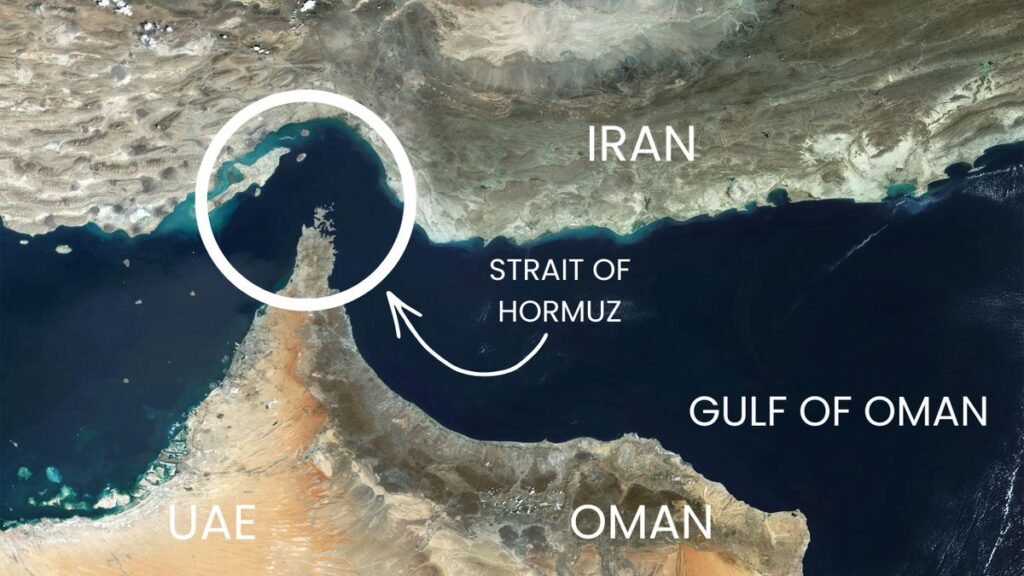
The Strait of Hormuz is a narrow but vital waterway connecting the Persian Gulf to the Gulf of Oman and the Arabian Sea. It is in the news in 2026 because Iran has closed it following US–Israel strikes, triggering a global oil and gas price surge. Iran controls the strait through its geographic position, military presence, and the ability of its Revolutionary Guard Corps (IRGC) to block or disrupt shipping.
🌍 What is the Strait of Hormuz?
- Location: Between Oman and Iran, linking the Persian Gulf with the Gulf of Oman and Arabian Sea.
- Width: Narrowest point is about 33 km wide.
- Importance: Around 20% of global oil trade passes through it daily, making it the world’s most critical energy chokepoint.
- Users: Oil tankers from Saudi Arabia, UAE, Iraq, Kuwait, and Qatar rely on it to reach global markets.
📰 Why is it in the News (2026)?
- On 28 February 2026, US–Israel carried out strikes on Iran, killing Iran’s Supreme Leader Ali Khamenei.
- In retaliation, Iran announced closure of the Strait of Hormuz on 2 March 2026.
- Consequences:
- Global oil and gas prices surged sharply.
- Shipping disruptions: At least 11 merchant ships damaged, one tug sunk, and multiple casualties reported.
- Regional spillover: Conflict spread into the Indian Ocean, forcing ships to reroute through longer, riskier paths.
🇮🇷 How Iran Controls the Strait
- Geographic Advantage: Iran borders the entire northern side of the strait, giving it natural dominance.
- Military Presence:
- The IRGC Navy deploys fast attack boats, mines, and anti-ship missiles.
- Over 150 tankers were anchored along the strait under Iranian orders in March 2026.
- Tactics Used:
- Closure announcements backed by military enforcement.
- GPS jamming and electronic warfare to disrupt navigation.
- Threat of mining and missile strikes deters commercial shipping.
- Strategic Leverage: Iran uses control of the strait as a bargaining chip in geopolitical conflicts, knowing its closure impacts global energy markets.