Current Affairs

Current Affairs is the most important part of every competitive exam in India. At gknow.in, we provide accurate, exam-focused, and easy-to-read current affairs to help aspirants prepare confidently for SSC, UPSC, Banking, Railways, Defence, State PCS, and other government exams.

This parent category covers all major current affairs topics, including:

  • National Current Affairs – Government updates, policies, bills, and major developments

  • International Affairs – Global events, agreements, and geopolitical updates

  • Awards & Honours – National and international recognitions

  • Culture & Heritage – Festivals, traditions, and notable cultural events

  • Science & Technology – ISRO, DRDO, space missions, innovations, discoveries

  • Polity & Governance – Constitutional amendments, committees, judicial updates

  • Important Days & Themes – Monthly observances and exam-relevant themes

  • Government Schemes – New initiatives, updates, launches, and budgets

Our content is:
Daily updated
Exam-oriented
Available in simple language

Budget Session of Parliament 2026: Economic Survey & Union Budget Timeline

The Budget Session of Parliament 2026 began on January 28, 2026, and will continue until April 2, 2026, conducted in two phases. It is one of India’s most important parliamentary sessions, featuring the President’s address, the Economic Survey, and the presentation of the Union Budget.

In Phase 1 (January 28 – February 13), President Droupadi Murmu addressed the joint sitting of Parliament, followed by the presentation of the Economic Survey 2025–26 on January 29, and the Union Budget 2026–27 on February 1 by Finance Minister Nirmala Sitharaman. After a recess, Phase 2 (March 9 – April 2) will focus on discussions, departmental scrutiny, and passage of budget-related bills.

The session holds major significance as it sets the nation’s fiscal priorities, outlines economic policy direction, enables legislative business, and provides space for opposition scrutiny. Key issues include balancing fiscal targets with welfare spending, managing global economic uncertainties, and advancing reforms in infrastructure, digitalization, and social welfare.

Pravasi Bharatiya Diwas 2026 Observed Globally as a Non-Convention Year

Pravasi Bharatiya Diwas (PBD) is celebrated every year on January 9 to honour the contributions of the global Indian diaspora. The day commemorates the return of Mahatma Gandhi to India on 9 January 1915, marking a major historical milestone.

Since 2015, PBD conventions have been held biennially, with the 18th edition hosted in Bhubaneswar in January 2025, and the next scheduled for 2027.

In 2026, PBD was observed as a non-convention year, with Indian embassies and missions worldwide organizing local events instead of a central gathering in India. The celebrations highlighted diaspora contributions to culture, economy, global partnerships, and nation-building.

Prime Minister Narendra Modi extended greetings and described overseas Indians as “Rashtradoots” (ambassadors of the nation). Discussions emphasized the diaspora’s role in international networking, cultural diplomacy, innovation, and economic collaboration.

Women’s Premier League 2026 Begins in Navi Mumbai & Vadodara

The Women’s Premier League (WPL) 2026, the 4th edition of India’s top women’s T20 cricket league, is being held from January 9 to February 5, 2026, across Navi Mumbai and Vadodara. The tournament features five teams—Mumbai Indians, Royal Challengers Bengaluru, Delhi Capitals, Gujarat Giants, and UP Warriorz—with revamped squads following a mega auction in November 2025.

The season opened with a star-studded ceremony featuring Jacqueline Fernandez, Honey Singh, and Harnaaz Sandhu. On the field, the opening match saw RCB defeat defending champions Mumbai Indians in a last-ball thriller, driven by South African all-rounder Nadine de Klerk, who currently holds both the Orange and Purple Caps.

A total of 22 matches will be played in a round-robin + playoffs format. WPL 2026 carries added importance after India’s 2025 Women’s ODI World Cup victory, giving further momentum to women’s cricket. The league hosts top global stars along with India’s best talent, boosting visibility and fan engagement through Star Sports and JioCinema.

World Book Fair 2026 – from Jan 10 to Jan 18 in New Delhi

The 53rd New Delhi World Book Fair (NDWBF) 2026 is set to transform Bharat Mandapam into a global literary hub from January 10 to January 18. This nine-day extravaganza promises to be a landmark event for book lovers, featuring over 1,000 publishers from more than 35 countries.


Event Overview: NDWBF 2026

  • Dates: January 10 – 18, 2026
  • Venue: Bharat Mandapam, Pragati Maidan, New Delhi
  • Organizer: National Book Trust (NBT)
  • Special Announcement: For the first time in its history, entry to the book fair is free for all visitors.

Global & Cultural Partnerships

The 2026 edition emphasizes international literary exchange with two prominent nations taking center stage:

  • Guest of Honour Country: Qatar
  • Focus Country: Spain
  • Global Reach: Participation from 35+ countries ensures a diverse range of multilingual literature and cultural dialogues.

Central Theme: Valour and Wisdom @ 75

This year, the fair shifts its focus toward a deep appreciation of national service with the theme “Indian Military History: Valour and Wisdom @ 75.” * Tribute to the Armed Forces: The fair honors the Army, Navy, and Air Force for their contributions to India’s unity and security since Independence.

  • Theme Pavilion: A massive 1,000-square-metre curated space featuring visual installations, live programs, and exhibitions.
  • Curated Collection: Over 500 books dedicated to Indian military history, defense strategies, and tales of bravery will be on display.

Key Attractions for Visitors

  1. Children’s Pavilion: A dedicated space designed to foster a love for reading among younger audiences through interactive sessions and age-appropriate literature.
  2. Live Programs: The fair will host various author interactions, book launches, and cultural performances that bridge the gap between writers and readers.
  3. Modern Installations: The Theme Pavilion will use a mix of traditional books and modern visual technology to tell the story of India’s military journey.

Census of India 2027: Key Facts & Timeline

The Government of India has officially notified the roadmap for the 16th Indian Census. This exercise is landmarked as the nation’s first-ever digital census and includes the historic addition of caste enumeration.


1. Official Schedule & Phases

The Census will be conducted in two distinct phases:

PhaseActivityTimeline
Phase IHouselisting & Housing CensusApril 1 – Sept 30, 2026
Phase IIPopulation Enumeration (PE)February 2027
Special CasePE for Snow-bound areas (Ladakh, HP, UK)September 2026
  • State Window: Each State/UT will choose a specific 30-day window within the Phase I period for house-to-house listing.

2. Digital Innovation & Self-Enumeration

  • Mobile-First: Data collection via dedicated Android and iOS apps.
  • Self-Enumeration: Citizens can fill their own data online. This facility opens 15 days prior to the start of the house-to-house listing in their respective areas.
  • Paperless: This marks the end of traditional paper-based forms, ensuring faster data processing.

3. Caste Enumeration & Special Features

  • Caste Inclusion: Decided by the Cabinet Committee on Political Affairs, the 2027 Census will include caste-wise data collection for the first time in independent India’s census history.
  • Scope: It covers all States and Union Territories.
  • Reference Date: For the general population, the reference point is March 1, 2027.

4. Logistics & Financials

  • Total Budget: ₹11,718.24 crore (Approved by the Union Cabinet).
  • Workforce: 30 lakh field functionaries (Enumerators, Supervisors, and Charge Officers).
  • Hierarchy: Managed by the Registrar General and Census Commissioner of India under the Ministry of Home Affairs.

Somnath Swabhiman Parv: A Millennium of Resilience (1026–2026)

The Somnath Swabhiman Parv is being observed from January 8 to January 11, 2026, to commemorate a significant civilizational milestone. The festival marks exactly 1,000 years since the first major documented attack on the Somnath Temple by Mahmud of Ghazni in January 1026.

Beyond the historical reflection, the Parv (festival) celebrates the “indomitable spirit” of India, highlighting how the temple was rebuilt time and again as a symbol of national self-respect (Swabhiman).

Key Highlights of the Celebration

  • 72-Hour Omkar Naad: The event commenced on January 8 with an uninterrupted 72-hour chanting of the ‘Omkar’ mantra by over 2,500 Rishi Kumars.
  • Shaurya Yatra: A grand “Valour March” featuring 108 horses and cultural tableaux is scheduled for January 11.
  • Drone Show & Cultural Events: Nightly drone shows and light-and-sound programs narrate the history of the temple’s destruction and its subsequent “Phoenix-like” rebirth.
  • PM’s Participation: Prime Minister Narendra Modi is scheduled to address the nation and offer prayers at the temple on the final day, January 11.

Historical Significance: The 1,000-Year Timeline

The history of Somnath is a saga of “Creation over Destruction.”

Era/YearEvent
AncientMentioned in the Rig Veda and Puranas; revered as the first of the 12 Jyotirlingas.
1026 CEFirst major invasion and looting by Mahmud of Ghazni.
1297–1706Multiple destructions by Alauddin Khilji, Zafar Khan, and finally Aurangzeb.
1947–1951Post-independence reconstruction initiated by Sardar Vallabhbhai Patel and K.M. Munshi.
May 11, 1951Consecration (Pran-Pratistha) performed by Dr. Rajendra Prasad, the first President of India.
2026Somnath Swabhiman Parv marks 1,000 years of the first attack and 75 years of the 1951 rededication.

Architectural & Scientific Wonders

1. The Baanstambh (Arrow Pillar)

A major focus during the Parv is the Baanstambh located on the temple’s sea-facing side.

  • It contains a Sanskrit inscription: “Aasamudrant Dakshin Dhruv Paryant Abadhit Jyotirmarg.”
  • Meaning: There is no landmass in a straight line from that point to the South Pole (Antarctica). This reflects the advanced geographical and maritime knowledge of ancient Indian scholars.

2. Kailas Mahameru Prasad Style

The current temple is built in the Chaulukya (Solanki) style of temple architecture, a sub-type of the Nagara school.

  • Key Features: Intricate carvings, a 155-foot high Shikhara, and three main sections—Garbhagriha (sanctum), Sabha Mandapa (assembly hall), and Nritya Mandapa (dance hall).

India’s Real GDP Estimated to Grow 7.4% in 2025–26

India’s real Gross Domestic Product (GDP) is projected to grow by 7.4% in 2025–26, compared to 6.5% in the previous fiscal year. According to the first advance estimates released on 7 January 2026 by the Ministry of Statistics and Programme Implementation, the real GDP for the current financial year is estimated to exceed ₹201 lakh crore, higher than the provisional estimate of over ₹187 lakh crore in 2024–25.

The Ministry stated that buoyant growth in the services sector is the major driver of this expansion. Sectors such as trade, hotels, transport, communication, and broadcasting-related services are estimated to grow by 7.5% this fiscal. In the secondary sector, manufacturing and construction are expected to register a 7% growth rate.

Reacting to the GDP figures, Prime Minister Narendra Modi noted that India’s “Reform Express” continues to gain momentum, powered by the NDA Government’s investment-led and demand-led policies. He highlighted ongoing efforts to build a prosperous India through infrastructure development, manufacturing incentives, digital public goods, and improved ease of doing business.

India Becomes First to Commercially Produce Bio-Bitumen

On 7 January 2026, Union Road Transport and Highways Minister Nitin Gadkari announced that India has become the first country in the world to commercially produce bio-bitumen for road construction.
Bio-bitumen acts as a binder similar to conventional petroleum-based bitumen, which is a black, viscous hydrocarbon mixture obtained from crude oil.

Speaking at the CSIR Technology Transfer Ceremony in New Delhi, the Minister congratulated CSIR for achieving this milestone and stated that the innovation will reduce pollution from crop residue burning. He also described bio-bitumen as a transformative step towards the vision of Viksit Bharat 2047.

Science & Technology Minister Dr. Jitendra Singh highlighted that this step marks the beginning of a clean and green highway era, promotes the Waste to Wealth mission, and aligns with Atma Nirbhar Bharat.

NHAI Sets Two Guinness World Records on Bengaluru–Kadapa–Vijayawada Corridor

In January 2026, The National Highways Authority of India (NHAI) has set two Guinness World Records on the Vanavolu–Vankarakunta stretch of the six-lane Bengaluru–Kadapa–Vijayawada Economic Corridor.
The records are for:

  1. Longest continuous Bituminous Concrete laying within 24 hours (~29 lane-km)
  2. Highest quantity of Bituminous Concrete laid within 24 hours (over 10,000 metric tonnes)

NHAI stated that the 343 km Economic Corridor will boost inter-state connectivity between Karnataka and Andhra Pradesh, aiding trade, tourism, and regional economic growth through faster and safer transport.
Two additional Guinness World Record attempts are underway on the Vanavolu–Vankarakunta–Odulapalle section of NH-544G.

Andhra Pradesh CM N. Chandrababu Naidu praised the achievement and acknowledged the Government of India’s vision and the strong highway development focus under Union Minister Nitin Gadkari, appreciating the engineers and field teams for their dedication.

Integrated Security Hub (ICCC) in Andaman & Nicobar Islands

The Integrated Security Hub (Integrated Command and Control Centre – ICCC) was inaugurated on 3 January 2026 by Amit Shah at Sri Vijaya Puram in the Andaman & Nicobar Islands. The centre has been developed at a cost of ₹229 crore as a high-tech platform for maritime security, disaster management, and smart governance in the strategically vital Indo-Pacific region.

The ICCC functions as a centralized hub for real-time monitoring, AI-based surveillance, smart transport, port connectivity, and urban services, significantly enhancing the islands’ capacity to respond to cyclones, tsunamis, and security threats. Alongside the ICCC, nine infrastructure projects worth ₹373 crore were inaugurated, aimed at strengthening public services, tourism, and connectivity.

Overall, the Integrated Security Hub strengthens India’s maritime dominance, improves national security preparedness, and represents a major step toward digital and smart governance in remote island territories.

Indian Railways become the world’s largest electrified rail system

Indian Railways has become the world’s largest electrified rail system, completing 100 years of electrification in 2025 and surpassing all other networks globally. Nearly all of India’s 70-thousand route-kilometre broad-gauge network is now powered by electricity. This achievement reflects India’s commitment to sustainability, energy efficiency, and modernization of its transport infrastructure.


🚆 Timeline of Indian Railways Electrification

YearMilestoneDetails
1925First electric trainRan between Bombay VT (now CSMT) and Kurla Harbour Line, using 1.5 kV DC
1930s–40sExpansion in Western GhatsElectrification extended to Igatpuri and Pune to tackle steep gradients
1950sShift to 25 kV AC systemAdopted globally accepted standard for efficiency and scalability
1970s–80sRapid expansionMajor trunk routes electrified, reducing reliance on steam/diesel traction
2000sPolicy pushGovernment emphasized electrification for energy security and reduced imports of diesel
2014–2023Accelerated driveElectrification speed increased to ~6,000 km per year under national mission
2023100% electrification of broad-gauge routesIndian Railways announced completion of electrification across all broad-gauge tracks
2025100 years of electrificationIndia celebrated a century since the first electric train, marking itself as the largest electrified rail network globally

🌍 Global Context

  • Indian Railways operates over 68,000 route km, of which 100% broad-gauge is electrified.
  • This makes it the largest electrified rail network in the world, ahead of countries like China and Russia in terms of route length electrified.
  • Electrification reduces dependence on imported fossil fuels, cuts greenhouse gas emissions, and supports India’s climate commitments.

🔑 Key Facts

  • First electric locomotive: “Sir Leslie Wilson” introduced in 1925.
  • Technology shift: From 1.5 kV DC to 25 kV AC, aligning with global standards.
  • Environmental impact: Electrification expected to save billions of liters of diesel annually and reduce CO₂ emissions significantly.
  • Economic impact: Lower operating costs, faster trains, and improved reliability.

India’s First Vande Bharat Sleeper Train Launched on Kolkata–Guwahati Route

India achieved a major milestone in railway modernization with the launch of its first Vande Bharat Sleeper Train in January 2026 on the Kolkata (Howrah)–Guwahati route. This marked the beginning of semi-high-speed overnight rail travel in the country, extending the success of the Vande Bharat series beyond day-time chair car services. Developed by Indian Railways, the sleeper variant is designed for long-distance routes of 1,000–1,500 km, offering both speed and comfort.

The train is capable of running at speeds of up to 180 km/h, significantly reducing travel time while providing fully air-conditioned sleeper coaches with cushioned berths for overnight journeys. It is equipped with modern safety features such as automatic doors, fire detection systems, and advanced braking technology. With larger train sets than chair-car versions, it can accommodate more passengers. The fare structure is positioned between conventional express trains and premium luxury services, ranging from ₹2,300 to ₹3,600.

India’s Largest Integrated Inland Rainbow Trout Farm Inaugurated in Telangana

On 5 January 2026, Union Minister of Fisheries, Animal Husbandry and Dairying Rajiv Ranjan Singh, along with Union Coal Mines Minister G Kishan Reddy, inaugurated India’s largest integrated inland Rainbow Trout farm in Ranga Reddy district. The project has been developed by startup SmartGreen Aquaculture with an estimated investment of ₹50 crore.

This initiative is significant because Rainbow Trout is a cold-water fish species that has traditionally been farmed only in the high-altitude Himalayan regions of India. Through the use of advanced engineering, temperature-controlled systems, and modern aquaculture technology, the farm enables trout cultivation in the warm climate of the Deccan Plateau, marking a major technological breakthrough in Indian fisheries.

Speaking at the event, Rajiv Ranjan Singh assured full government support for the export of Rainbow Trout, particularly through assistance from the National Fisheries Development Board (NFDB). The project is expected to boost inland aquaculture diversification, encourage startup-led innovation, create employment, and enhance India’s presence in high-value fish exports.

India Becomes World’s Largest Rice Producer

India has emerged as the world’s largest producer of rice, overtaking China, according to Union Agriculture Minister Shivraj Singh Chouhan. Speaking in New Delhi on 4 January 2026, the minister stated that India’s rice production has reached 150.18 million tonnes, surpassing China’s 145.28 million tonnes, marking a major milestone in global agriculture. He also highlighted that India is now actively supplying rice to international markets.

At the same event, the minister unveiled 184 improved varieties of 25 field crops developed by the Indian Council of Agricultural Research (ICAR). These include 122 cereals, 6 pulses, 13 oilseeds, 11 fodder crops, 6 sugarcane, 24 cotton, and one variety each of jute and tobacco.

Mr Chouhan emphasized that these high-yielding and climate-resilient seed varieties will help farmers achieve better productivity and quality. He directed officials to ensure rapid distribution of these seeds to farmers and urged scientists to focus on boosting pulses and oilseeds production to make India self-reliant. The achievement reflects the collective efforts of ICAR projects, agricultural universities, and private seed companies, signaling a new phase of agricultural revolution in India.

World Braille Day: Awareness for Inclusive Education and Accessibility

World Braille Day is observed every year on 4 January to raise awareness about the importance of Braille as a means of communication for people who are blind or visually impaired. The day marks the birth anniversary of Louis Braille, the French educator who developed the Braille system in the 19th century.

Braille is a tactile writing system that uses raised dots to represent letters, numbers, and symbols, enabling visually impaired individuals to read, write, and access education independently. It plays a crucial role in inclusive education, equal opportunities, and social empowerment.

The United Nations officially recognized World Braille Day to highlight that access to information is a fundamental human right. On this day, governments, educational institutions, and social organizations emphasize the need for accessible learning materials, assistive technologies, and inclusive policies.

U.S. Military Operation in Venezuela: Key Event & Global Implications

In January 2026, a U.S. military action in Venezuela—codenamed Operation Absolute Resolve—triggered intense global debate after the capture of Venezuelan President Nicolás Maduro and First Lady Cilia Flores. The operation, carried out on January 3, 2026, involved elite U.S. units such as Delta Force, backed by intelligence and air–naval support, and was justified by Washington on allegations of drug trafficking and narco-terrorism.

Following the operation, Maduro and Flores were transported to the United States and detained in New York to face trial. The strikes caused explosions and widespread fear in Caracas, leading to shutdowns across the city and uncertainty among civilians about the country’s future leadership.

Internationally, the action raised sharp concerns over sovereignty and international law, with critics calling it a violation of Venezuelan independence, while supporters framed it as a necessary step against transnational crime. Statements attributed to former U.S. President Donald Trump about stabilizing Venezuela and restoring oil flows added to the controversy.

The fallout extended beyond Latin America. Analysts warned the precedent of unilateral intervention could influence other flashpoints involving Russia and China, while regional governments remained divided. Overall, the operation marked a major geopolitical turning point, reshaping Venezuela’s political landscape and intensifying debates over power, legality, and global order.
On January 3, 2026, a U.S. military action in Venezuela—codenamed Operation Absolute Resolve— capture of Venezuelan President Nicolás Maduro and First Lady Cilia Flores.

India’s First Bullet Train to Launch on Independence Day 2027: Mumbai–Ahmedabad High-Speed Rail Project

India’s first bullet train is scheduled to be inaugurated on 15 August 2027, coinciding with Independence Day, marking a historic milestone in the country’s infrastructure development. The high-speed rail service will operate on the 508-km Mumbai–Ahmedabad High-Speed Rail Corridor, dramatically transforming intercity travel between western India’s major economic hubs.

The project is being implemented by the National High-Speed Rail Corporation Limited (NHSRCL) with technical collaboration from Japan, using globally proven Shinkansen technology. Bullet trains on this corridor will run at speeds of up to 320 km/h, reducing travel time between Mumbai and Ahmedabad from the current 6–7 hours to about 2–3 hours.

The corridor will pass through Maharashtra, Gujarat, and Dadra & Nagar Haveli, and include 12 modern stations, such as Mumbai, Thane, Virar, Vapi, Surat, Vadodara, Anand, Ahmedabad, and Sabarmati. The rollout will take place in phases, with intermediate sections becoming operational before the full stretch is completed.

With an estimated cost of around ₹1 lakh crore, the bullet train project is expected to boost regional connectivity, economic activity, tourism, and trade, while introducing advanced rail technology and enhanced safety standards. Beyond faster travel, the project symbolizes India’s leap toward world-class transport infrastructure and a new era of modern, efficient, and sustainable mobility.

Sjoerd Marijne Appointed Chief Coach of Indian Women’s Hockey Team

On 2 January 2025, Sjoerd Marijne has been appointed as the chief coach of the Indian women’s hockey team, as announced by Hockey India. The experienced Dutch coach previously guided the Indian women’s team to a historic fourth-place finish at the Tokyo 2020 Olympics, marking only their second Olympic appearance in over 36 years and their best-ever performance at the Games.

Marijne’s first major assignment in his new role will be the FIH Hockey Women’s World Cup Qualifiers, scheduled to be held in Hyderabad, Telangana, from 8 to 14 March. These qualifiers are crucial for India’s bid to secure a place in the upcoming Women’s Hockey World Cup. He is set to arrive in India on 14 January, ahead of the National Coaching Camp, which will commence on 19 January at SAI, Bengaluru.

Hockey India President Dilip Tirkey expressed appreciation to the Ministry of Youth Affairs and Sports and the Sports Authority of India for facilitating the timely appointment. The move is aimed at ensuring optimal preparation and continuity as the Indian women’s hockey team gears up for key international competitions.

Air Marshal Nagesh Kapoor Assumes Charge as Vice Chief of the Air Staff, Indian Air Force

Air Marshal Nagesh Kapoor SYSM PVSM AVSM VM assumed charge as the Vice Chief of the Air Staff (VCAS) of the Indian Air Force on 1 January 2026, succeeding Air Marshal Narmdeshwar Tiwari, who superannuated after four decades of distinguished service.

An alumnus of the National Defence Academy, Air Marshal Kapoor was commissioned into the fighter stream of the Flying Branch in December 1986. A highly experienced fighter pilot, Qualified Flying Instructor, and Fighter Combat Leader, he has flown all variants of the MiG-21 and MiG-29 aircraft and has logged over 3,400 flying hours on combat and trainer aircraft.

With more than 39 years of illustrious service, he has held a wide range of command, operational, instructional, and staff appointments. His key roles include Commanding Officer of a fighter squadron, Station Commander of a major flying base, Air Officer Commanding of a premier air base, Chief Instructor (Flying) at the Air Force Academy, and Directing Staff at the Defence Services Staff College. He also played a crucial role in the induction and operationalisation of the PC-7 Mk II trainer aircraft.

Air Marshal Kapoor has served as Defence Attaché to Pakistan and held senior strategic positions at Air Headquarters. Prior to his present appointment, he was the Air Officer Commanding-in-Chief of Training Command and South Western Air Command. In recognition of his exceptional service, he has been awarded multiple gallantry and distinguished service medals, including Param Vishisht Seva Medal and Sarvottam Yudh Seva Medal.


“The Light & the Lotus”: Grand Exposition of Sacred Piprahwa Relics to be Inaugurated in New Delhi

Prime Minister Narendra Modi will inaugurate the Grand International Exposition of Sacred Piprahwa Relics, titled “The Light & the Lotus: Relics of the Awakened One”, on 3 January 2026 at the Rai Pithora Cultural Complex. The exposition marks a historic moment by bringing together, for the first time, the Piprahwa relics recently repatriated after more than a century with authenticated relics and archaeological materials preserved at the National Museum and the Indian Museum.

Discovered in 1898, the Piprahwa relics occupy a pivotal place in the study of early Buddhism and are among the earliest and most significant relic deposits directly associated with Bhagwan Buddha. Archaeological evidence links the Piprahwa site to ancient Kapilavastu, widely identified as the region where Bhagwan Buddha spent his early life before renunciation.

The exposition underscores India’s enduring civilizational connection with Buddhist teachings and reflects the government’s commitment to preserving spiritual and cultural heritage. The successful repatriation of the relics highlights sustained governmental efforts, institutional collaboration, and innovative public–private partnerships.

Curated thematically, the exhibition features a reconstructed interpretive model inspired by the Sanchi Stupa at its core, alongside sections such as Piprahwa Revisited, Life of Buddha, Aesthetic Language of Buddhist Teachings, Global Spread of Buddhist Art, and Repatriation of Cultural Artefacts. Enhanced by immersive audio-visual elements—films, digital reconstructions, and multimedia presentations—the exposition offers the public an accessible and enriching understanding of Bhagwan Buddha’s life, the journey of the Piprahwa relics, and their global cultural significance.

Exercise Desert Cyclone II: India–UAE Joint Military Drill

The second edition of the joint military exercise Desert Cyclone II between the Indian Army and the UAE Land Forces concluded successfully on 30 December 2025 at Al-Hamra Training City, Abu Dhabi, following nearly two weeks of intensive bilateral training held from 18–30 December 2025.

The exercise involved 45 personnel from the Indian Army’s Mechanised Infantry Regiment and troops from the 53 Mechanised Infantry Battalion of the UAE Land Forces. It was aimed at enhancing interoperability, strengthening defence cooperation, and reinforcing the shared commitment of both nations to regional peace, security, and stability.

Training focused on urban warfare and sub-conventional operations under a United Nations mandate, preparing both forces for peacekeeping, counter-terrorism, and stability operations. The programme combined classroom instruction with field exercises, covering urban combat basics, building marking and clearance, IED awareness, casualty evacuation, first aid, and detailed mission planning.

Practical drills included room intervention, building clearance techniques, heliborne operations, and air assault missions, culminating in integrated offensive and defensive urban operations. These activities demonstrated high levels of coordination, mutual trust, and combat readiness.

Union Cabinet Approves Nashik–Solapur 6-Lane Corridor and NH-326 Upgradation in Odisha

On 31 December 2025, the Union Cabinet approved two major highway infrastructure projects aimed at boosting connectivity and economic growth.

Six-Lane Nashik–Solapur–Akkalkot Greenfield Corridor (Maharashtra)

  • Length: 374 km
  • Capital Cost: ₹19,142 crore
  • Will connect key cities like Nashik, Ahilyanagar, Solapur, and Kurnool.
  • Part of PM Gati Shakti National Master Plan.
  • Design speed: 100 km/h | Average speed: 60 km/h
  • Expected to reduce travel time to around 17 hours and enable smooth passenger & freight movement.
  • Will generate around 251.06 lakh man-days (direct) and 313.83 lakh man-days (indirect) employment.

Widening & strengthening of NH-326 in Odisha (2-lane with paved shoulders)

  • Length: ~206 km
  • Capital Cost: ₹1,526.21 crore
  • Benefits Gajapati, Rayagada, Koraput districts.
  • Will improve regional connectivity with Raipur–Visakhapatnam corridor, Gopalpur Port, and industrial zones.
  • Expected to boost trade, tourism, education access, and socio-economic development in southern Odisha.

India Successfully Conducts Salvo Launch of Two ‘Pralay’ Missiles off Odisha Coast

India successfully conducted a salvo launch of two ‘Pralay’ surface-to-surface missiles off the Odisha coast on 31 December 2025. The test, conducted by DRDO, was a part of user evaluation trials and was witnessed by officers from the Indian Air Force, Indian Army, and industry representatives, including development and production partners.

‘Pralay’ is an indigenously developed short-range ballistic missile (SRBM) with a strike range of 150–500 km. It uses solid propellant, supports multiple types of warheads, and features advanced guidance and navigation systems for high accuracy. Its quasi-ballistic capability enhances survivability against interception, making it a significant boost to India’s tactical strike capabilities.

Top 2025 Current Affairs: Month-Wise Summary for Competitive Exams

A compilation of the Top most significant national and international current affairs of the year 2025 in short, curated for competitive exams (UPSC, SSC, Banking, and State PSCs). This summary is organized month-wise, focusing on facts and major milestones from gknow.in and other reliable educational sources.

January 2025

  • 13 Jan–26 Feb 2025 – 2025 Prayag Maha Kumbh Mela: The world’s largest religious gathering was held at Triveni Sangam, Prayagraj, Uttar Pradesh. It attracted over 660 million devotees. The theme was “Sarvashrestha Kumbh,” emphasizing sustainability and digital connectivity.
  • 25 January 2025 – Padma Awards 2025 Announced: A total of 140 Padma Awards were conferred, including 7 Padma Vibhushan. Notable awardees included veterans from social service and indigenous arts.
  • 26 January 2025 – 76th Republic Day: India celebrated its Republic Day with a focus on “Viksit Bharat” and “Nari Shakti.” The parade showcased indigenous defense platforms like the LCH Prachand and the Nag Mk 2 missile.

February 2025

  • 1 February 2025 – Union Budget 2025-26: Finance Minister Nirmala Sitharaman presented the budget with the theme “Sabka Vikas.” Key highlights included the abolition of the Angel Tax and a new income tax regime where no tax is levied for annual incomes up to ₹12 lakh.
  • 19 February 2025 – New Chief Election Commissioner: Shri Gyanesh Kumar took charge as the 26th Chief Election Commissioner (CEC) of India, succeeding Rajiv Kumar.
  • 24 February 2025 – NASA-SpaceX Return Mission: Astronauts Sunita Williams and Barry Wilmore successfully returned to Earth aboard a SpaceX Dragon spacecraft after being stationed at the ISS since mid-2024.

March 2025

  • 9 March 2025 – ICC Champions Trophy 2025: India clinched the title by defeating New Zealand in the final held in Dubai (co-hosted by Pakistan and UAE). This was India’s 3rd Champions Trophy title.
  • 15 March 2025 – India’s First PPP Green Waste Plant: Set up in Indore, Madhya Pradesh, this plant became the first Public-Private Partnership model to process 100% of the city’s green waste into sawdust and organic fuel.

April 2025

  • 14 April 2025 – Operation Sindoor: Following a terror attack in Pahalgam, the Indian Armed Forces launched “Operation Sindoor,” conducting precision strikes on nine terrorist launchpads across the border.
  • 20 April 2025 – World’s Highest Railway Bridge Commissioned: The Chenab Rail Bridge in Jammu & Kashmir (359m above river level) was fully integrated into the national grid, completing the Udhampur-Srinagar-Baramulla Rail Link (USBRL).

May 2025

  • 14 May 2025 – 52nd Chief Justice of India: Justice B.R. Gavai was sworn in as the 52nd CJI, succeeding Justice Sanjiv Khanna. He is slated to serve until his retirement at 65.
  • 22 May 2025 – India Becomes 4th Largest Economy: India officially overtook Japan to become the world’s 4th largest economy, with a GDP reaching $4.18 trillion.

June 2025

  • 15 June 2025 – ICC Hall of Fame Induction: Former Indian captain M.S. Dhoni was inducted into the ICC Cricket Hall of Fame for his unparalleled contribution to the game and leadership.
  • 21 June 2025 – International Day of Yoga: The 11th edition was celebrated globally with the theme “Yoga for Global Harmony and Peace.”

July 2025

  • 10 July 2025 – ISRO’s SpaDeX Mission: ISRO successfully conducted the Space Docking Experiment (SpaDeX), involving two satellites (Chaser and Target). This technology is a critical precursor to India’s own Space Station (Bharatiya Antariksha Station).
  • 28 July 2025 – 15th Vice President of India: Election results were announced for the 15th Vice President of India, marking a smooth constitutional transition.

August 2025

  • 24 August 2025 – Unified Pension Scheme (UPS): The Union Cabinet approved enhancements to the UPS for central government employees, ensuring a 50% assured pension for those with at least 25 years of service.
  • 25 August 2025 – Badminton Asia U-15 Gold: India’s Tanvi Patri clinched the girls’ singles title at the Asia U-17 & U-15 Junior Championships in Chengdu, China.

September 2025

  • 1 September 2025 – National Geospatial Mission: The government launched Phase II of the mission to build a high-resolution 3D digital twin of major Indian cities to improve urban planning and disaster management.
  • 15 September 2025 – Mines Secretary Appointment: Shri Piyush Goyal (IAS) assumed charge as the Mines Secretary of India, focusing on critical mineral security.
  • Vice President of India, C.P. Radhakrishnan, was appointed and sworn into office on September 12, 2025, following his election on September 9, 2025, succeeding Jagdeep Dhankhar. 

October 2025

  • 5 October 2025 – Waqf (Amendment) Act 2025: Parliament passed the landmark bill to streamline the management of Waqf properties, enhancing transparency through mandatory digital registration.
  • 31 October 2025 – UNESCO Creative City: Gwalior was recognized as a UNESCO “Creative City of Music,” further boosting India’s cultural standing in the Creative Cities Network (UCCN).

November 2025

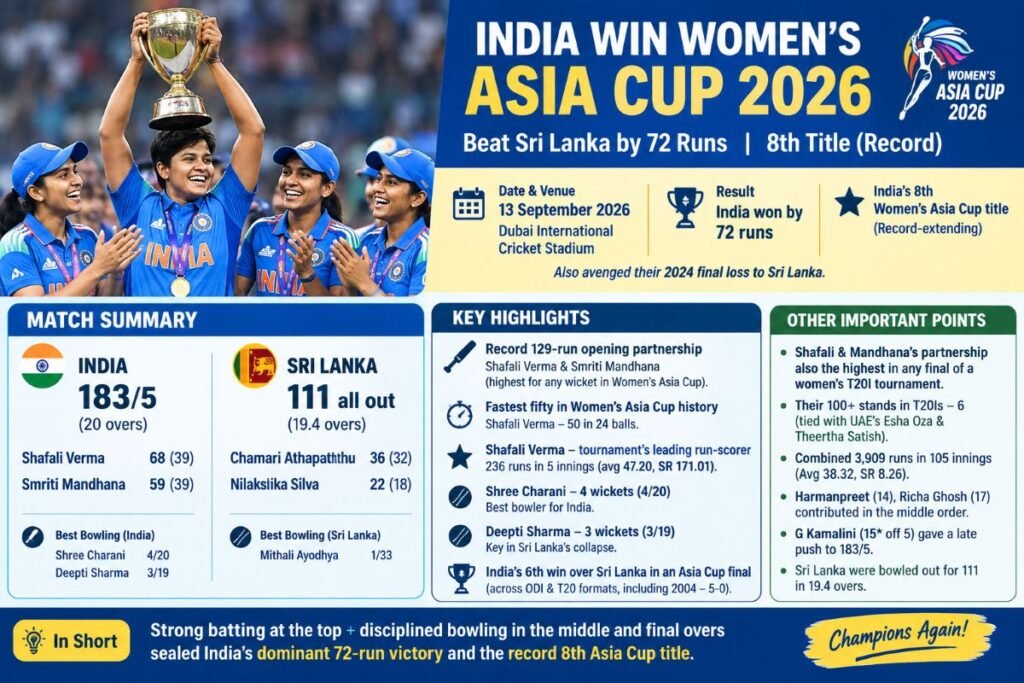
  • 2 November 2025 – India Wins Women’s Cricket World Cup: In a historic feat, the Indian Women’s team secured its first-ever ODI World Cup title by defeating South Africa in the final. Deepti Sharma was named Player of the Series.
  • 15 November 2025 – Janjatiya Gaurav Diwas: Celebrated on the birth anniversary of Birsa Munda; the government released a Santhali translation of the Constitution in the Ol Chiki script.

December 2025

  • 10 December 2025 – Deepavali Inscribed by UNESCO: Deepavali was officially inscribed on the UNESCO Representative List of Intangible Cultural Heritage of Humanity, recognizing its global cultural significance.
  • 28 December 2025 – President’s Submarine Sortie: President Droupadi Murmu undertook a rare operational sortie on the indigenous Kalvari-class submarine INS Vaghsheer on the Western Seaboard.
  • 30 December 2025 – FIDE World Rapid Chess: India’s Arjun Erigaisi and Koneru Humpy won bronze medals at the World Rapid Chess Championships held in Doha, Qatar.

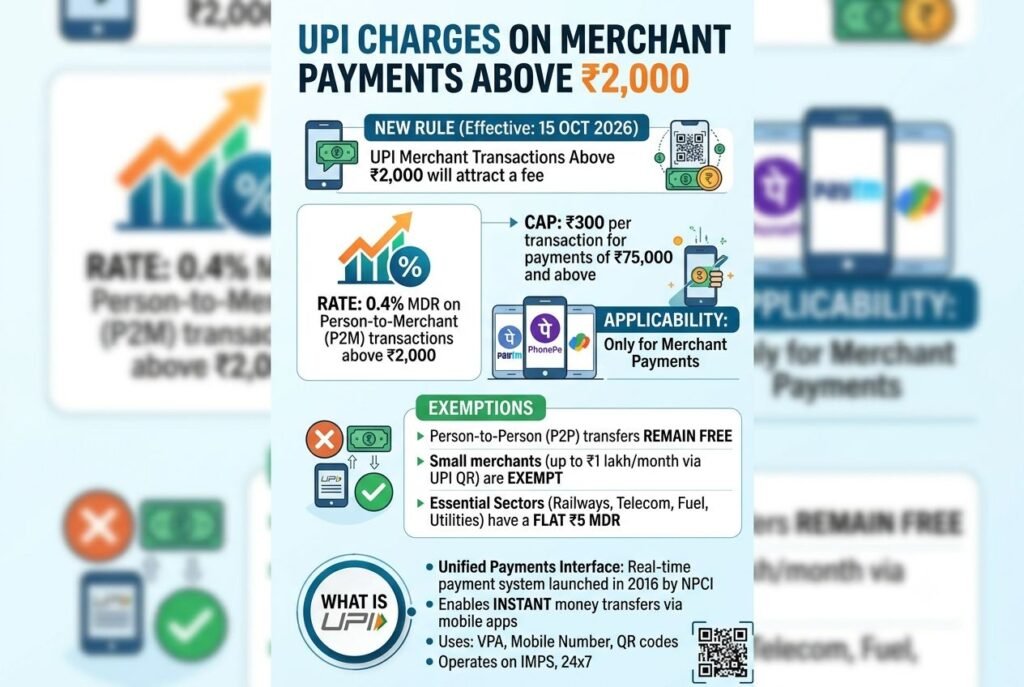
UPI Recognized as World’s Largest Real-Time Payment System by IMF

The Unified Payments Interface (UPI) has been recognized by the International Monetary Fund (IMF) as the world’s largest retail fast-payment (real-time) system by transaction volume, according to the IMF report “Growing Retail Digital Payments (The Value of Interoperability)” released in June 2025. Additionally, as per the ACI Worldwide report “Prime Time for Real-Time” 2024, UPI accounts for around 49% of global real-time payment transactions, underscoring India’s leadership in digital payments.

In terms of global comparison, India recorded 129.3 billion transactions, far ahead of other countries such as Brazil (14%), Thailand (8%), China (6%), and South Korea (3%), out of a total 266.2 billion global real-time transactions.

To accelerate adoption, especially among small and micro merchants, the Government of India, Reserve Bank of India (RBI), and National Payments Corporation of India (NPCI) have implemented targeted initiatives. These include incentives for low-value BHIM-UPI transactions and the Payments Infrastructure Development Fund (PIDF), which supports deployment of POS terminals and QR codes in tier-3 to tier-6 areas. As of 31 October 2025, about 5.45 crore digital touchpoints were deployed through PIDF, and 56.86 crore QR codes were issued to nearly 6.5 crore merchants by FY 2024–25.

UPI and RuPay are also being expanded across public services, transport, and e-commerce, further deepening digital transactions nationwide. This information was shared by Minister of State for Finance, Shri Pankaj Chaudhary, in a written reply in the Lok Sabha on 8 Dec 2025.

DRDO Successfully Tests Pinaka Long Range Guided Rocket with 120 km Range

The Defence Research and Development Organisation (DRDO) successfully carried out the maiden flight test of the Pinaka Long Range Guided Rocket at the Integrated Test Range (ITR), Chandipur, on 29 December 2025. The rocket was tested to its maximum range of 120 km, performing all planned in-flight manoeuvres and striking the target with high accuracy.

The rocket system was designed by the Armament Research and Development Establishment (ARDE) in collaboration with the High Energy Materials Research Laboratory (HEMRL), and supported by the Defence Research and Development Laboratory (DRDL) and the Research Centre Imarat (RCI). It was launched from an in-service Pinaka launcher, demonstrating its versatility and compatibility to fire different range variants from the same platform.

Defence Minister Rajnath Singh congratulated DRDO on the successful test, calling it a major technological boost for the Armed Forces and a potential game-changer in India’s defence capabilities.

Arjun Erigaisi & Koneru Humpy Win Bronze at 2025 FIDE World Rapid Chess Championships

At the 2025 FIDE World Rapid & Women’s World Rapid Chess Championships held in Doha, Qatar, on 28 December 2025, India secured two bronze medals. Arjun Erigaisi won bronze in the men’s section, finishing third with 9.5 points, while Koneru Humpy secured bronze in the women’s section, adding to her previous rapid chess gold titles from 2019 and 2024.

Magnus Carlsen won the men’s title with 10.5 points, claiming his sixth World Rapid Chess Championship, and Alexandra Goryachkina won the women’s title.

President Droupadi Murmu Undertakes Submarine Sortie on INS Vaghsheer

On 28 December 2025, President Droupadi Murmu, the Supreme Commander of the Armed Forces, undertook a rare dived operational sortie onboard INS Vaghsheer, an indigenous Kalvari-class submarine, on the Western Seaboard. She embarked the submarine from Karwar Naval Harbour, Karnataka, accompanied by Chief of the Naval Staff Admiral Dinesh K. Tripathi, and spent over two hours at sea interacting with the crew and observing live operational demonstrations.

President Murmu became only the second President of India to undertake a submarine sortie, after Dr A. P. J. Abdul Kalam. Describing the experience as special and memorable, she praised the successful firings, demanding operations, and the crew’s exceptional preparedness and dedication, reflecting the submarine’s motto “Veerta Varchasva Vijaya.”

She expressed confidence that the Indian Navy’s submarine arm is fully combat-ready to meet any threat. The sortie follows her earlier operational engagement with the Navy in November 2024 aboard INS Vikrant, highlighting her continued engagement with the Armed Forces.

Vaibhav Suryavanshi Awarded Pradhan Mantri Rashtriya Bal Puraskar 2025

On 26 December 2025, President Droupadi Murmu conferred the Pradhan Mantri Rashtriya Bal Puraskar on 14-year-old cricket sensation Vaibhav Suryavanshi for his exceptional achievements in domestic and U-19 cricket. The ceremony recognised outstanding children across fields such as sports, bravery, social service, environment, art & culture, and science & technology.

Vaibhav has quickly risen as one of India’s most exciting young talents, breaking multiple records. He became the youngest centurion in List A cricket, smashing 190 off 84 balls in the Vijay Hazare Trophy and surpassing AB de Villiers’ record for fastest 150. He also became the youngest batter to score a century in the Syed Mushtaq Ali Trophy, and holds the highest U-19 Asia Cup score by an Indian (171).

Internationally, he scored a century against Australia U-19 and hit 144 off 42 balls for India A in the Rising Stars Asia Cup, with a 32-ball hundred making him the youngest male cricketer to score a century at senior representative level.

In the IPL, he debuted for Rajasthan Royals at 14 years and 23 days, becoming the youngest player in tournament history. Nine days later, he became the youngest IPL centurion, scoring a stunning 35-ball hundred, the fastest by an Indian in IPL history.

Vaibhav’s achievements have earned him national recognition, marking him as one of India’s brightest future prospects in cricket.

Israel becomes first country to recognise Somaliland as independent state

Israel has officially become the first country to recognise Somaliland as an independent state, marking a historic diplomatic shift. The move has drawn sharp reactions from Somalia and the African Union, who warn it could destabilise the Horn of Africa.

Key Points

  • Historic Recognition: On 26 December 2025, Israel formally recognised Somaliland, a breakaway region that declared independence from Somalia in 1991.
  • First UN Member State: Israel is the first United Nations member to extend such recognition, though Taiwan had earlier recognised Somaliland in 2020.
  • Strategic Importance: Somaliland lies along the Red Sea corridor, a geopolitically vital region for trade and security.
  • Diplomatic Ties: Israeli PM Benjamin Netanyahu and Somaliland President Abdirahman Mohamed Abdullahi signed a declaration of mutual recognition, with plans for cooperation in agriculture, health, and technology.
  • Global Reactions: Somalia condemned the move as a violation of its sovereignty, while Turkey, Egypt, and the African Union also criticised Israel’s decision.

Context

Somaliland has operated with its own government, military, and currency since 1991 but lacked international recognition. Israel’s step could encourage other nations to reconsider their stance, though it risks heightening tensions in East Africa.

Scroll to Top