|

₹2,000 Crore Grant to NCDC Approved to Boost Cooperatives

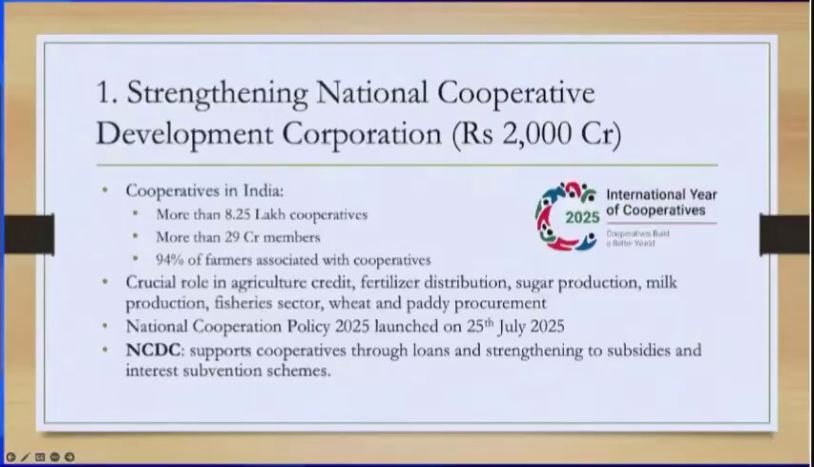
On July 31, 2025, the Union Cabinet, chaired by Prime Minister Narendra Modi, approved a ₹2,000 crore grant-in-aid to the National Cooperative Development Corporation (NCDC) under a Central Sector Scheme.

The grant will be disbursed over four years (FY 2025–26 to FY 2028–29) at ₹500 crore annually.

This financial support will empower NCDC to mobilize ₹20,000 crore from the open market, which will be extended as loans to cooperative societies.
Similar Posts

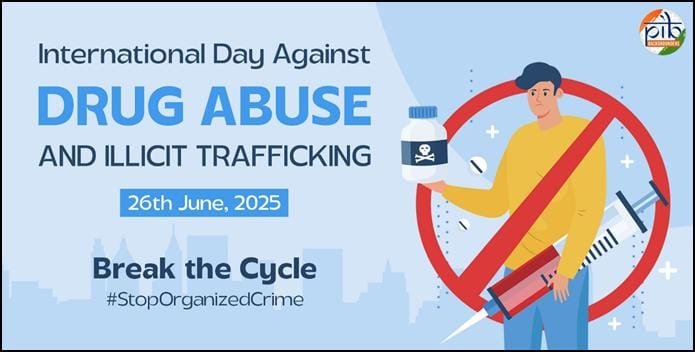
  • International Day Against Drug Abuse and Illicit Trafficking

    Observed on: June 26
    Theme for 2025: “Break the Cycle. #StopOrganizedCrime”


    🧭 Background

    Established by the United Nations General Assembly in 1987, this day underscores the global commitment to combat drug abuse and illicit trafficking. It aims to raise awareness about the devastating impact of drugs on individuals, families, and communities, while promoting international cooperation for a drug-free world.


    🔍 Why It Matters

    • Global Impact: Over 292 million people used drugs in 2022—a 20% increase over the past decade.
    • Health Crisis: Drug use disorders affect 64 million people, with opioids being the leading cause of overdose deaths.
    • Organized Crime: Illicit drug trade fuels violence, corruption, and instability, especially in vulnerable regions.

    🧩 2025 Theme: “Break the Cycle. #StopOrganizedCrime”

    This year’s theme emphasizes the need to disrupt the link between drug trafficking and organized crime. It calls for:

    • Investment in prevention through education, healthcare, and justice systems
    • Community empowerment to build resilience
    • Global cooperation to dismantle criminal networks

    🇮🇳 India’s Response

    India observes this day through initiatives like:

    • Nasha Mukt Bharat Abhiyaan – a people-centric campaign for a drug-free India
    • Awareness rallies, seminars, and pledges across schools, colleges, and workplaces
    • Law enforcement drives led by the Narcotics Control Bureau and local police
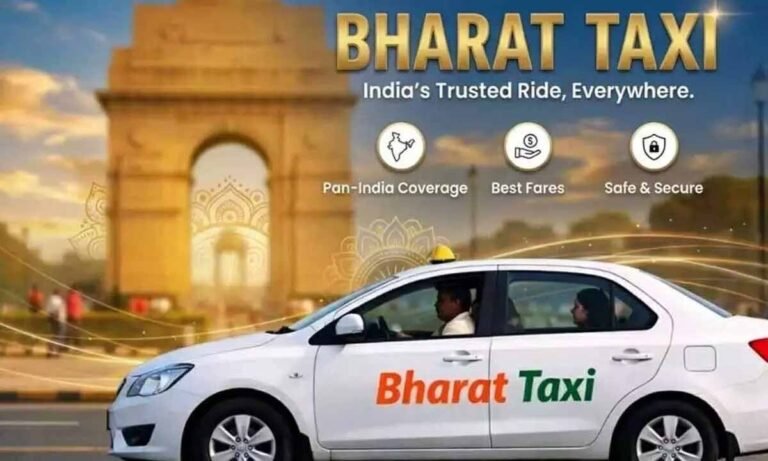
  • Bharat Taxi: India’s First Cooperative Ride-Hailing Platform

    Bharat Taxi is India’s first cooperative-based ride-hailing platform, launched on 5 February 2026 in New Delhi by Union Home and Cooperation Minister Amit Shah. Unlike private aggregators such as Ola and Uber, Bharat Taxi follows a “Sarathi hi Malik” (driver is the owner) model, ensuring zero-commission rides, surge-free pricing, and direct profit distribution to drivers.


    🚖 What is Bharat Taxi?

    • Concept: A cooperative-led ride-hailing service designed to empower drivers (called Sarathis) by making them stakeholders in the platform.
    • Ownership: Registered under the Multi-State Cooperative Societies Act, 2002.
    • Launch Date: Officially launched on 5 February 2026 at Vigyan Bhavan, New Delhi.
    • Pilot Operations: Began in December 2025 in Delhi-NCR and Gujarat.

    🌟 Key Features

    • Zero Commission: Drivers keep full earnings; no deductions by the platform.
    • Surge-Free Pricing: Transparent fares without sudden hikes during peak hours.
    • Profit Sharing: Direct distribution of profits among drivers.
    • Driver Welfare:
      • Personal accident insurance cover of ₹5 lakh.
      • Family health insurance of ₹5 lakh.
      • Recognition through share certificates for top-performing drivers.
    • Technology Backbone: Developed under the Digital India initiative with support from the National e-Governance Division (NeGD).
  • India Successfully Tests First Hydrogen-Powered Rail Coach

    India successfully tested its first hydrogen-powered train coach on 15 July 2025 at ICF Chennai, announced by Railway Minister Ashwini Vaishnaw. The 1,200 HP train is part of the “Hydrogen for Heritage” plan to run 35 hydrogen trains on heritage routes.

    A pilot DEMU retrofit is also underway for the Jind–Sonipat section at a cost of ₹111.83 crore. Hydrogen trains, though currently costlier, promise zero carbon emissions and support India’s clean energy goals.

  • New UGC Guidelines on Caste-Based Discrimination in Higher Education

    The University Grants Commission (UGC) has issued new legally binding guidelines in January 2026 to curb caste-based discrimination in higher education institutions. These rules, called the Promotion of Equity in Higher Education Institutions Regulations, 2026, replace the earlier 2012 advisory framework and mandate strict compliance by all UGC-recognised universities and colleges.


    📌 Key Features of the New UGC Guidelines

    • Legal Framework: Unlike the 2012 guidelines, the 2026 regulations are mandatory and enforceable, with penalties for non-compliance.
    • Expanded Definition of Discrimination: Explicitly covers SC, ST, and OBC students, correcting earlier gaps that excluded OBCs.
    • Equal Opportunity Centres (EOCs): Every institution must establish an EOC to handle complaints, promote inclusivity, and monitor compliance.
    • Accountability: Vice-chancellors, principals, and heads of institutions are directly responsible for ensuring equity and preventing discrimination.
    • Grievance Redressal: Institutions must set up dedicated grievance mechanisms for caste-based complaints, covering admissions, hostels, classrooms, and faculty interactions.
    • Penalties: Non-compliance can lead to financial sanctions, withdrawal of recognition, or other disciplinary action against institutions.

    🏛 Impact on Campuses

    • Students: Greater protection for marginalized groups, ensuring dignity and equal opportunity in academics, hostels, and extracurricular activities.
    • Faculty & Staff: Required to undergo sensitization programs to prevent discriminatory practices.
    • Institutions: Must adopt proactive measures like awareness campaigns, reporting systems, and periodic audits of inclusivity.

    📊 Comparison: Old vs New Guidelines

    Aspect2012 Guidelines2026 Guidelines
    NatureAdvisory onlyLegally binding
    CoverageSC/ST studentsSC, ST, OBC students
    ComplianceVoluntaryMandatory with penalties
    Grievance SystemGeneral redressDedicated caste-based complaint mechanisms
    Institutional RoleEncouraged equityEqual Opportunity Centres compulsory

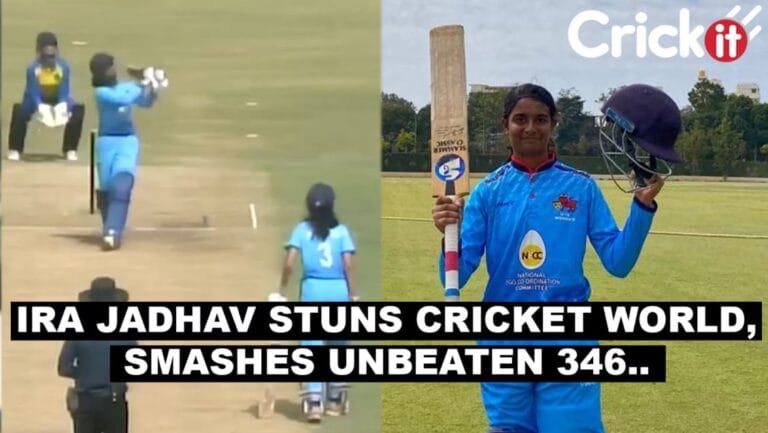
  • Ira Jadhav Shatters Records with Unbeaten 346 in Women’s Under 19 One Day Trophy

    On January 13, 2024, Ira Jadhav from Mumbai became the highest individual scorer in Women’s Under 19 One Day Trophy history. The 14-year-old prodigy played an unbeaten inning of 346 runs off 157 balls against Meghalaya at the Alur Cricket Stadium in Bengaluru.

    Her extraordinary performance, which included 42 fours and 16 sixes, led Mumbai to a monumental total of 563 for 3 in 50 overs. Ira’s achievement surpassed the previous record held by Smriti Mandhana, who scored 224 runs off 150 deliveries in 2013 while playing for Maharashtra. This remarkable feat has set a new benchmark in women’s domestic cricket and highlighted Ira’s immense potential as a future star.

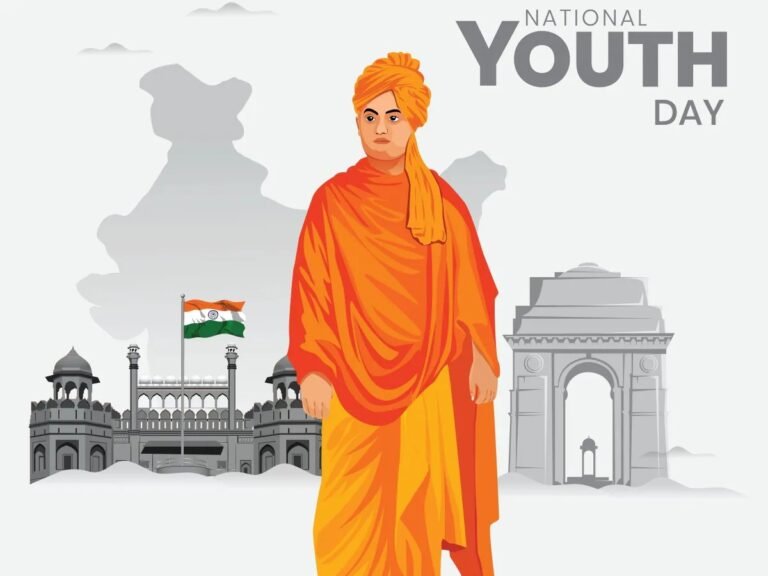
  • National Youth Day 2026: Celebrating Swami Vivekananda’s Legacy

    National Youth Day is observed every year on 12 January in India to commemorate the birth anniversary of Swami Vivekananda, one of the country’s greatest spiritual leaders, philosophers, and youth icons. The day aims to inspire young people to follow his ideals of character-building, knowledge, discipline, and nation-building.


    📅 Historical Background

    • In 1984, the Government of India declared 12 January as National Youth Day.
    • The first official celebration took place on 12 January 1985.
    • The decision was based on Swami Vivekananda’s lasting influence on youth empowerment and his contribution to Indian thought and culture.

    👤 About Swami Vivekananda

    • Born: 12 January 1863, Kolkata
    • Original Name: Narendranath Datta
    • Key Contribution: Introduced Indian philosophy and Vedanta to the Western world through his iconic speech at the World Parliament of Religions in Chicago (1893).
    • Mission: Awakening spiritual and social consciousness; service to humanity.
    • Legacy Organizations: Ramakrishna Mission and Ramakrishna Math