8th International Solar Alliance (ISA) Assembly Held from October 27–30, 2025, in New Delhi

The 8th International Solar Alliance (ISA) Assembly was held from October 27–30, 2025, at Bharat Mandapam, New Delhi, with participation from 124 countries and over 40 ministers. Centered on the theme “One Sun, One World, One Grid,” the event focused on strengthening global cooperation for solar energy expansion.

President Droupadi Murmu delivered the first-ever presidential keynote at an ISA Assembly, highlighting India’s leadership in sustainable solar growth. Minister Pralhad Joshi showcased India’s clean energy achievements, including attaining 50% of installed electricity capacity from non-fossil sources and becoming the third-largest solar power producer globally.

The Assembly reviewed progress on solar financing, technology transfer, and grid integration while launching new initiatives in solar R&D, training, and green hydrogen. As the ISA’s host nation, India reaffirmed its pivotal role in promoting affordable and universal solar access, aligning with Prime Minister Narendra Modi’s vision of making solar energy central to global climate action.

Similar Posts

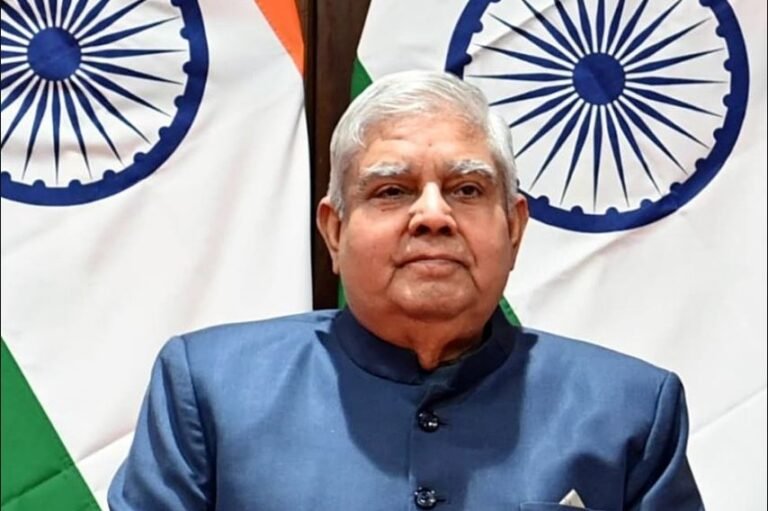
  • Vice President Jagdeep Dhankhar Resigns Due to Health Reasons

    Vice President Jagdeep Dhankhar Resigns Due to Health Reasons on 21 July 2025.

    • Reason: Health concerns and medical advice
    • Constitutional Provision: Resigned under Article 67(a) of the Constitution
    • Addressed to: President Droupadi Murmu
    • Role: Also served as Chairman of the Rajya Sabha
    • The resignation took effect immediately and coincided with the first day of the Monsoon Session of Parliament.
  • Eid-ul-Fitr 2026 : Marks End of Ramadan

    Eid-ul-Fitr 2026 was celebrated in India on 21 March 2026, following the sighting of the crescent moon on 20 March in Mumbai. In Saudi Arabia and several Gulf countries, the festival was observed earlier on 20 March 2026. The occasion marked the end of the holy month of Ramadan and the beginning of Shawwal (1447 AH).

    Eid-ul-Fitr marked the completion of a month of fasting, prayer, and reflection. Known as the festival of breaking the fast, it symbolized spiritual renewal, gratitude, and joy. A key aspect of the celebration was Zakat al-Fitr, a form of charity given to the needy before the Eid prayers, ensuring inclusivity in the festivities.

    The day began with special Eid prayers (Salat al-Eid) performed in mosques and open grounds. People wore new clothes, exchanged greetings of “Eid Mubarak”, and visited relatives and friends. Traditional dishes like Sheer Khurma and other sweets were prepared, adding to the festive spirit.

  • Trump–Putin Alaska Meeting on August 15 in Alaska

    US President Donald Trump announced he will meet Russian President Vladimir Putin in Alaska on August 15 to discuss efforts to end the war in Ukraine.

    This will be their first in-person meeting since Trump’s return to the White House in January, and Putin’s first US visit in a decade.
    The announcement followed Trump’s unveiling of a peace framework between Armenia and Azerbaijan, part of his push to resolve multiple global conflicts.

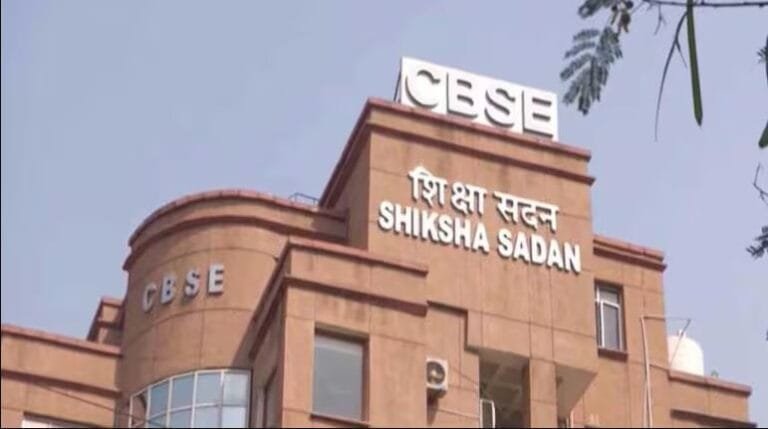
  • CBSE’s New Rules for Class 10 & 12 Board Exams

    On 15 September 2025, the Central Board of Secondary Education (CBSE) announced new guidelines for board exams:

    Attendance Rule:

    • 75% attendance is mandatory to appear in Class 10 & 12 board exams.
    • Attendance will be directly linked to internal assessment.
    • Students failing to meet this requirement will not be allowed to sit for exams.

    Additional Subjects:

    • Class 10: Students may opt for two additional subjects (besides five compulsory).
    • Class 12: Students may opt for one additional subject.
    • These subjects must be studied over two academic years.

    Restrictions on Schools:

    • Schools cannot offer subjects without trained teachers, labs, or board approval.
    • Students cannot take such subjects as main or additional papers.

    Compartment/Essential Repeat Students: Students in these categories for additional subjects may reappear as private candidates.

  • PM Narendra Modi Conferred Ethiopia’s Highest Civilian Award

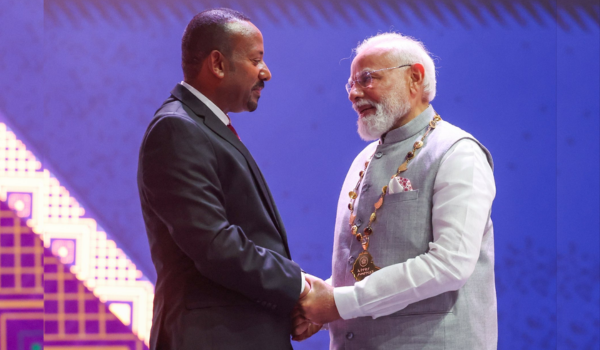
    Prime Minister Narendra Modi was conferred Ethiopia’s highest civilian award, The Great Honour Nishan of Ethiopia during his visit to Addis Ababa in December 2025. He became the first global Head of State or Government to receive this prestigious honour, marking a historic moment in India–Ethiopia relations.

    The award was bestowed by Ethiopian Prime Minister Abiy Ahmed Ali at a special ceremony, recognising PM Modi’s visionary leadership and his role in strengthening Ethiopia’s global partnerships, particularly with India. It reflects Ethiopia’s appreciation of India’s growing influence in Africa and its long-standing cooperation with the country.

  • India Rejects Court of Arbitration’s Supplemental Award on Indus Waters Treaty

    On June 27, 2025, India categorically rejected a “supplemental award” issued by a Court of Arbitration constituted under the Indus Waters Treaty (IWT) of 1960. The award pertained to the Kishenganga and Ratle hydroelectric projects in Jammu & Kashmir.

    India’s Position

    • The Ministry of External Affairs (MEA) declared the Court of Arbitration as illegally constituted, stating it was a serious breach of the IWT.
    • India emphasized it has never recognized the legal validity of this court, calling the proceedings a “charade at Pakistan’s behest”.
    • The MEA reiterated that any decisions or awards by this body are “illegal and per se void”.

    Treaty in Abeyance

    • Following the April 22 Pahalgam terror attack, India placed the Indus Waters Treaty in abeyance, citing Pakistan’s continued support for cross-border terrorism.
    • India asserted that until Pakistan credibly and irrevocably abjures terrorism, it is no longer bound by the treaty’s obligations.

    Background

    • The dispute stems from Pakistan’s objections to the design of the Kishenganga (on Jhelum tributary) and Ratle (on Chenab) projects.
    • In 2016, Pakistan moved the World Bank to establish a Court of Arbitration, while India preferred resolution through a neutral expert, as per treaty provisions.
    • Despite India’s objections, the World Bank appointed both a neutral expert and a Court of Arbitration in October 2022, leading to parallel proceedings.