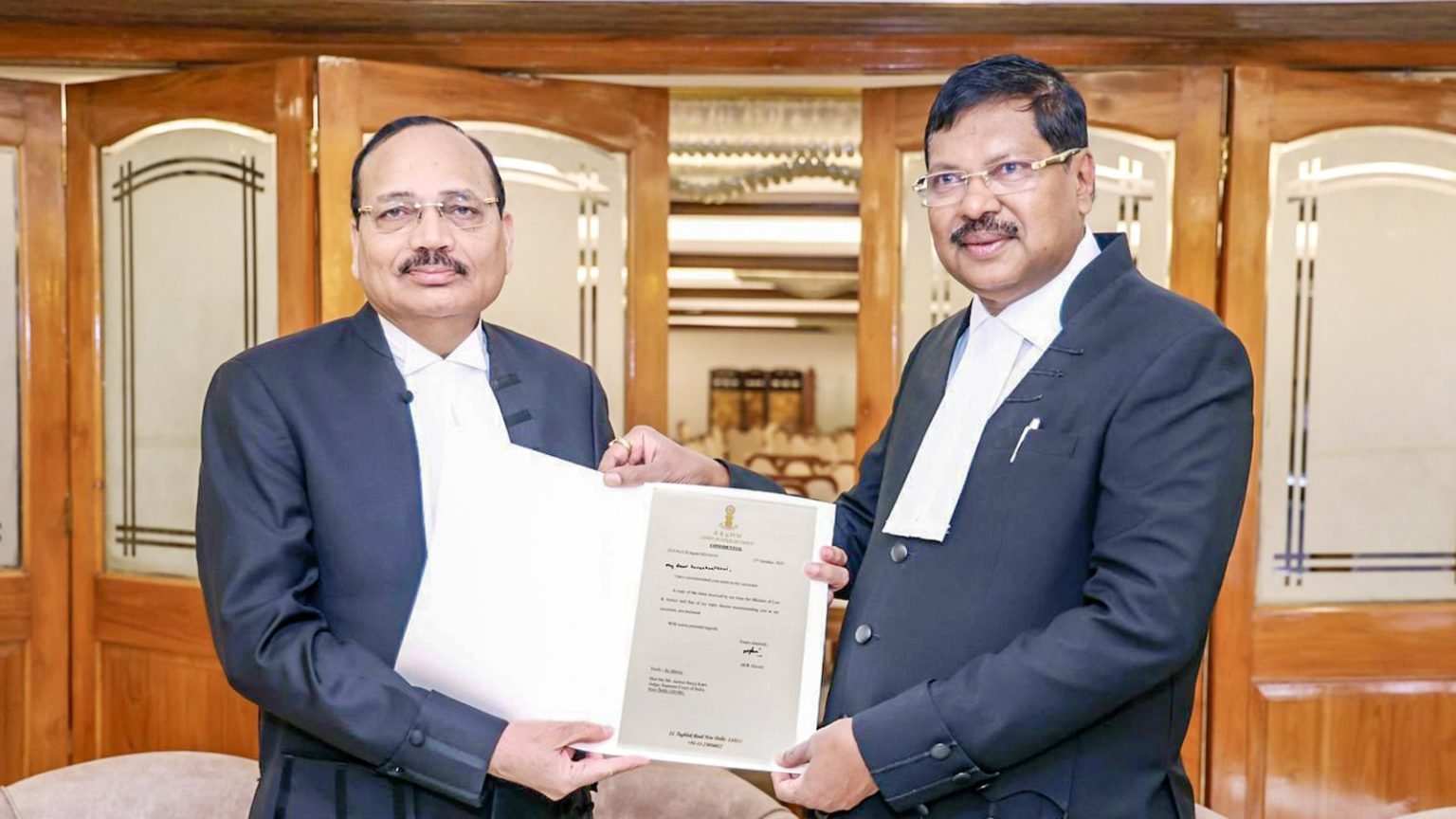
Justice Surya Kant Appointed as 53rd Chief Justice of India

Justice Surya Kant has been appointed as the 53rd Chief Justice of India (CJI), succeeding Chief Justice B.R. Gavai, who retires on November 23, 2025. President Droupadi Murmu has approved the appointment under Article 124(2) of the Constitution. Justice Kant will assume office on November 24, 2025, and will serve a 14-month tenure until February 9, 2027.

Born on February 10, 1962, in Petwar village, Hisar district (Haryana), Justice Surya Kant earned his LL.B. from Maharishi Dayanand University, Rohtak, in 1984 and began practicing law in Hisar before moving to the Punjab and Haryana High Court in 1985.

He became the youngest Advocate General of Haryana in 2000 and was later elevated as a Judge of the Punjab and Haryana High Court (2004), Chief Justice of the Himachal Pradesh High Court (2018), and Judge of the Supreme Court (2019).

Similar Posts

  • UNSC Condemns Pahalgam Terror Attack, Reaffirms Global Stand Against Terrorism

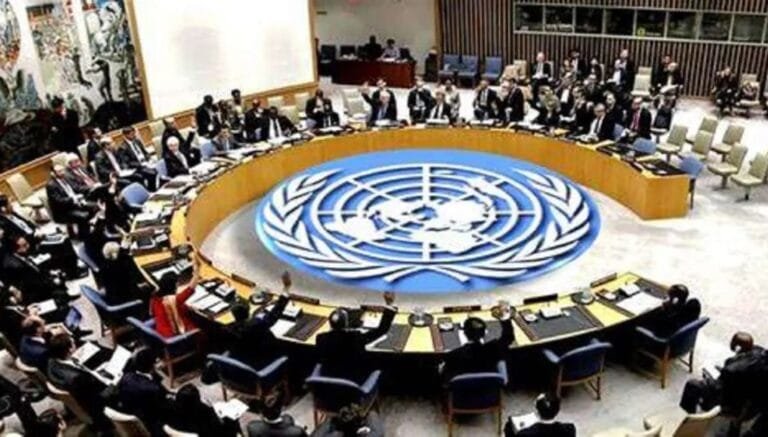
    The United Nations Security Council (UNSC) has strongly condemned the Pahalgam terror attack in Jammu and Kashmir, which killed 26 people, mostly tourists. The 15-member Council reaffirmed that terrorism is a serious threat to international peace and security.

    The UNSC called for the accountability of the perpetrators, organizers, financiers, and sponsors, urging all nations to cooperate under international law and Security Council resolutions.

    The attack on April 22 sparked outrage across India and abroad. India responded with punitive actions against Pakistan, including the expulsion of military attachés, suspension of the Indus Waters Treaty, and closure of the Attari post. Pakistan retaliated by shutting its airspace to Indian airlines and suspending trade.

  • Balendra Shah Sworn in as Nepal Prime Minister

    Balendra Shah was sworn in as the Prime Minister of Nepal on 27 March 2026 at the President’s Office, Sheetal Niwas, Kathmandu. He is the leader of the Rastriya Swatantra Party (RSP) and was elected as the party’s parliamentary leader before assuming office. At 35 years, he became Nepal’s youngest elected Prime Minister and the first from the Madhes region to hold the post.

    His party, RSP, achieved a landslide victory in the March 5, 2026 parliamentary elections, winning 182 out of 275 seats in the House of Representatives. The elections marked a major political shift, with voters favoring new leadership after Gen Z-led protests demanding change and anti-corruption reforms.

    Balendra Shah, a rapper-turned-politician and former Kathmandu mayor, defeated former PM K. P. Sharma Oli in Jhapa-5 constituency, a traditional stronghold of the Communist Party of Nepal (UML).

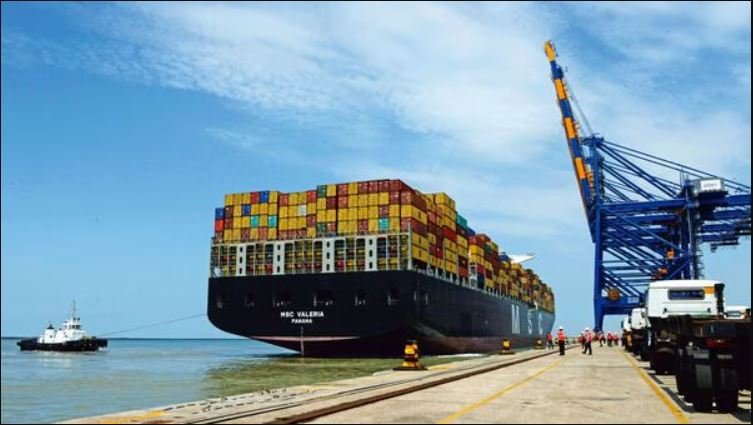
  • Parliament Passes Coastal Shipping Bill, 2025 to Boost India’s Maritime Economy

    The Coastal Shipping Bill, 2025 was passed by the Rajya Sabha on 7 August 2025, after clearance from the Lok Sabha on April 3, 2025.

    • The bill replaces Part XIV of the Merchant Shipping Act, 1958 with a modern legal framework aligned with global cabotage norms.
    • Union Minister Sarbananda Sonowal, who introduced the bill, stated it will help increase India’s coastal cargo share to 230 million metric tonnes by 2030.
    • Key Features:
      • Introduces a simplified licensing system for coastal shipping.
      • Provides a framework for regulating foreign vessels in coastal trade.
      • Mandates a National Coastal and Inland Shipping Strategic Plan to guide future policy and infrastructure.
      • Proposes a National Database for Coastal Shipping to support transparency and investment.
    • The bill aims to enhance supply-chain security, promote Indian vessel usage, reduce foreign dependence, and generate local employment.
    • With its passage, all three key maritime laws are now approved:
      1. Merchant Shipping Bill, 2025
      2. Carriage of Goods by Sea Bill, 2025
      3. Coastal Shipping Act, 2025
  • ArabPlast 2025: India Leads Charge in Sustainable Plastics

    The 17th edition of ArabPlast, West Asia’s premier trade exhibition for plastics and petrochemicals, opened on January 7, 2025, in Dubai, with India emerging as a key player in sustainable manufacturing. Running through January 9, 2025, the event has attracted over 750 exhibitors from 12 international pavilions, focusing on innovations in plastics, recycling, petrochemicals, packaging, and rubber industries.

    India’s delegation, led by the Plastic Export Promotion Council of India (PLEXCONCIL), includes 125 companies, a 70% increase from the previous edition. This underscores India’s growing role in the global plastics sector and commitment to sustainable practices and the circular economy. Vikram Bhaduria, Chairman of PLEXCONCIL, highlighted the potential for expanding Indo-UAE trade relations.

    The event emphasizes environmental sustainability, with Indian companies showcasing biodegradable plastics and advanced recycling technologies. The GCC petrochemical sector, generating over $100 billion in annual revenues, is also a key focus.

    Inaugurated by Shri Satish Kumar Sivan, Consul General of India to Dubai and the Northern Emirates, ArabPlast 2025 solidifies Dubai’s status as a global hub for industrial innovation and sustainable development, providing a platform for stakeholders to explore new technologies and forge partnerships.

  • 17th India-Mongolia Joint Military Exercise NOMADIC ELEPHANT Concludes in Ulaanbaatar

    The 17th edition of the India-Mongolia Joint Military Exercise NOMADIC ELEPHANT concluded on June 13, 2025 at Ulaanbaatar, Mongolia.

    Defence Secretary Rajesh Kumar Singh praised the professionalism and dedication of the Indian soldiers, highlighting the exercise as a symbol of the strong friendship and shared cultural ties between India and Mongolia.

    The Indian Army contingent included 45 personnel, mainly from the ARUNACHAL SCOUTS battalion.

    The two-week-long exercise focused on enhancing interoperability between the two nations’ armed forces in semi-conventional operations, particularly in semi-urban and mountainous terrain under a United Nations mandate.

  • Exercise Desert Cyclone II: India–UAE Joint Military Drill

    The second edition of the joint military exercise Desert Cyclone II between the Indian Army and the UAE Land Forces concluded successfully on 30 December 2025 at Al-Hamra Training City, Abu Dhabi, following nearly two weeks of intensive bilateral training held from 18–30 December 2025.

    The exercise involved 45 personnel from the Indian Army’s Mechanised Infantry Regiment and troops from the 53 Mechanised Infantry Battalion of the UAE Land Forces. It was aimed at enhancing interoperability, strengthening defence cooperation, and reinforcing the shared commitment of both nations to regional peace, security, and stability.

    Training focused on urban warfare and sub-conventional operations under a United Nations mandate, preparing both forces for peacekeeping, counter-terrorism, and stability operations. The programme combined classroom instruction with field exercises, covering urban combat basics, building marking and clearance, IED awareness, casualty evacuation, first aid, and detailed mission planning.

    Practical drills included room intervention, building clearance techniques, heliborne operations, and air assault missions, culminating in integrated offensive and defensive urban operations. These activities demonstrated high levels of coordination, mutual trust, and combat readiness.