|

Samvidhan Diwas (Constitution Day) – 26 November

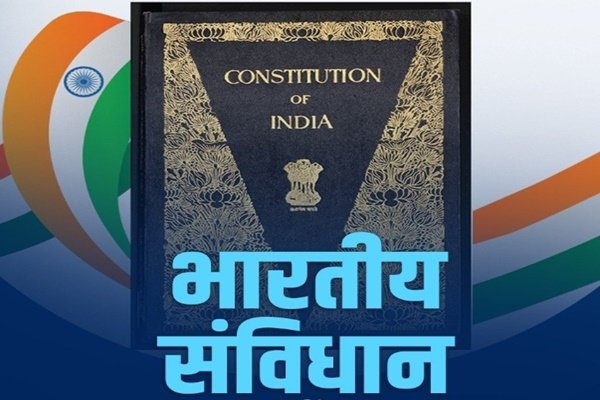
Samvidhan Diwas is observed every year on 26 November to commemorate the adoption of the Indian Constitution in 1949. Although the Constitution came into force on 26 January 1950, this day marks its official acceptance by the Constituent Assembly. The Government of India declared it Constitution Day in 2015.

Historically, the Constitution was drafted by the Constituent Assembly formed in 1946, with Dr. Rajendra Prasad as its President and Dr. B.R. Ambedkar as the Chairman of the Drafting Committee. The day honours their contributions and highlights the core constitutional values of Justice, Liberty, Equality, and Fraternity.

In 2025, India is celebrating the 75th Constitution Day with the theme “Hamara Samvidhan – Hamara Swabhiman”. Events across the country include Preamble reading, awareness campaigns, debates, and special sessions in institutions and Parliament.

Overall, Samvidhan Diwas reminds citizens to uphold democratic values and remain committed to the principles laid out in the Constitution.
Similar Posts

  • Pusa Krishi Vigyan Mela 2025 Held in New Delhi (22-24 February)

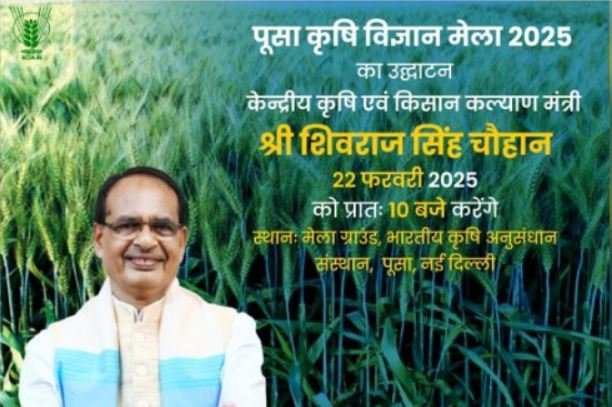
    The Pusa Krishi Vigyan Mela 2025 was inaugurated in New Delhi on 22nd February 2025 by Union Agriculture and Farmers’ Welfare Minister Shivraj Singh Chouhan. The three-day fair is themed “Unnat Krishi – Viksit Bharat” and will conclude on 24th February, with Ministers Ramnath Thakur and Bhagirath Choudhary as Chief Guests at the Valedictory Session.

    Key attractions include live demonstrations of advanced agricultural technologies developed by the Indian Agricultural Research Institute (IARI) and exhibitions showcasing innovations from Krishi Vigyan Kendras, Farmers’ Producer Organizations, entrepreneurs, and start-ups.

    The event also features technical sessions and farmer-scientist interactions on topics such as climate-resilient agriculture, crop diversification, digital agriculture, and entrepreneurship development for youth and women. On-spot agro-advisory services will also be available for farmers.

  • Indian Army Conducts Field Trials Of Next-Gen Indigenous Defence Technologies

    On 1 June 2025, the Indian Army began trials of next-generation defence technologies at key sites across the country, including Pokhran, Babina, and Joshimath. These trials, conducted under near-combat conditions with electronic warfare simulations, are meant to rigorously test the performance of new systems.

    Air defence demonstrations are also being held in Agra and Gopalpur.

    Technologies being tested include:

    • Unmanned Aerial Systems (UAS)
    • UAV-launched Precision-Guided Munitions
    • Loitering Munitions
    • Low-Level Lightweight Radars
    • Electronic Warfare Platforms
    • Vertical-launch Drones

    These systems are developed under the Aatmanirbhar Bharat initiative, with active participation from multiple defence industry partners. The goal is to ensure rapid integration of emerging battlefield technologies.

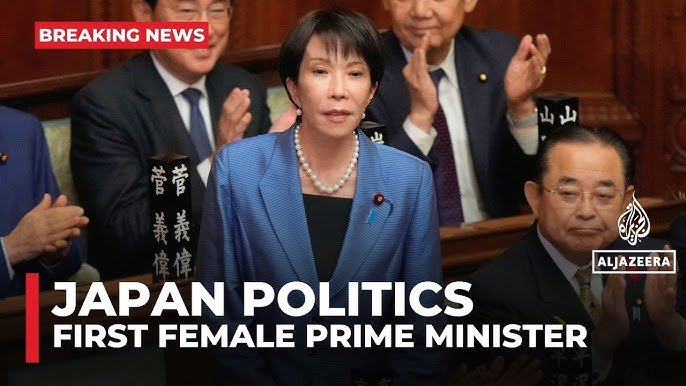
  • Sanae Takaichi Becomes Japan’s First Female Prime Minister

    On 21 October 2025, Sanae Takaichi became Japan’s first female Prime Minister, elected by both Houses of Parliament with narrow majorities. A former TV anchor, Takaichi began her political career in 1993 and joined the Liberal Democratic Party (LDP) in 1996.

    She has previously served in the Cabinet under Shinzo Abe, including as Economic Security Minister (2022–2024). The 64-year-old lawmaker from Nara Prefecture now faces major challenges such as slow economic growth, inflation, and yen depreciation.

  • CISF Raising Day 2026: Celebrating 57 Years of Industrial Security

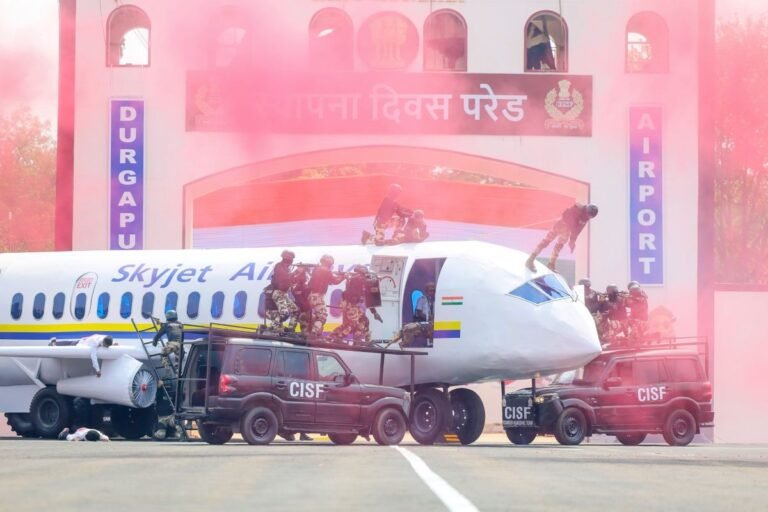
    CISF Raising Day 2026 was celebrated on March 10, marking the 57th anniversary of the Central Industrial Security Force (CISF). The grand parade and events were held at Mundali, Cuttack, Odisha, with Union Home Minister Amit Shah attending as chief guest. The day honored CISF’s role in safeguarding India’s critical infrastructure, including airports, seaports, nuclear plants, and major industrial undertakings.


    📅 History & Background

    • Formation: CISF was established in 1969 under the CISF Act, 1968.
    • Purpose: Initially tasked with protecting public sector undertakings (PSUs), it has since expanded to cover airports, metros, nuclear facilities, and major industrial plants.
    • Growth: From a modest beginning, CISF has grown into one of India’s largest Central Armed Police Forces (CAPFs) under the Ministry of Home Affairs.

    🎖️ CISF Raising Day 2026 Celebrations

    • Date: March 10, 2026.
    • Venue: KRTC Mundali, Cuttack, Odisha.
    • Chief Guest: Union Home Minister Amit Shah.
    • Highlights:
      • Grand parade showcasing discipline and operational readiness.
      • Demonstrations of tactical drills, disaster response, and counter-terror capabilities.
      • Awards & honors presented to personnel for distinguished service.
      • DG Praveer Ranjan reviewed preparations, emphasizing precision and excellence.

    🛡️ Significance of CISF

    • Critical Infrastructure Protection: Safeguards airports, seaports, nuclear plants, metro networks, and industrial complexes.
    • Specialized Roles:
      • Airport Security: CISF is the primary force at all major Indian airports.
      • Disaster Response: Trained for emergency evacuations and crisis management.
      • VIP Security: Provides protection to certain dignitaries.
    • Contribution to National Security: Acts as a shield for India’s economic and strategic assets, ensuring uninterrupted functioning of industries and transport hubs.

    📊 CISF at a Glance

    AspectDetails
    Established1969 under CISF Act, 1968
    Personnel StrengthOver 1.7 lakh (approx.)
    Key AreasAirports, metros, nuclear plants, PSUs, seaports
    MinistryMinistry of Home Affairs
    Motto“Protection and Security”

  • Japan Secures Spot in 2026 FIFA World Cup!

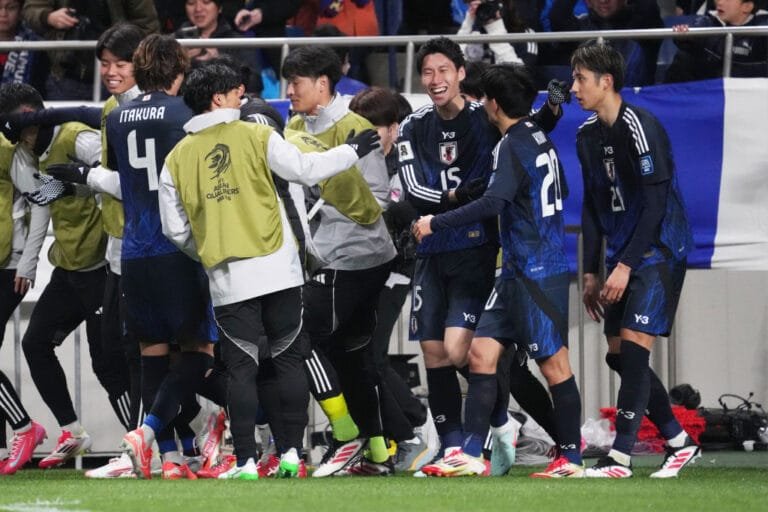
    On March 20, 2025, Japan became the first non-host nation to qualify for the 2026 FIFA World Cup after a 2-0 victory over Bahrain. Goals by Daichi Kamada and Takefusa Kubo sealed the win, marking Japan’s eighth consecutive World Cup appearance since 1998.

    With this win, Japan has claimed one of the two automatic qualification spots from Group C in the Asian qualifiers, with three matches still remaining. The expanded 48-team format will see the Asian Football Confederation (AFC) sending at least eight teams to the tournament, co-hosted by Canada, Mexico, and the United States.

    Other Teams to Watch

    • Australia is in a strong position in Group C.
    • Iran leads Group A, followed by Uzbekistan and the UAE.
    • South Korea tops Group B, with Iraq and Jordan trailing.

    🚀 The qualification process continues until June 2025, leading to a fourth round and an inter-confederation play-off offering one more Asian nation a final shot at qualifying.

  • 56th GST Council Meeting in New Delhi on 3 September 2025

    The 56th GST Council Meeting began in New Delhi on 3 September 2025, chaired by Union Finance Minister Nirmala Sitharaman. The two-day meeting focuses on next-generation GST reforms, including rate rationalisation and compliance simplification.

    Prime Minister Narendra Modi, in his Independence Day speech, emphasized the benefits of GST and announced that the new reforms would be unveiled on Diwali 2025, reducing taxes on essential goods and providing relief to farmers, the middle class, MSMEs, local vendors, and consumers.