|

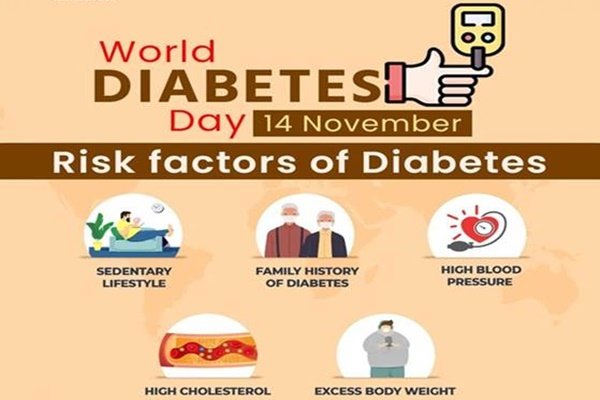
World Diabetes Day (14 November)

World Diabetes Day is observed every year on 14 November, marking the birthday of Sir Frederick Banting, the co-discoverer of insulin. The 2025 theme is “Access to Diabetes Care”, highlighting the need for equitable treatment, early diagnosis, and global awareness.

Diabetes is a chronic disease caused by insufficient insulin or the body’s inability to use it effectively. The main types are Type 1, Type 2, and Gestational diabetes. Globally, over 530 million people are living with the condition, with India having the second-highest number of diabetics. About 50% of adults with diabetes remain undiagnosed.

Diabetes significantly increases the risk of blindness, kidney failure, heart disease, and stroke. Prevention through healthy lifestyle, timely screening, and access to essential medicines like insulin is critical. Awareness campaigns, healthier habits, and advocacy for affordable care are key to reducing its impact worldwide.

Similar Posts

  • Khelo India Winter Games 2025 Postponed Due to Lack of Snow in Gulmarg

    The second and final leg of the Khelo India Winter Games 2025 in Gulmarg, Jammu and Kashmir, scheduled for February 22, 2025 has been postponed due to insufficient snowfall. Events in alpine skiing, Nordic skiing, ski mountaineering, and snowboarding will be rescheduled once weather conditions improve.

    The first leg took place in Ladakh (Jan 23-27) at NDS Sports Complex and Guphuk Pond, featuring ice hockey and ice skating. A total of 19 teams are competing across six disciplines, with Ladakh leading the medal tally (4 golds, 2 silvers, 1 bronze).

  • Sagar Defence Wins Robotics Challenge at Dubai Airshow 2025

    On 18 November 2025, Sagar Defence, an iDEX (Innovations for Defence Excellence) winner, secured the “Accelerating the Autonomous Robotics Revolution” challenge under the VISTA Track at the Dubai Airshow 2025, earning a USD 5,000 prize for its autonomous systems concept. iDEX congratulated the team, calling it a reflection of India’s rising strength in defence innovation.

    Sagar Defence’s winning pitch featured “Genesis”, a “boat-in-a-box” AI-powered module that can be retrofitted onto existing vessels to make them semi-autonomous, fully autonomous, or remotely operated. The company presented the idea during a three-minute pitch to the grand jury.

    Launched by Prime Minister Narendra Modi in 2018, iDEX has rapidly become a major driver of India’s defence-tech ecosystem and now works with over 650 start-ups and MSMEs. At the Dubai Airshow, 15 iDEX-supported startups showcased technologies in robotics, space systems, electronic warfare, battlefield awareness, anti-drone systems, AR/VR training, and autonomous platforms, including innovations such as an autonomous cargo aerial vehicle, multi-sensor satellite systems, portable SAR image disrupters, and AESA radar for counter-UAS operations.

    Strong interest from global OEMs and investors signals growing international recognition of India’s innovation-driven defence ecosystem. The Vista Startup Zone at the airshow (17–21 November) provided startups with mentorship, investor access, and global exposure.

  • Bihar Assembly Elections 2025: First Phase Voting Underway in 18 Districts

    The first phase of Bihar Assembly Elections 2025 is underway today, 6 November, across 121 constituencies in 18 districts including Patna, Nalanda, and Muzaffarpur. Polling runs from 7 AM to 6 PM under tight security, with webcasting at all 45,341 booths.

    Over 3.75 crore voters will decide the fate of 1,314 candidates, including 122 women. The NDA (JD(U), BJP, LJP-R, RLM) and Mahagathbandhan (RJD, Congress, Left parties, VIP) are the main contenders, while Jan Suraj Party is contesting 119 seats.

    Prominent candidates include Tejashwi Yadav (Raghopur), Deputy CMs Samrat Choudhary and Vijay Sinha, Ram Kripal Yadav (Danapur), and newcomers Maithili Thakur and Kheshari Lal Yadav.

  • Sanskriti ka Mahakumbh: A Grand Cultural Festival at Maha Kumbh Mela from January 16 to February 24, 2025

    Sanskriti ka Mahakumbh is a grand cultural festival held during the Maha Kumbh Mela, from January 16 to February 24, 2025. It showcases India’s rich cultural heritage through performances by artists nationwide. Highlights include:

    • Classical singing by Prof. Ritwik Sanyal
    • Odissi dance by Bichtrananda Swain
    • Sitar recital by Kushal Das
    • Bhajans and light music performances by Shankar Mahadevan and Ravi Shankar

    Traditional folk performances like Nautanki, Alha singing, and tribal folk dances will also be featured, highlighting India’s diverse cultural traditions. It’s a vibrant celebration of Indian culture, drawing thousands of spectators to witness and participate in these performances.

  • India–UK joint military exercise “Ajeya Warrior” from 17-30 November at Bikaner

    The 8th edition of the India–UK joint military exercise “Ajeya Warrior” began on 17 November 2025 at the Mahajan Field Firing Range, Bikaner, and will continue until 30 November. A total of 240 soldiers from both countries are participating, including troops from India’s Sikh Regiment.

    Colonel Neeraj Beniwal stated that the main focus is on counter-terrorism operations in urban environments, conducted under a United Nations mandate. The exercise aims to promote the exchange of combat skills and operational experience and strengthen the capability of both armies to work together in complex scenarios.

  • India Marks 10 Years of AMRUT Mission: Transforming Urban Infrastructure Since 2015

    India celebrates a major milestone as the Atal Mission for Rejuvenation and Urban Transformation (AMRUT) completes 10 years on 25 June 2025. Launched in 2015, AMRUT aimed to improve urban infrastructure and quality of life across 500 cities and towns, focusing on water supply, sewerage, urban mobility, and green spaces.

    Over the past decade:

    • ₹77,640 crore in State Annual Action Plans (SAAPs) approved
    • ₹35,990 crore committed as Central Assistance
    • ₹79,401 crore worth of projects completed with ₹72,656 crore spent

    Key achievements include:

    • Universal tap water and sewer connections
    • Parks developed with 2.5% of project costs for children and the elderly
    • Projects in stormwater drainage, non-motorized transport, and green spaces
    • Capacity building in Urban Local Bodies (ULBs) for better governance

    To scale up its impact, AMRUT 2.0 was launched on 1 October 2021, with an expanded scope to cover all ULBs in India. It aims for:

    • Universal water security and sewerage coverage
    • Outlay of ₹2.99 lakh crore, with ₹76,760 crore as Central share

    Under AMRUT 2.0:

    • 3,568 water supply projects worth ₹1.14 lakh crore approved
    • 181 lakh tap connections, 10,647 MLD water treatment capacity added
    • 592 sewerage projects worth ₹67,607 crore approved
    • 67.11 lakh new sewer connections and 6,739 MLD sewage treatment capacity created
    • SCADA technology used in 1,487 projects for real-time monitoring
    • 120 start-ups shortlisted for innovative pilots in 82 cities

    Cumulatively, AMRUT and AMRUT 2.0 have:

    • 14,828 projects sanctioned worth ₹2.73 lakh crore
    • ₹1.02 lakh crore in Central Assistance (₹47,625 crore disbursed)
    • 2.03 crore tap water connections and 1.5 crore sewerage connections provided
    • 544 water bodies rejuvenated, covering 9,511 acres
    • AMRUT Mitra initiative engaged 10,000+ women from Self-Help Groups
    • ‘Drink from Tap’: 381 projects worth ₹23,490 crore to benefit 8 lakh households
    • 90,000+ individuals trained across states

    AMRUT@10 marks a paradigm shift in India’s urban transformation—blending infrastructure development, inclusivity, sustainability, and citizen well-being, laying the groundwork for resilient, future-ready cities.