|

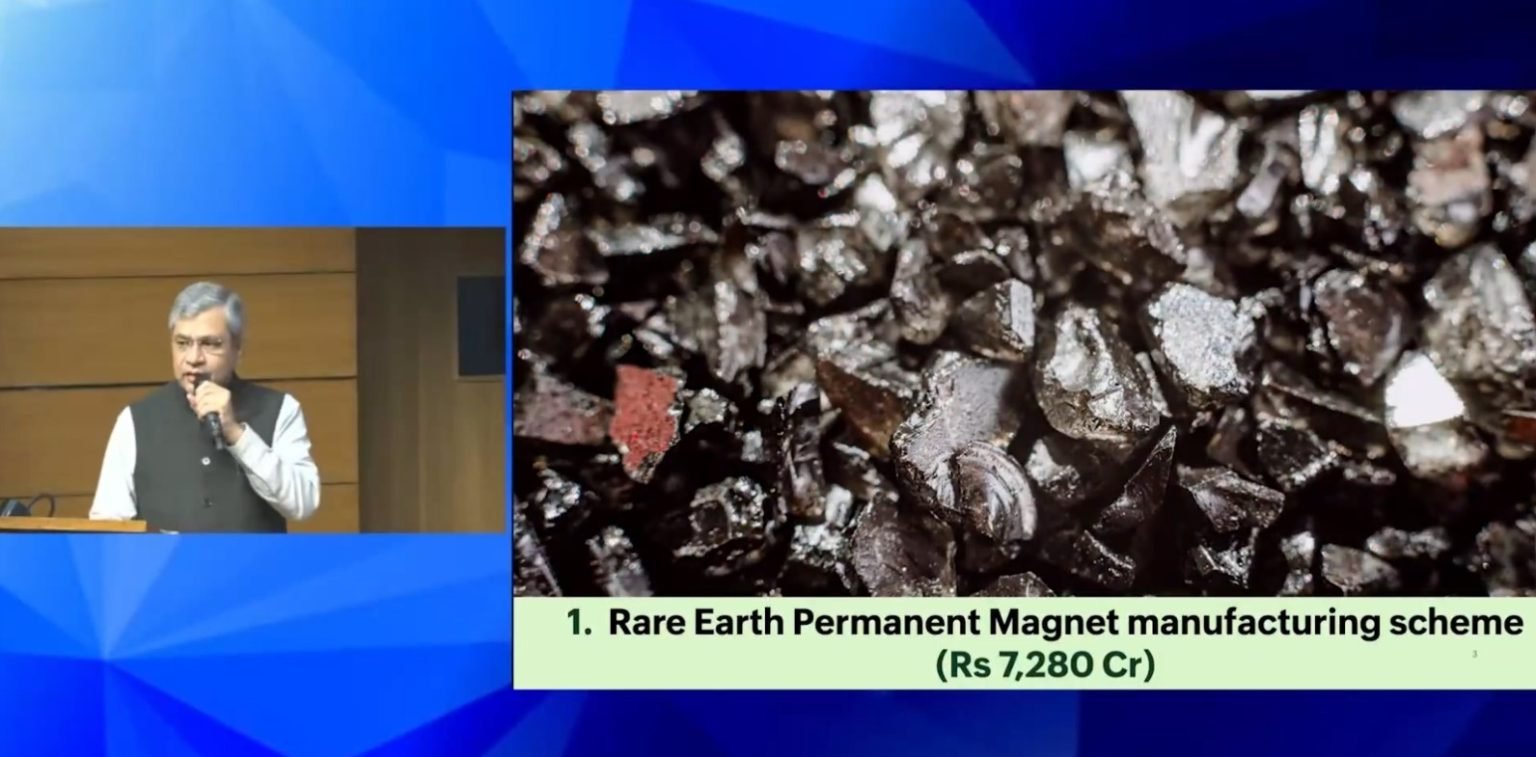
Cabinet Approves ₹7,280 Crore Scheme for Rare Earth Magnet Manufacturing

The Union Cabinet has approved a new scheme worth ₹7,280 crore to promote the manufacturing of sintered rare earth permanent magnets in India. This is the country’s first initiative aimed at establishing an annual production capacity of 6,000 metric tonnes of integrated permanent magnets.

Union Minister Ashwini Vaishnaw stated that rare earth permanent magnets are among the strongest available and are essential for technologies such as electric vehicles, renewable energy equipment, electronics, aerospace, and defence systems. The scheme will support complete domestic production — from processing rare earth oxides into metals, converting metals into alloys, and finally manufacturing finished magnets.

Demand for these magnets in India is rising rapidly and is expected to double by 2030, largely due to growth in EVs, renewable energy, and electronics. Currently, India depends mainly on imports for its requirements.

This initiative will enable India to set up its first integrated rare earth magnet manufacturing ecosystem, strengthening self-reliance, boosting skilled employment, and supporting the national goal of achieving Net Zero emissions by 2070.

The scheme will run for seven years, including a two-year setup period, and production capacity will be allocated to five selected beneficiaries through a global competitive process.

Similar Posts

  • Union Cabinet Clears Proposal to Rename Kerala as Keralam

    The Union Cabinet on 24 February 2026 approved the proposal to rename the State of Kerala as Keralam, restoring its original Malayalam name. The move follows a unanimous resolution passed by the Kerala Legislative Assembly in June 2024, seeking to align the state’s official name with its linguistic and cultural identity. Under Article 3 of the Constitution, the Kerala (Alteration of Name) Bill, 2026 will be referred to the state assembly before being introduced in Parliament.

    The renaming is aimed at ensuring linguistic authenticity, acknowledging the historical usage of “Keralam” in inscriptions and literature, and strengthening the state’s cultural identity. The proposal enjoys cross-party political support and long-standing public backing, though its timing ahead of the 2026 state elections adds political relevance.

    Once approved by Parliament, the change will require administrative updates to official records and documents. Symbolically, it reflects India’s broader effort to restore indigenous place names and preserve cultural heritage.

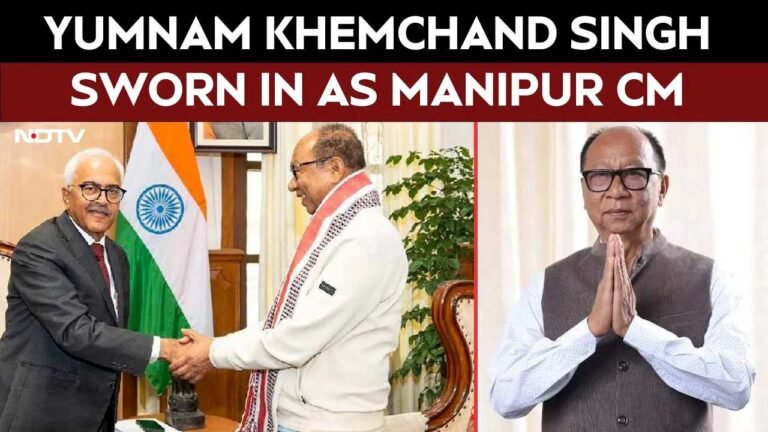
  • President’s Rule Revoked in Manipur; Yumnam Khemchand Singh Sworn in as Chief Minister

    President’s Rule in Manipur was revoked on 4 February 2026, and BJP MLA Yumnam Khemchand Singh was sworn in as the new Chief Minister of Manipur. The Ministry of Home Affairs issued a notification revoking President’s Rule with immediate effect. President’s Rule had been imposed on 13 February 2025 following the resignation of former Chief Minister N. Biren Singh, placing the Legislative Assembly under suspended animation despite its tenure lasting until March 2027.

    The swearing-in ceremony was held at Lok Bhavan, Imphal, where Governor Ajay Kumar Bhalla administered the oath. Nemcha Kipgen (BJP) and Losii Dikho (NPF) were sworn in as Deputy Chief Ministers, while Govindas Konthoujam (BJP) and Khuraijam Loken (NPP) took oath as ministers. Nemcha Kipgen joined the ceremony via video conference from Manipur Bhavan, New Delhi.

    Yumnam Khemchand Singh, a BJP leader from Singjamei Assembly Constituency, previously served as Speaker and minister in the N. Biren Singh government. After meeting the Governor, he claimed formation of a BJP-led NDA government.

  • Israel and Hamas Sign First Phase of Peace Plan

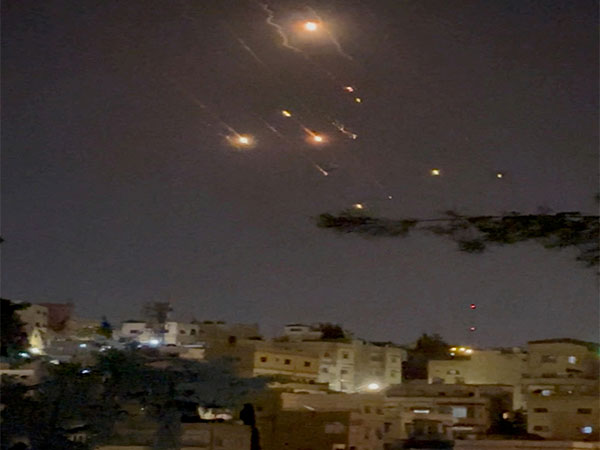
    On 9 October 2025, Israel and Hamas signed the first phase of a landmark peace agreement aimed at ending a two-year war that has devastated Gaza and strained regional stability. The deal, brokered by Egypt, Qatar, Turkey, and the United States, includes:

    • Release of 20 Israeli hostages in exchange for nearly 2,000 Palestinian prisoners
    • Israeli troop withdrawal to a designated line within Gaza
    • Humanitarian aid: 400 trucks per day allowed into Gaza for the first five days
    • Framework for future negotiations on governance, disarmament, and reconstruction

    The agreement was signed in Sharm el-Sheikh, Egypt, and hailed by leaders as a breakthrough. While critical issues remain unresolved, the deal marks a hopeful step toward lasting peace in the region.

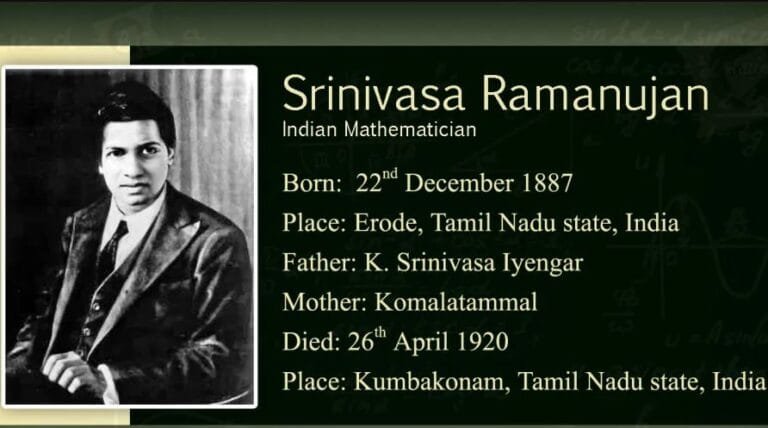
  • ‘Ramanujan: Journey of a Great Mathematician’ Launched by National Archives of India

    The National Archives of India launched a new book titled “Ramanujan: Journey of a Great Mathematician” on 30 April 2025 at the Dr. Ambedkar International Centre, New Delhi. The book highlights Srinivasa Ramanujan’s life, tracing his journey from Erode, Tamil Nadu, to becoming a pioneer in number theory, infinite series, and continued fractions. Despite minimal formal training, Ramanujan’s work still influences modern mathematics. The book also serves as a tribute to his passion and perseverance, aiming to inspire future generations.

    In addition, the National Archives launched Abhilekh Patal Version 3.0, a revamped digital platform for historical records, and announced it had received ISO Certification, reinforcing its commitment to archival excellence and accessibility.

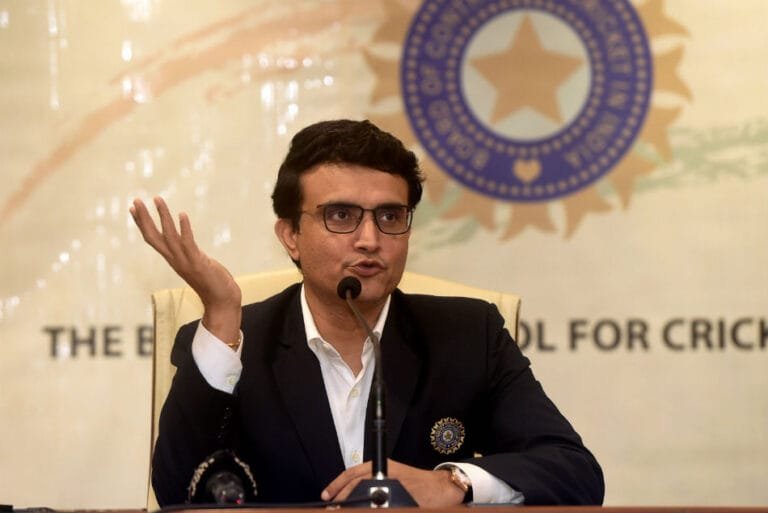
  • Sourav Ganguly Reappointed as ICC Men’s Cricket Committee Chairperson

    Sourav Ganguly, former Indian cricket captain, has been reappointed as the chairperson of the ICC Men’s Cricket Committee as of April 13, 2025. He first took on the role in 2021, succeeding Anil Kumble.

    The ICC Men’s Cricket Committee advises the ICC Board on key areas such as playing conditions, rule changes, and the sport’s long-term development. Under Ganguly’s leadership, the committee aims to further modernize and grow the game globally.

    Joining him on the committee are prominent names like VVS Laxman, Temba Bavuma, Hamid Hassan, Desmond Haynes, and Jonathan Trott, bringing diverse and global perspectives.

    Ganguly’s reappointment signals the ICC’s trust in his vision and progressive leadership, promising positive strides for the future of cricket.

  • Indian Railways become the world’s largest electrified rail system

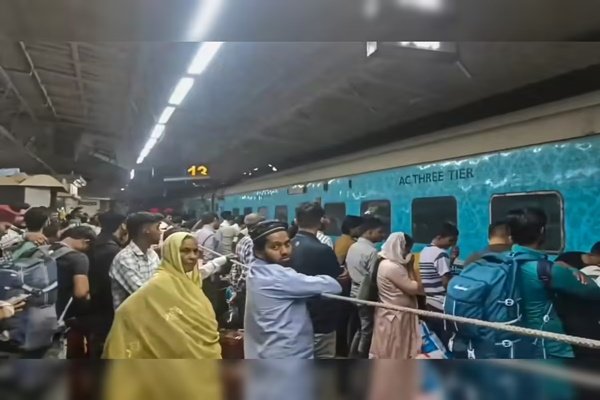
    Indian Railways has become the world’s largest electrified rail system, completing 100 years of electrification in 2025 and surpassing all other networks globally. Nearly all of India’s 70-thousand route-kilometre broad-gauge network is now powered by electricity. This achievement reflects India’s commitment to sustainability, energy efficiency, and modernization of its transport infrastructure.


    🚆 Timeline of Indian Railways Electrification

    YearMilestoneDetails
    1925First electric trainRan between Bombay VT (now CSMT) and Kurla Harbour Line, using 1.5 kV DC
    1930s–40sExpansion in Western GhatsElectrification extended to Igatpuri and Pune to tackle steep gradients
    1950sShift to 25 kV AC systemAdopted globally accepted standard for efficiency and scalability
    1970s–80sRapid expansionMajor trunk routes electrified, reducing reliance on steam/diesel traction
    2000sPolicy pushGovernment emphasized electrification for energy security and reduced imports of diesel
    2014–2023Accelerated driveElectrification speed increased to ~6,000 km per year under national mission
    2023100% electrification of broad-gauge routesIndian Railways announced completion of electrification across all broad-gauge tracks
    2025100 years of electrificationIndia celebrated a century since the first electric train, marking itself as the largest electrified rail network globally

    🌍 Global Context

    • Indian Railways operates over 68,000 route km, of which 100% broad-gauge is electrified.
    • This makes it the largest electrified rail network in the world, ahead of countries like China and Russia in terms of route length electrified.
    • Electrification reduces dependence on imported fossil fuels, cuts greenhouse gas emissions, and supports India’s climate commitments.

    🔑 Key Facts

    • First electric locomotive: “Sir Leslie Wilson” introduced in 1925.
    • Technology shift: From 1.5 kV DC to 25 kV AC, aligning with global standards.
    • Environmental impact: Electrification expected to save billions of liters of diesel annually and reduce CO₂ emissions significantly.
    • Economic impact: Lower operating costs, faster trains, and improved reliability.