|

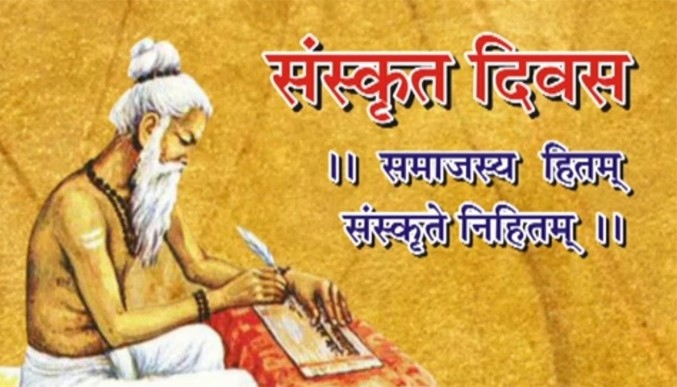
World Sanskrit Day 2025 – Celebrating India’s Ancient Language

World Sanskrit Day (Vishva Samskrita Dinam) is celebrated annually on Shravana Purnima (full moon day in Shravana), coinciding with Raksha Bandhan, to honor one of the world’s oldest languages.

First observed in 1969 by the Government of India, the day promotes Sanskrit learning and preserves its heritage. Sanskrit is the liturgical language of Hinduism, Buddhism, and Jainism, and the medium of ancient Indian texts like the Vedas, Upanishads, Ramayana, and Mahabharata.

In 2025, it is celebrated on 9 August, highlighting Sanskrit’s linguistic precision (Panini’s Ashtadhyayi), scientific relevance (AI and computational linguistics), and cultural continuity (Ayurveda, Yoga, astronomy, mathematics).
Similar Posts

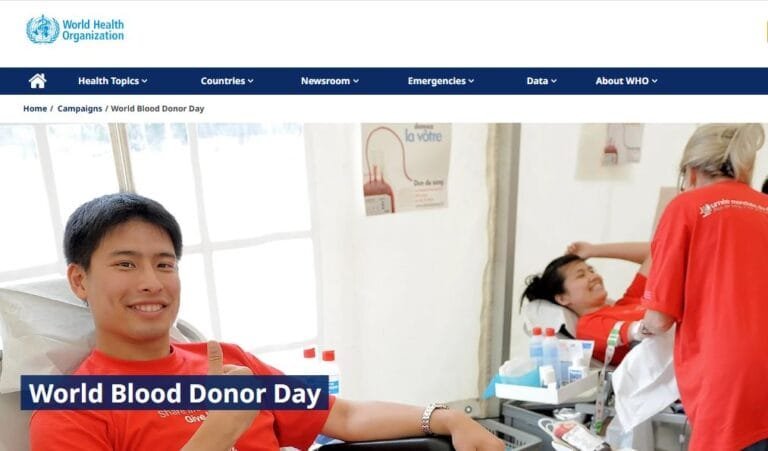
  • World Blood Donor Day -14 June : “Give Blood, Give Hope: Together We Save Lives”

    Every year on 14 June, the world comes together to celebrate World Blood Donor Day, a day dedicated to raising awareness about the importance of voluntary blood donation and honoring those who selflessly donate blood to save lives.

    Why Blood Donation Matters

    Blood transfusions are critical in medical emergencies, surgeries, and treatments for conditions like cancer, anemia, and trauma injuries. However, many countries still face shortages of safe blood supplies, making regular donations essential.

    2025 Theme: “Give Blood, Give Hope: Together We Save Lives”

    This year’s theme emphasizes the life-saving impact of blood donation and encourages communities to unite in support of this noble cause.

    How You Can Participate

    • Donate Blood: Visit your nearest blood donation center and contribute to saving lives.
    • Spread Awareness: Share information on social media to inspire others to donate.
    • Volunteer: Support local blood donation drives and encourage participation.

    Blood donation is a simple act with a profound impact. By donating, you become a lifeline for those in need. Let’s celebrate World Blood Donor Day by making a difference—one donation at a time!

  • India Unveils First Indigenous Semiconductor Chip “Vikram-3201”

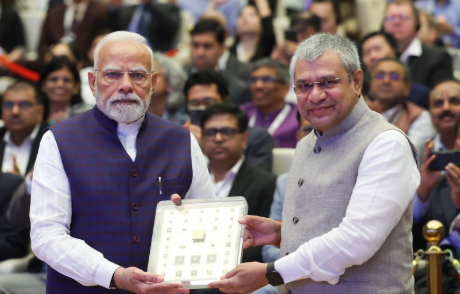
    On the sidelines of Semicon India 2025 in New Delhi, On 2 September 2025, India unveiled its first fully Made-in-India semiconductor chip, named Vikram-3201, developed by ISRO’s Semiconductor Laboratory (SCL).

    Union Minister Ashwini Vaishnaw presented the chip to Prime Minister Narendra Modi, marking a giant step in India’s semiconductor self-reliance journey under the India Semiconductor Mission (2021).

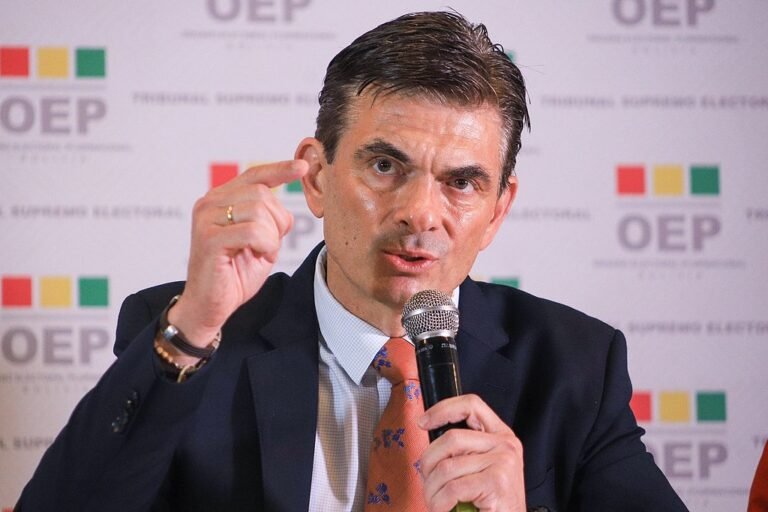
  • Rodrigo Paz Wins Bolivia’s Presidency, Ending 19 Years of Socialist Rule

    Rodrigo Paz, leader of the Christian Democratic Party (PDC), won Bolivia’s 2025 presidential election with 54.5% of the vote, defeating former interim President Jorge “Tuto” Quiroga (45.5%) in the October 19 runoff. He will assume office on November 8, 2025.

    Paz’s victory marks the end of nearly two decades of socialist dominance by the Movement Toward Socialism (MAS), once led by Evo Morales. A 58-year-old economist educated in the U.S., Paz ran on a centrist and reform-oriented platform, pledging “capitalism for all”—balancing market reforms with social welfare.

    Bolivia is currently facing a severe economic crisis with high inflation and fuel shortages, which fueled voter dissatisfaction. Paz now faces the challenge of governing without a legislative majority, requiring alliances to stabilize the economy, rebuild investor trust, and strengthen democracy.

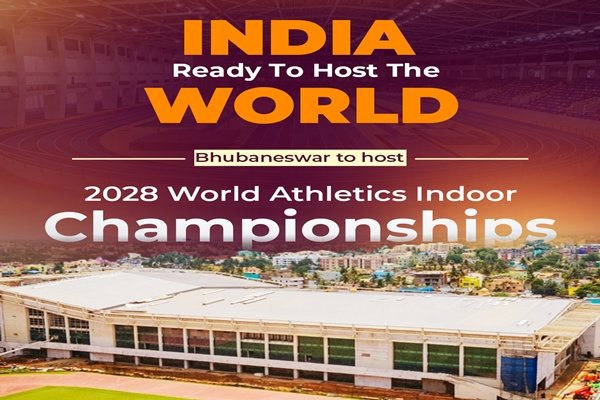
  • India to Host World Indoor Athletics Championships 2028 in Bhubaneswar

    India has been awarded the hosting rights for the World Indoor Athletics Championships 2028, marking the first time the country will host this prestigious global event. The championship will be held at the state-of-the-art indoor facility at Kalinga Stadium in Bhubaneswar, Odisha.

    The decision was taken by World Athletics during its Council meeting held in Torun, Poland. Welcoming the announcement, Athletics Federation of India (AFI) President Bahadur Singh Sagoo said that this achievement reflects the growing stature of Indian athletics on the global stage.

    The World Indoor Athletics Championships is a major international event featuring top athletes from across the world. It typically includes 26 events, with 13 events each for men and women, conducted over three days.

    Meanwhile, the 2026 edition of the championship is being held in Torun, Poland, from 19 to 22 March 2026. Notably, the 4x400m mixed relay is being introduced for the first time in this edition, adding a new dimension to the competition.

  • Sachin Tendulkar Honoured with BCCI Lifetime Achievement Award 2025

    Cricket legend Sachin Tendulkar has been honoured with the BCCI’s Lifetime Achievement Award at the Board’s annual gala in Mumbai on 1 February 2025. Tendulkar, now 51, becomes the 31st recipient of this prestigious award, which was first introduced in 1994 to honor India’s inaugural cricket captain, Col. C.K. Nayudu.

    Throughout his illustrious career, Tendulkar played an astounding 664 international matches for India, amassing the highest number of runs in both Test (15,921) and ODI (18,426) cricket history. He also holds the record for the most appearances in both formats, with 200 Test matches and 463 ODIs to his name. One of Tendulkar’s crowning achievements was being a crucial member of India’s 2011 World Cup-winning team, marking his record sixth and final tournament appearance.

    In recent years, other notable recipients of the Lifetime Achievement Award include former India head coach Ravi Shastri and wicket-keeping legend Farokh Engineer, who received the honor in 2023.

  • PM Modi Flags Off India’s First Namo Bharat RRTS

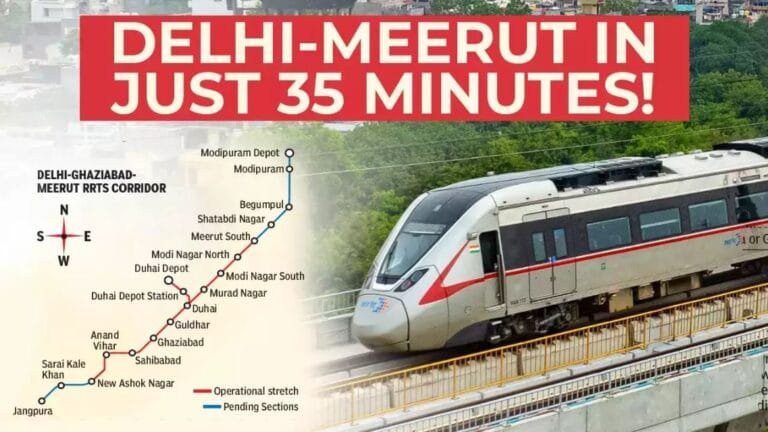
    Prime Minister Narendra Modi inaugurated India’s first Namo Bharat Regional Rapid Transit System (RRTS) on February 22, 2026, dedicating the Delhi–Meerut Namo Bharat Corridor to the nation. The launch took place at Shatabdi Nagar Namo Bharat Station in Meerut, where he also flagged off the Meerut Metro services.


    Key Highlights

    • Corridor Length: 82 km, connecting Delhi to Meerut.
    • Stations: 16 stations including Sahibabad, Ghaziabad, Modinagar, and Meerut.
    • Speed: Designed for 180 km/h, making it India’s fastest metro and RRTS.
    • Travel Time: Reduces Delhi–Meerut journey to less than 1 hour.
    • Cost: Developed at an estimated ₹30,000 crore.
    • Development Boost: PM Modi also inaugurated projects worth ₹12,930 crore in Meerut.

    Significance

    • Urban Connectivity: Seamless travel between Delhi NCR and Meerut, easing congestion and improving daily commutes.
    • Economic Impact: Expected to boost trade, education, and employment opportunities in the region.
    • Sustainability: Promotes eco-friendly, high-speed public transport, reducing reliance on private vehicles.
    • Symbol of Modernization: Marks a new era of world-class infrastructure in India, aligning with the vision of a “Developed Bharat.”