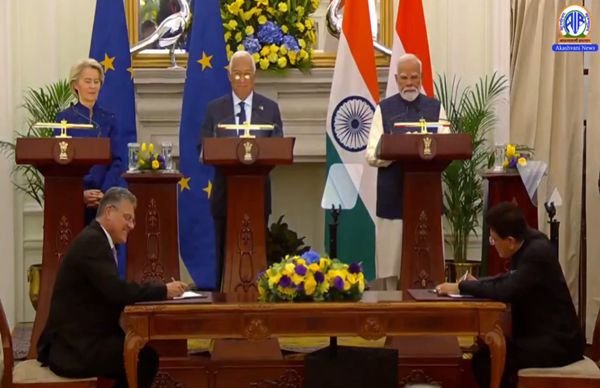
On 27 Jan 2026, India and the European Union (EU) officially concluded negotiations on a landmark Free Trade Agreement (FTA), described as the “mother of all deals.” The pact is expected to become operational by end of 2026, significantly reshaping global trade dynamics by eliminating tariffs, boosting exports, and strengthening strategic ties between two major economies.
The FTA covers markets representing ~2 billion people and ~25% of global GDP. It includes major tariff reductions, such as removal of duties on aircraft, and cuts on alcohol, food products, chemicals, and over 90% of EU goods. The deal ensures market access for 99% of India’s exports and includes €500 million in climate support funding.
Strategically, it promises an economic boost, with expectations of doubling EU exports to India by 2032, while enhancing India’s competitiveness in textiles, IT services, and pharmaceuticals. It also contributes to geopolitical balance amid uncertainties with the US and China, and expands cooperation in defence, security, and mobility.
However, challenges include a lengthy ratification process, domestic adjustments for Indian sectors like agriculture and small-scale manufacturing, and the need for regulatory alignment with EU standards on data protection, sustainability, and product quality.
In conclusion, the India–EU FTA marks a historic milestone, paving the way for economic growth, innovation, and stronger geopolitical alignment, despite implementation and adaptation challenges.