Posts

  • Sudarsan Pattnaik Becomes First Indian to Win Fred Darrington Sand Master Award

    Renowned Indian sand artist Sudarsan Pattnaik has become the first Indian to win the prestigious Fred Darrington Sand Master Award for his exceptional contribution to sand art. The honor was presented at the Sandworld 2025 International Sand Art Festival held in Dorset, England.

    To celebrate the occasion, Pattnaik crafted a 10-foot sculpture of Lord Ganesha bearing the message of “World Peace.” The award carries special meaning this year as it coincides with the 100th birth anniversary of legendary British sculptor Fred Darrington.

    A Padma Shri awardee from Odisha, Pattnaik has represented India in over 65 international sand art festivals, known for artworks that blend spiritual themes with social messages. The Sandworld exhibition at Lodmoor Park, famous for large-scale sculptures made from just sand and water, featured global talent—but Pattnaik’s peace-themed creation stood out as a highlight.

    His win is not only a personal milestone but also a proud moment for Indian art on the world stage.

  • Hitesh Gulia win Gold medal at World Boxing Cup Brazil 2025

    Hitesh Gulia has etched his name in the annals of Indian boxing history by clinching the gold medal at the prestigious World Boxing Cup Brazil 2025 on 6 April 2025. Competing in the 70kg weight category, Gulia emerged victorious in the final held at Foz do Iguaçu, Brazil. His opponent, Odel Kamara of England, was unable to compete due to injury, granting Gulia a walkover.

    This remarkable achievement marks the first time an Indian boxer has won gold at the World Boxing Cup. Gulia’s journey to the final was nothing short of extraordinary, as he defeated French Olympian Makan Traore with a dominant 5-0 unanimous decision in the semifinals. A sailor with the Indian Navy, Gulia has consistently showcased his prowess, having previously won gold at the Senior National Boxing Championships and the Uttarakhand National Games.

    India’s campaign at the World Boxing Cup Brazil 2025 concluded with an impressive haul of six medals: one gold, one silver, and four bronze. This milestone not only highlights Gulia’s individual brilliance but also underscores the growing strength of Indian boxing on the global stage.

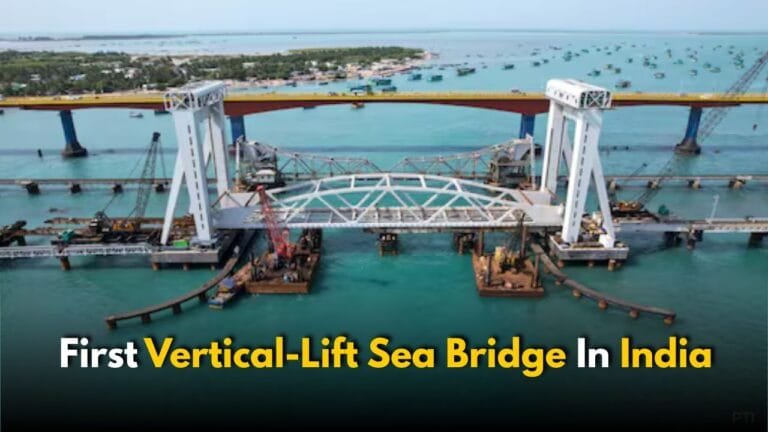
  • India’s First Vertical-Lift Sea Bridge: Connecting Rameswaram Island to Mainland India

    On April 6, 2025, Prime Minister Narendra Modi inaugurated the New Pamban Bridge in Tamil Nadu, India’s first vertical-lift sea bridge, marking a major milestone in the country’s infrastructure and engineering capabilities. Spanning 2.07 km across the Palk Strait, the bridge enhances connectivity between Rameswaram Island and mainland India, replacing the original 1914 structure.

    The bridge was built by Rail Vikas Nigam Limited (RVNL) and offers improved vertical clearance for maritime traffic, as demonstrated by the successful passage of an Indian Coast Guard boat and a train during the event. The project was sanctioned in 2019, is three metres taller than the original, and designed for higher speed, load capacity, and durability.

    Union Railway Minister Ashwini Vaishnaw and Tamil Nadu Governor RN Ravi joined the inauguration. Vaishnaw also marked the BJP’s foundation day by hoisting the party flag. The New Pamban Bridge symbolizes India’s leap in infrastructure, standing alongside global engineering icons like the Golden Gate and Tower Bridge.

  • Haryana GK MCQs for Competitive Exams

    Haryana General Knowledge : GK MCQs questions for Competitive Exams. Important previous year exam questions are provided for free online practice of students preparing for Haryana State Government jobs.

    Haryana General Knowledge questions

    Question 1: When was the state of Haryana established?
    a) 1 November 1966
    b) 15 August 1947
    c) 26 January 1950
    d) 2 October 1965

    Answer
    Answer: (a) 1 November 1966
    Explanation: Haryana was established as a separate state from Punjab on 1 November 1966. It was recognized as an independent state.

    Question 2: What is the capital of Haryana?
    a) Rohtak
    b) Faridabad
    c) Chandigarh
    d) Hisar

    Answer
    Answer: (c) Chandigarh
    Explanation: Chandigarh is the shared capital of both Haryana and Punjab.

    Question 3: Which is the largest district of Haryana in terms of area?
    a) Sirsa
    b) Bhiwani
    c) Gurugram
    d) Rohtak

    Answer
    Answer: (a) Sirsa
    Explanation: Sirsa is the largest district in Haryana by area. Earlier, Bhiwani was the largest, but after Charkhi Dadri was carved out, Sirsa became the largest.

    Question 4: Which district of Haryana is known for the cotton textile industry?
    a) Hisar
    b) Panipat
    c) Sonipat
    d) Karnal

    Answer
    Answer: (b) Panipat
    Explanation: Panipat is known for its cotton textile industry and houses many textile mills.

    Question 5: Which river is considered the most important in Haryana?
    a) Yamuna
    b) Ghaggar
    c) Sutlej
    d) Ganga

    Answer
    Answer: (a) Yamuna
    Explanation: The Yamuna River is the most important river in Haryana, flowing through the eastern part of the state.

    Question 6: What is the state bird of Haryana?
    a) House Sparrow
    b) Black Francolin
    c) Peacock
    d) Parrot

    Answer
    Answer: (b) Black Francolin
    Explanation: The Black Francolin is the state bird of Haryana.

    Question 7: Which place in Haryana is famous for ‘Bhagat Phool Singh Mahila Vishwavidyalaya’?
    a) Sonipat
    b) Panipat
    c) Rohtak
    d) Hisar

    Answer
    Answer: (a) Sonipat
    Explanation: ‘Bhagat Phool Singh Mahila Vishwavidyalaya’ is a prominent women’s university located in Sonipat.

    Question 8: What is the state flower of Haryana?
    a) Rose
    b) Lotus
    c) Sunflower
    d) Marigold

    Answer
    Answer: (b) Lotus
    Explanation: Lotus is the state flower of Haryana.

    Question 9: In which month is the ‘Surajkund Mela’ held in Haryana?
    a) January
    b) February
    c) March
    d) April

    Answer
    Answer: (b) February
    Explanation: The ‘Surajkund Mela’ is held every year in February at Surajkund in Faridabad district.

    Question 10: Which is the oldest city in Haryana?
    a) Jind
    b) Panipat
    c) Hisar
    d) Rohtak

    Answer
    Answer: (a) Jind
    Explanation: Jind is a historic city in Haryana and one of the oldest districts in the state. It serves as the district headquarters.

    Question 11: What is the state sport of Haryana?
    a) Football
    b) Kabaddi
    c) Hockey
    d) Wrestling

    Answer
    Answer: (d) Wrestling
    Explanation: Wrestling is considered the state sport of Haryana, and many wrestlers from here are famous at national and international levels.

    Question 12: What is the state tree of Haryana?
    a) Peepal
    b) Neem
    c) Banyan
    d) Mango

    Answer
    Answer: (a) Peepal
    Explanation: The Peepal tree is the state tree of Haryana and is known for its medicinal properties.

    Question 13: When was Kurukshetra University established in Haryana?
    a) 1950
    b) 1957
    c) 1960
    d) 1965

    Answer
    Answer: (b) 1957
    Explanation: Kurukshetra University was established in 1957 and is one of the leading educational institutions in the state.

    Question 14: When was the Panchayati Raj system implemented in Haryana?
    a) 1950
    b) 1956
    c) 1994
    d) 1965

    Answer
    Answer: (c) 1994
    Explanation: The Panchayati Raj system was implemented in Haryana in 1994.

    Question 15: What is the official language of Haryana?
    a) Hindi
    b) Punjabi
    c) Urdu
    d) Haryanvi

    Answer
    Answer: (a) Hindi
    Explanation: Hindi is the official language of Haryana. However, Haryanvi and Punjabi are also widely spoken.

    Question 16: Which city in Haryana is known as the hub of boxing?
    a) Bhiwani
    b) Sonipat
    c) Panchkula
    d) Gurugram

    Answer
    Answer: (a) Bhiwani
    Explanation: Bhiwani is called “Mini Cuba” and the hub of boxing because a large number of boxers come from there.

    Question 17: Which district of Haryana is known as “Science City”?
    a) Faridabad
    b) Gurugram
    c) Karnal
    d) Ambala

    Answer
    Answer: (d) Ambala
    Explanation: Ambala in Haryana is known for the production of scientific instruments.

    Question 18: What is Haryana’s rank in India by area?
    a) 20th
    b) 22nd
    c) 24th
    d) 25th

    Answer
    Answer: (a) 20th
    Explanation: Haryana ranks 20th in India by area, covering 44,212 km².

    Question 19: Which is the largest district of Haryana in terms of area?
    a) Faridabad
    b) Rohtak
    c) Panchkula
    d) Sirsa

    Answer
    Answer: (d) Sirsa
    Explanation: Sirsa is the largest district in Haryana by area, covering 4,277 sq. km.

    Question 20: In which district of Haryana is the Agricultural University located?
    a) Kurukshetra
    b) Hisar
    c) Karnal
    d) Faridabad

    Answer
    Answer: (b) Hisar
    Explanation: ‘Chaudhary Charan Singh Haryana Agricultural University’ is located in Hisar, and it is a major center for agricultural education and research.

    Question 21: In which city of Haryana is the ‘Surajkund International Crafts Mela’ organized?
    a) Gurugram
    b) Faridabad
    c) Panchkula
    d) Karnal

    Answer
    Answer: (b) Faridabad
    Explanation: The Surajkund International Crafts Mela is held every year in Faridabad during the spring season in February.

    Question 22: In which city of Haryana is the ‘IT Park’ located?
    a) Gurugram
    b) Hisar
    c) Karnal
    d) Panchkula

    Answer
    Answer: (d) Panchkula
    Explanation: The IT Park in Panchkula was established in 2008 and is located behind Nada Sahib Gurudwara in Sector 22.

    Question 23: Where did Lord Krishna deliver the teachings of the Gita?
    a) Jyotisar
    b) Shahabad
    c) Ladwa
    d) Pehowa

    Answer
    Answer: (a) Jyotisar
    Explanation: Jyotisar in Kurukshetra is believed to be the place where Lord Krishna gave the teachings of the Gita to Arjuna during the Mahabharata war.

    Question 24: Where is the Markandeshwar Temple of Haryana located?
    a) Kurukshetra
    b) Ambala
    c) Kaithal
    d) Panipat

    Answer
    Answer: (a) Kurukshetra
    Explanation: The Markandeshwar Mahadev Temple is

    Question 25: What is the ancient epic of Haryana?

    a) Mahabharata
    b) Samaveda
    c) Atharvaveda
    d) Ramayana

    Answer
    Answer: a) Mahabharata
    Explanation: In the Indian epic Mahabharata, Haryana is mentioned as Bahudhanaka and Bahudhana, which highlights its importance and prosperity.

    Question 26: When was the Haryana State Agricultural Marketing Board established?

    a) 1 August 1969
    b) 1 September 1966
    c) 1 September 1971
    d) 1 August 1972

    Answer
    Answer: a) 1 August 1969
    Explanation: The Haryana State Agricultural Marketing Board was established on 1st August, 1969.

    Question 27: Who is known as the Iron Man of Haryana?

    a) Bansi Lal
    b) Pt. Nekiram Sharma
    c) Chaudhary Chhotu Ram
    d) Pt. Bhagwat Dayal Sharma

    Answer
    Answer: a) Bansi Lal

    Question 28: In which year was the Ambala Cantonment (military base) established in Haryana?

    a) 1839
    b) 1840
    c) 1842
    d) 1843

    Answer
    Answer: d) 1843

    Question 29: Who was the longest-serving Chief Minister of Haryana?

    a) Om Prakash Chautala
    b) Bhupinder Singh Hooda
    c) Bansi Lal
    d) Bhajan Lal

    Answer
    Answer: d) Bhajan Lal

    Question 30: In which company’s petroleum complex is located in Panipat district of Haryana?

    a) Bharat Petroleum
    b) Essar Petroleum
    c) Indian Oil Corporation
    d) Reliance Petroleum

    Answer
    Answer: c) Indian Oil Corporation

    Question 31: Which city of Haryana was described in the book of the famous Chinese traveler Hiuen Tsang for its grandeur and prosperity?

    a) Panipat
    b) Rohtak
    c) Ambala
    d) Thanesar

    Answer
    Answer: d) Thanesar
    Explanation: Harshavardhana was born in 590 AD in Thanesar (Thanesar, Haryana), to King Prabhakaravardhana. Chinese Buddhist traveler Hiuen Tsang praised the achievements of King Harshavardhana in his writings.

    Question 32: What is the average height of the alluvial plains in Haryana?

    a) Between 200–220 meters
    b) Between 200–240 meters
    c) Between 210–270 meters
    d) Between 220–240 meters

    Answer
    Answer: c) Between 210–270 meters
    Explanation: The alluvial plain is situated at a height of 700 to 900 feet (210 to 270 meters), and the only perennial river, Yamuna, flows along the eastern border of the state.

    Question 33: Who was the founder of Bhiwani?

    a) Karampal
    b) Maharaja Dandpati
    c) Anangpal
    d) Neem Singh

    Answer
    Answer: d) Neem Singh
    Explanation: The district headquarters, Bhiwani city, is named after it. Bhiwani is believed to have been founded by a Rajput named Neem Singh, after his wife Bhani.

    Question 34: Markanda is a major tributary of which river?

    a) Yamuna
    b) Saraswati
    c) Indori
    d) Ghaggar

    Answer
    Answer: d) Ghaggar
    Explanation: The Markanda River is a tributary of the Ghaggar River. It originates from Uttamwala Baraban in Sirmaur district of Himachal Pradesh and passes through Ambala and Kurukshetra districts.

    Question 35: When was Gurgaon renamed Gurugram?

    a) 10 April 2016
    b) 11 April 2016
    c) 12 April 2016
    d) 13 April 2016

    Answer
    Answer: c) 12 April 2016
    Explanation: Gurgaon was renamed Gurugram in the year 2016.

    Question 36: Where is the Pandu Mela held?

    a) Papahana Asandh
    b) Amupur
    c) Salwan
    d) Indri

    Answer
    Answer: a) Papahana Asandh

    Question 37: Sakshi Malik, who won a medal in the Rio Olympics, belongs to which district of Haryana?

    a) Sirsa
    b) Panipat
    c) Rohtak
    d) Karnal

    Answer
    Answer: c) Rohtak
    Explanation: Sakshi Malik was born on 3rd September 1992 in Mokhra village of Rohtak district, Haryana.

    Question 38: What is the first novel written in Haryanvi?

    a) Kayakalp
    b) Harigandha
    c) Jhaadu Phiri
    d) Haryana Samvaad

    Answer
    Answer: c) Jhaadu Phiri
    Explanation: The first novel written in Haryanvi language is Jhaadu Phiri, authored by Rajaram Shastri.

    Question 39: Who started the publication of ‘Haryana Sandesh’?

    a) Brahmanand
    b) Pyarelal
    c) Atmaram Jain
    d) Pt. Neki Ram Sharma

    Answer
    Answer: d) Pt. Neki Ram Sharma
    Explanation: Haryana Sandesh was a weekly magazine started by Pt. Neki Ram Sharma.

    Question 40: Where is the tomb of Sheikh Chilli located?

    a) Thanesar
    b) Gharaunda
    c) Ganaur
    d) Jagadhri

    Answer
    Answer: a) Thanesar
    Explanation: The tomb of Sheikh Chilli is located in Thanesar near Kurukshetra.

    Question 41: What is the highest literary award of Haryana?

    a) Soor Samman
    b) Vyas Puraskar
    c) Arjun Puraskar
    d) Bheem Puraskar

    Answer
    Answer: a) Soor Samman
    Explanation: The Soor Samman Puraskar is awarded for excellence in literature and is the highest literary honor in Haryana.

    Question 42: Who led the 1857 revolt in Kharkhoda?

    a) Naharsingh
    b) Khemchand
    c) Rao Tularam
    d) Risaldar Bisarat Ali

    Answer
    Answer: d) Risaldar Bisarat Ali
    Explanation: The revolt in Kharkhoda was led by farmer leader Risaldar Bisarat Ali with the support of the Ranghars of Rohtak.

    Question 43: Where was the first horticulture university of Haryana established?

    a) Karnal
    b) Rohtak
    c) Jind
    d) Kurukshetra

    Answer
    Answer: a) Karnal
    Explanation: Haryana’s first horticulture university, Maharana Pratap Horticultural University, was established in Karnal.

    Question 44: Where did the 1857 revolt begin in Haryana?

    a) Ambala Cantonment
    b) Sirsa Cantonment
    c) Hansi Cantonment
    d) Rewari Cantonment

    Answer
    Answer: a) Ambala Cantonment
    Explanation: The 1857 revolt began at Ambala Cantonment on the morning of 10th May 1857, where the 5th Native Infantry was stationed.

    Question 45: A large region of Haryana was once called ‘Shri Kanth Janpad’. Which dynasty’s ruler gave this name?

    a) Naga
    b) Pushyabhuti
    c) Hun
    d) Gupta

    Answer
    Answer: a) Naga
    Explanation: A ruler of the Naga dynasty named a large part of Haryana as ‘Shri Kanth Janpad’.

    Question 46: Who wrote the famous book Prithviraj Raso?

    a) Chand Bardai
    b) Surdas
    c) Babur
    d) Kabirdas

    Answer
    Answer: a) Chand Bardai
    Explanation: Prithviraj Raso is an epic written by Chand Bardai, who accompanied Prithviraj Chauhan to Ghazni.

    Question 47: The majority of Haryana’s land is dominated by which type of soil?

    a) Kachari soil
    b) Desert soil
    c) Sandy-loamy soil
    d) Loamy soil

    Answer
    Answer: a) Kachari soil
    Explanation: Generally, Kachari soil is found in most parts of Haryana.

    Question 48: In which district is the urea plant located?

    a) Bhiwani
    b) Rohtak
    c) Sonipat
    d) Panipat

    Answer
    Answer: d) Panipat

    Question 49: The village of Sihi near Faridabad is considered the birthplace of which famous devotional poet?

    a) Ramdas
    b) Raidas
    c) Surdas
    d) Tulsidas

    Answer
    Answer: c) Surdas
    Explanation: Sihi village in Faridabad is believed to be the birthplace of the great saint-poet Surdas, born in 1535 (Samvat).

    Question 50: How many days did the Mahabharata war last?

    a) 12
    b) 14
    c) 16
    d) 18

    Answer
    Answer: d) 18
    Explanation: The Mahabharata war lasted for 18 days, during which Lord Krishna gave the teachings of the Gita.

    Question 51: What was the ancient name of Panipat?

    a) Thaneshwar
    b) Sthanuvishwar
    c) Panduprastha
    d) Somnath

    Answer
    Answer: c) Panduprastha
    Explanation: According to legend, Panipat was one of the five cities (prastha) established by the Pandavas, known as Panduprastha.

    Question 52: Dr. Gopi Chand Bhargava, the first Chief Minister of Punjab, belonged to which district of Haryana?

    a) Hisar
    b) Sirsa
    c) Bhiwani
    d) Yamunanagar

    Answer
    Answer: b) Sirsa
    Explanation: Dr. Gopi Chand Bhargava was born on 8 March 1889 in Sirsa, which was part of unified Punjab and is now in Haryana.

    Question 53: Where does the Saraswati River enter Haryana?

    a) From Pinjore
    b) From Kalesar
    c) From Panchkula
    d) From Adi Badri

    Answer
    Answer: d) From Adi Badri
    Explanation: The Saraswati River is believed to originate from Adi Badri, located slightly below the Shivalik Hills near Yamunanagar.

  • Bihar GK MCQs for Competitive Exams

    Bihar GK MCQs Questions for preparation of Competitive Exams. Important Bihar General Knowledge previous year exam question answer with explanation are provided below.

    Bihar General Knowledge MCQs

    Question 1: Which is the largest city in Bihar?
    a) Patna
    b) Gaya
    c) Muzaffarpur
    d) Bhagalpur

    Answer
    Answer: (a) Patna
    Explanation: Patna is the capital of Bihar and the largest city in the state.

    Question 2: In which year did the Champaran Satyagraha start in Bihar?
    a) 1915
    b) 1917
    c) 1920
    d) 1930

    Answer
    Answer: (b) 1917
    Explanation: Mahatma Gandhi started a movement in Champaran in 1917 to support the indigo farmers.

    Question 3: What is the official state animal of Bihar?
    a) Elephant
    b) Cow
    c) Ox
    d) Lion

    Answer
    Answer: (c) Ox
    Explanation: The ox has been declared the state animal of Bihar.

    Question 4: Which district of Bihar is famous as the ‘Silk City’?
    a) Patna
    b) Gaya
    c) Bhagalpur
    d) Munger

    Answer
    Answer: (c) Bhagalpur
    Explanation: Bhagalpur is known for its silk textile industry and is called the ‘Silk City’.

    Question 5: How many divisions (Pramandal) are there in Bihar?
    a) 7
    b) 9
    c) 10
    d) 11

    Answer
    Answer: (b) 9
    Explanation: Bihar has a total of 9 divisions that administratively divide the state into different regions.

    Question 6: Who is the current Chief Minister of Bihar? (As of August 2024)
    a) Nitish Kumar
    b) Tejashwi Yadav
    c) Jitan Ram Manjhi
    d) Sushil Modi

    Answer
    Answer: (a) Nitish Kumar
    Explanation: Nitish Kumar is currently serving as the Chief Minister of Bihar and has held the position multiple times.

    Question 7: Who was the first Chief Minister of Bihar?
    a) Shri Krishna Singh
    b) Jagannath Mishra
    c) Lalu Prasad Yadav
    d) Karpoori Thakur

    Answer
    Answer: (a) Shri Krishna Singh
    Explanation: Shri Krishna Singh was the first Chief Minister of Bihar after independence.

    Question 8: Which city in Bihar is considered the ‘center of education’?
    a) Patna
    b) Gaya
    c) Nalanda
    d) Darbhanga

    Answer
    Answer: (c) Nalanda
    Explanation: Nalanda was home to the ancient Nalanda University, which was a major center of education.

    Question 9: On which date is Bihar Day celebrated?
    a) 15 January
    b) 22 March
    c) 1 April
    d) 2 October

    Answer
    Answer: (b) 22 March
    Explanation: Bihar Day is celebrated on 22nd March to mark the formation of the state in 1912 after separating from Bengal.

    Question 10: What is the main language of Bihar?
    a) Hindi
    b) Bhojpuri
    c) Maithili
    d) Magahi

    Answer
    Answer: (a) Hindi
    Explanation: Hindi is the official language of Bihar, although Bhojpuri, Maithili, and Magahi are also widely spoken.

    Question 11: Which is the largest district in Bihar?
    a) Patna
    b) West Champaran
    c) Gaya
    d) Bhagalpur

    Answer
    Answer: (b) West Champaran
    Explanation: Based on area, West Champaran is the largest district in Bihar.

    Question 12: In which district of Bihar is the ‘Mahabodhi Temple’ located?
    a) Patna
    b) Gaya
    c) Muzaffarpur
    d) Darbhanga

    Answer
    Answer: b) Gaya
    Explanation: The Mahabodhi Temple is located in the Gaya district and is an important site in Buddhism.

    Question 13: Which city of Bihar is the birthplace of ‘Sher Shah Suri’?
    a) Patna
    b) Sasaram
    c) Darbhanga
    d) Nalanda

    Answer
    Answer: b) Sasaram
    Explanation: Sasaram is the birthplace of Sher Shah Suri and is also famous for his mausoleum.

    Question 14: At which place in Bihar did Lord Buddha deliver his first sermon?
    a) Nalanda
    b) Pawapuri
    c) Bodh Gaya
    d) Sarnath

    Answer
    Answer: c) Bodh Gaya
    Explanation: Lord Buddha attained enlightenment in Bodh Gaya, which is a major center of Buddhism.

    Question 15: In which year did the reconstruction of Nalanda University begin?
    a) 2010
    b) 2014
    c) 2005
    d) 2012

    Answer
    Answer: b) 2014
    Explanation: The reconstruction of Nalanda University began in 2014 with contributions from India and many other countries.

    Question 16: Which folk dance of Bihar is very famous?
    a) Bihu
    b) Jumari
    c) Kathak
    d) Chhau

    Answer
    Answer: b) Jumari
    Explanation: Jumari is one of the most famous folk dances of Bihar, especially performed by married women and connected deeply with the local culture and heritage.

    Question 17: Which place in Bihar is known as the birthplace of Lord Mahavira?
    a) Nalanda
    b) Pawapuri
    c) Vaishali
    d) Bodh Gaya

    Answer
    Answer: c) Vaishali
    Explanation: Vaishali is the birthplace of Lord Mahavira, the 24th Tirthankara of Jainism.

    Question 18: In which district is the Sonepur Mela organized?
    a) Patna
    b) Saran
    c) Gaya
    d) Nalanda

    Answer
    Answer: b) Saran
    Explanation: The Sonepur Mela is organized every year in the Saran district and is considered the largest cattle fair in Asia.

    Question 19: Bihar shares its southern border with which state?
    a) Uttar Pradesh
    b) Jharkhand
    c) West Bengal
    d) Madhya Pradesh

    Answer
    Answer: b) Jharkhand
    Explanation: Bihar shares its southern border with Jharkhand, and many of its districts are adjacent to Jharkhand.

    Question 20: What was the ancient name of Patna?
    a) Pataliputra
    b) Vaishali
    c) Magadh
    d) Rajgir

    Answer
    Answer: a) Pataliputra
    Explanation: The ancient name of Patna was Pataliputra, which was also the capital of the Maurya Empire.

    Question 21: Which place is known as the ‘Education City’ of Bihar?
    a) Nalanda
    b) Patna
    c) Gaya
    d) Muzaffarpur

    Answer
    Answer: a) Nalanda
    Explanation: Nalanda is famous for its ancient university and has been a center of education for centuries.

    Question 22: Which place in Bihar is called the “Capital of Religion”?
    a) Gaya
    b) Rajgir
    c) Bodh Gaya
    d) Pawapuri

    Answer
    Answer: c) Bodh Gaya
    Explanation: Bodh Gaya is called the “Capital of Religion” because it is the place where Gautam Buddha attained enlightenment.

    Question 23: Where are the remains of the Vikramshila University found?
    a) Patna
    b) Bhagalpur
    c) Nalanda
    d) Munger

    Answer
    Answer: b) Bhagalpur
    Explanation: The remains of Vikramshila University are located in Bhagalpur district, which was a center of ancient education.

    Question 24: Which city in Bihar is known as the “City of Kabir”?
    a) Patna
    b) Sasaram
    c) Motihari
    d) Darbhanga

    Answer
    Answer: b) Sasaram
    Explanation: Sasaram has a large number of followers of Saint Kabir, hence it is known as the “City of Kabir”.

    Question 25: Where is the Mahatma Gandhi Setu located?
    a) Patna
    b) Hajipur
    c) Bhagalpur
    d) Buxar

    Answer
    Answer: a) Patna
    Explanation: Mahatma Gandhi Setu is built over the Ganges river in Patna and is one of the longest bridges in India.

    Question 26: What is the original meaning of the word “Bihar”?
    a) Mountain
    b) River
    c) Buddhist Monastery
    d) Fort

    Answer
    Answer: c) Buddhist Monastery
    Explanation: The word “Bihar” is derived from the Sanskrit word “Vihar”, meaning “Buddhist Monastery”. In ancient times, this region was a significant center for Buddhism, with many monasteries.

    Question 27: When was the Patna High Court established?
    a) 1912
    b) 1916
    c) 1919
    d) 1935

    Answer
    Answer: b) 1916
    Explanation: Patna High Court was established on 3rd February 1916 after the separation of Bihar and Odisha. Justice Edward Mayne Stuart was its first Chief Justice.

    Question 28: How many seats does Bihar have in the Rajya Sabha?
    a) 12
    b) 14
    c) 16
    d) 18

    Answer
    Answer: c) 16
    Explanation: Bihar has 16 representatives in the Rajya Sabha, which is the upper house of the Parliament of India. These members are elected by the elected members of the Bihar Legislative Assembly.

    Question 29: For what was Nalanda University world-famous?
    a) Advancement in Physics
    b) Expertise in Ayurveda
    c) Study of Buddhism and Philosophy
    d) Excellence in Mathematics and Astronomy

    Answer
    Answer: c) Study of Buddhism and Philosophy
    Explanation: Nalanda University was located in Bihar and was active from the 5th to the 12th century. It was especially famous for the study of Buddhism and Philosophy and was one of the most prestigious ancient universities.

    Question 30: What was the main cause of the destruction of Nalanda University?
    a) Turkish Invasion
    b) Chinese Invasion
    c) Muslim Invasion
    d) Mongol Invasion

    Answer
    Answer: c) Muslim Invasion
    Explanation: Nalanda University was destroyed in 1193 AD by Muslim invaders. Muhammad bin Bakhtiyar Khilji attacked and completely destroyed the university, which ended its prosperous educational legacy.

    Question 31: In which district are the ruins of Nalanda University located?
    a) Patna
    b) Nalanda
    c) Gaya
    d) Saran

    Answer
    Answer: b) Nalanda
    Explanation: The ruins of the ancient Nalanda University are located in Nalanda district.

    Question 32: What is the state tree of Bihar?
    a) Peepal
    b) Ashoka
    c) Neem
    d) Banyan

    Answer
    Answer: a) Peepal
    Explanation: The Peepal tree is the state tree of Bihar. It holds great significance in Indian culture and is considered sacred in religious beliefs.

    Question 33: When was Jharkhand separated from Bihar?
    a) 15 August 1947
    b) 1 January 2000
    c) 15 November 2000
    d) 26 January 1950

    Answer
    Answer: c) 15 November 2000
    Explanation: Jharkhand was separated from Bihar on 15 November 2000, which is also the birth anniversary of tribal leader Birsa Munda. Prior to this, Jharkhand was part of Bihar.

    Question 34: In which year was the first Hindi newspaper “Bihar Bandhu” published in Bihar?
    a) 1862
    b) 1872
    c) 1882
    d) 1892

    Answer
    Answer: b) 1872
    Explanation: “Bihar Bandhu” was the first Hindi newspaper in Bihar, published in 1872, marking the beginning of Hindi journalism in the state.

    Question 35: Who was the first woman Speaker of the Lok Sabha?
    a) Meira Kumar
    b) Ranjit Kumari
    c) Urmila Singh
    d) Shobha Yadav

    Answer
    Answer: a) Meira Kumar
    Explanation: Meira Kumar was the first woman Speaker of the Lok Sabha, serving during the 15th Lok Sabha from 2009 to 2014.

    Question 36: Which great personality of Bihar is known for contributing to the historical development of “Magadh”?
    a) Ashoka
    b) Chandragupta Maurya
    c) Emperor Akbar
    d) Bimbisara

    Answer
    Answer: d) Bimbisara
    Explanation: Bimbisara was a great ruler of the Magadh Empire and significantly contributed to its historical development.

    Question 37: In which district is the “Bihar Museum” located?
    a) Patna
    b) Darbhanga
    c) Muzaffarpur
    d) Gaya

    Answer
    Answer: a) Patna
    Explanation: Bihar Museum is located in Patna and showcases the cultural and historical heritage of the state.

    Question 38: “Litti Chokha” is a dish of which state?
    a) Bihar
    b) Kerala
    c) Goa
    d) Punjab

    Answer
    Answer: a) Bihar

    Question 39: Which is the largest municipal corporation in Bihar?
    a) Patna
    b) Bhagalpur
    c) Muzaffarpur
    d) Gaya

    Answer
    Answer: a) Patna
    Explanation: Patna is the largest municipal corporation in Bihar. It is also the capital of the state and has the highest population and area among cities in Bihar.

    Question 40: On which day is ‘Dr. Rajendra Prasad’s’ birth anniversary celebrated in Bihar?

    a) January 3
    b) January 26
    c) August 15
    d) December 3

    Answer
    Answer: d) December 3
    Explanation: Rajendra Prasad was born on December 3, 1884, in Ziradei, Siwan district of Bihar. Being the youngest in a large joint family, he was very much loved. He had a deep bond with his mother and elder brother Mahendra.

    Question 41: Who founded the ‘Nalanda’ University in Bihar?

    a) Ashoka
    b) Chandragupta Maurya
    c) Kumaragupta
    d) Vikramaditya I

    Answer
    Answer: c) Kumaragupta I
    Explanation: Nalanda University was founded by Kumaragupta I. It was one of the most prominent educational centers of ancient India, offering studies in Buddhism, Tantra, Mathematics, and Science.

    Question 42: Which district of Bihar is famous for ‘Madhubani Painting’?

    a) Patna
    b) Madhubani
    c) Gaya
    d) Bhagalpur

    Answer
    Answer: b) Madhubani
    Explanation: Madhubani district is famous for Madhubani painting, which is a traditional Indian art style.

    Question 43: Which district of Bihar is famous for ‘Litchi’?

    a) Darbhanga
    b) Muzaffarpur
    c) Patna
    d) Gaya

    Answer
    Answer: b) Muzaffarpur
    Explanation: Muzaffarpur district is known for the production of high-quality litchi.

    Question 44: In which district of Bihar is ‘Tilka Manjhi’ University located?

    a) Patna
    b) Bhagalpur
    c) Muzaffarpur
    d) Gaya

    Answer
    Answer: b) Bhagalpur
    Explanation: Tilka Manjhi University is located in Bhagalpur and is named after the freedom fighter Tilka Manjhi.

    Question 45: What is the western border state of Bihar?

    a) Uttar Pradesh
    b) Madhya Pradesh
    c) Rajasthan
    d) West Bengal

    Answer
    Answer: a) Uttar Pradesh
    Explanation: Uttar Pradesh lies on the western border of Bihar. Several major rivers flow between these two states.

    Question 46: Which is the smallest district in Bihar in terms of area?

    a) Patna
    b) Sheohar
    c) Gopalganj
    d) Bhagalpur

    Answer
    Answer: b) Sheohar
    Explanation: Sheohar is the smallest district of Bihar by area, covering a total of 443 square kilometers.

    Question 47: Which district of Bihar has the lowest population?

    a) Sheikhpura
    b) Kishanganj
    c) Darbhanga
    d) Gaya

    Answer
    Answer: a) Sheikhpura
    Explanation: Sheikhpura is a small district in Bihar with a comparatively low population. As per the 2011 Census, its population is about 4.8 lakhs.

    Question 48: Where is the oil refinery located in Bihar?

    a) Patna
    b) Barauni
    c) Muzaffarpur
    d) Bhagalpur

    Answer
    Answer: b) Barauni
    Explanation: The only oil refinery in Bihar is located in Barauni. It is operated by Indian Oil Corporation Limited (IOCL) and was established in 1964.

    Question 49: By whose hands was the glory of Nalanda University destroyed?

    a) Ashoka
    b) Mahmud of Ghazni
    c) Bakhtiyar Khilji
    d) Qutb-ud-din Aibak

    Answer
    Answer: c) Bakhtiyar Khilji
    Explanation: Nalanda University, a prominent educational and Buddhist center of ancient India, was destroyed in 1193 CE by Turkish invader Bakhtiyar Khilji. He burned down the university and killed many scholars and monks. Thousands of manuscripts and books stored in the library were lost, deeply impacting the history of Indian education and Buddhism.

    Question 50: In which state is the Chanakya National Law University (CNLU) located?

    a) Uttar Pradesh
    b) Bihar
    c) Jharkhand
    d) West Bengal

    Answer
    Answer: b) Bihar
    Explanation: Chanakya National Law University (CNLU) is located in Patna, Bihar. It is a premier law university of the state and was established in 2006.

    Question 51: What is the main monsoon season in Bihar?

    a) April-May
    b) June-September
    c) October-November
    d) December-January

    Answer
    Answer: b) June-September
    Explanation: The main monsoon season in Bihar occurs between June and September. Most of the rainfall in the state happens during this time, which is very important for agriculture.

    Question 52: How many districts are there in Bihar?

    a) 35
    b) 38
    c) 40
    d) 42

    Answer
    Answer: b) 38
    Explanation: Bihar has a total of 38 districts. These districts play an important role in the smooth functioning of administrative and developmental activities in the state.

    Question 53: Who constructed the ‘Golghar’ located in Patna?

    a) Lord Cornwallis
    b) John Garstin
    c) Sher Shah Suri
    d) Emperor Ashoka

    Answer
    Answer: b) John Garstin
    Explanation: The Golghar in Patna was built by John Garstin in 1786. It is a large grain storage facility.

    Question 54: In which district of Bihar is the Kanwar Lake Bird Sanctuary located?

    a) Munger
    b) West Champaran
    c) Begusarai
    d) Gaya

    Answer
    Answer: c) Begusarai
    Explanation: The Kanwar Lake Bird Sanctuary is located in Begusarai district of Bihar. The ancient Buddhist-era Harshai Stupa, of archaeological significance, is also situated in this region.

    Question 55: In whose court did the Greek ambassador Megasthenes come to Pataliputra?

    a) Chandragupta Maurya
    b) Ashoka
    c) Vikramaditya
    d) Sultan Tipu

    Answer
    Answer: a) Chandragupta Maurya
    Explanation: The Greek ambassador Megasthenes visited the court of Chandragupta Maurya. He was a well-known Greek envoy and writer who traveled across the Indian subcontinent. His book Indica provides detailed information about the social, political, and economic conditions of India during that time.

    Question 56: In which year was cow slaughter banned by law in Bihar?

    a) 1963
    b) 1955
    c) 1959
    d) 1960

    Answer
    Answer: b) 1955
    Explanation: Cow slaughter was banned in Bihar through the Bihar Animal Preservation and Improvement Act of 1955. Violation of the law can lead to imprisonment of up to six months or a fine of up to one thousand rupees.
  • Parliament Budget Session concludes, both houses adjourned sine die

    The Budget Session of Parliament, which began on January 31, 2025, officially concluded on April 5, 2025, with both Lok Sabha and Rajya Sabha adjourned sine die. The Monsoon Session will be scheduled later.

    In his valedictory remarks for the 267th Rajya Sabha session, Chairman Jagdeep Dhankhar praised members for their active participation. The Upper House sat for 159 hours, achieving 119% productivity, including a historic longest sitting on April 3–4 from 11 AM to 4:02 AM. A record 49 private members’ bills were introduced.

    Lok Sabha Speaker Om Birla reported 26 sittings and a 118% productivity rate. During the session, 10 government bills were introduced and 16 were passed, including the key Waqf (Amendment) Bill, 2025, which passed after midnight following an intense debate. The bill received 128 votes in favor and 95 against.

    The Waqf (Amendment) Bill, revised based on recommendations from a Joint Parliamentary Committee, aims to modernize the 1995 Act by improving the efficiency of Waqf Boards, simplifying the registration process, and integrating technology for better management of waqf properties.

    The Budget Session was split into two parts: Jan 31–Feb 13 and from March 10 onwards.

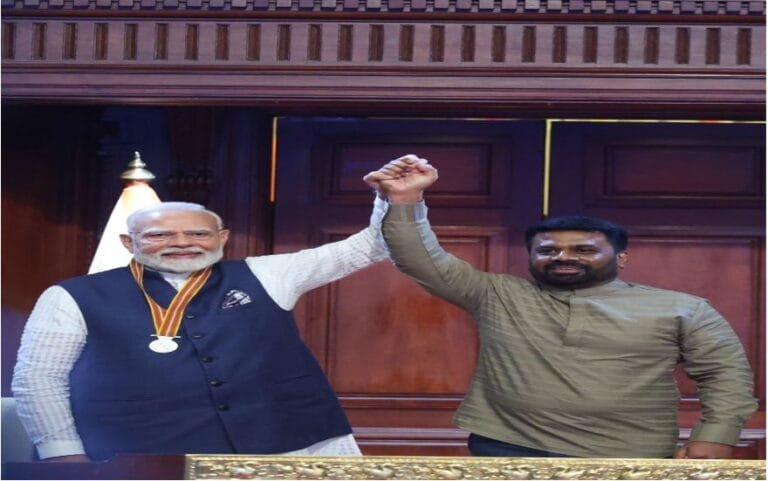
  • PM Modi Honoured with Sri Lanka’s Highest Civilian Award for Strengthening Bilateral Ties

    On April 5, 2025, Prime Minister Narendra Modi was awarded the Sri Lanka Mitra Vibhushana, Sri Lanka’s highest civilian honour for foreign Heads of State and Government, by President Anura Kumara Dissanayake in Colombo. The award recognizes PM Modi’s significant contributions to strengthening India-Sri Lanka relations and symbolizes deep friendship between the two nations.

    PM Modi expressed gratitude, calling it an honour for all 140 crore Indians, and highlighted the shared spiritual and cultural heritage of both countries. The medal’s design features symbols such as the Dharma Chakra and Pun Kalasa, reflecting their Buddhist legacy and prosperity.

    This marks Modi’s 22nd international recognition, reinforcing his image as a global statesman. During the visit, both leaders also launched bilateral projects like the Sampur Solar Power Project and signed MoUs in energy, digital transformation, and trilateral cooperation (including the UAE). India’s aid to Sri Lanka now totals around $7 billion, including grants and investments exceeding $2 billion.

  • Today Current Affairs MCQs : 5 April 2025

    Q. Who became the first Indian boxer to reach the final of the Boxing World Cup 2025?

    A) Vishal
    B) Hitesh
    C) Jadumani Singh
    D) Sachin Siwach

    Show Answer
    Correct Answer: B) Hitesh
    On April 4, 2025, Hitesh made history by becoming the first Indian boxer to reach the final of the Boxing World Cup 2025, held in Foz do Iguaçu, Brazil.

    Q. Which country assumed the Chairmanship of BIMSTEC for 2025–2027?

    A) India
    B) Thailand
    C) Bangladesh
    D) Sri Lanka

    Show Answer
    Correct Answer: C) Bangladesh
    On April 4, 2025, Bangladesh assumed the Chairmanship of BIMSTEC (Bay of Bengal Initiative for Multi-Sectoral Technical and Economic Cooperation) for the next two years, during the BIMSTEC Summit held in Bangkok.

    Q. What major transport agreement was signed during the BIMSTEC Summit 2025?

    A) BIMSTEC Aviation Pact
    B) BIMSTEC Road Development Agreement
    C) BIMSTEC Maritime Transport Agreement
    D) BIMSTEC Rail Integration Plan

    Show Answer
    Answer: C) BIMSTEC Maritime Transport Agreement
    On April 4, 2025, Prime Minister Narendra Modi participated in the 6th BIMSTEC Summit held in Bangkok

    Q. Where were the MRSAM flight tests conducted by DRDO and the Indian Army in April 2025?

    A) Chandipur
    B) Pokhran
    C) Dr. A.P.J. Abdul Kalam Island
    D) Visakhapatnam

    Show Answer
    Answer: C) Dr. A.P.J. Abdul Kalam Island
    On April 4, 2025, the DRDO and Indian Army successfully conducted four flight tests of the Army version of the Medium-Range Surface-to-Air Missile (MRSAM) from Dr. A.P.J. Abdul Kalam Island, Odisha.

  • DRDO and Indian Army Successfully Test Medium-Range Surface-to-Air Missiles (MRSAM)

    On April 4, 2025, the DRDO and Indian Army successfully conducted four flight tests of the Army version of the Medium-Range Surface-to-Air Missile (MRSAM) from Dr. A.P.J. Abdul Kalam Island, Odisha.

    The missiles intercepted and destroyed aerial targets at various ranges and altitudes, demonstrating full operational capability. The tests involved targets at long range, short range, high altitude, and low altitude. Defence Minister Rajnath Singh congratulated all involved and said the tests re-established the weapon system’s effectiveness.

  • PM Modi’s Bangkok Summit and Sri Lanka State Visit

    On April 4, 2025, Prime Minister Narendra Modi participated in the 6th BIMSTEC Summit held in Bangkok, where he unveiled several India-led initiatives focused on institution and capacity building across the region. Key announcements included the setting up of BIMSTEC Centres of Excellence in India for Disaster Management, Sustainable Maritime Transport, Traditional Medicine, and Agriculture Research & Training.

    He also launched the BODHI programme (BIMSTEC for Organized Development of Human Resource Infrastructure), aimed at providing training and scholarships to youth, professionals, and researchers. Other initiatives included a pilot study on Digital Public Infrastructure, a cancer care capacity-building programme, and the proposal for an annual BIMSTEC Business Summit in India, alongside the creation of a BIMSTEC Chamber of Commerce.

    PM Modi welcomed the signing of the BIMSTEC Maritime Transport Agreement, adoption of the Bangkok Vision 2030, and the BIMSTEC Eminent Persons Group Report. He paid tribute to victims of the recent earthquakes in Myanmar and Thailand, and praised Thailand’s leadership in BIMSTEC.

    Additionally, PM Modi visited the Wat Pho Buddhist Temple in Bangkok, highlighting the cultural ties between India and Thailand.

    Later the same day, PM Modi arrived in Colombo for a three-day state visit to Sri Lanka at the invitation of President Anura Kumara Dissanayaka. He was received by Sri Lankan ministers at the airport. During his visit, PM Modi will engage in bilateral talks, inaugurate Indian-assisted projects, and visit Anuradhapura, where he will pray at the Jaya Sri Maha Bodhi temple and inaugurate railway connectivity projects in the northern region.

  • Bangladesh Assumes BIMSTEC Chairmanship for 2025–2027

    On April 4, 2025, Bangladesh assumed the Chairmanship of BIMSTEC (Bay of Bengal Initiative for Multi-Sectoral Technical and Economic Cooperation) for the next two years, during the BIMSTEC Summit held in Bangkok. The Chairmanship was handed over by the Prime Minister of Thailand to Chief Adviser of Bangladesh’s Interim Government, Muhammad Yunus.

    In his acceptance, Yunus emphasized the need for an inclusive and action-oriented BIMSTEC, reaffirming Bangladesh’s commitment to regional cooperation and development.

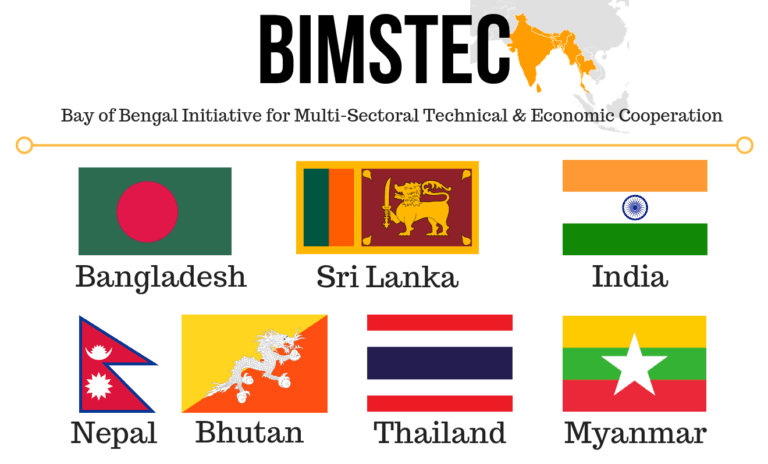
    BIMSTEC consists of seven member countries: Bangladesh, Bhutan, India, Myanmar, Nepal, Sri Lanka, and Thailand.

  • Hitesh Becomes First Indian Boxer to Enter World Cup 2025 Final

    On April 4, 2025, Hitesh made history by becoming the first Indian boxer to reach the final of the Boxing World Cup 2025, held in Foz do Iguaçu, Brazil. He secured a dominant 5-0 victory over Makan Traore of France in the men’s 70kg semifinal.

    Hitesh is a rising Indian boxer known for his speed and precision in the ring. Hailing from Haryana, he has steadily climbed the national boxing ranks, earning recognition for his dedication, discipline, and powerful performance in the 70kg weight category.

    Meanwhile, three other Indian boxers — Jadumani Singh (50kg), Sachin Siwach (60kg), and Vishal (90kg) — earned bronze medals after reaching the semifinals in their respective categories.

  • Game and Sports MCQs for Competitive Exams

    Game and Sports MCQs questions for Competitive Exams. Important questions from previous year General Knowledge question paper.

    Medium: English

    Game and Sports Questions

    Question 1: In which year did the Olympic Games begin?

    (A) 1896
    (B) 1900
    (C) 1920
    (D) 1936

    Answer
    Answer: (A) 1896
    Explanation: The modern Olympic Games began in 1896 in Athens, Greece.

    Question 2: How often is the FIFA World Cup Football Tournament held?

    (A) 2 years
    (B) 3 years
    (C) 4 years
    (D) 5 years

    Answer
    Answer: (C) 4 years
    Explanation: The FIFA World Cup is held every four years.

    Question 3: “Uber Cup” is associated with which sport?

    (A) Cricket
    (B) Tennis
    (C) Badminton
    (D) Football

    Answer
    Answer: (C) Badminton
    Explanation: The Uber Cup is awarded in the Women’s Badminton Team Championship.

    Question 4: In which year did India win its first Cricket World Cup?

    (A) 1975
    (B) 1983
    (C) 1987
    (D) 1996

    Answer
    Answer: (B) 1983
    Explanation: India won its first Cricket World Cup in 1983 under the captaincy of Kapil Dev.

    Question 5: Which tournament is NOT included in the Grand Slam of tennis?

    (A) Wimbledon
    (B) Australian Open
    (C) French Open
    (D) Davis Cup

    Answer
    Answer: (D) Davis Cup
    Explanation: The Grand Slam in tennis includes four major tournaments: Wimbledon, Australian Open, French Open, and US Open.

    Question 6: The “Arjuna Award” is given for excellence in which field?

    (A) Literature
    (B) Sports
    (C) Music
    (D) Science

    Answer
    Answer: (B) Sports
    Explanation: The Arjuna Award is given for outstanding achievements in Indian sports.

    Question 7: In which sport did India win its first Olympic gold medal?

    (A) Hockey
    (B) Wrestling
    (C) Boxing
    (D) Athletics

    Answer
    Answer: (A) Hockey
    Explanation: India won its first Olympic gold medal in hockey in 1928.

    Question 8: Who is a famous Indian racer in Formula 1 racing?

    (A) Sachin Tendulkar
    (B) Viswanathan Anand
    (C) Narain Karthikeyan
    (D) Leander Paes

    Answer
    Answer: (C) Narain Karthikeyan
    Explanation: Narain Karthikeyan is India’s first Formula 1 racer.

    Question 9: “Thomas Cup” is associated with which sport?

    (A) Table Tennis
    (B) Badminton
    (C) Football
    (D) Hockey

    Answer
    Answer: (B) Badminton
    Explanation: The Thomas Cup is awarded in the Men’s Badminton Team Championship.

    Question 10: Viswanathan Anand is associated with which sport?

    (A) Tennis
    (B) Football
    (C) Chess
    (D) Badminton

    Answer
    Answer: (C) Chess
    Explanation: Viswanathan Anand is a famous Indian chess player and a former World Chess Champion.

    Question-11: “Roland Garros” is associated with which sport?

    (A) Cricket
    (B) Badminton
    (C) Football
    (D) Tennis

    Answer
    Answer: (D) Tennis
    Explanation: Roland Garros is another name for the French Open tennis tournament.

    Question-12: In which year did the Asian Games begin?

    (A) 1948
    (B) 1951
    (C) 1960
    (D) 1965

    Answer
    Answer: (B) 1951
    Explanation: The first Asian Games were held in 1951 in New Delhi, India.

    Question-13: Which Indian batsman scored the first triple century in Test cricket?

    (A) Sachin Tendulkar
    (B) Sourav Ganguly
    (C) Virender Sehwag
    (D) Rahul Dravid

    Answer
    Answer: (C) Virender Sehwag
    Explanation: Virender Sehwag scored the first triple century for India in Test cricket in 2004 against Pakistan.

    Question-14: Which country has won the FIFA World Cup the most times?

    (A) Argentina
    (B) Germany
    (C) Italy
    (D) Brazil

    Answer
    Answer: (D) Brazil
    Explanation: Brazil has won the FIFA World Cup the most times, with a total of 5 victories.

    Question-15: How many balls are bowled in an over in cricket?

    (A) 4
    (B) 5
    (C) 6
    (D) 7

    Answer
    Answer: (C) 6
    Explanation: An over in cricket consists of 6 balls.

    Question-16: How many players are there in a football team?

    (A) 9
    (B) 10
    (C) 11
    (D) 12

    Answer
    Answer: (C) 11
    Explanation: A football team consists of 11 players, including a goalkeeper.

    Question-17: How many categories is wrestling divided into in the Olympic Games?

    (A) 4
    (B) 5
    (C) 6
    (D) 7

    Answer
    Answer: (D) 7
    Explanation: Wrestling in the Olympics is divided into seven weight categories for both men and women.

    Question-18: The ‘Davis Cup’ in tennis is awarded for?

    (A) Individual male players
    (B) Men’s team championship
    (C) Women’s team championship
    (D) Mixed doubles

    Answer
    Answer: (B) Men’s team championship
    Explanation: The Davis Cup is awarded for the men’s team tennis championship.

    Question-19: In which country is ‘Wimbledon’ held?

    (A) USA
    (B) France
    (C) England
    (D) Australia

    Answer
    Answer: (C) England
    Explanation: The Wimbledon Tennis Championship is held in London, England.

    Question-20: ‘Ranji Trophy’ in India is associated with which sport?

    (A) Hockey
    (B) Cricket
    (C) Football
    (D) Badminton

    Answer
    Answer: (B) Cricket
    Explanation: The Ranji Trophy is a domestic cricket championship in India.

    Question 31: “Team India” is associated with which sport?

    (A) Football
    (B) Badminton
    (C) Cricket
    (D) Hockey

    Answer
    Answer: (C) Cricket
    Explanation: “Team India” refers to the Indian cricket team.

    Question 32: Rafael Nadal is associated with which sport?

    (A) Football
    (B) Tennis
    (C) Golf
    (D) Hockey

    Answer
    Answer: (B) Tennis
    Explanation: Rafael Nadal is a famous Spanish tennis player and has won multiple Grand Slam titles.

    Question 33: What does ‘hat-trick’ mean in football?

    (A) Scoring three goals
    (B) Scoring two goals
    (C) Scoring one goal
    (D) Scoring four goals

    Answer
    Answer: (A) Scoring three goals
    Explanation: In football, a ‘hat-trick’ means a player has scored three goals in a single match.

    Question 34: The ‘Yellow Jersey’ for the winner is associated with which sport?

    (A) Football
    (B) Cycling
    (C) Tennis
    (D) Hockey

    Answer
    Answer: (B) Cycling
    Explanation: The ‘Yellow Jersey’ is awarded to the leading cyclist in the Tour de France race.

    Question 35: Who was the captain of the Indian women’s cricket team in the 2022 Women’s World Cup?

    (A) Mithali Raj
    (B) Harmanpreet Kaur
    (C) Smriti Mandhana
    (D) Jhulan Goswami

    Answer
    Answer: (B) Harmanpreet Kaur
    Explanation: Harmanpreet Kaur led the Indian women’s cricket team in the 2022 Women’s World Cup.

    Question 36: Which Indian athlete won the first gold medal at the Tokyo Olympics 2021?

    (A) P. V. Sindhu
    (B) Neeraj Chopra
    (C) Bajrang Punia
    (D) Mirabai Chanu

    Answer
    Answer: (B) Neeraj Chopra
    Explanation: Neeraj Chopra won India’s first gold medal in the javelin throw event at the Tokyo Olympics 2021.

    Question 37: When is National Sports Day celebrated in India?

    (A) 15th August
    (B) 29th August
    (C) 2nd October
    (D) 26th January

    Answer
    Answer: (B) 29th August
    Explanation: In India, National Sports Day is celebrated on 29th August in honor of the legendary hockey player Major Dhyan Chand./su_spoiler]

    Question 38: In which sport is the term “dribbling” used?

    (A) Hockey
    (B) Cricket
    (C) Tennis
    (D) Football

    Answer
    Answer: (D) Football
    Explanation: Dribbling in football refers to a player's ability to control and move the ball forward while avoiding defenders.

    Question 39: In which year was the first season of IPL (Indian Premier League) played?

    (A) 2007
    (B) 2008
    (C) 2010
    (D) 2011

    Answer
    Answer: (B) 2008
    Explanation: The first season of IPL was played in 2008, and Rajasthan Royals won the championship.

    Question 40: Who won India's first Olympic medal in boxing?

    (A) Vijender Singh
    (B) Mary Kom
    (C) Shiva Thapa
    (D) Akhil Kumar

    Answer
    Answer: (A) Vijender Singh
    Explanation: Vijender Singh won a bronze medal in boxing at the 2008 Beijing Olympics, making him India’s first Olympic boxing medalist.

    Question 41: What is the highest award given in the field of sports?

    (A) Jnanpith Award
    (B) Padma Shri Award
    (C) Major Dhyan Chand Khel Ratna Award
    (D) Bharat Bhushan Award

    Answer
    Answer: (C) Major Dhyan Chand Khel Ratna Award
    Explanation: The highest award given in the field of sports in India is the ‘Major Dhyan Chand Khel Ratna Award.’ In 2021, the name of this award was changed from ‘Rajiv Gandhi Khel Ratna Award’ to ‘Major Dhyan Chand Khel Ratna Award.’

    Question 42: Which sport is Navjot Singh Sidhu associated with?

    (A) Football
    (B) Tennis
    (C) Cricket
    (D) Hockey

    Answer
    Answer: (C) Cricket
    Explanation: Navjot Singh Sidhu is a former Indian cricketer who played for India in both Test and One-Day formats.

    Question 43: What does 'Albatross' mean in golf?

    (A) Scoring three strokes under par
    (B) Scoring more than two strokes over par
    (C) Scoring exactly par
    (D) Scoring more than four strokes over par

    Answer
    Answer: (A) Scoring three strokes under par
    Explanation: An ‘Albatross’ occurs when a player completes a golf hole three strokes under the designated number of strokes (par).

    Question 44: Federer, Nadal, and Djokovic are associated with which sport?

    (A) Football
    (B) Golf
    (C) Badminton
    (D) Tennis

    Answer
    Answer: (D) Tennis
    Explanation: These three players are considered among the greatest tennis players of all time and have won multiple Grand Slam titles.

    Question 45: Who was India's first Grand Slam winner?

    (A) Leander Paes
    (B) Mahesh Bhupathi
    (C) Sania Mirza
    (D) Ramanathan Krishnan

    Answer
    Answer: (B) Mahesh Bhupathi
    Explanation: Mahesh Bhupathi became India’s first Grand Slam winner by winning the French Open mixed doubles title in 1997.

    Question 46: In which sport is the 'Bulgarian Bag' used?

    (A) Wrestling
    (B) Weightlifting
    (C) Boxing
    (D) Badminton

    Answer
    Answer: (A) Wrestling
    Explanation: The ‘Bulgarian Bag’ is used in wrestling training to enhance endurance and strength.

    Question 47: In which sport has P.V. Sindhu won an Olympic medal?

    (A) Tennis
    (B) Badminton
    (C) Hockey
    (D) Athletics

    Answer
    Answer: (B) Badminton
    Explanation: P.V. Sindhu won a silver medal in badminton at the 2016 Rio Olympics and a bronze medal at the 2021 Tokyo Olympics.

    Question 48: In which country was the FIFA World Cup 2022 held?

    (A) Qatar
    (B) Brazil
    (C) Russia
    (D) South Africa

    Answer
    Answer: (A) Qatar
    Explanation: The 2022 FIFA World Cup was held in Qatar, marking the first time the tournament was hosted in the Middle East.

    Question 49: Who is known as the "Little Master" in Indian cricket?

    (A) Kapil Dev
    (B) Sachin Tendulkar
    (C) Sunil Gavaskar
    (D) Rahul Dravid

    Answer
    Answer: (C) Sunil Gavaskar
    Explanation: Sunil Gavaskar is called the “Little Master” due to his exceptional batting skills and records. He was one of India’s first cricketing legends.

    Question 50: Which Indian cricketer holds the record for the highest runs scored in a single Test match innings?

    (A) Virat Kohli
    (B) Sachin Tendulkar
    (C) Rahul Dravid
    (D) Sunil Gavaskar

    Answer
    Answer: (B) Sachin Tendulkar
    Explanation: Sachin Tendulkar holds the record for the highest runs scored in a single Test innings for India with his 248* against Bangladesh in 2004.

    Question-51: Who was the captain of the Indian team that won the first World Cup in 1983?

    A) Sunil Gavaskar
    B) Kapil Dev
    C) Mohammad Azharuddin
    D) Sourav Ganguly

    Answer
    Answer: B) Kapil Dev
    Explanation: Kapil Dev led the Indian team to its first World Cup victory in 1983, defeating the West Indies in the final.

    Question-52: Which Indian cricketer is known by the nickname "Dada"?

    A) Sachin Tendulkar
    B) Sourav Ganguly
    C) Rahul Dravid
    D) Anil Kumble

    Answer
    Answer: B) Sourav Ganguly
    Explanation: Sourav Ganguly is known as “Dada,” a term used in Bengali to mean elder brother.

    Question-53: In which year did India win its first T20 World Cup?

    A) 2005
    B) 2007
    C) 2011
    D) 2013

    Answer
    Answer: B) 2007
    Explanation: India won its first T20 World Cup in 2007 under the captaincy of Mahendra Singh Dhoni.

    Question-54: Who was the highest run-scorer for India in the 2011 ICC Cricket World Cup?

    A) Sachin Tendulkar
    B) Virat Kohli
    C) Gautam Gambhir
    D) Kumar Sangakkara

    Answer
    Answer: C) Gautam Gambhir
    Explanation: Gautam Gambhir was the highest run-scorer for India in the 2011 World Cup, scoring 808 runs.

    Question-55: Who was the first Indian cricketer to score a double century in a One-Day International (ODI) match?

    A) Sachin Tendulkar
    B) Virat Kohli
    C) Rohit Sharma
    D) Shikhar Dhawan

    Answer
    Answer: C) Rohit Sharma
    Explanation: Rohit Sharma has scored three double centuries in ODI matches, with his first one coming against Australia in 2013.

    Question-56: Which Indian cricketer was the first to take 10 wickets in a single Test innings?

    A) Bishan Singh Bedi
    B) Anil Kumble
    C) Erapalli Prasanna
    D) Ravi Shastri

    Answer
    Answer: B) Anil Kumble
    Explanation: Anil Kumble achieved this rare feat in 1999 against Pakistan, taking all 10 wickets in a single innings.

    Question-57: Which Indian cricketer is known as "The Wall"?

    A) Sachin Tendulkar
    B) Rahul Dravid
    C) Virender Sehwag
    D) Sunil Gavaskar

    Answer
    Answer: B) Rahul Dravid
    Explanation: Rahul Dravid is known as “The Wall” due to his solid and dependable batting technique.

    Question-58: Which Indian cricketer holds the record for the highest individual score in an ODI match?

    A) Sachin Tendulkar
    B) Virat Kohli
    C) Rohit Sharma
    D) Shikhar Dhawan

    Answer
    Answer: C) Rohit Sharma
    Explanation: Rohit Sharma holds the record for the highest individual score in ODI cricket, scoring 264 runs.

    Question-59: Which Indian bowler holds the record for the most wickets in T20 International cricket?

    A) Harbhajan Singh
    B) Yuvraj Singh
    C) Ravi Ashwin
    D) Jasprit Bumrah

    Answer
    Answer: C) Ravi Ashwin
    Explanation: Ravi Ashwin holds the record for the most wickets for India in T20 International cricket.

    Question-60: Who was the first Indian cricketer to score a century in T20 International cricket?

    A) Virat Kohli
    B) Suresh Raina
    C) Yuvraj Singh
    D) Rohit Sharma

    Answer
    Answer: B) Suresh Raina
    Explanation: Suresh Raina was the first Indian to score a century in T20 International cricket, achieving this against South Africa in 2010.

    Question-61: Who was the captain of the Indian team in the 2003 Cricket World Cup final?

    A) Sourav Ganguly
    B) Rahul Dravid
    C) MS Dhoni
    D) Sachin Tendulkar

    Answer
    Answer: A) Sourav Ganguly
    Explanation: Sourav Ganguly was the captain of the Indian team in the 2003 Cricket World Cup final, where India played against Australia.

    Question-62: Who was the first Indian cricketer to win the ICC Cricketer of the Year award?

    A) Sachin Tendulkar
    B) Rahul Dravid
    C) MS Dhoni
    D) Virat Kohli

    Answer
    Answer: A) Sachin Tendulkar
    Explanation: Sachin Tendulkar was the first Indian cricketer to win the ICC Cricketer of the Year award in 2010.

    Question-63: Which Indian cricketer is famous for hitting six sixes in an over in T20 cricket?

    A) MS Dhoni
    B) Yuvraj Singh
    C) Virender Sehwag
    D) Rohit Sharma

    Answer
    Answer: B) Yuvraj Singh
    Explanation: Yuvraj Singh hit six sixes in an over against Stuart Broad during the 2007 T20 World Cup.

  • World History MCQs for Competitive Exams

    World History MCQs Questions with answer and explanation for Competitive Exams. Important previous year questions.

    Medium: English

    World History Questions

    Question 1: Which part of India did Alexander the Great invade?
    a) Punjab
    b) Bengal
    c) Kashmir
    d) Tamil Nadu

    Answer
    Answer: a) Punjab
    Explanation: Alexander the Great invaded the northwestern part of India, particularly Punjab. His campaign brought significant changes to the Indian subcontinent.

    Question 2: Who was the first emperor of the Maurya Empire?
    a) Chandragupta Maurya
    b) Ashoka
    c) Bindusara
    d) Emperor Vikramaditya

    Answer
    Answer: a) Chandragupta Maurya
    Explanation: Chandragupta Maurya founded the Maurya Empire and became its first emperor. He established a significant empire in India during the 4th century BCE.

    Question 3: When did World War I end?
    a) 1914
    b) 1918
    c) 1920
    d) 1939

    Answer
    Answer: b) 1918
    Explanation: World War I ended in 1918 when all major powers signed peace agreements.

    Question 4: Which country conducted the first nuclear bomb test?
    a) USA
    b) Russia
    c) England
    d) Japan

    Answer
    Answer: a) USA
    Explanation: The USA conducted the first nuclear bomb test in 1945, which was a significant event towards the end of World War II.

    Question 5: Which empire developed the ‘Code of Laws’ in Mesopotamia?
    a) Babylonian
    b) Assyrian
    c) Maurya
    d) Greek

    Answer
    Answer: a) Babylonian
    Explanation: The Babylonian Empire developed Hammurabi’s Code, which was an important ancient legal document.

    Question 6: What was the role of the ‘Senate’ in ancient Rome?
    a) Function as a court
    b) Make laws and provide advice
    c) Expand the empire
    d) Control trade deals

    Answer
    Answer: b) Make laws and provide advice
    Explanation: The main role of the Senate in ancient Rome was to create laws and advise the ruler. It was a crucial part of the Roman government.

    Question 7: What does “Drops of John” refer to?
    a) A political plan
    b) A war name
    c) A social movement in the USA
    d) A scientific discovery

    Answer
    Answer: c) A social movement in the USA
    Explanation: “Drops of John” was the name of a social movement in the USA aimed at prohibiting alcohol. This movement led to “Prohibition” in the 1920s, banning alcohol production and sales.

    Question 8: Which action led to the October Revolution in Russia?
    a) Economic crisis
    b) War defeat
    c) Political dissatisfaction
    d) Foreign invasion

    Answer
    Answer: b) War defeat
    Explanation: The main cause of the October Revolution (1917) in Russia was the country’s defeat in World War I, which led to economic and social crises, ultimately fueling the Bolshevik Revolution.

    Question 9: Who was the prominent ruler of the Babylonian Empire?
    a) Hammurabi
    b) Nebuchadnezzar II
    c) Alexander
    d) Ramses II

    Answer
    Answer: b) Nebuchadnezzar II
    Explanation: Nebuchadnezzar II was a significant ruler of the Babylonian Empire, known for constructing the Hanging Gardens of Babylon.

    Question 10: Which ancient civilization built the pyramids?
    a) Mesopotamia
    b) Egypt
    c) Greece
    d) India

    Answer
    Answer: b) Egypt
    Explanation: The ancient Egyptian civilization built the pyramids, which reflected their religious and cultural significance.

    Question 11: In which year did the French Revolution begin?
    (A) 1787
    (B) 1789
    (C) 1792
    (D) 1794

    Answer
    Answer: (B) 1789
    Explanation: The French Revolution began in 1789. It was caused by deep social inequality and an economic crisis, with the main goal of ending the old feudal system and implementing the principles of equality, liberty, and fraternity.

    Question 12: Which emperor commissioned the construction of the Taj Mahal, famous for its tomb and architecture?
    (A) Akbar
    (B) Shah Jahan
    (C) Aurangzeb
    (D) Babur

    Answer
    Answer: (B) Shah Jahan
    Explanation: The Taj Mahal was built by Shah Jahan in memory of his wife Mumtaz Mahal. It is an excellent example of Indian architecture.

    Question 13: In which year did Columbus first discover America?
    (A) 1492
    (B) 1498
    (C) 1500
    (D) 1520

    Answer
    Answer: (A) 1492
    Explanation: Christopher Columbus discovered America in 1492. This journey was a significant historical event for the Americas.

    Question 14: Which empire led to the unification of modern Germany?
    (A) Roman Empire
    (B) Frankish Empire
    (C) Prussian Empire
    (D) Ottoman Empire

    Answer
    Answer: (C) Prussian Empire

    Question 15: Which king achieved major victories to gain control over the Indian Ocean?
    (A) Chandragupta Maurya
    (B) Ashoka
    (C) Samudragupta
    (D) Shivaji

    Answer
    Answer: (D) Shivaji
    Explanation: Shivaji achieved significant victories to gain control over the Indian Ocean and established the Maratha Empire as a Chhatrapati.

    Question 16: Which emperor adopted Islam as the state religion?
    (A) Akbar
    (B) Aurangzeb
    (C) Babur
    (D) Shah Jahan

    Answer
    Answer: (B) Aurangzeb
    Explanation: Aurangzeb adopted Islam as the state religion of the Mughal Empire and implemented Islamic laws during his rule.

    Question 17: When was the United Nations established after World War II?
    (A) 1945
    (B) 1947
    (C) 1949
    (D) 1950

    Answer
    Answer: (A) 1945
    Explanation: The United Nations was established in 1945 after World War II with the aim of maintaining global peace and security.

    Question 18: Which prominent scholar and writer in Akbar’s court wrote “Akbarnama”?
    (A) Zahir-ud-din Babur
    (B) Abul Fazl
    (C) Akbar
    (D) Ibrahim Lodi

    Answer
    Answer: (B) Abul Fazl
    Explanation: Abul Fazl was a prominent scholar and writer in Akbar’s court who wrote “Akbarnama,” a detailed account of Akbar’s life and reign.

    Question 19: Who gave the slogan “Liberty, Equality, Fraternity” during the French Revolution?
    (A) Louis XVI
    (B) Napoleon Bonaparte
    (C) Georges Danton
    (D) Maximilien Robespierre

    Answer
    Answer: (D) Maximilien Robespierre
    Explanation: The slogan “Liberty, Equality, Fraternity” was given by Maximilien Robespierre during the French Revolution. It symbolized revolutionary ideals.

    Question 20: In which year did the American War of Independence begin?
    (A) 1776
    (B) 1783
    (C) 1800
    (D) 1790

    Answer
    Answer: (A) 1776
    Explanation: The American War of Independence began in 1776 when America declared independence from Britain.

    Question 21: Which empire was founded by Alexander the Great?
    A) Roman Empire
    B) Mongol Empire
    C) Macedonian Empire
    D) Sassanian Empire

    Answer
    Answer: C) Macedonian Empire
    Explanation: Alexander the Great founded the Macedonian Empire and expanded it over a vast territory.

    Question 22: Which country was most affected by the Seven Years’ War?
    A) Britain
    B) France
    C) Russia
    D) Germany

    Answer
    Answer: B) France
    Explanation: The Seven Years’ War (1756-1763) significantly impacted France, resulting in the loss of many of its colonial possessions to Britain.

    Question 23: In which famous battle did Napoleon Bonaparte face defeat?
    A) Battle of Waterloo
    B) Battle of Trafalgar
    C) Battle of Austerlitz
    D) Battle of Lützen

    Answer
    Answer: A) Battle of Waterloo
    Explanation: Napoleon Bonaparte faced defeat in the Battle of Waterloo in 1815, marking the end of his rule and bringing stability to Europe.

    Question 24: Which major book was written during Akbar’s reign?
    A) Baburnama
    B) Akbarnama
    C) Ain-i-Akbari
    D) Mughalnama

    Answer
    Answer: C) Ain-i-Akbari
    Explanation: “Ain-i-Akbari” was written by Abul Fazl, detailing the administrative, social, and religious aspects of Akbar’s reign.

    Question 25: Which revolution in China was a major outcome under Mao Zedong’s leadership?
    A) Taiping Rebellion
    B) Summer Uprising
    C) Communist Revolution of China
    D) Xinhai Revolution

    Answer
    Answer: C) Communist Revolution of China
    Explanation: The Communist Revolution of China (1949), led by Mao Zedong, resulted in the establishment of Communist Party rule in China.

    Question 26: In which year did Japan surrender after World War II?
    A) 1945
    B) 1946
    C) 1944
    D) 1947

    Answer
    Answer: A) 1945
    Explanation: Japan surrendered in 1945, marking the end of World War II and leading to the formation of the United Nations.

    Question 27: What was the primary goal of the Bolshevik Revolution?
    A) End of imperialism
    B) Establishment of communism
    C) Establishment of democracy
    D) End of colonialism

    Answer
    Answer: B) Establishment of communism
    Explanation: The main goal of the Bolshevik Revolution was to establish communism, leading to the formation of a communist government in Russia.

    Question 28: Which great empire played a major role in Europe after the Roman Empire?
    A) Byzantine Empire
    B) Ottoman Empire
    C) Frankish Empire
    D) British Empire

    Answer
    Answer: A) Byzantine Empire
    Explanation: The Byzantine Empire, also known as the Eastern Roman Empire, played a dominant role in Europe after the fall of the Roman Empire.

    Question 29: The “Napoleonic Code” was implemented in which country?
    A) Britain
    B) France
    C) Spain
    D) Italy

    Answer
    Answer: B) France
    Explanation: The “Napoleonic Code” was implemented in France and became an important legal framework codifying civil laws.

    Question 30: When was the World Trade Organization (WTO) established?
    A) 1995
    B) 1990
    C) 1985
    D) 2000

    Answer
    Answer: A) 1995
    Explanation: The World Trade Organization (WTO) was established in 1995 to regulate international trade and resolve trade disputes.

    Question 31: When did the ancient Egyptian empire begin?
    A) 3100 BCE
    B) 3000 BCE
    C) 2500 BCE
    D) 2000 BCE

    Answer
    Answer: A) 3100 BCE
    Explanation: The ancient Egyptian empire began around 3100 BCE when Narmer unified Egypt and established the first dynasty.

    Question 32: In which country is the “Great Wall” located?
    A) India
    B) China
    C) Japan
    D) Vietnam

    Answer
    Answer: B) China
    Explanation: The Great Wall of China was built in ancient times to defend against foreign invasions.

    Question 33: Where was Genghis Khan born?
    A) China
    B) Mongolia
    C) India
    D) Russia

    Answer
    Answer: B) Mongolia
    Explanation: Genghis Khan was born in Mongolia. He founded the Mongol Empire and conquered a vast territory.

    Question 34: Which U.S. president played a crucial role in the construction of the Panama Canal?
    A) Theodore Roosevelt
    B) Woodrow Wilson
    C) Franklin D. Roosevelt
    D) Abraham Lincoln

    Answer
    Answer: A) Theodore Roosevelt
    Explanation: Theodore Roosevelt played a significant role in the construction of the Panama Canal, which was completed in 1914, providing a navigational route between the Atlantic and Pacific Oceans.

    Question 35: In which decade did colonialism come to an end?
    A) 1940s
    B) 1950s
    C) 1960s
    D) 1970s

    Answer
    Answer: C) 1960s
    Explanation: Colonialism largely ended in the 1960s when many African and Asian countries gained independence from colonial powers.

    Question 36: In which country was the center of the Renaissance?
    A) France
    B) England
    C) Italy
    D) Spain

    Answer
    Answer: C) Italy
    Explanation: The Renaissance was centered in Italy, particularly in Florence, Venice, and Rome, where major advancements in art, literature, and science took place.

    Question 37: Who was one of the main revolutionary leaders during the French Revolution?
    A) Maximilien Robespierre
    B) Louis XVI
    C) Napoleon Bonaparte
    D) Georges Danton

    Answer
    Answer: A) Maximilien Robespierre
    Explanation: Maximilien Robespierre was a key revolutionary leader during the French Revolution and played a crucial role in its radical phase.

    Question 38: When was the World Trade Organization (WTO) established?
    A) 1995
    B) 1990
    C) 2000
    D) 1985

    Answer
    Answer: A) 1995
    Explanation: The World Trade Organization (WTO) was established in 1995. It is responsible for regulating global trade and resolving international trade disputes.

    Question 39: Which war established the modern European balance of power?
    A) Seven Years’ War
    B) Thirty Years’ War
    C) Napoleonic Wars
    D) French Revolution

    Answer
    Answer: A) Seven Years’ War
    Explanation: The Seven Years’ War (1756–1763) established the modern European balance of power, leading to a global redistribution of power between Britain and France.

    Question 40: What was the first constitution of France after the French Revolution?
    A) Constitution of 1791
    B) Constitution of 1789
    C) Constitution of 1804
    D) Constitution of 1795

    Answer
    Answer: A) Constitution of 1791
    Explanation: The Constitution of 1791 was the first constitution of France after the French Revolution. It established a constitutional monarchy, limiting the powers of the king.

    Question 41: Who became the first President of Russia after the dissolution of the Soviet Union?

    A) Mikhail Gorbachev
    B) Boris Yeltsin
    C) Vladimir Putin
    D) Nikita Khrushchev

    Answer
    Answer: B) Boris Yeltsin
    Explanation: After the dissolution of the Soviet Union, Boris Yeltsin became the first President of Russia. He served from 1991 to 1999.

    Question 42: The “Cold War” was fought between which two countries?

    A) USA and Japan
    B) USA and Soviet Union
    C) Britain and France
    D) Germany and Italy

    Answer
    Answer: B) USA and Soviet Union
    Explanation: The Cold War was an ideological and political conflict between the USA and the Soviet Union after World War II, lasting from 1947 to 1991.

    Question 43: In which year was the Berlin Wall brought down?

    A) 1987
    B) 1989
    C) 1991
    D) 1993

    Answer
    Answer: B) 1989
    Explanation: The Berlin Wall was demolished in 1989, marking the reunification of East and West Germany and signaling the end of the Cold War.

    Question 44: When did the “D-Day” operation take place during World War II?

    A) 1941
    B) 1942
    C) 1944
    D) 1945

    Answer
    Answer: C) 1944
    Explanation: The D-Day operation took place on June 6, 1944, when Allied forces landed in Normandy, France. This was a crucial step in defeating Nazi Germany.

    Question 45: Where did the “Renaissance” begin?

    A) England
    B) France
    C) Italy
    D) Germany

    Answer
    Answer: C) Italy
    Explanation: The Renaissance began in Florence, Italy, during the 14th to 17th centuries. It led to major advancements in art, science, and culture.

    Question 46: Who established democracy in Athens?

    A) Solon
    B) Pericles
    C) Aristotle
    D) Plato

    Answer
    Answer: B) Pericles
    Explanation: Under the leadership of Pericles, democracy was established in Athens. He encouraged civic participation and made Athens a cultural and political hub.

    Question 47: In which battle was the great French leader Napoleon Bonaparte defeated?

    A) Battle of Waterloo
    B) Battle of Trafalgar
    C) Battle of Leipzig
    D) Battle of Austerlitz

    Answer
    Answer: A) Battle of Waterloo
    Explanation: Napoleon Bonaparte was defeated in the Battle of Waterloo in 1815. After this defeat, he was exiled, bringing peace to Europe.

    Question 48: Who was the first Emperor of Rome?

    A) Nero
    B) Julius Caesar
    C) Augustus
    D) Caligula

    Answer
    Answer: C) Augustus
    Explanation: Augustus was the first Emperor of Rome. He was the successor of Julius Caesar and expanded the Roman Empire during his reign.

    Question 49: In which country did the “Industrial Revolution” first begin?

    A) Germany
    B) France
    C) Britain
    D) United States

    Answer
    Answer: C) Britain
    Explanation: The Industrial Revolution started in Britain in the mid-18th century. It brought revolutionary changes in production methods and had a global economic impact.

    Question 50: In which country did the Bolshevik Revolution take place?

    A) China
    B) Russia
    C) Cuba
    D) Vietnam

    Answer
    Answer: B) Russia
    Explanation: The Bolshevik Revolution occurred in Russia in 1917, leading to the rise of communism and the establishment of the Soviet Union under Vladimir Lenin.

    Question 51: In which year did the American War of Independence end?

    A) 1776
    B) 1781
    C) 1783
    D) 1791

    Answer
    Answer: C) 1783
    Explanation: The American War of Independence ended in 1783 with the Treaty of Paris, in which Britain recognized the independence of the 13 American colonies.

    Question 52: Along which river did the ancient Egyptian civilization develop?

    A) Tigris
    B) Yangtze
    C) Nile
    D) Indus

    Answer
    Answer: C) Nile
    Explanation: The ancient Egyptian civilization developed along the Nile River. The annual flooding of the Nile provided the necessary resources for agriculture and survival.

    Question 53: Who led the Allied Powers during World War II?

    A) Winston Churchill
    B) Adolf Hitler
    C) Joseph Stalin
    D) Franklin D. Roosevelt

    Answer
    Answer: A) Winston Churchill
    Explanation: Winston Churchill led the Allied Powers during World War II and played a crucial role in the fight against Nazi Germany.

    Question 54: Who is known as the “Founder of Revolutionary China”?

    A) Chiang Kai-shek
    B) Mao Zedong
    C) Sun Yat-sen
    D) Deng Xiaoping

    Answer
    Answer: B) Mao Zedong
    Explanation: Mao Zedong is known as the “Founder of Revolutionary China.” He established the People’s Republic of China in 1949 and laid the foundation for communist rule in China.

    Question 55: In which year did the Glorious Revolution of England take place?

    A) 1642
    B) 1688
    C) 1701
    D) 1789

    Answer
    Answer: B) 1688
    Explanation: The Glorious Revolution of England took place in 1688. It was a peaceful revolution in which King James II was deposed, and his daughter Mary and her husband, William of Orange, were installed as rulers. This revolution laid the foundation for constitutional governance in England, establishing parliamentary supremacy over the monarchy.

    Question 56: From which country did the European Renaissance begin?

    A) England
    B) France
    C) Italy
    D) Greece

    Answer
    Answer: C) Italy
    Explanation: The European Renaissance was a cultural and intellectual movement that marked a revival in art, science, and literature after the Middle Ages. It began in Italy in the late 14th century and lasted until the 17th century.

    Question 57: Who was the Mughal emperor during the Revolt of 1857?

    A) Akbar
    B) Shah Alam
    C) Bahadur Shah Zafar
    D) Shah Jahan

    Answer
    Answer: C) Bahadur Shah Zafar
    Explanation: Bahadur Shah Zafar was the last Mughal emperor during the Revolt of 1857, also known as the First War of Indian Independence. He was seen as a symbolic leader by the rebels and led the uprising in Delhi against British rule.

    Question 58: When did Alexander invade India?

    A) 326 BCE
    B) 356 BCE
    C) 300 BCE
    D) 250 BCE

    Answer
    Answer: A) 326 BCE
    Explanation: Alexander invaded India in 326 BCE and fought the Battle of Hydaspes against King Porus on the banks of the Jhelum River.

    Question 59: When was Bangladesh established?

    A) 1972
    B) 1971
    C) 1970
    D) 1975

    Answer
    Answer: B) 1971
    Explanation: In 1971, Sheikh Mujibur Rahman and the Awami League declared independence for Bangladesh on March 26. This led to the liberation of Bangladesh from Pakistan.

    Question 60: Who discovered the Harappan civilization?

    A) Alexander Cunningham
    B) Robert Bruce Foote
    C) Dayaram Sahni
    D) John Marshall

    Answer
    Answer: C) Dayaram Sahni
    Explanation: The Harappan civilization was discovered in 1921 by Dayaram Sahni. He was an official of the Archaeological Survey of India and conducted excavations at Harappa (now in Pakistan). Later, this civilization was termed the Indus Valley Civilization, one of the world’s oldest civilizations.

  • Today Current Affairs MCQs : 4 April 2025

    Q. Who has been appointed as the Deputy Governor of the Reserve Bank of India in April 2025?

    A) Urjit Patel
    B) Michael Debaprata Patra
    C) Dr. Poonam Gupta
    D) Raghuram Rajan

    Show Answer
    Correct Answer: C) Dr. Poonam Gupta
    Dr. Poonam Gupta has been appointed as the Deputy Governor of the Reserve Bank of India (RBI) for a three-year term starting April 1, 2025.

    Q. What was the real name of Veteran actor-director Manoj Kumar, who passed away in April 2025?

    A) Harikrishna Giri Goswami
    B) Hariom Kumar
    C) Harish Goswami
    D) Giri Prasad Manoj

    Show Answer
    Correct Answer: A) Harikrishna Giri Goswami
    Veteran actor and director Manoj Kumar passed away in Mumbai on April 4, 2025, at the age of 87.

    Q. In which country is the World Boxing Cup 2025, being held?

    A) Italy
    B) Kazakhstan
    C) Brazil
    D) Australia

    Show Answer
    Correct Answer: C) Brazil
    On April 3, 2025, Indian boxers Manish Rathore, Hitesh, and Abhinash Jamwal advanced to the semifinals of their respective weight categories at the World Boxing Cup in Brazil, guaranteeing three more medals for India.

    Q. When did the Parliament Passes the Waqf (Amendment) Bill, 2025?

    A) April 1, 2025
    B) April 2, 2025
    C) April 3, 2025
    D) March 31, 2025

    Show Answer
    Correct Answer: C) April 3, 2025
    The Waqf (Amendment) Bill, 2025 was passed by Parliament after the Rajya Sabha approved it on April 3, 2025, with 128 votes in favor and 95 against, following a 12-hour debate. The Lok Sabha had already approved the Bill.
  • Parliament Passes Waqf (Amendment) Bill, 2025

    The Waqf (Amendment) Bill, 2025 was passed by Parliament after the Rajya Sabha approved it on April 3, 2025, with 128 votes in favor and 95 against, following a 12-hour debate. The Lok Sabha had already approved the Bill.

    The Bill aims to streamline the management of Waqf properties, ensure transparency and accountability, and promote heritage protection and social welfare, particularly improving the status of Muslim women, including widows and divorcees. It proposes an inclusive Waqf Board, with representation from different Muslim sects and a limited number of non-Muslim members to preserve its secular nature.

    Minority Affairs Minister Kiren Rijiju stated the Bill would benefit crores of poor Muslims without interfering with Waqf properties, aligning with the government’s “Sabka Saath, Sabka Vikas” vision. The Bill was drafted after consultations with stakeholders and the Joint Parliamentary Committee.

    Opposition leaders, including Mallikarjun Kharge, Dr. Syed Naseer Hussain, and others, opposed the Bill, calling it anti-secular, unconstitutional, and politically motivated. However, several leaders like HD Devegowda supported the Bill, citing misuse of Waqf properties.

    Parliament also passed the Mussalman Wakf (Repeal) Bill, 2025, repealing the Mussalman Wakf Act of 1923.

  • India Secures Three Medals at World Boxing Cup Brazil 2025

    On April 3, 2025, Indian boxers Manish Rathore, Hitesh, and Abhinash Jamwal advanced to the semifinals of their respective weight categories at the World Boxing Cup in Brazil, guaranteeing three more medals for India.

    • Abhinash Jamwal defeated Germany’s Dennis Brill in the 65 kg category by unanimous decision.
    • Hitesh triumphed over Italy’s Gabriele Guidi Rontani in the 70 kg division.
    • Manish Rathore beat Australia’s Yusuf Chotia in the 55 kg category.

    In the upcoming semifinals:

    • Rathore will face Nursultan Altynbek of Kazakhstan
    • Hitesh will take on Makan Traoré
    • Jamwal will fight Gianluigi Malanga of Italy

    India now looks forward to turning these guaranteed medals into gold.

  • Manoj Kumar passed away at the age of 87

    Veteran actor and director Manoj Kumar passed away in Mumbai on April 4, 2025, at the age of 87. Widely known as ‘Bharat Kumar’ for his iconic patriotic roles, he was honored with the Padma Shri and the Dadasaheb Phalke Award for his significant contributions to Indian cinema.

    Born as Harikrishna Giri Goswami, he redefined patriotism in Bollywood through classics like Upkar (1967), Purab Aur Paschim (1970), and Kranti (1981). His powerful screen presence and memorable performances made him a legend. Other popular films include Patthar Ke Sanam, Shor, Sanyasi, and Roti Kapda Aur Makan.

  • Poonam Gupta appointed as Deputy Governor of the Reserve Bank of India (RBI)

    Dr. Poonam Gupta has been appointed as the Deputy Governor of the Reserve Bank of India (RBI) for a three-year term starting April 1, 2025, succeeding Michael Debaprata Patra. She previously served as Director General of NCAER and has extensive experience with the World Bank and IMF.

    Holding a PhD in International Economics, she specializes in economic growth, financial stability, and policy analysis. As Deputy Governor, she will oversee monetary policy, financial supervision, and economic forecasting. Her leadership is expected to strengthen RBI’s regulatory framework and support India’s economic growth amid key financial challenges.

  • UP GK MCQs for Competitive Exams

    Uttar Pradesh General Knowledge MCQs questions for Competitive Exams. Important questions practice set from previous year papers of UPSSSC exams in English.

    Question 1: On which of the following dates is Uttar Pradesh Foundation Day celebrated?

    A) March 10
    B) January 24
    C) December 21
    D) June 23

    Answer
    Answer: B) January 24
    Explanation: On January 24, 1950, the name of the United Provinces was changed to Uttar Pradesh.

    Question 2: Which is the largest city in Uttar Pradesh?

    A) Meerut
    B) Agra
    C) Kanpur
    D) Varanasi

    Answer
    Answer: C) Kanpur
    Explanation: Kanpur is the largest city in Uttar Pradesh and is also known for its industrial sector.

    Question 3: What is the state bird of Uttar Pradesh?

    A) Peacock
    B) Sarus Crane
    C) Crow
    D) Pigeon

    Answer
    Answer: B) Sarus Crane
    Explanation: The state bird of Uttar Pradesh is the ‘Sarus Crane’ (Grus antigone). It is the tallest flying bird in India, with a height of 5 to 6 feet. It can be easily recognized by its long neck, bright red head, and white wings. The Sarus Crane is mainly found in the plains of Uttar Pradesh.

    Question 4: Through which of the following districts does the Ganga River flow in Uttar Pradesh?

    A) Ballia
    B) Prayagraj
    C) Gorakhpur
    D) Agra

    Answer
    Answer: B) Prayagraj
    Explanation: In Uttar Pradesh, the Ganga and Yamuna rivers meet at Prayagraj.

    Question 5: What is the state animal of Uttar Pradesh?

    A) Elephant
    B) Barasingha (Swamp Deer)
    C) Chital (Spotted Deer)
    D) Ganges Dolphin

    Answer
    Answer: B) Barasingha (Swamp Deer)
    Explanation: The state animal of Uttar Pradesh is the ‘Barasingha’ (Swamp Deer). It is also known as the ‘Swamp Deer’ in local language. It is recognized by its long antlers, which usually have twelve or more branches. The Barasingha is mainly found in grasslands and swampy areas. Dudhwa National Park in Uttar Pradesh is famous for the conservation of Barasingha. This animal was chosen as the state animal to symbolize the state’s biodiversity and wildlife conservation efforts.

    Question 6: Which is the major river of Uttar Pradesh?

    A) Yamuna
    B) Gomti
    C) Ganga
    D) Saraswati

    Answer
    Answer: C) Ganga
    Explanation: The Ganga River is the major river of Uttar Pradesh and holds great significance in Indian culture.

    Question 7: Which is the major festival of Uttar Pradesh?

    A) Diwali
    B) Holi
    C) Makar Sankranti
    D) All of the above

    Answer
    Answer: D) All of the above
    Explanation: In Uttar Pradesh, major festivals like Diwali, Holi, and Makar Sankranti are celebrated with great enthusiasm.

    Question 8: Who is the current Chief Minister of Uttar Pradesh?

    A) Akhilesh Yadav
    B) Mayawati
    C) Yogi Adityanath
    D) Rahul Gandhi

    Answer
    Answer: C) Yogi Adityanath
    Explanation: Yogi Adityanath is the current Chief Minister of Uttar Pradesh. He assumed office in 2017.

    Question 9: Where is the famous “Buland Darwaza” located in Uttar Pradesh?

    A) Agra
    B) Lucknow
    C) Fatehpur Sikri
    D) Varanasi

    Answer
    Answer: C) Fatehpur Sikri
    Explanation: The famous “Buland Darwaza” is located in Fatehpur Sikri, Uttar Pradesh. It was built by Mughal Emperor Akbar in 1601 to commemorate his victory over Gujarat. This gate is an architectural marvel and is considered the highest entrance gate in the world, standing approximately 54 meters tall. It is made of red sandstone.

    Question 10: In which district of Uttar Pradesh is diamond found?

    A) Banda
    B) Lalitpur
    C) Varanasi
    D) Jaunpur

    Answer
    Answer: A) Banda
    Explanation: Diamonds are found in Banda district, which is located in the Bundelkhand region of Uttar Pradesh. In Banda, diamonds are extracted from deep mines.

    Question 11: Which of the following universities is located in Uttar Pradesh?

    A) Indraprastha University
    B) Banaras Hindu University
    C) Takshashila University
    D) Ambedkar University

    Answer
    Answer: B) Banaras Hindu University
    Explanation: Banaras Hindu University (BHU) is a prominent university in Uttar Pradesh and is globally renowned.

    Question 12: Where is Chaukhandi Stupa located in Uttar Pradesh?

    a) Agra
    b) Varanasi
    c) Lucknow
    d) Sarnath

    Answer
    Answer: d) Sarnath
    Explanation: Chaukhandi Stupa is located in Sarnath, Uttar Pradesh. It is associated with Buddhism and important events in the life of Gautam Buddha.

    Question 13: Which state borders Uttar Pradesh in the north?

    A) Haryana
    B) Bihar
    C) Uttarakhand
    D) Rajasthan

    Answer
    Answer: C) Uttarakhand
    Explanation: Uttarakhand is located to the north of Uttar Pradesh.

    Question 14: Which is the largest district in Uttar Pradesh?

    A) Lucknow
    B) Allahabad
    C) Lakhimpur Kheri
    D) Saharanpur

    Answer
    Answer: C) Lakhimpur Kheri
    Explanation: Lakhimpur Kheri, situated on the India-Nepal border, is the largest district in Uttar Pradesh.

    Question 15: Which major fair is held in Uttar Pradesh?

    A) Kumbh Mela
    B) Surajkund Mela
    C) Kite Festival
    D) Dussehra Fair

    Answer
    Answer: A) Kumbh Mela
    Explanation: Kumbh Mela is held every four years in Prayagraj (Allahabad) and is the largest religious gathering in the world.

    Question 16: Who founded the city of Agra?

    A) Bahlol Lodi
    B) Firoz Tughlaq
    C) Khizr Khan
    D) Sikandar Lodi

    Answer
    Answer: D) Sikandar Lodi
    Explanation: Sikandar Lodi founded the city of Agra in 1504 AD. It was an important city of the Mughal Empire.

    Question 17: What is the main language of Uttar Pradesh?

    A) Hindi
    B) Urdu
    C) English
    D) Punjabi

    Answer
    Answer: A) Hindi
    Explanation: Hindi is the primary language of Uttar Pradesh and holds a significant place in the state’s governance and education system.

    Question 18: What are the major industries in Uttar Pradesh?

    A) Textile
    B) Information Technology
    C) Agriculture
    D) Automobile

    Answer
    Answer: C) Agriculture
    Explanation: Uttar Pradesh is an agriculture-based state where wheat, rice, and sugarcane are the main crops.

    Question 19: In which region of Uttar Pradesh is gold found?

    A) Gomti – Ghaghra Rivers
    B) Gomti – Sharda Rivers
    C) Sharda – Ramganga Rivers
    D) Sharda – Ghaghra Rivers

    Answer
    Answer: C) Sharda – Ramganga Rivers

    Question 20: What is the area of Uttar Pradesh?

    a) 2,40,928 sq. km
    b) 3,00,000 sq. km
    c) 1,94,024 sq. km
    d) 2,10,000 sq. km

    Answer
    Answer: a) 2,40,928 sq. km
    Explanation: Uttar Pradesh covers an area of 2,40,928 sq. km, making it the fourth largest state in India. It shares borders with 9 states and holds significant importance in agriculture, population, and cultural heritage.

    Question 21: Where is the ‘Sangam’ located in Uttar Pradesh?

    A) Ganga and Yamuna
    B) Ganga and Yamunashar
    C) Yamuna and Saraswati
    D) Ganga and Gomti

    Answer
    Answer: A) Ganga and Yamuna
    Explanation: The confluence of the Ganga, Yamuna, and Saraswati rivers is known as the ‘Sangam’ and is located in Prayagraj.

    Question 22: During which festival is the Kumbh Mela held in Uttar Pradesh?

    A) Diwali
    B) Holi
    C) Magh Mela
    D) Dussehra

    Answer
    Answer: C) Magh Mela
    Explanation: Kumbh Mela is held during the month of Magh in Prayagraj and is of great religious significance.

    Question 23: Which district in Uttar Pradesh is called the ‘Land of Saints’?

    A) Mathura
    B) Kanpur
    C) Varanasi
    D) Agra

    Answer
    Answer: C) Varanasi
    Explanation: Varanasi is called the ‘Land of Saints’ as it has been home to many renowned saints and sages.

    Question 24: Which city in Uttar Pradesh is famous for the leather industry?

    A) Saharanpur
    B) Varanasi
    C) Kanpur
    D) Jhansi

    Answer
    Answer: C) Kanpur
    Explanation: Kanpur is known for its leather industry.

    Question 25: Where is Shri Kashi Vishwanath Temple located?

    A) Ayodhya
    B) Allahabad
    C) Varanasi
    D) Lucknow

    Answer
    Answer: C) Varanasi
    Explanation: The Kashi Vishwanath Temple is located in Varanasi and is dedicated to Lord Shiva.

    Question 26: Which country shares a border with Uttar Pradesh?

    A) Pakistan
    B) Nepal
    C) China
    D) Bangladesh

    Answer
    Answer: B) Nepal
    Explanation: Uttar Pradesh shares its border with Nepal, located in the northeastern region of India.

    Question 27: Through which major city does the Gomti River flow in Uttar Pradesh?

    A) Lucknow
    B) Varanasi
    C) Kanpur
    D) Allahabad

    Answer
    Answer: A) Lucknow
    Explanation: The Gomti River flows through Lucknow and is a river of regional significance.

    Question 28: Which district in Uttar Pradesh is famous for its ‘Tiger Reserve’?

    A) Lakhimpur
    B) Gorakhpur
    C) Dudhwa
    D) Sultanpur

    Answer
    Answer: C) Dudhwa
    Explanation: Dudhwa Tiger Reserve is located in Lakhimpur district and is home to tigers and other wildlife species.

    Question 29: What is the state tree of Uttar Pradesh?

    a) Peepal
    b) Ashoka
    c) Neem
    d) Bael

    Answer
    Answer: b) Ashoka
    Explanation: The state tree of Uttar Pradesh is ‘Ashoka’ (Saraca asoca), which holds great cultural and religious significance in India.

    Question 30: Which part of Uttar Pradesh is known as the ‘Sugarcane Belt’?

    A) Purvanchal
    B) Bundelkhand
    C) Western Uttar Pradesh
    D) Central Uttar Pradesh

    Answer
    Answer: C) Western Uttar Pradesh
    Explanation: Western Uttar Pradesh is known as the ‘Sugarcane Belt’ due to its extensive sugarcane cultivation.

    Question 31: Which famous ‘bathing’ site is located in Uttar Pradesh?

    A) Haridwar
    B) Prayagraj
    C) Rishikesh
    D) Shirdi

    Answer
    Answer: B) Prayagraj
    Explanation: People from all over the world come to bathe at the Sangam in Prayagraj, especially during the Kumbh Mela.

    Question 32: Which is the major commercial center of Uttar Pradesh?

    A) Noida
    B) Ghaziabad
    C) Lucknow
    D) Kanpur

    Answer
    Answer: D) Kanpur
    Explanation: Kanpur is the major commercial center of Uttar Pradesh and is known for its industrial activities.

    Question 33: With which state does Uttar Pradesh share its southern border?

    A) Madhya Pradesh
    B) Bihar
    C) Rajasthan
    D) Uttarakhand

    Answer
    Answer: A) Madhya Pradesh
    Explanation: Uttar Pradesh shares its southern border with Madhya Pradesh.

    Question 34: In which place of Uttar Pradesh is the memory of ‘Rani Lakshmibai’ preserved?

    A) Kanpur
    B) Jhansi
    C) Lucknow
    D) Agra

    Answer
    Answer: B) Jhansi
    Explanation: The memory of Rani Lakshmibai is preserved in Jhansi, where she fought against the British East India Company.

    Question 35: ‘Bodh Gaya’ in Uttar Pradesh is famous for which great personality?

    A) Buddha
    B) Mahavira
    C) Ram
    D) Krishna

    Answer
    Answer: A) Buddha
    Explanation: Bodh Gaya is famous as the place where Buddha attained enlightenment, although it is located in Bihar.

    Question 36: Which is a major ‘cultural site’ in Uttar Pradesh?

    A) New Delhi
    B) Banaras
    C) Shimla
    D) Kashmir

    Answer
    Answer: B) Banaras
    Explanation: Banaras is famous as a cultural and religious site, showcasing the vibrant essence of Indian traditions.

    Question 37: In which city of Uttar Pradesh is ‘Hazratganj’ located?

    A) Kanpur
    B) Lucknow
    C) Varanasi
    D) Agra

    Answer
    Answer: B) Lucknow
    Explanation: Hazratganj is a major commercial and cultural hub in Lucknow.

    Question 38: ‘Kaiserbagh’ in Uttar Pradesh is famous for which major landmark?

    A) Historical Palace
    B) Religious Site
    C) Industrial Area
    D) Museum

    Answer
    Answer: A) Historical Palace
    Explanation: Kaiserbagh is a historical palace located in Lucknow, built during the era of the Nawabs.

    Question 39: What is the birthplace of ‘Sant Ravidas’ in Uttar Pradesh?

    A) Varanasi
    B) Lucknow
    C) Allahabad
    D) Agra

    Answer
    Answer: A) Varanasi
    Explanation: Sant Ravidas was born in Varanasi, where he became known for his religious and social teachings.

    Question 40: The ‘Kannauj’ district of Uttar Pradesh is famous for which product?

    A) Tea
    B) Perfume
    C) Knives
    D) Cottage Industry

    Answer
    Answer: B) Perfume
    Explanation: Kannauj is famous for its production of perfumes, and its traditional perfume-making techniques are ancient.

    Question 41: Where is the Buland Darwaza located in Uttar Pradesh?
    A) Kanpur
    B) Delhi
    C) Lucknow
    D) Fatehpur Sikri

    Answer
    Answer: D) Fatehpur Sikri
    Buland Darwaza is located in Fatehpur Sikri, Agra district. It was built by Emperor Akbar.

    Question 42: The ‘Satavahana’ in Uttar Pradesh is related to which field?
    A) Pandavas
    B) Maurya
    C) Buddhist
    D) Rajput

    Answer
    Answer: C) Buddhist
    Satavahana is associated with the Buddhist era. Uttar Pradesh has many important Buddhist sites.

    Question 43: What is ‘Saharanpur’ in Uttar Pradesh famous for?
    A) Tea
    B) Wooden handicrafts
    C) Cottage industries
    D) Herbal medicines

    Answer
    Answer: B) Wooden handicrafts
    Saharanpur is famous for its high-quality wooden handicrafts and carvings.

    Question 44: Vrindavan in Uttar Pradesh is famous for which religious site?
    A) Krishna
    B) Ram
    C) Shiva
    D) Ganesha

    Answer
    Answer: A) Krishna
    Vrindavan is known for Lord Krishna’s temples and is an important pilgrimage site.

    Question 45: What is ‘Hardoi’ in Uttar Pradesh famous for?
    A) Tea
    B) Flower cultivation
    C) Religious sites
    D) Cottage industries

    Answer
    Answer: B) Flower cultivation
    Hardoi is known for its flower farming, and its flowers are of excellent quality.

    Question 46: Uttar Pradesh’s ‘Mathura’ is famous for which major religious site?
    A) Ganga
    B) Krishna Janmabhoomi
    C) Maheshwari
    D) Ram Janmabhoomi

    Answer
    Answer: B) Krishna Janmabhoomi
    Mathura is the birthplace of Lord Krishna and a major religious site.

    Question 47: Where is the ‘Secretariat’ in Uttar Pradesh located?
    A) Allahabad
    B) Lucknow
    C) Varanasi
    D) Agra

    Answer
    Answer: B) Lucknow
    The Secretariat of Uttar Pradesh is in Lucknow, the state capital.

    Question 48: Where is the High Court of Uttar Pradesh located?
    A) Lucknow
    B) Prayagraj
    C) Agra
    D) Meerut

    Answer
    Answer: B) Prayagraj
    The main High Court of Uttar Pradesh is in Prayagraj, with a bench in Lucknow.

    Question 49: What is the main folk dance of Uttar Pradesh?
    A) Dhobiya
    B) Nautanki
    C) Shayara
    D) Neelam

    Answer
    Answer: B) Nautanki
    Nautanki is a popular folk dance and theatre form in Uttar Pradesh.

    Question 50: What is the headquarters of Gautam Buddha Nagar district?
    A) Greater Noida
    B) Ghaziabad
    C) Ramabai Nagar
    D) Noida

    Answer
    Answer: D) Noida
    The district headquarters of Gautam Buddha Nagar is in Greater Noida.

    Question 51: Which is the highest dam in Uttar Pradesh?
    A) Matatila
    B) Meja
    C) Rihand
    D) Ramganga

    Answer
    Answer: D) Ramganga
    Ramganga Dam is located in Moradabad district and is built on the Ramganga River.

    Question 52: Where is the first open university of Uttar Pradesh located?
    A) Agra
    B) Jhansi
    C) Prayagraj
    D) Delhi

    Answer
    Answer: C) Prayagraj
    Uttar Pradesh Rajarshi Tandon Open University is in Prayagraj, named after Rajarshi Purushottam Das Tandon.

  • Today Current Affairs MCQs : 3 April 2025

    Q. By how much has NHAI increased toll charges on highways and expressways from April 1, 2025?

    A) 2-3%
    B) 4-5%
    C) 6-7%
    D) 8-10%

    Show Answer
    Answer: B) 4-5%
    The National Highways Authority of India (NHAI) has raised toll charges by 4-5% as part of its annual inflation adjustment based on the wholesale price index.

    Q. Where is the 6th BIMSTEC Summit held on April 4, 2025?

    A) New Delhi, India
    B) Colombo, Sri Lanka
    C) Bangkok, Thailand
    D) Dhaka, Bangladesh

    Show Answer
    Answer: C) Bangkok, Thailand
    The 6th BIMSTEC Summit is set to take place on April 4, 2025, in Bangkok, Thailand. This summit marks a significant milestone as it is the first in-person BIMSTEC meeting since 2018.

    Q. When was the Waqf (Amendment) Bill 2025 passed in the Lok Sabha?

    a) March 31, 2025
    b) April 2, 2025
    c) April 5, 2025
    d) April 10, 2025

    Show Answer
    Answer: b) April 2, 2025
    The Lok Sabha passed the Waqf (Amendment) Bill 2025 on April 2, 2025, with 288 votes in favor and 232 against. The House also approved the Mussalman Wakf (Repeal) Bill 2024, repealing the Mussalman Wakf Act 1923.

    Q. What is the percentage of the reciprocal tariff effective from April 9, 2025 imposed by Donald Trump on Indian goods?

    A. 20%
    B. 26%
    C. 30%
    D. 35%

    Show Answer
    Ans: B. 26%
    Donald Trump’s announcement of a 26% reciprocal tariff on Indian goods has significant implications for India’s economy and trade relations. This tariff, effective from April 9, 2025.

  • Impact of Donald Trump’s 26% Reciprocal Tariff on Indian Economy

    Donald Trump’s announcement of a 26% reciprocal tariff on Indian goods has significant implications for India’s economy and trade relations. This tariff, effective from April 9, 2025, is aimed at countering what Trump described as India’s high tariffs on American goods, which he claimed were as high as 52%.

    The sectors most affected include automobiles, IT, and pharmaceuticals, with potential declines in export revenues. For instance, Indian automobile companies like Tata Motors, which exports vehicles to the US, have already seen a drop in stock value. On the other hand, pharmaceutical exports are currently exempt from this tariff, offering some relief to Indian companies.

    India is reportedly considering reducing tariffs on $23 billion worth of US imports to mitigate the impact, but no agreement has been finalized yet. The broader economic effects will depend on how long these tariffs remain in place and whether India and the US can negotiate a trade deal to ease tensions.

    This move underscores the complexities of global trade and the challenges emerging economies like India face in balancing domestic interests with international trade dynamics.

  • Lok Sabha Passes Waqf (Amendment) Bill 2025 Amid Heated Debate

    The Lok Sabha passed the Waqf (Amendment) Bill 2025 on April 2, 2025, with 288 votes in favor and 232 against. The House also approved the Mussalman Wakf (Repeal) Bill 2024, repealing the Mussalman Wakf Act 1923.

    Key Provisions and Government’s Stand:

    • Union Minority Affairs Minister Kiren Rijiju moved the bill, stating that it focuses solely on Waqf properties and aims to make Waqf Boards more inclusive and transparent.
    • The bill mandates representation from different Muslim sects and women in Waqf Boards.
    • Rijiju criticized the 2013 amendments under the UPA government for allowing misuse of Waqf laws and questioned why, despite India having the highest number of Waqf properties globally, Indian Muslims remain economically disadvantaged.

    Opposition’s Criticism:

    • Congress MP Gaurav Gogoi called the bill unconstitutional and alleged it was an attempt to defame minorities and divide society.
    • Samajwadi Party’s Akhilesh Yadav accused the government of using the bill to divert attention from economic issues like unemployment and inflation.
    • TMC’s Kalyan Banerjee, DMK’s A Raja, and other opposition leaders criticized the bill, calling it anti-minority and an attack on Muslim rights.

    Government’s Response:

    • Union Home Minister Amit Shah clarified that non-Muslims will not manage Waqf properties, dismissing fears of interference in religious practices.
    • He argued that the bill aims to prevent land mismanagement and enhance transparency, blaming the Congress for past misuses of Waqf-related laws.
    • BJP’s Ravi Shankar Prasad emphasized that the bill promotes gender justice by ensuring women’s representation in Waqf Boards.

    Support from Other Parties:

    • TDP’s Krishna Prasad Tenneti supported the bill, highlighting the mismanagement of Waqf properties worth ₹1.2 lakh crore.
    • JD(U) leader Rajiv Ranjan Singh asserted that the bill ensures justice for all sections of Muslims while curbing misuse of Waqf properties.
    • Shiv Sena MP Shrikant Shinde referred to the legislation as “UMEED” (Unified Waqf Management Empowerment, Efficiency, and Development), aimed at uplifting minorities.

    The bill’s passage marks a significant move in reforming Waqf property management, though controversy and political opposition remain strong.

  • 6th BIMSTEC Summit on April 4, 2025, in Bangkok, Thailand

    The 6th BIMSTEC Summit is set to take place on April 4, 2025, in Bangkok, Thailand. This summit marks a significant milestone as it is the first in-person BIMSTEC meeting since 2018. The theme for this year’s summit is “BIMSTEC – Prosperous, Resilient, and Open”, reflecting the organization’s focus on enhancing regional cooperation in areas such as trade, security, connectivity, and human security.

    The Bay of Bengal Initiative for Multi-Sectoral Technical and Economic Cooperation (BIMSTEC) is a regional organization comprising seven member states: Bangladesh, Bhutan, India, Myanmar, Nepal, Sri Lanka, and Thailand. Established in 1997, BIMSTEC aims to foster economic and technical collaboration among countries bordering the Bay of Bengal.

    During the summit, leaders are expected to adopt the Bangkok Vision 2030, which outlines a roadmap for regional development and cooperation. Key discussions will focus on enhancing maritime transport, completing the India–Myanmar–Thailand Trilateral Highway, and addressing shared challenges such as climate change, terrorism, and poverty.

    Indian Prime Minister Narendra Modi is attending the summit and will also hold bilateral talks with Thai Prime Minister Paetongtarn Shinawatra to strengthen India-Thailand relations. Following the summit, PM Modi is scheduled to visit Sri Lanka to further enhance bilateral ties.

    This summit underscores BIMSTEC’s role as a bridge between South Asia and Southeast Asia, promoting regional integration and collaboration across various sectors. It is a pivotal moment for the member states to reaffirm their commitment to a prosperous and resilient Bay of Bengal region.

  • NHAI Raises Toll Charges by Up to 5% Across Highways

    The National Highways Authority of India (NHAI) has raised toll charges by 4-5% as part of its annual inflation adjustment based on the wholesale price index. The additional revenue will support highway maintenance and expansion projects.

    Key toll hikes include:

    • Delhi-Meerut Expressway: Toll for cars from Sarai Kale Khan to Meerut increased from ₹165 to ₹170, and from Ghaziabad to Meerut from ₹70 to ₹75.
    • Chhijarsi toll plaza (NH-9): Car tolls rose from ₹170 to ₹175, light commercial vehicles to ₹280, and trucks to ₹590.
    • Lucknow Highways: Light vehicles will pay ₹5-10 more per trip, while heavy vehicles will pay ₹20-25 extra.
    • Delhi-Jaipur Highway (Kherki Daula toll plaza): No hike for private cars and jeeps, but larger vehicles face a ₹5 increase per trip.
    • Monthly passes: For cars, it increased from ₹930 to ₹950, and for cabs, from ₹1,225 to ₹1,255.

    India has 855 toll plazas, with 675 government-funded and 180 privately operated.

  • Today Current Affairs MCQs : 2 April 2025

    Q. When did the RBI announce the withdrawal of ₹2000 banknotes from circulation?

    A) March 31, 2024
    B) May 19, 2023
    C) October 7, 2023
    D) January 1, 2024

    Show Answer
    Answer: B) May 19, 2023
    The Reserve Bank of India (RBI) announced that 98.21% of ₹2000 banknotes have been returned to the banking system as on March 31, 2024. On May 19, 2023, the RBI declared the withdrawal of ₹2000 notes from circulation.

    Q. How much renewable energy capacity did India add in the 2024-2025 financial year?

    A) 18.57 GW
    B) 21 GW
    C) 25 GW
    D) 9 GW

    Show Answer
    Answer: C) 25 GW
    India’s renewable energy sector recorded its highest-ever capacity addition of 25 gigawatts (GW) in the 2024-2025 financial year, marking a 35% increase from the 18.57 GW installed in 2023-24.

    Q. Who is the President of Chile visiting India in April 2025?

    A) Sebastián Piñera
    B) Michelle Bachelet
    C) Gabriel Boric Font
    D) Ricardo Lagos

    Show Answer
    Answer: C) Gabriel Boric Font
    Chilean President Gabriel Boric Font is on a state visit to India from April 1 to April 5, 2025, marking 76 years of diplomatic relations between the two nations.

    Q. Which Indian equestrian won first place at the Azelhof CSI Lier competition in 2025?

    A) Rohan Bopanna
    B) Niharika Singhania
    C) Fouaad Mirza
    D) Anush Agarwal

    Show Answer
    Answer: B) Niharika Singhania
    On April 1, 2025, young Indian equestrian Niharika Singhania secured first place at the prestigious Azelhof CSI Lier competition in Belgium.
  • Niharika Singhania Wins Gold at Azelhof CSI Lier Equestrian Competition

    On April 1, 2025, young Indian equestrian Niharika Singhania secured first place at the prestigious Azelhof CSI Lier competition in Belgium. Competing against international riders, she showcased exceptional skill and composure.

    Niharika participated in the Two Phases special event, riding Hotese Charboniere, and finished with 40.72 and 40.34 penalty points, earning gold.

  • Chilean President Gabriel Boric Font Visits India to Strengthen Bilateral Ties

    Chilean President Gabriel Boric Font is on a state visit to India from April 1 to April 5, 2025, marking 76 years of diplomatic relations between the two nations. President Droupadi Murmu welcomed him at Rashtrapati Bhavan and hosted a banquet in his honor.

    During his visit, President Boric is engaging in New Delhi, Agra, Mumbai, and Bengaluru. He held discussions with Prime Minister Narendra Modi on minerals, energy, defense, agriculture, and space cooperation. Both leaders agreed to initiate talks for a Comprehensive Economic Partnership Agreement.

    The visit also highlights cultural and educational exchanges, including student programs and Chile’s growing interest in Yoga and Ayurveda. President Boric emphasized Chile’s commitment to strengthening ties with India, recognizing its global geopolitical significance.

    This visit reinforces India-Chile cooperation in trade, innovation, and culture, reflecting a shared vision for a prosperous future.

  • India Achieves Record 25 GW Renewable Energy Addition

    India’s renewable energy sector recorded its highest-ever capacity addition of 25 gigawatts (GW) in the 2024-2025 financial year, marking a 35% increase from the 18.57 GW installed in 2023-24. Solar energy led the growth, rising from 15 GW to nearly 21 GW, a 38% increase.

    New and Renewable Energy Minister Pralhad Joshi announced initiatives to decarbonize transportation and households, including mandating bioCNG blending with compressed and piped natural gas. Solar PV cell manufacturing capacity tripled to 9 GW, and the PM KUSUM Scheme showed significant progress. The PM Surya Ghar Muft Bijli Yojana benefited 1.1 lakh households and generated 7 lakh jobs.

  • RBI Reports 98.21% Return of ₹2000 Notes

    The Reserve Bank of India (RBI) announced that 98.21% of ₹2000 banknotes have been returned to the banking system as on March 31, 2024. On May 19, 2023, the RBI declared the withdrawal of ₹2000 notes from circulation. At that time, ₹3.56 lakh crore worth of ₹2000 notes were in circulation, which has now reduced to ₹6,366 crore as of March 31, 2024.

    The deposit and exchange facility at bank branches was available until October 7, 2023, but remains open at 19 RBI issue offices. People can also send ₹2000 notes via India Post for credit to their bank accounts. Despite withdrawal, ₹2000 notes remain legal tender.