Posts

  • Gupt Kaal MCQ in Hindi

    गुप्त साम्राज्य एवं गुप्तोत्तर काल एमसीक्यू प्रश्न प्रतियोगी परीक्षाओं की तैयारी के लिए । Gupt Kaal, History GK MCQ in Hindi for UPSC, SSC, UPSSC and all competitive exams.

    गुप्त साम्राज्य एवं गुप्तोत्तर काल एमसीक्यू प्रश्न

    Qns 1 : अजंता की गुफाओं का निर्माण किसके काल में हुआ था ?

    (a) गुप्ता
    (b) कुषाण
    (c) मौर्य
    (d) चालुक्य

    Answer
    (a) गुप्ता

    Qns 2 : प्राचीन भारत का नेपोलियन किसे कहा जाता है?

    (a) चंद्रगुप्त मौर्य
    (b) पुष्यमित्र
    (c) कनिष्क
    (d) समुद्रगुप्त

    Answer
    (d) समुद्रगुप्त

    Qns 3 : गुप्त सम्राट जिसने ‘हूणों’ को पराजित किया था

    (a) समुद्रगुप्त
    (b) चंद्रगुप्त-द्वितीय
    (c) स्कंदगुप्त
    (d) रामगुप्त

    Answer
    (c) स्कंदगुप्त

    Qns 4 : किस गुप्त शासक ने सर्वाधिक किस्म के सिक्के जारी किए थे?

    (a) चंद्रगुप्त
    (b) कुमारगुप्त
    (c) चंद्रगुप्त
    (d) समुद्रगुप्त

    Answer
    (b) कुमारगुप्त

    Qns 5 : भारत के इतिहास के संदर्भ में, ‘कुल्यवपा’ और ‘द्रोणवापा’ शब्द निरूपित करते हैं

    (a) भूमि की माप
    (b) विभिन्न मौद्रिक मूल्य के सिक्के
    (c) शहरी भूमि का वर्गीकरण
    (d) धार्मिक अनुष्ठान

    Answer
    (a) भूमि की माप

    Qns 6 : प्राचीन भारत की निम्नलिखित में से किस पुस्तक में शुंग वंश के संस्थापक के पुत्र की प्रेम कहानी है?

    (a) स्वप्नवासवदत्त
    (b) मालविकाग्निमित्र
    (c) मेघदूत
    (d) रत्नावली

    Answer
    (b) मालविकाग्निमित्र

    Qns 7 : विशाखादत्त के प्राचीन भारतीय नाटक मुद्राराक्षस का विषय है

    (a) प्राचीन हिंदू विद्या के देवताओं और राक्षसों के बीच संघर्ष।
    (b) एक आर्यन राजकुमार और एक आदिवासी महिला की रोमांटिक कहानी।
    (c) दो आर्य जनजातियों के बीच सत्ता संघर्ष की कहानी।
    (d) चंद्रगुप्त मौर्य के समय अदालत की साज़िश।

    Answer
    (d) चंद्रगुप्त मौर्य के समय अदालत की साज़िश।

    Qns 8 : निम्नलिखित में से कौन सा नाटक कालिदास द्वारा नहीं लिखा गया था?

    (a) मालविकाग्निमित्रम
    (b) अभिज्ञान शाकुंतलम
    (c) कुमारसंभवम
    (d) जानकी हरणम

    Answer
    (d) जानकी हरणम

    Qns 9 : निम्नलिखित साहित्यिक कृतियों में से कौन-सी गुप्त काल की नहीं है?

    (a) अभिज्ञान शाकुंतलम
    (b) अमरकोश
    (c) चरक संहिता
    (d) मृच्छकटिका

    Answer
    (c) चरक संहिता

    Qns 10 : गुप्त युग के दौरान साहित्य के निम्नलिखित शास्त्रीय कार्यों में से कौन सा लिखा गया था?

    I. अमरकोष
    II. कामसूत्र
    III. मेघदत्त
    IV. मद्रराक्षस
    नीचे दिए गए कूट से सही उत्तर का चयन करें।
    (a) केवल I और II
    (b) केवल II और III
    (c) केवल I, II और III
    (d) I, II, III और IV

    Answer
    (d) I, II, III और IV

    Qns 11 : नीचे वर्णित चार कार्यों में से कौन सा प्रकृति में विश्वकोषीय है?

    (a) अमरकोश
    (b) सिद्धांत शिरोमणि
    (c) बृहत् संहिता
    (d) अष्टांग हृदयम

    Answer
    (d) अष्टांग हृदयम

    Qns 12 : निम्नलिखित में से कौन स्पष्ट रूप से ‘मिताक्षरा’ को परिभाषित करता है?

    (a) खगोल विज्ञान पर एक काम।
    (b) विरासत के प्राचीन हिंदू कानून पर एक ग्रंथ।
    (c) कृषि पर एक पाठ।
    (d) दवा का एक संग्रह।

    Answer
    (b) विरासत के प्राचीन हिंदू कानून पर एक ग्रंथ।

    Qns 13 : गुप्त काल में भारत में जबरन मजदूरी (विष्टि) के संदर्भ में निम्नलिखित में से कौन-सा एक कथन सही है?

    (a) इसे राज्य के लिए आय का एक स्रोत माना जाता था, एक प्रकार का कर जो लोगों द्वारा चुकाया जाता था।
    (b) यह गुप्त साम्राज्य के मध्य प्रदेश और काठियावाड़ क्षेत्रों में पूरी तरह से अनुपस्थित था।
    (c) मजबूर मजदूर साप्ताहिक मजदूरी का हकदार था।
    (d) मजदूर के सबसे बड़े बेटे को जबरन मजदूर बनाकर भेज दिया गया।

    Answer
    (a) इसे राज्य के लिए आय का एक स्रोत माना जाता था, एक प्रकार का कर जो लोगों द्वारा चुकाया जाता था।

    Qns 14 : गुप्त काल में गुजरात, बंगाल, दक्कन और तमिल देश में स्थित केंद्र निम्नलिखित में से किससे जुड़े थे?

    (a) कपड़ा निर्माण
    (b) रत्न और कीमती पत्थर
    (c) हस्तशिल्प
    (d) अफीम की खेती

    Answer
    (a) कपड़ा निर्माण

    Qns 15 : निम्नलिखित में से किस शिलालेख से रेशम बुनकर संघ के बारे में जानकारी मिलती है?

    (a) दशपुर शिलालेख
    (b) प्रयाग प्रशस्ति
    (c) एरान शिलालेख
    (d) हाथीगुम्फा शिलालेख

    Answer
    (a) दशपुर शिलालेख

    Qns 16 : सूची I को सूची II से सुमेलित कीजिए और सूचियों के नीचे दिए गए कूट का प्रयोग कर सही उत्तर चुनिए।

    सूची I (भूमि का प्रकार)सूची II (अर्थ)
    A. उर्वरा1. नदी द्वारा सिंचित भूमि
    B. मारू2. उपजाऊ भूमि
    C. नादिमातृका3. वर्षा से सींची हुई भूमि
    D. देवमातृका4. मरुभूमि

    (a) 2, 1, 4, 3
    (b) 3, 4, 1, 2
    (c) 3, 1, 4, 2
    (d) 2, 4, 1, 3

    Answer
    (d) 2, 4, 1, 3

    Qns 17 : केवल धारणा को कौन स्वीकार करता है?

    (a) जैन
    (b) चार्वाक
    (c) बुद्ध
    (d) सांख्य

    Answer
    (b) चार्वाक

    Qns 18 : गुप्त साम्राज्य के पतन के विभिन्न कारण थे। नीचे दिए गए कथनों में से कौन सा कारण नहीं था?

    (a) हूण आक्रमण
    (b) प्रशासन की सामंती व्यवस्था
    (c) बाद के गुप्तों द्वारा बौद्ध धर्म की स्वीकृति
    (d) अरब आक्रमण

    Answer
    (d) अरब आक्रमण

    Qns 19 : निम्नलिखित में से किस शिलालेख में हर्षवर्धन के विरुद्ध पुलकेशिन-II की सैन्य सफलता का उल्लेख है?

    (a) इलाहाबाद स्तंभ शिलालेख
    (b) ऐहोल शिलालेख
    (c) दामोदरपुर कॉपर-प्लेट शिलालेख
    (d) बिलसाद शिलालेख

    Answer
    (b) ऐहोल शिलालेख

    Qns 20 : निम्नलिखित में से कौन-सा हर्ष का कार्य नहीं है?

    (a) रत्नावली
    (b) नागानंद
    (c) हर्षचरित
    (d) प्रियदर्शिका

    Answer
    (c) हर्षचरित

    Qns 21 : चीनी यात्री ह्वेनसांग किसके शासनकाल में भारत आया था?

    (a) चंद्रगुप्त-द्वितीय
    (b) हर्ष
    (c) चंद्रगुप्त मौर्य
    (d) चंद्रगुप्त- I

    Answer
    (b) हर्ष

    Qns 22 : ह्वेनसांग यात्रा के दौरान सूती वस्त्रों के उत्पादन के लिए भारत का सर्वाधिक प्रसिद्ध नगर था I

    (a) वाराणसी
    (b) मथुरा
    (c) पाटलिपुत्र
    (d) कांची

    Answer
    (b) मथुरा

    Qns 23 : भारत आने वाले चीनी यात्री युआन च्वांग (ह्वेन त्सांग) ने उस समय भारत की सामान्य परिस्थितियों और संस्कृति को दर्ज किया। इस संदर्भ में, निम्नलिखित में से कौन सा/से कथन सही है/हैं?
    I. सड़कें और नदी-मार्ग लूटपाट से पूरी तरह सुरक्षित थे।
    II. आग, पानी और जहर द्वारा किए गए अपराधों के लिए सजा के संबंध में किसी व्यक्ति की निर्दोषता या अपराध को निर्धारित करने के साधन थे।
    III. व्यापारियों को फेरी और बैरियर स्टेशनों पर शुल्क देना पड़ता था।

    नीचे दिए गए कूट का प्रयोग कर सही उत्तर चुनिए।
    (a) केवल I
    (b) केवल II
    (c) II और III
    (d) उपर्युक्त सभी

    Answer
    (c) II और III

    Qns 24 : निम्नलिखित में से कौन मैत्रक वंश का सबसे शक्तिशाली शासक था?

    (a) ध्रुवसेन- I
    (b) ध्रुवसेन-II
    (c) विग्रहपाल
    (d) यशोधर्मन

    Answer
    (b) ध्रुवसेन-II

    Qns 25 : सामान्यतः, उत्तराधिकार की स्थिति में स्त्रीधन पर पहला अधिकार निम्नलिखित में से किसका था?

    (a) पति
    (b) बेटा
    (c) बेटियां
    (d) बहू

    Answer
    (c) बेटियां

    Qns 26 : गुप्तोत्तर काल में मुख्य व्यवसाय केन्द्र था

    (a) कन्नौज
    (b) उज्जैन
    (c) धार
    (d) देवगिरी

    Answer
    (a) कन्नौज

    Qns 27 : निम्नलिखित में से कौन सा मुहावरा हर्षोत्तर काल के स्रोतों में आमतौर पर संदर्भित ‘हुंडी’ की प्रकृति को परिभाषित करता है?

    (a) राजा द्वारा अपने अधीनस्थों को जारी की गई एक सलाह।
    (b) दैनिक खातों के लिए बनाए रखने के लिए एक डायरी।
    (c) विनिमय का एक बिल
    (d) सामंती स्वामी से अपने अधीनस्थों के लिए एक आदेश।

    Answer
    (c) विनिमय का एक बिल

    Qns 28 : निम्नलिखित में से किस संप्रदाय में मानव बलि प्रचलित थी?

    (a) पसुपत
    (b) कापालिक
    (c) अघोरी
    (d) लिंगायत

    Answer
    (b) कापालिक

    Qns 29 : निम्नलिखित में से किस राजवंश के शासकों को पुराणों में ‘श्रीपर्वतीय’ कहा गया है?

    (a) वाकाटक
    (b) इक्ष्वाकुस
    (c) शक
    (d) खारवेलस

    Answer
    (b) इक्ष्वाकुस

    Qns 30 : निम्नलिखित में से किसके सिक्के संगीत के प्रति उनके प्रेम को प्रकट करते हैं?

    (a) मौर्य
    (b) नंदस
    (c) गुप्ता
    (d) चोल

    Answer
    (c) गुप्ता

    Thanks for attempt Gupt Kaal MCQ in Hindi for competitive exams.
  • Gupta Empire MCQ for Competitive exams

    The Gupta and the Post-Gupta Period Empire MCQ for Competitive exams. The Gupta Age objective question answer in English are selected from the previous year exam question paper of UPSC, SSC CGL, CHSL and UPSSSC PET.

    Gupta Empire MCQ

    Qns 1 : Ajanta caves were built during period of

    (a) Gupta
    (b) Kushana
    (c) Maurya
    (d) Chalukya

    Answer
    (a) Gupta

    Qns 2 : Who is called the Napoleon of Ancient India?

    (a) Chandragupta Maurya
    (b) Pushyamitra
    (c) Kanishka
    (d) Samudragupta

    Answer
    (d) Samudragupta

    Qns 3 : The Gupta Emperor who defeated the ‘Hunas’ was

    (a) Samudragupta
    (b) Chandragupta-II
    (c) Skandagupta
    (d) Ramagupta

    Answer
    (c) Skandagupta

    Qns 4 : Which Gupta ruler had issued the largest varieties of coins?

    (a) Chandragupta
    (b) Kumaragupta
    (c) Chandragupta
    (d) Samudragupta

    Answer
    (b) Kumaragupta

    Qns 5 : With reference to the history of India, the terms ‘Kulyavapa‘ and ‘Dronavapa‘ denote

    (a) Measurement of land
    (b) Coins of different monetary value
    (c) Classification of urban land
    (d) Religious rituals

    Answer
    (a) Measurement of land

    Qns 6 : Which one of the following books of ancient India has the love story of the son of the founder of Sunga dynasty?

    (a) Swapnavasavadatta
    (b) Malvikagnimitra
    (c) Meghaduta
    (d) Ratnavali

    Answer
    (b) Malvikagnimitra

    Qns 7 : The ancient Indian Play Mudrarakshasa of Vishakhadatta has its subject on

    (a) A conflict between Gods and Demons of ancient Hindu lore.
    (b) A romantic story of an aryan prince and a tribal woman.
    (c) The story of the power struggle between two Aryan tribes.
    (d) The court intrigues at the time of Chandragupta Maurya.

    Answer
    (d) The court intrigues at the time of Chandragupta Maurya.

    Qns 8 : Which of the following drama was not written by Kalidas?

    (a) Malvikagnimitram
    (b) Abhigyan Shakuntalam
    (c) Kumarasambhavam
    (d) Janaki Haranam

    Answer
    (d) Janaki Haranam

    Qns 9 : Which one of the following literary works did not belong to the Gupta period?

    (a) Abhijnana shakuntalam
    (b) Amarakosha
    (c) Charaka Samhita
    (d) Mrichakatika

    Answer
    (c) Charaka Samhita

    Qns 10 : Which of the following classical works of literature were written during the Gupta era?
    I. Amarkosh
    II. Kamasutra
    III. Meghadutta
    IV. Madrarakshasa
    Select the correct answer from the codes given below.
    (a) I and II only
    (b) II and III only
    (c) I, II and III only
    (d) I, II, III and IV

    Answer
    (d) I, II, III and IV

    Qns 11 : Among the four works mentioned below which one is encyclopedic in nature?

    (a) Amarakosha
    (b) Siddhanta Shiromani
    (c) Brihat Samhita
    (d) Ashtanga Hridayam

    Answer
    (d) Ashtanga Hridayam

    Qns 12 : Which of the following clearly define ‘Mitaksara”?

    (a) A work on astronomy.
    (b) A treatise on ancient Hindu law of inheritance.
    (c) A text on agriculture.
    (d) A compendium of medicine.

    Answer
    (b) A treatise on ancient Hindu law of inheritance.

    Qns 13 : With reference to forced labour (Vishti) in India during the Gupta period, which one of the following statements is correct?

    (a) It was considered a source of income for the state, a sort of tax paid by the people.
    (b) It was totally absent in the Madhya Pradesh and Kathiawar regions of the Gupta Empire.
    (c) The forced labourer was entitled to weekly wages.
    (d) The eldest son of the labourer was sent as the forced labourer.

    Answer
    (a) It was considered a source of income for the state, a sort of tax paid by the people.

    Qns 14 : Centres located in Gujarat, Bengal, Deccan and Tamil country during the Gupta period were associated with which of the following?

    (a) Textile manufacture
    (b) Gems and precious stones
    (c) Handicrafts
    (d) Opium cultivation

    Answer
    (a) Textile manufacture

    Qns 15 : Which of the following inscriptions reveals information about silk weavers guild?

    (a) Dashpur Inscription
    (b) Prayag Prashasti
    (c) Eran Inscription
    (d) Hathigumpha Inscription

    Answer
    (a) Dashpur Inscription

    Qns 16 : Match List I with List II and select the correct answer using the code given below the Lists.

    List I (Type of Land)List II (Meaning)
    A. Urvara1. Land watered by a river
    B. Maru2. Fertile land
    C. Nadimatrika3. Land watered by rain
    D. Devamatrika4. Desert land

    (a) 2, 1, 4, 3
    (b) 3, 4, 1, 2
    (c) 3, 1, 4, 2
    (d) 2, 4, 1, 3

    Answer
    (d) 2, 4, 1, 3

    Qns 17 : Who accepts only perception?

    (a) Jaina
    (b) Charvaka
    (c) Buddha
    (d) Samkhya

    Answer
    (b) Charvaka

    Qns 18 : There was different causes for the downfall of the Gupta Empire. Which one was not the cause among the statements given below?

    (a) Huna invasion
    (b) Feudal set-up of administration
    (c) Acceptance of Buddhism by the later Guptas
    (d) Arab invasion

    Answer
    (d) Arab invasion

    Qns 19 : Which one of the following inscriptions mentions Pulakeshin-II military success against Harshavardhana?

    (a) Allahabad Pillar Inscription
    (b) Aihole Inscription
    (c) Damodarpur Copper-Plate Inscription
    (d) Bilsad Inscription

    Answer
    (b) Aihole Inscription

    Qns 20 : Which of the following is not the work of Harsha?

    (a) Ratnavali
    (b) Nagananda
    (c) Harshacharit
    (d) Priyadarshika

    Answer
    (c) Harshacharit

    Qns 21 : In whose reign-period the Chinese traveller Hiuen-Tsang visited India?

    (a) Chandragupta-II
    (b) Harsha
    (c) Chandragupta Maurya
    (d) Chandragupta-I

    Answer
    (b) Harsha

    Qns 22 : During Hiuen-Tsang tour in India most famous city for the production of cotton clothes was

    (a) Varanasi
    (b) Mathura
    (c) Pataliputra
    (d) Kanchi

    Answer
    (b) Mathura

    Qns 23 : The Chinese traveller Yuan Chwang (Hiuen Tsang), who visited India recorded the general conditions and culture of India at that time. In this context, which of the following statements is/are correct?
    I. The roads and river-routes were completely immune from robbery.
    II. As regards punishment for offences ordeals by fire, water and poison were the instruments for determining the innocence or guilt of a person.
    III. The tradesmen had to pay duties at ferries and barrier stations.

    Select the correct answer using the codes given below.
    (a) Only I
    (b) Only II
    (c) II and III
    (d) All of these

    Answer
    (c) II and III

    Qns 24 : Which of the following was the most powerful ruler of Maitraka dynasty?

    (a) Dhruvsen-I
    (b) Dhruvsen-II
    (c) Vigrahapal
    (d) Yashodharman

    Answer
    (b) Dhruvsen-II

    Qns 25 : Generally, which one of the following, had the first right over ‘stridhan’, in case of succession?

    (a) Husband
    (b) Son
    (c) Daughters
    (d) Daughter-in-law

    Answer
    (c) Daughters

    Qns 26 : During post Gupta period, main business centre was

    (a) Kannauj
    (b) Ujjain
    (c) Dhar
    (d) Devgiri

    Answer
    (a) Kannauj

    Qns 27 : Which of the following phrases defines the nature of the ‘Hundi’ generally referred to in the sources of the post-Harsha period?

    (a) An advisory issued by the king to his subordinates.
    (b) A diary to be maintained for daily accounts.
    (c) A bill of exchange
    (d) An order from the feudal lord to his subordinates.

    Answer
    (c) A bill of exchange

    Qns 28 : Human sacrifice was prevalent in which of the following sect?

    (a) Pasupat
    (b) Kapalik
    (c) Aghori
    (d) Lingayat

    Answer
    (b) Kapalik

    Qns 29 : The rulers of which of the following dynasty have been called as ‘Shriparvatiya’ in Puranas?

    (a) Vakatakas
    (b) Ikshvakus
    (c) Shakas
    (d) Kharavelas

    Answer
    (b) Ikshvakus

    Qns 30 : The coins of which of the following reveal their love for music?

    (a) Mauryas
    (b) Nandas
    (c) Guptas
    (d) Cholas

    Answer
    (c) Guptas

    Thanks for attempt online practice set of Gupta Empire MCQ for the preparation of upcoming Competitive exams.

  • छठी शताब्दी ईसा पूर्व के धार्मिक आंदोलन

    प्रतियोगी परीक्षाओं की तैयारी के लिए छठी शताब्दी ईसा पूर्व के धार्मिक आंदोलन पर बहुविकल्पी प्रश्न। प्रश्न और उत्तर यूपीएससी, एसएससी और यूपीएसएसएससी के पिछले वर्ष के परीक्षा प्रश्न पत्र से लिए गए हैं।

    छठी शताब्दी ईसा पूर्व के धार्मिक आंदोलन बहुविकल्पी प्रश्न

    Qns 1: जैन धर्म के प्रवर्तक ……

    (a) आर्य सुधर्मा
    (b) महावीर स्वामी
    (c) पार्श्वनाथ
    (d) ऋषभदेव

    Answer
    Ans : (d) ऋषभदेव

    Qns 2 : जैन धर्म में ‘पूर्ण बुद्धि’ के लिए किस शब्द का प्रयोग किया जाता है?

    (a) जिन
    (b) रत्ना
    (c) कैवल्य
    (d) निर्वाण

    Answer
    Ans : (c) कैवल्य

    Qns 3 : निम्नलिखित में से कौन जैन धर्म का ‘त्रि रत्न’ नहीं है?

    (a) सही विश्वास
    (b) सही ज्ञान
    (सी) राइट व्यू
    (d) सही आचरण

    Answer
    Ans : (सी) राइट व्यू

    Qns 4 : तीर्थंकर शब्द किससे संबंधित है

    (a) बौद्ध
    (b) ईसाई
    (c) हिंदू
    (d) जैन

    Answer
    Ans : (d) जैन

    Qns 5: जैन धर्म के प्रथम तीर्थंकर कौन थे?

    (a) पार्श्वनाथ
    (b) ऋषभनाथ
    (c) महावीर
    (d) चेतक

    Answer
    Ans : (b) ऋषभनाथ

    Qns 6 : अंतिम तीर्थंकर का नाम बताइए।

    (a) पार्श्वनाथ
    (b) महावीर
    (c) सिद्धार्थ
    (d) सुभद्रा

    Answer
    Ans : (b) महावीर

    Qns 7 : महावीर स्वामी का जन्म कहाँ हुआ था ?

    (a) कुंडाग्राम
    (b) पाटलिपुत्र
    (c) मगध
    (d) वैशाली

    Answer
    Ans : (a) कुंडाग्राम

    Qns 8 : किस दर्शन को ‘त्रि रत्न’ के रूप में मान्यता प्राप्त है?

    (a) वैदिक दर्शन
    (b) नया दर्शन
    (c) योग दर्शन
    (d) जैन दर्शन

    Answer
    Ans : (d) जैन दर्शन

    Qns 9 : जैनियों के पवित्र ग्रंथ कहलाते हैं

    (a) आगम सिद्धांत
    (b) अंगस
    (c) पर्व
    (d) उपांग

    Answer
    Ans : (b) अंगस

    Qns 10 : गौतम बुद्ध का जन्म हुआ था

    (a) वैशाली
    (b) लुंबिनी
    (c) कपिलवस्तु
    (d) पाटलिपुत्र

    Answer
    Ans : (b) लुंबिनी

    Qns 11 : इनमें से कौन सा बुद्ध का दूसरा नाम है?

    (a) पार्थ
    (b) प्रच्छन्न
    (c) मिहिर
    (d) इनमें से कोई नहीं

    Answer
    Ans : (d) इनमें से कोई नहीं

    Qns 12 : निम्नलिखित में से किसे ‘एशिया का प्रकाश’ कहा जाता है?

    (a) ईसा मसीह
    (b) भगवान बुद्ध
    (c) पैगंबर मोहम्मद
    (d) जरथुस्त्र

    Answer
    Ans : (b) भगवान बुद्ध

    Qns 13 : गौतम बुद्ध ने किसके राज्य में “महापरिनिर्वाण” प्राप्त किया

    (a) आंग
    (b) मगध
    (c) मल्ला
    (d) वत्स

    Answer
    Ans : (c) मल्ला

    Qns 14 : अलारा कलाम कौन थे ?

    (a) बुद्ध के एक शिष्य।
    (b) एक प्रतिष्ठित बौद्ध भिक्षु।
    (c) बुद्ध के समय के एक राजा।
    (d) बुद्ध के एक शिक्षक।

    Answer
    Ans : (d) बुद्ध के एक शिक्षक।

    Qns 15 : गौतम बुद्ध ने अपना पहला उपदेश कहाँ दिया था?

    (a) बोधगया
    (b) श्रावस्ती
    (c) सारनाथ
    (d) वैशाली

    Answer
    Ans : (c) सारनाथ

    Qns 16 : गौतम बुद्ध ने निर्वाण (ज्ञान) कहाँ प्राप्त किया था?

    (a) लुम्बिनी
    (b) सारनाथ
    (c) कुशीनगर
    (d) बोध गया

    Answer
    Ans : (d) बोध गया

    Qns 17 : सारनाथ राज्य में है

    (a) केरल
    (b) महाराष्ट्र
    (c) गुजरात
    (d) उत्तर प्रदेश

    Answer
    Ans : (d) उत्तर प्रदेश

    Qns 18 : महापरिनिर्वाण मंदिर स्थित है

    (a) कुशीनगर
    (b) सारनाथ
    (c) बोध गया
    (d) श्रावस्ती

    Answer
    Ans : (a) कुशीनगर

    Qns 19: स्तूप स्थल जो भगवान बुद्ध के जीवन की किसी भी घटना से जुड़ा नहीं है, है

    (a) सारनाथ
    (b) सांची
    (c) बोध गया
    (d) कुशीनगर

    Answer
    Ans : (b) सांची

    Qns 20 : ‘मुद्रा’ का नाम बताइए, जिसका प्रतिनिधित्व सारनाथ प्रथम धर्मोपदेश की गंधारन बुद्ध छवि द्वारा किया गया है।

    (a) अभय
    (b) ध्याना
    (c) धर्मचक्र
    (d) भूमिस्पर्श

    Answer
    Ans : (c) धर्मचक्र

    Qns 21 : निम्नलिखित में से कौन गौतम बुद्ध का समकालीन था?

    (a) भद्रबाहु
    (b) चंद्रगुप्त मौर्य
    (c) पार्श्वनाथ
    (d) वर्धमान महावीर

    Answer
    Ans : (d) वर्धमान महावीर

    Qns 22 : निम्नलिखित में से कौन सा/से कथन भगवान बुद्ध के बारे में सही है/हैं?
    I. उनका जन्म कपिलवस्तु में हुआ था।
    II. उन्होंने बोधगया में ज्ञान प्राप्त किया।
    III. उन्होंने वैदिक धर्म को त्याग दिया।
    IV. उन्होंने महान सत्य का प्रचार किया।
    नीचे दिए गए कूट का प्रयोग कर सही उत्तर चुनिए।

    (a) II और III
    (b) I और III
    (c) I, II और III
    (d) I, II, III और IV

    Answer
    Ans : (d) I, II, III और IV

    Qns 23 : निम्नलिखित का मिलान कीजिए।

             सूची I              सूची II
    (घटना बुद्ध से संबंधित)           (स्थान)
    A.  बुद्ध का जन्म              1. बोधगया
    B.  ज्ञानोदय                  2. लुंबिनी
    C.  पहला उपदेश              3. कुशीनगर (कसिया)
    D.  बुद्ध की मृत्यु              4. सारनाथ
                               5. राजगृह
    कोड्स
        ए बी सी डी         ए बी सी डी           
    (a) 2 1 3 4        (b) 1 3 4 5
    (c) 2 1 4 3        (d) 4 2 5 3
    Answer
    Ans : (c) 2 1 4 3

    Qns 24 : नालंदा-विश्वविद्यालय विश्व में क्यों प्रसिद्ध था?

    (a) चिकित्सा विज्ञान
    (b) दर्शनशास्त्र
    (c) बौद्ध धार्मिक दर्शन
    (d) रासायनिक विज्ञान

    Answer
    Ans : (c) बौद्ध धार्मिक दर्शन

    Qns 25 : ‘बुद्ध चरिता’ के लेखक कौन थे?

    (a) अश्वघोष
    (b) नागासेन
    (c) नागार्जुन
    (d) वसुमित्र

    Answer
    Ans : (a) अश्वघोष

    Qns 26 : ‘त्रिपिटक’ ग्रंथ किस धर्म से संबंधित हैं?

    (a) वैदिक धर्म
    (b) बौद्ध धर्म
    (c) जैन धर्म
    (d) शैववाद

    Answer
    Ans : (b) बौद्ध धर्म

    Qns 27 : नालंदा विश्वविद्यालय के संस्थापक कौन थे?

    (a) चंद्रगुप्त विक्रमादित्य
    (b) कुमारगुप्त
    (c) धर्मपाल
    (d) फुश्यगुप्त

    Answer
    Ans : (b) कुमारगुप्त

    Qns 28 : लिंगायत आंदोलन की स्थापना किसने की थी?

    (a) बसवा
    (b) रामानुज
    (c) शंकराचार्य
    (d) कम्बर

    Answer
    Ans : (a) बसवा

    Qns 29: वासुदेव कृष्ण की पूजा करने वाले पहले कौन थे?

    (a) भागवत
    (b) वैदिक आर्य
    (c) तमिलियन
    (d) अभीर

    Answer
    Ans : (a) भागवत

    Qns 30 : पुरी में रथयात्रा किस हिंदू देवता के सम्मान में मनाई जाती है?

    (a) भगवान राम
    (b) भगवान विष्णु
    (c) भगवान जगन्नाथ
    (d) भगवान शिव

    Answer
    Ans : (c) भगवान जगन्नाथ

    Qns 31 : नासिक में कुंभ मेला निम्नलिखित में से किस नदी के तट पर आयोजित किया जाता है?

    (a) ताप्ती नदी
    (b) नर्मदा नदी
    (c) कोयना नदी
    (d) गोदावरी नदी

    Answer
    Ans : (d) गोदावरी नदी

    Qns 32 : भारत में पूजा की जाने वाली पहली मानव मूर्ति जहां की थी

    (a) ब्रह्मा
    (b) विष्णु
    (c) बुद्ध
    (d) शिव

    Answer
    Ans : (c) बुद्ध

    Qns 33 : ‘सप्तपर्णी गुफा’ स्थित है

    (a) सांची
    (b) नालंदा
    (c) राजगृह
    (d) पावापुरी

    Answer
    Ans : (c) राजगृह
  • Religious Movements of 6th Century BCE

    Religious Movements of 6th Century BCE MCQ Questions from the previous year exam question paper. This practice set of objective question answer is very useful for the preparation of upcoming UPSC, SSC, UPSSSC competitive exams.

    Religious Movements of 6th Century BCE Questions

    Qns 1 : The originator of the Jain religion is ……

    (a) Arya Sudharma
    (b) Mahavira Swami
    (c) Parshvanatha
    (d) Rishabhdev

    Answer
    Ans : (d) Rishabhdev

    Qns 2 : In Jain religion, which word is used for ‘Complete Intellect’?

    (a) Jin
    (b) Ratna
    (c) Kaivalya
    (d) Nirvana

    Answer
    Ans : (c) Kaivalya

    Qns 3 : Which of the following is not the ‘Tri Ratna’ of Jainism?

    (a) Right faith
    (b) Right knowledge
    (c) Right view
    (d) Right conduct

    Answer
    Ans : (c) Right view

    Qns 4 : The word Tirthankar is related to

    (a) Buddhists
    (b) Christians
    (c) Hindus
    (d) Jains

    Answer
    Ans : (d) Jains

    Qns 5 : Who was the first Tirthankara of Jain religion?

    (a) Parsvanath
    (b) Rishabhanatha
    (c) Mahavira
    (d) Chetaka

    Answer
    Ans : (b) Rishabhanatha

    Qns 6 : Name the last Tirthankara.

    (a) Parshvanatha
    (b) Mahavira
    (c) Siddhartha
    (d) Subhadra

    Answer
    Ans : (b) Mahavira

    Qns 7 : Where was Mahavira Swami born?

    (a) Kundagrama
    (b) Pataliputra
    (c) Magadha
    (d) Vaishali

    Answer
    Ans : (a) Kundagrama

    Qns 8 : Which philosophy is recognised as ‘Tri Ratna’?

    (a) Vedic Philosophy
    (b) Nayaya Philosophy
    (c) Yoga Philosophy
    (d) Jain Philosophy

    Answer
    Ans : (d) Jain Philosophy

    Qns 9 : The sacred books of Jains are called

    (a) Agama Sidhanta
    (b) Angas
    (c) Parvas
    (d) Upangas

    Answer
    Ans : (b) Angas

    Qns 10 : Gautama Buddha was born at

    (a) Vaishali
    (b) Lumbini
    (c) Kapilvastu
    (d) Pataliputra

    Answer
    Ans : (b) Lumbini

    Qns 11 : Which of these is another name of Buddha?

    (a) Parth
    (b) Prachhanna
    (c) Mihir
    (d) None of these

    Answer
    Ans : (d) None of these

    Qns 12 : Who amongst the following is known as the ‘Light of Asia’?

    (a) Jesus Christ
    (b) Lord Buddha
    (c) Paigamber Mohammad
    (d) Zarathustra

    Answer
    Ans : (b) Lord Buddha

    Qns 13 : Gautama Buddha attained “Mahaparinirvana” in kingdom of

    (a) Aung
    (b) Magadha
    (c) Malla
    (d) Vatsa

    Answer
    Ans : (c) Malla

    Qns 14 : Who was Alara Kalama?

    (a) A disciple of Buddha.
    (b) A distinguished Buddhist monk.
    (c) A king of Buddha’s time.
    (d) A teacher of Buddha.

    Answer
    Ans : (d) A teacher of Buddha.

    Qns 15 : Where did Gautama Buddha deliver his first sermon?

    (a) Bodh Gaya
    (b) Shravasti
    (c) Sarnath
    (d) Vaishali

    Answer
    Ans : (c) Sarnath

    Qns 16 : Where did Gautama Buddha attain Nirvana (enlightenment)?

    (a) Lumbini
    (b) Sarnath
    (c) Kushinagar
    (d) Bodh Gaya

    Answer
    Ans : (d) Bodh Gaya

    Qns 17 : Sarnath is in the state of

    (a) Kerala
    (b) Maharashtra
    (c) Gujarat
    (d) Uttar Pradesh

    Answer
    Ans : (d) Uttar Pradesh

    Qns 18 : Mahaparinirvana Temple is located at

    (a) Kushinagar
    (b) Sarnath
    (c) Bodh Gaya
    (d) Shravasti

    Answer
    Ans : (a) Kushinagar

    Qns 19: The Stupa site which is not connected with any incident of Lord Buddha’s life, is

    (a) Sarnath
    (b) Sanchi
    (c) Bodh Gaya
    (d) Kushinagar

    Answer
    Ans : (b) Sanchi

    Qns 20 : Name the ‘Mudra’ which is represented by the Gandharan Buddha image of Sarnath first Sermon.

    (a) Abhaya
    (b) Dhyana
    (c) Dharmachakra
    (d) Bhumisparsha

    Answer
    Ans : (c) Dharmachakra

    Qns 21 : Who of the following was a contemporary of Gautama Buddha?

    (a) Bhadrabahu
    (b) Chandragupta Maurya
    (c) Parshvanatha
    (d) Vardhamana Mahavira

    Answer
    Ans : (d) Vardhamana Mahavira

    Qns 22 : Which of the following statements is/are correct about Lord Buddha?
    I. He was born in Kapilvastu.
    II. He attained enlightenment at Bodh Gaya.
    III. He discarded the Vedic religion.
    IV. He preached noble truths.
    Select the correct answer using the codes given below.

    (a) II and III
    (b) I and III
    (c) I, II and III
    (d) I, II, III and IV

    Answer
    Ans : (d) I, II, III and IV

    Qns 23 : Match the following.

             List I                                   List II
    (Event Related to Buddha)        (Place)
    A.  Birth of  Buddha                1. Bodh Gaya
    B.  Enlightenment                   2. Lumbini
    C.  First Sermon                    3. Kushinagar(Kasia)
    D.  Death of Buddha                 4. Sarnath
                                        5. Rajgriha
        Codes
        A B C D            A B C D
    (a) 2 1 3 4        (b) 1 3 4 5
    (c) 2 1 4 3        (d) 4 2 5 3
    Answer
    Ans : (c) 2 1 4 3

    Qns 24 : Why was Nalanda-University famous in the world?

    (a) Medical Science
    (b) Philosophy
    (c) Buddhist Religious Philosophy
    (d) Chemical Science

    Answer
    Ans : (c) Buddhist Religious Philosophy

    Qns 25 : Who was the author of ‘Buddha Charita’?

    (a) Asvaghosa
    (b) Nagasena
    (c) Nagarjuna
    (d) Vasumitra

    Answer
    Ans : (a) Asvaghosa

    Qns 26: ‘Tripitaka’ texts are related to which religion?

    (a) Vedic religion
    (b) Buddhism
    (c) Jainism
    (d) Shaivism

    Answer
    Ans : (b) Buddhism

    Qns 27 : Who was the founder of Nalanda University?

    (a) Chandragupta Vikramaditya
    (b) Kumargupta
    (c) Dharmapal
    (d) Phushyagupta

    Answer
    Ans : (b) Kumargupta

    Qns 28 : Who founded the Lingayat Movement?

    (a) Basava
    (b) Ramanuja
    (c) Shankaracharya
    (d) Kambar

    Answer
    Ans : (a) Basava

    Qns 29 : Who were the first to worship Vasudeva Krishna?

    (a) Bhagavatas
    (b) Vedic Aryans
    (c) Tamilians
    (d) Abhirs

    Answer
    Ans : (a) Bhagavatas

    Qns 30 : The Rathyatra at Puri is celebrated in honour of which Hindu deity?

    (a) Lord Rama
    (b) Lord Vishnu
    (c) Lord Jagannath
    (d) Lord Shiva

    Answer
    Ans : (c) Lord Jagannath

    Qns 31 : Kumbh Mela at Nasik is held on which of the following river banks?

    (a) Tapti River
    (b) Narmada River
    (c) Koyna RIver
    (d) Godavari River

    Answer
    Ans : (d) Godavari River

    Qns 32 : The first human statue worshipped in India where those of

    (a) Brahma
    (b) Vishnu
    (c) Buddha
    (d) Shiva

    Answer
    Ans : (c) Buddha

    Qns 33 : ‘Saptaparni Cave’ is situated in

    (a) Sanchi
    (b) Nalanda
    (c) Rajgriha
    (d) Pawapuri

    Answer
    Ans : (c) Rajgriha
  • List of International Organisations and their Headquarters PDF

    List of International Organisations and their Headquarters with established year PDF for competitive exams for free download. This GK PDF is very useful for General Awareness of students preparing for UPSC, SSC examinations.

    International Organisations and their Headquarters

    Sr. No. Organization HeadquartersEstablished
    1African Development Bank GroupAbidjan, Cote d’Ivoire1964
    2African Union (AU)Addis Abab, Ethiopia2002
    3Amnesty International (AI)London, United Kingdom1961
    4Andean Community Lima, Peru1969
    5Arctic CouncilTromso, Norway1996
    6Asian Development Bank (ADB)Mandaluyong, Philippines1966
    7Asia-Pacific Economic Cooperation (APEC)Queenstown, Singapore1989
    8Association of Caribbean States (ACS)Port of Spain, Trinidad, Tobago1994
    9Association of European Parliamentarians with Africa (AWEPA)Amsterdam, Netherlands1984
    10Association of Southeast Asian Nations (ASEAN)Jakarta, Indonesia1967
    11Bank for International Settlements (BIS)Basel, Switzerland1930
    12Black Sea Economic Cooperation (BSEC)Istanbul, Turkey1992
    13Caribbean Community (CARICOM)Georgetown, Guyana1973
    14Central American Bank for Economic Integration Tegucigalpa, Honduras1960
    15Common Market for Eastern and Southern Africa (COMESA)Lusaka, Zambia1994
    16Commonwealth SecretariatLondon, United Kingdom1965
    17Council of EuropeStrasbourg, France1949
    18Council of European Municipalities and Regions (CEMR)Geneva, Switzerland1951
    19Council of the Baltic Sea States (CBSS)Stockholm, Switzerland1992
    20Economic Community of West African States (ECOWAS)Federal Capital Territory, Nigeria1975
    21European Bank for Reconstruction and Development (EBRD)London, United Kingdom1991
    22European Central Bank (ECB)Frankfurt, Germany1998
    23European Free Trade Association (EFTA)Geneva, Switzerland1960
    24European Space Agency (ESA)Paris, France1975
    25European Union (EU)Brussels, Belgium1993
    26Food and Agriculture Organization (FAO)Rome, Italy1945
    27G-15 SummitGeneva, Switzerland1990
    28Group of Eight (G8)New York, USA1975
    29Inter-American Development Bank (IDB)Washington, DC, USA1959
    30Intergovernmental Authority on Development (IGAD)Djibouti, Djibouti1986
    31International Atomic Energy Agency (IAEA)Vienna, Austria1957
    32International Atomic Energy Agency (IAEA)Vienna, Austria1957
    33International Chamber of Commerce (ICC)Paris, France1919
    34International Civil Aviation Organization (ICAO)Montreal, Canada1947
    35International Civil Aviation Organization (ICAO)Montreal, Canada1947
    36International Committee of the Red Cross (ICRC)Geneva, Switzerland1863
    37International Court of Justice (ICJ)The Hague, Netherlands1945
    38International Development Association (IDA)Washington, DC, USA1960
    39International Federation of Red Cross and Red Crescent Societies (IFRC)Geneva, Switzerland1919
    40International Finance Corporation (IFC)Washington, DC, USA1956
    41International Fund for Agricultural Development (IFAD)Rome, Italy1977
    42International Labour Organization (ILO)Geneva, Switzerland1919
    43International Labour Organization (ILO)Geneva, Switzerland1919
    44International Maritime Organization (IMO)London, United Kingdom1948
    45International Monetary Fund (IMF)Washington, DC, USA1944
    46International Olympic Committee (IOC)Lausanne, Switzerland1894
    47International Organization for Migration (IOM)Geneva, Switzerland1951
    48International Organization for Standardization (ISO)Geneva, Switzerland1947
    49International Peace Bureau (IPB)Geneva, Switzerland1891
    50International Seabed Authority (ISA)Kingston, Jamaica1994
    51International Service for Human Rights (ISHR)Geneva, Switzerland1984
    52International Telecommunication Union (ITU)Geneva, Switzerland1865
    53International Trade Centre (ITC)Geneva, Switzerland1964
    54Inter-Parliamentary UnionGeneva, Switzerland1889
    55Joint United Nations Programme on HIV/AIDS (UNAIDS)Geneva, Switzerland1994
    56League of Arab StatesCairo, Egypt1945
    57Multilateral Investment Guarantee Agency (MIGA)Washington, DC, USA1988
    58Nordic Council of MinistersCopenhagen, Denmark1971
    59North Atlantic Treaty Organization (NATO)Washington, DC, USA1949
    60Organization for Economic Co-operation and Development (OECD)Paris, France1961
    61Organization for Security and Co-operation in Europe (OSCE)Vienna, Austria1975
    62Organization for the Prohibition of Chemical Weapons (OPCW)The Hague, Netherlands1997
    63Organization of Arab Petroleum Exporting Countries (OAPEC)Kuwait, Middle East1968
    64Organization of the Islamic Conference (OIC)Jeddah, Saudi Arabia1969
    65Organization of the Petroleum Exporting Countries (OPEC)Vienna, Austria1960
    66Secretariat of the Pacific Community (SPC)Noumea, New Caledonia1947
    67South Asian Association for Regional Cooperation (SAARC)Kathmandu, Nepal1985
    68The Non-Aligned Movement (NAM)Central Jakarta, Indonesia1961
    69UN WomenNew York City, USA2010
    70Unión LatinaParis, France1954
     United Cities & Local Governments (UCLG)Barcelona, Spain2004
    71United Nations Children’s Fund (UNICEF)New York City, USA1946
    72United Nations Development Programme (UNDP)New York City, USA1965
    73United Nations Economic and Social Commission for Asia and the Pacific (ESCAP)Bangkok, Thailand1947
    74United Nations Economic and Social Commission for Western Asia (ESCWA)Beirut, Lebanon1973
    75United Nations Educational, Scientific and Cultural Organization (UNESCO)Paris, France1945
    76United Nations Environment Programme (UNEP)Nairobi, Kenya1972
    77United Nations Environmental Program (UNEP)Nairobi, Kenya1972
    78United Nations Food and Agriculture Organization (FAO)Rome, Italy1945
    79United Nations Framework Convention on Climate Change (UNFCCC)Bonn, Germany1994 (Signed in 1993)
    80United Nations High Commissioner for Human Rights (UNHCHR)Geneva, Switzerland and New York City, USA1993
    81United Nations High Commissioner for Refugees (UNHCR)Geneva, Switzerland1950
    82United Nations Human Settlement Programme (UN-Habitat)Nairobi, Kenya1978
    83United Nations Industrial Development Organization (UNIDO)Vienna, Austria1966
    84United Nations Institute for Disarmament Research (UNIDIR)Geneva, Switzerland1980
    85United Nations Institute for Training and Research (UNITAR)Geneva, Switzerland1963
    86United Nations International Research and Training Institute for the Advancement of Women (INSTRAW)Santo Domingo, Dominican Republic1975
    87United Nations Office for Project Services (UNOPS)Copenhagen, Denmark1973
    88United Nations Office for the Coordination of Humanitarian Affairs (OCHA)Geneva, Switzerland and New York City, USA1991
    89United Nations Office on Drugs and Crime (UNODC)Vienna, Austria1997
    90United Nations Population Fund (UNPF)New York City, USA1969
    91United Nations Relief and Works Agency for Palestine Refugees (UNRWA)Amman, Jordan1949
    92United Nations Relief and Works Agency for Palestine Refugees in the Near East (UNRWA)Amman, Jordan1949
    93United Nations System Staff College (UNSSC)Turin, Italy2002
    94United Nations University (UNU)Tokyo, Japan1973
    95Universal Postal Union (UPU)Bern, Switzerland1874
    96Western European Union (WEU)Paris, France1954
    97World BankWashington, DC, USA1944
    98World Federation of United Nations Associations (WFUNA)Geneva, Switzerland and New York City, USA1946
    99World Food Programme (WFP)Rome, Italy1961
    100World Health Organization (WHO)Geneva, Switzerland1948
    101World Intellectual Property Organization (WIPO)Geneva, Switzerland1967
    102World Meteorological Organization (WMO)Geneva, Switzerland1950
    103World Organization Against Torture (OMCT)Geneva, Switzerland1985
    104World Tourism Organization (UNWTO)Madrid, Spain1974
    105World Trade Organization (WTO)Geneva, Switzerland1995
    106World Wide Fund for Nature (WWF)Gland, Switzerland1961

    Download : List of International Organisations and their Headquarters PDF

    PDF Name : List of International Organizations and their Headquarters
    Prepared by : GK NOW
    Medium : English
    Number of PDF Pages : 4

    Download List of International Organisations and their Headquarters PDF from the below google drive link given in button :

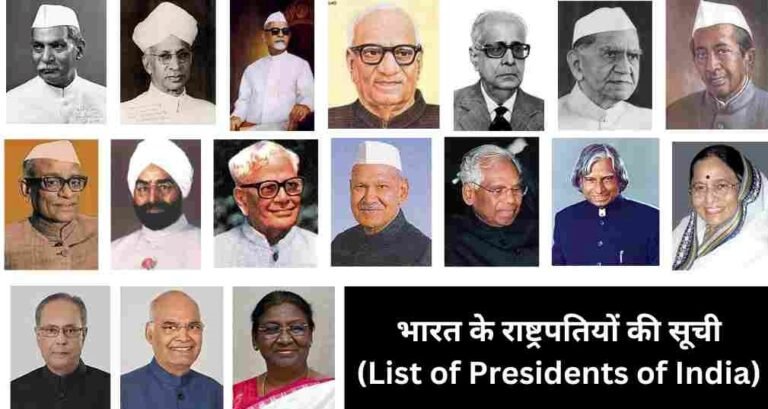
  • List of Presidents of India PDF

    List of Presidents of India PDF for free download. This document with Name of Indian’s Presidents in chronical order with their tenure in office are very useful for improve the GK for competitive exams.

    Dr. Rajendra Prasad (3 December 1884 – 28 February 1963) :

    Dr. Rajendra Prasad was an Indian politician, lawyer, Indian independence activist, journalist and scholar, who served as the first President of India from 1950 to 1962. He joined the Indian National Congress during Indian independence.

     Dr. Sarvepalli Radhakrishnan (5 September 1888 – 17 April 1975) :

    Sarvepalli Radhakrishnan Om originally Radhakrishnaiah, was an Indian philosopher and politician. He served as the second President of India from 1962 to 1967. He was also the first Vice President of India from 1952 to 1962. He was India’s second ambassador to the Soviet Union from 1949 to 1952.

    Dr. Zakir Hussain (8 February 1897 – 3 May 1969) :

    Zakir Hussain Khan was an Indian educationist and politician who served as the third President of India from 13 May 1967 until his death on 3 May 1969. He served as its Vice-Chancellor from 1926 to 1948. He was against the policy of separate electorates for Muslims, and in 1946 the Muslim League, led by Muhammad Ali Jinnah, vetoed a proposal by the Indian National Congress to include Hussain in India’s interim government.

    Varahagiri Venkata Giri (10 August 1894 – 24 June 1980) :

    Varahagiri Venkata Giri was an Indian politician and activist who served as the fourth president of India from 24 August 1969 to 24 August 1974. He also third vice president of India from 13 May 1967 to 3 May 1969. He is the first president to be elected as an independent candidate. He was succeeded by Fakhruddin Ali Ahmed as president in 1974. After the end of his full term, Giri was honoured by the Government of India with the Bharat Ratna in 1975. Giri died on 24 June 1980.

    Mohammad Hidayatullah (17 December 1905 – 18 September 1992) :

    Mohammad Hidayatullah OBE was the 11th Chief Justice of India serving from 25 February 1968 to 16 December 1970, and the sixth vice president of India, serving from 31 August 1979 to 30 August 1984. He had also served as the acting president of India from 20 July 1969 to 24 August 1969 and from 6 October 1982 to 31 October 1982 and from 25 July 1983 to 25 July 1983 and from 25 July 1984 to 25 July 1984. He is regarded as an eminent jurist, scholar, educationist, author and linguist.

    Fakhruddin Ali Ahmed (13 May 1905 – 11 February 1977) :

    Fakhruddin Ali Ahmed was an Indian lawyer and politician who served as the fifth President of India from 1974 to 1977. Beginning a long association with the Indian National Congress in the 1930s, Ahmed was Finance Minister of Assam in the Gopinath Bordoloi ministry in 1939 and again under Bimala Prasad Chaliha from 1957 to 1966. He was made a cabinet minister by Prime Minister Indira Gandhi in 1966 and was in charge of ministries including power, irrigation, industry and agriculture until 1974, when he was elected President of India.

    Basappa Danappa Jatti (10 September 1912 – 7 June 2002) :

    Basappa Danappa Jatti was the fifth Vice President of India, serving from 1974 to 1979. He was the acting President of India from 11 February to 25 July 1977. He also served as the Chief Minister of Karnataka. In a tumultuous political career spanning five decades, Jatti rose from a municipal councilor to the second highest office in India.

    Neelam Sanjiva Reddy (19 May 1913 – 1 June 1996) :

    Neelam Sanjiva Reddy was an Indian politician who served as the sixth president of India, serving from 1977 to 1982. Beginning a long political career with the Indian National Congress Party in the independence movement, he went on to hold several key offices in independent India — as Deputy Chief minister of Andhra state and the first Chief Minister of United Andhra Pradesh, a two-time Speaker of the Lok Sabha and a Union Minister— before becoming the Indian president.

    Giani Zail Singh (5 May 1916 – 25 December 1994) :

    Giani Zail Singh was an Indian politician from Punjab who served as the seventh president of India from 1982 to 1987. He was the first Sikh to become president. His political activism in the Praja Mandal, an organization allied with the Indian National Congress, saw him sentenced to solitary confinement between 1938 and 1943. He led the flag satyagraha and formed a parallel government in Faridkot State which were called off only after the intervention of Jawaharlal Nehru and Vallabhbhai Patel. The stints in jail inspired him to change his name to Zail Singh.

    Ramaswamy Venkataraman (pronunciation (4 December 1910 – 27 January 2009) :

    Ramaswamy Venkataraman was an Indian lawyer, Indian independence activist and politician who served as a Union Minister and as the eighth president of India. He was elected as the seventh vice president of India and in 1987, he became the eighth President of India and served from 1987 to 1992. He was appointed as the member of the Constituent Assembly and the provisional cabinet. He was elected to the Lok Sabha four times and served as Union Finance Minister and Defence Minister. In 1984, He also served as a State minister under K. Kamaraj and M. Bhaktavatsalam.

    Shankar Dayal Sharma (August 1918 – 26 December 1999) :

    Shankar Dayal Sharma was an Indian lawyer and politician from the state of Madhya Pradesh who served as the ninth president of India, from 1992 to 1997. A member of the Indian National Congress party, Sharma was Chief Minister (1952–1956) of Bhopal State and served as a Cabinet Minister (1956–1971) in the government of Madhya Pradesh holding several portfolios. Twice elected to the Lok Sabha, Sharma served as Governor of Andhra Pradesh (1984-1985), Punjab (1985-1986) and Maharashtra (1986-1987) before being elected unopposed as the eighth Vice President of India in 1987.

    Kocheril Raman Narayanan (27 October 1920 – 9 November 2005) :

    Kocheril Raman Narayanan was an Indian statesman, diplomat, academic, and politician who served as the ninth vice president of India from 1992 to 1997 and tenth president of India from 1997 to 2002. He served as ambassador to Japan, the United Kingdom, Thailand, Turkey, China and the United States and was referred to by Nehru as “the best diplomat of the country”. Elected as vice president in 1992, Narayanan went on to become president in 1997. He was the first person from the Dalit community to hold either post.

    Avul Pakir Jainulabdeen Abdul Kalam BR (15 October 1931 – 27 July 2015) :

    Avul Pakir Jainulabdeen Abdul Kalam BR was an Indian aerospace scientist and statesman who served as the 11th president of India from 2002 to 2007. Kalam was elected as the 11th president of India in 2002 with the support of both the ruling Bharatiya Janata Party and the then-opposition Indian National Congress. Widely referred to as the “People’s President”. he returned to his civilian life of education, writing and public service after a single term.

    Prathibha Devisingh Patil (born 19 December 1934) :

    Prathibha Devisingh Patil is an Indian politician and lawyer who served as the 12th president of India spanning from 2007 to 2012. She is the first woman to become the president of India. A member of the Indian National Congress, she previously served as the Governor of Rajasthan from 2004 to 2007, and was a member of Lok Sabha from 1991 to 1996.

    Pranab Mukherjee (11 December 1935 – 31 August 2020) :

    Pranab Mukherjee was an Indian politician and statesman who served as the 13th president of India from 2012 until 2017. In a political career spanning five decades, Mukherjee was a senior leader in the Indian National Congress and occupied several ministerial portfolios in the Government of India. Prior to his election as President, Mukherjee was Union Finance Minister from 2009 to 2012. He was awarded India’s highest civilian honour, the Bharat Ratna, in 2019, by his successor as president, Ram Nath Kovind.

    Ram Nath Kovind (born 1 October 1945) :

    Ram Nath Kovind is an Indian politician and lawyer who served as the 14th president of India from 2017 to 2022. He is a member of the Bharatiya Janata Party. Prior to his presidency, he served as the 26th Governor of Bihar from 2015 to 2017. He also served as a Member of Rajya Sabha from 1994 to 2006. Before entering politics, he was a lawyer for 16 years and practiced in the Delhi High Court and the Supreme Court of India until 1993.

    Droupadi Murmu (born 20 June 1958) :

    Droupadi Murmu is an Indian politician and former teacher who is serving as the 15th and current President of India since 2022. She is the first person belonging to the tribal community and also the second woman after Pratibha Patil to hold the office. She is also the youngest person to occupy the post and the first President born in Independent India. She has also served as the 9th Governor of Jharkhand from 2015 to 2021. She has also previously served as a member of the Odisha Legislative Assembly from Rairangpur Assembly constituency from 2000 to 2009 and Minister of State (Independent Charge), Government of Odisha from 2000 to 2004.

    List of Presidents of India

    Sr. No.NameStarting dateEnding dateProfiles
    1Dr. Rajendra Prasad26th Jan, 195013th May, 1962He was the first President of republic of India.
    2 Dr. Sarvepalli Radhakrishnan13th May, 196213th May, 1967He was the 2nd President of India.
    3 Dr. Zakir Hussain13th May, 19673rd May, 1969He was the 3rd President of India.
    4Varahagiri Venkata Giri3rd May, 196920th July, 1969He was acting President because of Hussain’s death.
    5Mohammad Hidayatullah20th July, 196924th August, 1969He was acting President till Giri’s presidency.
    6Varahagiri Venkata Giri24th August, 196924th August, 1974He was the 4th President of India.
    7Fakhruddin Ali Ahmed24th August, 197411th February, 1977He was the 5th President of India.
    8Basappa Danappa Jatti11th February, 197725th July, 1977He was a chief minister of the Mysore but got elected as President, After the death of Ahmed.
    9Neelam Sanjiva Reddy25th July, 197725th July, 1982Reddy was the 6th President of India unopposed.
    10Giani Zail Singh25th July, 198225th July, 1987He was the 7th President of India and was also a member of the Congress party.
    11Ramaswamy Venkataraman25th July, 198725th July, 1992He was the 8th President of India. He was also a lawyer and a professional politician.
    12Shankar Dayal Sharma25th July, 199225th July, 1997He was the 9th President of India, and he was also a member of the National Congress party of India.
    13Kocheril Raman Narayanan25th July, 199725th July, 2002He was the 10th President of India and the best diplomat in India.
    14 Dr. A.P.J. Abdul Kalam25th July, 200225th July, 2007He was the 11th President of India, and he was a great scientist. He worked in ISRO and DRDO organizations.
    15Pratibha Patil25th July, 200725th July, 2012She was the 12th President of India, and she was the first woman to Be President.
    16Pranab Mukherjee25th July, 201225th July, 2017He was the 13th President of India, and he was also a senior leader of the National Congress party.
    17Shri Ram Nath Kovind25th July, 201721st July, 2022He is the 14th President of India, and he is also ex-governor Of Bihar.
    18Droupadi Murmu21st July, 2022WorkingShe is the 15th President of India and was a member of the Bharatiya Janata Party

    Download : List of Presidents of India PDF

    PDF Name : List of President of India
    Prepared by : GK NOW
    Medium : English
    Number of PDF Pages : 5

    Download PDF from the below google drive link given in button :

  • Maurya Samrajya Objective Question in Hindi

    Maurya Samrajya Objective Question in Hindi for free online practice for competitive exams. Maurya Dynasty मौर्य और मौर्योत्तर काल MCQ questions answer from previous year exam paper.

    Maurya Samrajya MCQ

    Qns 1 : निम्नलिखित में से कौन सा भारत का सबसे पुराना राजवंश है?

    (a) गुप्ता
    (b) मौर्य
    (c) वर्धन
    (d) कुषाण

    Answer
    Ans : (b) मौर्य

    Qns 2 : प्रथम भारतीय साम्राज्य किसके द्वारा स्थापित किया गया था

    (a) कनिष्क
    (b) हर्ष
    (c) चंद्रगुप्त मौर्य
    (d) समुद्रगुप्त

    Answer
    Ans : (c) चंद्रगुप्त मौर्य

    Qns 3 : मालवा, गुजरात और महाराष्ट्र को जीतने वाला पहला राजा कौन था?

    (a) हर्ष
    (b) स्कंदगुप्त
    (c) विक्रमादित्य
    (d) चंद्रगुप्त मौर्य

    Answer
    Ans : (d) चंद्रगुप्त मौर्य

    Qns 4 : चंद्रगुप्त मौर्य ने सेल्यूकस को किस वर्ष हराया था?

    (a) 317 ईसा पूर्व
    (b) 315 ईसा पूर्व
    (c) 305 ईसा पूर्व
    (d) 300 ईसा पूर्व

    Answer
    Ans : (c) 305 ईसा पूर्व

    Qns 5 : चंद्रगुप्त मौर्य के समय भारत कौन आया था?

    (a) फैक्सियन (फा-हियान)
    (b) जुआनजांग (ह्वेन त्सांग)
    (c) मेगस्थनीज
    (d) स्ट्रैबो

    Answer
    Ans : (c) मेगस्थनीज

    Qns 6: यूनानी राजदूत मेगस्थनीज निम्नलिखित में से किस शासक के दरबार में था?

    (a) अशोक
    (b) चंद्रगुप्त
    (c) बिंदुसार
    (d) चाणक्य

    Answer
    Ans : (b) चंद्रगुप्त

    Qns 7 : यूनानियों के लेखन में किसे ‘सैंड्रोकोटस’ कहा गया था?

    (a) अशोक
    (b) बिन्दुसार
    (c) चंद्रगुप्त मौर्य
    (d) धनानंद

    Answer
    Ans : (c) चंद्रगुप्त मौर्य

    Qns 8 : चन्द्रगुप्त का पुत्र कौन था ?

    (a) बिन्दुसार
    (b) चंद्रगुप्त द्वितीय
    (c) अशोक
    (d) बिंबसार

    Answer
    Ans : (a) बिन्दुसार

    Qns 9 : अशोक किस राजवंश से संबंधित था?

    (a) वर्धन
    (b) मौर्य
    (c) कुषाण
    (d) गुप्ता

    Answer
    Ans : (b) मौर्य

    Qns 10 : शिलालेखों में किस राजा का उल्लेख ‘पियदस्सी’ और देवानामपिया’ के रूप में किया गया है?

    (a) चंद्रगुप्त मौर्य
    (b) अशोक
    (c) समुद्रगुप्त
    (d) हर्षवर्धन

    Answer
    Ans : (b) अशोक

    Qns 11 : सारनाथ स्तंभ किसके द्वारा बनाया गया था

    (a) हर्षवर्धन
    (b) अशोक
    (c) गौतम बुद्ध
    (d) कनिष्क

    Answer
    Ans : (b) अशोक

    Qns 12 : ‘सांची स्तूप’ का निर्माण किसने किया था?

    (a) चंद्रगुप्त
    (b) कौटिल्य
    (c) गौतम बुद्ध
    (d) अशोक

    Answer
    Ans : (d) अशोक

    Qns 13 : निम्नलिखित में से किस शिलालेख में अशोक का नाम है?

    (a) गुजरा
    (b) अहरौरा
    (c) ब्रह्मगिरी
    (d) सारनाथ

    Answer
    Ans : (a) गुजरा

    Qns 14 : निम्नलिखित में से कौन सा सबसे अच्छा स्तूप माना जाता है?

    (a) अमरावती
    (b) भरहुत
    (c) सांची
    (d) सारनाथ

    Answer
    Ans : (c) सांची

    Qns 15 : अशोक के शिलालेखों में प्रयुक्त भाषा है

    (a) संस्कृत
    (b) प्राकृत
    (c) अपभ्रंश
    (d) हिंदी

    Answer
    Ans : (b) प्राकृत

    Qns 16 : कालसी किसके लिए प्रसिद्ध है

    (a) बौद्ध चैत्य
    (b) फारसी सिक्के
    (c) अशोक के शिलालेख
    (d) गुप्त काल के मंदिर

    Answer
    Ans : (c) अशोक के शिलालेख

    Qns 17 : कौटिल्य किस देश के प्रधानमंत्री थे

    (a) चंद्रगुप्त विक्रमादित्य
    (b) अशोक
    (c) चंद्रगुप्त मौर्य
    (d) राजा जनक

    Answer
    Ans : (c) चंद्रगुप्त मौर्य

    Qns 18: चाणक्य का दूसरा नाम था

    (a) भट्टस्वामी
    (b) विष्णुगुप्त
    (c) राजशेखर
    (d) विशाखदत्त

    Answer
    Ans : (b) विष्णुगुप्त

    Qns 19 : मौर्य काल के दौरान सीखने का सबसे प्रसिद्ध केंद्र था

    (a) वैशाली
    (b) नालंदा
    (c) तक्षशिला
    (d) उज्जैन

    Answer
    Ans : (c) तक्षशिला

    Qns 20 : स्वायत्त निर्वाचित पंचायतों के माध्यम से गांवों को नियंत्रित करने वाली प्रणाली किसके द्वारा विकसित की गई थी

    (a) कुषाण
    (b) द्रविड़
    (c) आर्यों
    (d) मौर्य

    Answer
    Ans : (d) मौर्य

    Qns 21 : मौर्य काल के दौरान ‘पिन टैक्स’ था

    (a) श्रम के लिए दिया गया कर
    (b) सिंचाई कर
    (c) गैर-कृषि उत्पाद पर कर
    (d) एक गांव द्वारा एकत्र कर

    Answer
    Ans : (d) एक गांव द्वारा एकत्र कर

    Qns 22 : मौर्य काल में ‘सीता’ का अर्थ है

    (a) एक देवी
    (b) एक धार्मिक संप्रदाय
    (c) मुकुट भूमि से राजस्व
    (d) बंजर भूमि

    Answer
    Ans : (c) मुकुट भूमि से राजस्व

    Qns 23 : भारत का पहला अस्पताल और हर्बल गार्डन किसके द्वारा बनाया गया था

    (a) अशोक
    (b) चंद्रगुप्त मौर्य
    (c) भगवान महावीर
    (d) धन्वन्तरि

    Answer
    Ans : (a) अशोक

    Qns 24 : भारत का पहला अस्पताल और हर्बल गार्डन किसके द्वारा बनाया गया था

    (a) अशोक
    (b) चंद्रगुप्त मौर्य
    (c) भगवान महावीर
    (d) धन्वन्तरि

    Answer
    Ans : (d) धन्वन्तरि

    Qns 25: कौटिल्य का अर्थशास्त्र एक पुस्तक है

    (a) आर्थिक संबंध
    (b) शासन कला के सिद्धांत और अभ्यास
    (c) विदेश नीति
    (d) धन संचय

    Answer
    Ans : (b) शासन कला के सिद्धांत और अभ्यास

    Qns 26 : मेगस्थनीज की पुस्तक का नाम क्या है?

    (a) अर्थशास्त्र
    (b) ऋग्वेद
    (c) पुराण
    (d) इंडिका

    Answer
    Ans : (d) इंडिका

    Qns 27 : निम्नलिखित में से कौन अन्य तीन का समकालीन नहीं था?

    (a) बिम्बिसार
    (b) गौतम बुद्ध
    (c) मिलिंडा
    (d) प्रसेनजीत

    Answer
    Ans : (c) मिलिंडा

    Qns 28 : अंतिम मौर्य सम्राट थे

    (a) जलोका
    (b) अवंती वर्मा
    (c) नंदिवर्धन
    (d) बृहद्रथ

    Answer
    Ans : (d) बृहद्रथ

    Qns 29 : निम्नलिखित व्यक्ति एक समय या किसी अन्य पर भारत आए थे।

    I. फा-हियान II. आई-टी गाना
    III. मेगस्थनीज IV. ह्वेन त्सांग-
    उनकी यात्राओं का सही कालानुक्रमिक क्रम है

    (a) III, I, II and IV
    (b) III, I, IV, II
    (c) I, III, II and IV
    (d) I, III, IV and II

    Answer
    Ans : (b) III, I, IV, II

    Qns 30 : शक युग की शुरुआत किसने और कब की थी?

    (a) 58 ईसा पूर्व [डब्ल्यूबीसीएस 2008] में कडफिसेस
    (b) 58 ईसा पूर्व में विक्रमादित्य
    (c) रुद्रदामन प्रथम 78 ईस्वी में
    (d) कनिष्क ने 78 ईस्वी में

    Answer
    Ans : (d) कनिष्क ने 78 ईस्वी में

    Qns 31 : निम्नलिखित में से किस वंश साम्राज्य का विस्तार भारत के बाहर भी हुआ था?

    (a) गुप्त वंश
    (b) मौर्य वंश
    (c) कुषाण वंश
    (d) इनमें से कोई नहीं

    Answer
    Ans : (c) कुषाण वंश

    Qns 32 : गंगहर शैली की कला किसके शासनकाल में फली-फूली

    (a) कुषाण
    (b) गुप्ता
    (c) अकबर
    (d) मौर्य

    Answer
    Ans : (a) कुषाण

    Qns 33 : निम्नलिखित में से कौन कुषाण वंश का शासक था?

    (a) विक्रमादित्य
    (b) दांती दुर्गा
    (c) खडफिसेस
    (d) पुष्यमित्र

    Answer
    Ans : (c) खडफिसेस

    Qns 34 : सातवाहनों की राजधानी स्थित थी

    (a) अमरावती
    (b) नांदेड़
    (c) नालदुर्ग
    (d) दुर्ग

    Answer
    Ans : (a) अमरावती

    Qns 35 : विक्रम संवत कब शुरू हुआ था?

    (a) 78 एडी
    (b) 57 ईसा पूर्व
    (c) 72 ईसा पूर्व
    (d) 56 ईसा पूर्व

    Answer
    Ans : (b) 57 ईसा पूर्व

    Thanks for attempt Maurya Samrajya Objective Question in Hindi for competitive exams.

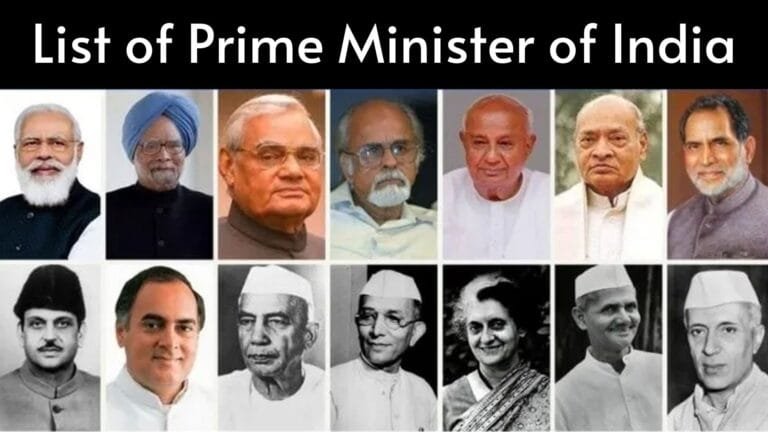
  • List of Prime Ministers of India PDF

    List of Prime Ministers of India PDF for Competitive Exams General Knowledge (GK) paper for free download. All PM with photo and Bio for the General Awareness are compiled below :

    List of Prime Ministers of India

    Jawahar Lal Nehru

    Jawahar Lal Nehru (14 November 1889 – 27 May 1964) :

    Jawaharlal Nehru was an Indian anti-colonial nationalist, secular humanist, social democrat, statesman and author who was a central figure in India during the middle of the 20th century. He became the first Prime Minister of India, serving for 16 years.

    Gulzarilal Nanda

    Gulzarilal Nanda (4 July 1898 – 15 January 1998) :

    Gulzarilal Nanda was an Indian politician and economist who specialised in labour issues. He was the Interim Prime Minister of India for two 13-day tenures following the deaths of Jawaharlal Nehru in 1964 and Lal Bahadur Shastri in 1966 respectively. Both his terms ended after the ruling Indian National Congress’s parliamentary party elected a new prime minister. He was awarded the Bharat Ratna, India’s highest civilian award in 1997.

    Lal Bahadur Shastri

    Lal Bahadur Shastri (2 October 1904 – 11 January 1966) :

    Lal Bahadur Shastri was an Indian politician and statesman who served as the 2nd Prime Minister of India from 1964 to 1966 and 6th Home Minister of India from 1961 to 1963. He promoted the White Revolution – a national campaign to increase the production and supply of milk – by supporting the Amul milk co-operative of Anand, Gujarat and creating the National Dairy Development Board.

    Indira Gandhi

    Indira Gandhi (19 November 1917 – 31 October 1984) :

    Indira Priyadarshini Gandhi was an Indian politician and stateswoman who served as the third prime minister of India from 1966 to 1977 and from 1980 until her assassination in 1984. She was India’s first female prime minister and a central figure of the Indian National Congress. Gandhi was the daughter of Jawaharlal Nehru, the first prime minister of India, and the mother of Rajiv Gandhi, who succeeded her in office as the country’s sixth prime minister.

    Morarji Ranchhodji Desai

    Morarji Ranchhodji Desai (29 February 1896 – 10 April 1995) :

    Morarji Ranchhodji Desai was an Indian independence activist and politician who served as the 4th Prime Minister of India between 1977 and 1979 leading the government formed by the Janata Party. During his long career in politics, he held many important posts in government such as Chief Minister of Bombay State, Home Minister, Finance Minister and 2nd Deputy Prime Minister of India.

    Charan Singh

    Charan Singh (23 December 1902 – 29 May 1987) :

    Chaudhary Charan Singh served as the 5th prime minister of India between 28 July 1979 and 14 January 1980. Historians and people alike frequently refer to him as the ‘champion of India’s peasants. Charan Singh entered politics as part of the Indian independence movement inspired by Mahatma Gandhi.

    Rajiv Gandhi

    Rajiv Gandhi (20 August 1944 – 21 May 1991) :

    Rajiv Gandhi was an Indian politician who served as the 6th prime minister of India from 1984 to 1989. He took office after the assassination of his mother, then-Prime Minister Indira Gandhi, to become the youngest Indian Prime minister at the age of 40.

    Vishwanath Pratap Singh

    Vishwanath Pratap Singh (25 June 1931 – 27 November 2008) :

    Vishwanath Pratap Singh shortened to V. P. Singh, was an Indian politician who was the 7th Prime Minister of India from 1989 to 1990 and the 41st Raja Bahadur of Manda. He is India’s only prime minister to have been former royalty. He served as the Minister of Commerce from 1976 to 1977. In 1980, he became the Chief Minister of Uttar Pradesh and was known for the encounter of the gang of Phoolan Devi.

    Chandra Shekhar

    Chandra Shekhar (17 April 1927 – 8 July 2007) :

    Chandra Shekhar was an Indian politician who served as the 8th Prime Minister of India, between 10 November 1990 and 21 June 1991. He headed a minority government of a breakaway faction of the Janata Dal with outside support from the Indian National Congress. He was the first Indian Prime Minister who had never held any prior government office.

    P. V. Narasimha Rao

    P. V. Narasimha Rao (28 June 1921 – 23 December 2004) :

    Pamulaparthi Venkata Narasimha Rao popularly known as P. V. Narasimha Rao, was an Indian lawyer, statesman and politician who served as the 9th prime minister of India from 1991 to 1996. He is known for introducing various liberal reforms to India’s economy. His ascendancy to the prime ministership was politically significant because he was the second holder of this office from a non-Hindi-speaking region and the first from South India (United Andhra Pradesh).

    Atal Bihari Vajpayee

    Atal Bihari Vajpayee (25 December 1924 – 16 August 2018) :

    Atal Bihari Vajpayee was an Indian politician who served three terms as the 10th Prime Minister of India, first for a term of 13 days in 1996, then for a period of 13 months from 1998 to 1999, followed by a full term from 1999 to 2004. Vajpayee was one of the co-founders and a senior leader of the BJP. He was a member of the RSS, a Hindu nationalist volunteer organisation. He was the first Indian prime minister not of the INC to serve a full term in office. He was also a renowned poet and a writer.

    H. D. Deve Gowda

    H. D. Deve Gowda (born 18 May 1933) :

    Haradanahalli Doddegowda Deve Gowda is an Indian politician who served as the 11th prime minister of India from 1 June 1996 to 21 April 1997.He was previously the 14th Chief Minister of Karnataka from 1994 to 1996. He presently is a Member of Parliament in the Rajya Sabha representing Karnataka. He is the national president of the Janata Dal (Secular) party.

    Inder Kumar Gujral

    Inder Kumar Gujral (4 December 1919 – 30 November 2012) :

    Inder Kumar Gujral was an Indian diplomat, politician and freedom activist who served as the 12th prime minister of India from April 1997 to March 1998. He was the Minister of Information and Broadcasting during the emergency. In 1976, he was appointed the Ambassador of India to the Soviet Union. In 1996, he became the Minister of External Affairs in the Deve Gowda ministry, and developed the Gujral doctrine during this period.

    Dr. Manmohan Singh

    Dr. Manmohan Singh (born 26 September 1932) :

    Manmohan Singh is an Indian politician, economist, academician and bureaucrat who served as the 13th Prime Minister of India from 2004 to 2014. He is the third longest-serving prime minister after Jawaharlal Nehru and Indira Gandhi. A member of the Indian National Congress, Singh was the first Sikh prime minister of India. He was also the first prime minister since Jawaharlal Nehru to be re-elected after completing a full five-year term.

    Narendra Damodardas Modi

    Narendra Damodardas Modi (born 17 September 1950) :

    Narendra Damodardas Modi is an Indian politician serving as the 14th and current prime minister of India since May 2014. Modi was the chief minister of Gujarat from 2001 to 2014 and is the Member of Parliament from Varanasi. He is a member of the Bharatiya Janata Party (BJP) and of the Rashtriya Swayamsevak Sangh (RSS), a right-wing Hindu nationalist paramilitary volunteer organisation. He is the longest serving prime minister from outside the Indian National Congress.

    Prime Minister of India from 1947 to 2023
    SR. No.Prime Minister NameTerm of OfficeParty Name
    1Jawahar Lal Nehru15 Aug 1947 to 27-May-1964Indian National Congress
    2Gulzarilal Nanda27 May 1964 to 9 June 1964Indian National Congress
    3Lal Bahadur Shastri09-Jun-1964 to 11-Jan-1966Indian National Congress
    4Gulzarilal Nanda11-Jan-1966 to 24 January 1966Indian National Congress
    5Indira Gandhi24-Jan-1966 to 24-Mar-1977Indian National Congress
    6Morarji Desai24-Mar-1977 to 28-Jul-1979Janata Party
    7Charan Singh28-Jul-1979 to 14-Jan-1980Janata Party (Secular)
    8Indira Gandhi14-Jan-1980 to 31-Oct-1984Indian National Congress
    9Rajiv Gandhi31-Oct-1984 to 02-Dec-1989Indian National Congress
    10Vishwanath Pratap Singh02-Dec-1989 to 10-Nov-1990Janata Dal
    (National Front)
    11Chandra Shekhar10-Nov-1990 to 21-Jun-1991Samajwadi Janata Party (Rashtriya)  
    12P. V. Narasimha Rao21-Jun-1991 to 16-May-1996Indian National Congress (I)
    13Atal Bihari Vajpayee16-May-1996 to 01-Jun-1996Bharatiya Janata Party
    14H. D. Deve Gowda01-Jun-1996 to 21-Apr-1997Janata Dal
    (United Front)
    15
    Inder Kumar Gujral
    21 April 1997  to 19 March 1998Janata Dal
    (United Front)
    16Atal Bihari Vajpayee19-Mar-1998 to 22-May-2004Bharatiya Janata Party
    (NDA)
    17Dr. Manmohan   Singh22-May-2004 to 26-May-2014Indian National Congress
    (UPA)
    17Narendra Damodardas Modi26-May-2014  to IncumbentBharatiya Janata Party
    (NDA)

    Download : List of Prime Ministers of India PDF

    PDF Name : List of Prime Ministers of India.
    Prepared by : GK NOW
    Medium : English
    Number of PDF Pages : 4

    Download PDF from the below google drive link given in button :

    Thanks for visit and download the List of Prime Ministers of India GK PDF for Competitive Exams

  • Mauryan and Post-Mauryan Period MCQ

    Mauryan and Post-Mauryan Period History MCQs from the previous year exam question papers. The objective question answer is very helpful for the preparation of upcoming UPSC, SSC, UPSSSC PET Competitive exams.

    Mauryan and Post-Mauryan Period Questions

    Qns 1 : Which among the following is India’s oldest dynasty?

    (a) Gupta
    (b) Maurya
    (c) Vardhana
    (d) Kushana

    Answer
    Ans : (b) Maurya

    Qns 2 : First Indian Empire was established by

    (a) Kanishka
    (b) Harsha
    (c) Chandragupta Maurya
    (d) Samudragupta

    Answer
    Ans : (c) Chandragupta Maurya

    Qns 3 : Who was the first king to conquer Malwa, Gujarat and Maharashtra?

    (a) Harsha
    (b) Skandagupta
    (c) Vikramaditya
    (d) Chandragupta Maurya

    Answer
    Ans : (d) Chandragupta Maurya

    Qns 4 : In which year Chandragupta Maurya had defeated Seleucus?

    (a) 317 BC
    (b) 315 BC
    (c) 305 BC
    (d) 300 BC

    Answer
    Ans : (c) 305 BC

    Qns 5 : Who came to India during the time of Chandragupta Maurya?

    (a) Faxian (Fa-Hien)
    (b) Xuanzang (Hiuen Tsang)
    (c) Megasthenes
    (d) Strabo

    Answer
    Ans : (c) Megasthenes

    Qns 6: The Greek ambassador Megasthenese was in the court of which of the following rulers?

    (a) Ashoka
    (b) Chandragupta
    (c) Bindusara
    (d) Chanakya

    Answer
    Ans : (b) Chandragupta

    Qns 7 : Who was referred to as ‘Sandrocottus’ in the writings of the Greeks?

    (a) Ashoka
    (b) Bindusara
    (c) Chandragupta Maurya
    (d) Dhanananda

    Answer
    Ans : (c) Chandragupta Maurya

    Qns 8 : Who was the son of Chandragupta?

    (a) Bindusara
    (b) Chandragupta II
    (c) Ashoka
    (d) Bimbasara

    Answer
    Ans : (a) Bindusara

    Qns 9 : To which dynasty did Ashoka belong?

    (a) Vardhana
    (b) Maurya
    (c) Kushan
    (d) Gupta

    Answer
    Ans : (b) Maurya

    Qns 10 : Which of the king has been mentioned as ‘Piyadassi’ and Devanampiya’ in inscriptions?

    (a) Chandragupta Maurya
    (b) Ashoka
    (c) Samudragupta
    (d) Harshavardhana

    Answer
    Ans : (b) Ashoka

    Qns 11 : Sarnath Pillar was built by

    (a) Harshavardhana
    (b) Ashoka
    (c) Gautam Buddha
    (d) Kanishka

    Answer
    Ans : (b) Ashoka

    Qns 12 : Who constructed the ‘Sanchi Stupa’?

    (a) Chandragupta
    (b) Kautilya
    (c) Gautam Buddha
    (d) Ashoka

    Answer
    Ans : (d) Ashoka

    Qns 13 : Which one of the following inscriptions contains the name of Ashoka?

    (a) Gujarra
    (b) Ahraura
    (c) Brahmagiri
    (d) Sarnath

    Answer
    Ans : (a) Gujarra

    Qns 14 : Which one of the following is considered the best Stupa?

    (a) Amravati
    (b) Bharhut
    (c) Sanchi
    (d) Sarnath

    Answer
    Ans : (c) Sanchi

    Qns 15 : Language used in the inscriptions of Ashoka is

    (a) Sanskrit
    (b) Prakrit
    (c) Apabhramsa
    (d) Hindi

    Answer
    Ans : (b) Prakrit

    Qns 16 : Kalsi is famous for

    (a) Buddhist Chaityas
    (b) Persian coins
    (c) Rock Edicts of Ashoka
    (d) Temples of Gupta period

    Answer
    Ans : (c) Rock Edicts of Ashoka

    Qns 17 : Kautilya was Prime Minister of

    (a) Chandragupta Vikramaditya
    (b) Ashoka
    (c) Chandragupta Maurya
    (d) King Janak

    Answer
    Ans : (c) Chandragupta Maurya

    Qns 18 : The another name of Chanakya was

    (a) Bhattswami
    (b) Vishnugupta
    (c) Rajshekhar
    (d) Vishakhadatta

    Answer
    Ans : (b) Vishnugupta

    Qns 19 : The most famous centre of learning during Maurya period was

    (a) Vaishali
    (b) Nalanda
    (c) Taxila
    (d) Ujjain

    Answer
    Ans : (c) Taxila

    Qns 20 : The system governing villages through autonomous elected Panchayats was evolved by

    (a) Kushans
    (b) Dravids
    (c) Aryans
    (d) Mauryans

    Answer
    Ans : (d) Mauryans

    Qns 21 : During Mauryan Period ‘Pin tax’ was a

    (a) tax given for labour
    (b) irrigation tax
    (c) tax on non-agricultural product
    (d) tax collected by a village

    Answer
    Ans : (d) tax collected by a village

    Qns 22 : ‘Sita’ in Maurya period means

    (a) a Goddess
    (b) a religious sect
    (c) revenue from crown land
    (d) barren land

    Answer
    Ans : (c) revenue from crown land

    Qns 23 : India’s first hospital and herbal gardens were built by

    (a) Ashoka
    (b) Chandragupta Maurya
    (c) Lord Mahavir
    (d) Dhanvantari

    Answer
    Ans : (a) Ashoka

    Qns 24 : India’s first hospital and herbal gardens were built by

    (a) Ashoka
    (b) Chandragupta Maurya
    (c) Lord Mahavir
    (d) Dhanvantari

    Answer
    Ans : (d) Dhanvantari

    Qns 25 : Kautilya’s Arthashastra is a book on

    (a) economic relations
    (b) principles and practice of statecraft
    (c) foreign policy
    (d) wealth accumulation

    Answer
    Ans : (b) principles and practice of statecraft

    Qns 26 : What is the name of Megasthenes’s book?

    (a) Economics
    (b) Rig Veda
    (c) Purana
    (d) Indica

    Answer
    Ans : (d) Indica

    Qns 27 : Who among the following was not a contemporary of the other three?

    (a) Bimbisara
    (b) Gautama Buddha
    (c) Milinda
    (d) Prasenjit

    Answer
    Ans : (c) Milinda

    Qns 28 : The last Mauryan emperor was

    (a) Jaloka
    (b) Avanti Verma
    (c) Nandivardhana
    (d) Brihadratha

    Answer
    Ans : (d) Brihadratha

    Qns 29 : The following persons came to India at one time or another.
    I. Fa-Hien II. I-Tsing
    III. Megasthenes IV. Hieun-Tsang
    The correct chronological sequence of their visits are

    (a) III, I, II and IV
    (b) III, I, IV, II
    (c) I, III, II and IV
    (d) I, III, IV and II

    Answer
    Ans : (b) III, I, IV, II

    Qns 30 : Who started the Shaka era and when?

    (a) Kadphises in 58 BC [WBCS 2008]
    (b) Vikramaditya in 58 BC
    (c) Rudradaman I in AD 78
    (d) Kanishka in AD 78

    Answer
    Ans : (d) Kanishka in AD 78

    Qns 31 : Which of the following dynasty empire was expanded even outside of India?

    (a) Gupta dynasty
    (b) Maurya dynasty
    (c) Kushan dynasty
    (d) None of these

    Answer
    Ans : (c) Kushan dynasty

    Qns 32 : Art of Ganghara style flourished during the reign of

    (a) Kushans
    (b) Guptas
    (c) Akbar
    (d) Mauryas

    Answer
    Ans : (a) Kushans

    Qns 33 : Who among the following was the ruler of Kushan dynasty?

    (a) Vikramaditya
    (b) Danti Durga
    (c) Khadphises I
    (d) Pushyamitra

    Answer
    Ans : (c) Khadphises I

    Qns 34 : The capital of the Satavahanas was located at

    (a) Amravati
    (b) Nanded
    (c) Naldurg
    (d) Durg

    Answer
    Ans : (a) Amravati

    Qns 35 : When was Vikram Samvat started?

    (a) 78 AD
    (b) 57 BC
    (c) 72 BC
    (d) 56 BC

    Answer
    Ans : (b) 57 BC

    Qns 36 : The art style which combines Indian and Greek feature is called

    (a) Sikhar
    (b) Vera
    (c) Gandhara
    (d) Nagara

    Answer
    Ans : (c) Gandhara

    Qns 37 : With reference to the invaders in ancient India, which one of the following is the correct chronological order?

    (a) Greeks, Shakas and Kushans
    (b) Greeks, Kushans and Shakas
    (c) Shakas, Greeks and Kushans
    (d) Shakas, Kushans and Greeks

    Answer
    Ans : (d) Shakas, Kushans and Greeks

    Qns 38 : Which one of the following is the correct chronological order of the given rulers of ancient India?

    (a) Ashoka, Kanishka and Milinda
    (b) Milinda, Ashoka and Kanishka
    (c) Ashoka, Milinda and Kanishka
    (d) Milinda, Kanishka and Ashoka

    Answer
    Ans : (c) Ashoka, Milinda and Kanishka

    Thanks for visit and attempt Mauryan and Post-Mauryan Period MCQ questions practice set for competitive exams.

  • Vedic Period MCQ in Hindi

    Vedic Civilization Period MCQ question answer in Hindi for UPSC, SSC competitive exams. वैदिक युग और महाजनपद GK questions Practice set for free online practice.

    Practice Set : Vedic Period MCQ in Hindi

    Qns 1: भारत में लोहे के उपयोग का सबसे पहला प्रमाण कहा से खोजा गया है

    (a) तक्षशिला
    (b) अतरंजीखेड़ा
    (c) कौशाम्बी
    (d) हस्तिनापुर

    Answer
    Ans : (b) अतरंजीखेड़ा

    Qns 2: प्राचीन काल में आर्यों की मुख्य आजीविका थी

    (a) कृषि
    (b) शिकार
    (c) कला शिल्प
    (d) व्यापार

    Answer
    Ans : (b) शिकार

    Qns 3: शास्त्रीय संस्कृत में ‘आर्य’ शब्द का अर्थ है

    (a) भगवान के विश्वासी
    (b) एक वंशानुगत जाति
    (c) विशेष धर्म में विश्वास करने वाला
    (d) एक महान आदमी

    Answer
    Ans : (d) एक महान आदमी

    Qns 4: निम्नलिखित में से किस नदी को वैदिक काल में पुरुषनी के नाम से जाना जाता था?

    (a) रवि
    (b) सतलज
    (c) ब्यास
    (d) चिनाब

    Answer
    Ans : (a) रवि

    Qns 5: वैदिक नदी कुभा स्थित थी

    (a) अफगानिस्तान
    (b) चीनी तुर्किस्तान
    (c) कश्मीर
    (d) पंजाब

    Answer
    Ans : (a) अफगानिस्तान

    Qns 6: वैदिक नदी अस्किनी की पहचान निम्नलिखित में से किस नदी से की जाती है?

    (a) ब्यास
    (b) रवि
    (c) चिनाब
    (d) झेलम

    Answer
    Ans : (c) चिनाब

    Qns 7 : निम्नलिखित में से किस नदी को पहले ‘वितस्ता’ के नाम से जाना जाता था?

    (a) तीस्ता
    (b) झेलम
    (c) तुंगभद्रा
    (d) भारतपुझा

    Answer
    Ans : (b) झेलम

    Qns 8 : गायत्री मंत्र किस ग्रंथ में पाया जाता है?

    (a) उपनिषद
    (b) भगवद गीता
    (c) ऋग्वेद
    (d) यजुर्वेद

    Answer
    Ans : (c) ऋग्वेद

    Qns 9: गायत्री मंत्र की रचना किसने की थी?

    (a) वशिष्ठ
    (b) विश्वामित्र
    (c) इंद्र
    (d) परीक्षित

    Answer
    Ans : (b) विश्वामित्र

    Qns 10 : गोत्र शब्द पहली बार में आया है

    (a) अथर्ववेद
    (b) ऋग्वेद
    (c) सामवेद
    (d) यजुर्वेद

    Answer
    Ans : (b) ऋग्वेद

    Qns 11: ऋग्वेद में मंत्रों की संख्या सर्वाधिक है

    (a) अग्नि
    (b) वरुण
    (c) विष्णु
    (d) यम

    Answer
    Ans : (a) अग्नि

    Qns 12 : ऋग्वेद में उल्लिखित निम्नलिखित में से कौन सी नदी अफगानिस्तान के साथ आर्यों के संबंधों का कारण बताती है?

    (a) अस्किनी
    (b) परुष्णी
    (c) कुभा, क्रमु
    (d) विपाशा, शुतुद्री

    Answer
    Ans : (c) कुभा, क्रमु

    Qns 13: यज्ञों से संबंधित अधिकारों और अनुष्ठानों का उल्लेख किया गया है

    (a) ऋग्वेद
    (b) सामवेद
    (c) ब्राह्मण ग्रंथ
    (d) यजुर्वेद

    Answer
    Ans : (a) ऋग्वेद

    Qns 14 : ‘नचिकेता’ की कथा का उल्लेख मिलता है

    (a) अथर्ववेद
    (b) शतपथ ब्राह्मण
    (c) कठोपनिषद
    (d) बृहदारण्यक उपनिषद

    Answer
    Ans : (c) कठोपनिषद

    Qns 15 : ‘सत्यमेव जयते’ जो भारतीय प्रतीक पर खुदा हुआ है, कहाँ से लिया गया है?

    (a) ऋग्वेद
    (b) भगवद गीता
    (c) मुंडकोपनिषद
    (d) मत्स्य पुराण

    Answer
    Ans : (c) मुंडकोपनिषद

    Qns 16 : पाणिनि, भारत में संस्कृत भाषा के पहले व्याकरणविद, किसके दौरान रहते थे

    (a) दूसरी शताब्दी ईसा पूर्व
    (b) छठी-पांचवीं शताब्दी ई.पू
    (c) दूसरी शताब्दी ईस्वी
    (d) 5वीं-6ठी शताब्दी ई

    Answer
    Ans : (b) छठी-पांचवीं शताब्दी ई.पू

    Qns 17: अष्टाध्यायी किसके द्वारा लिखी गई थी

    (a) वेद व्यास
    (b) पाणिनि
    (c) शुकदेव
    (d) वाल्मीकि

    Answer
    Ans : (b) पाणिनि

    Qns 18 : निम्नलिखित में से कौन सा वैदिक साहित्य का सही क्रम है?

    (a) वैदिक संहिता, ब्राह्मण, आरण्यक और उपनिषद
    (b) वैदिक संहिता, उपनिषद, आरण्यक और ब्राह्मण
    (c) वैदिक संहिता, आरण्यक, ब्राह्मण और उपनिषद
    (d) वैदिक संहिता, वेदांग, आरण्यक और स्मृति

    Answer
    Ans : (a) वैदिक संहिता, ब्राह्मण, आरण्यक और उपनिषद

    Qns 19 : माना जाता है कि महाभारत का युद्ध कुरुक्षेत्र में लड़ा गया था

    (a) 14 दिन
    (b) 16 दिन
    दिन(d) 20 दिन

    Answer
    Ans : दिन

    Qns 20 : प्राचीन भारत में ‘निष्क’ के रूप में जाना जाता था

    (a) सोने के आभूषण
    (b) गायों
    (c) तांबे के सिक्के
    (d) चांदी के सिक्के

    Answer
    Ans : (a) सोने के आभूषण

    Qns 21 : बोगाज़-कोई महत्वपूर्ण है क्योंकि

    (a) यह मध्य एशिया और तिब्बत के बीच एक महत्वपूर्ण व्यापारिक केंद्र था।
    (b) अभिलेख मिले हैं जिनमें वैदिक देवी-देवताओं के नामों का उल्लेख है।
    (c) वेदों के मूल ग्रंथों की रचना यहीं हुई थी।
    (d) उपर्युक्त में से कोई नहीं

    Answer
    Ans : (b) अभिलेख मिले हैं जिनमें वैदिक देवी-देवताओं के नामों का उल्लेख है।

    Qns 22: मूल रूप से महाभारत के रूप में जाना जाता था

    (a) बृहत्कथा
    (b) ब्राह्मण
    (c) बृहत्संहिता
    (d) जयसंहिता

    Answer
    Ans : (d) जयसंहिता

    Qns 23 : उत्तर-वैदिक काल के दौरान निम्नलिखित में से किसे आर्य सभ्यता का केंद्र माना जाता है?

    (a) अंग, मगध
    (b) कोसल, विदेह
    (c) कुरु, पांचाल
    (d) मत्स्य, सुरसेन

    Answer
    Ans : (b) कोसल, विदेह

    Qns 24 : पाटलिपुत्र की स्थापना किसने की थी?

    (a) उदयन
    (b) अशोक
    (c) बिंबिसार
    (d) महापद्मनंद

    Answer
    Ans : (a) उदयन

    Qns 25: प्राचीन भारत में, मगध साम्राज्य की सबसे पुरानी राजधानी थी

    (a) पाटलिपुत्र
    (b) राजगीर
    (c) वैशाली
    (d) वाराणसी

    Answer
    Ans : (b) राजगीर

    Qns 26 : हर्यंका वंश से मगध का पहला शासक था ………

    (a) अशोक
    (b) प्रसेनजीत
    (c) बिंबिसार
    (d) अजातशत्रु

    Answer
    Ans : (c) बिंबिसार

    Qns 27 : अजातशत्रु के वंश का क्या नाम था?

    (a) मौर्य
    (b) हरियाणा
    (c) नंदा
    (d) गुप्ता

    Answer
    Ans : (b) हरियाणा

    Qns 28 : किस मगध शासक को ‘सेनिया’ के नाम से जाना जाता था?

    (a) बिम्बिसार
    (b) अजातशत्रु
    (c) महापद्म नंद
    (d) चंद्रगुप्त मौर्य

    Answer
    Ans : (a) बिम्बिसार

    Qns 29: मगध के किस सम्राट को ‘अपरोपराशुराम’ के नाम से जाना जाता है?

    (a) बिन्दुसार
    (b) अजातशत्रु
    (c) कालाशोक
    (d) महापद्म नंद

    Answer
    Ans : (d) महापद्म नंद

    Qns 30 : सिकंदर ने भारत पर आक्रमण किया था……

    (a) 326 ईसा पूर्व
    (b) 326 ईसा पूर्व
    (c) 232 ईसा पूर्व
    (d) 323 एडी

    Answer
    Ans : (a) 326 ईसा पूर्व

    Qns 31: सिकंदर महान की मृत्यु 323 ईसा पूर्व में …… में हुई थी

    (a) फारस
    (b) बेबीलोन
    (c) मैसेडोनिया
    (d) तक्षशिला

    Answer
    Ans : (b) बेबीलोन

    Thanks for attempt Vedic Period MCQ in Hindi, important for competitive exams.
  • List of banks in India PDF Download

    List of nationalised banks in India after merger, Public, Private, small sector bank, Payment bank and foreign bank with branch in India PDF for free download. This GK list of Government and merchant banks is very important for upcoming competitive exams.

    Public Sector Banks (PSB)

    There are 12 public sector banks.

    SR. No.Anchor BankEstablishedHeadquartersBranches
    1Union Bank of India1919Mumbai, Maharashtra9,315
    2UCO Bank1943Kolkata, West Bengal3,087
    3State Bank of India1955Mumbai, Maharashtra22,219
    4Punjab National Bank1894New Delhi, NCT of Delhi10,769
    5Punjab and Sind Bank1908New Delhi, NCT of Delhi1,526
    6Indian Overseas Bank1937Chennai, Tamil Nadu3,217
    7Indian Bank1907Chennai, Tamil Nadu5,744
    8Central Bank of India1911Mumbai, Maharashtra4,608
    9Canara Bank1906Bengaluru, Karnataka10,416
    10Bank of Maharashtra1935Pune, Maharashtra2,022
    11Bank of India1906Mumbai, Maharashtra5,084
    12Bank of Baroda1908Vadodara, Gujarat8,310

    Private-sector banks

    At present, There are 21 private banks in India.

    SR. No. Bank NameEstablishedHeadquartersBranches
    1Yes Bank2004Mumbai, Maharashtra1,070
    2Tamilnad Mercantile Bank1921Thoothukkudi, Tamil Nadu509
    3South Indian Bank1929Thrissur, Kerala935
    4RBL Bank1943Mumbai, Maharashtra435
    5Nainital Bank1922Nainital, Uttarakhand160
    6Kotak Mahindra Bank2003Mumbai, Maharashtra1,604
    7Karur Vysya Bank1916Karur, Tamil Nadu811
    8Karnataka Bank1924Mangaluru, Karnataka905
    9Jammu & Kashmir Bank1938Srinagar, Jammu and Kashmir957
    10IndusInd Bank1994Mumbai, Maharashtra2,015
    11IDFC First Bank2015Mumbai, Maharashtra707
    12IDBI Bank1964Mumbai, Maharashtra1,884
    13ICICI Bank1994Mumbai, Maharashtra5,266
    14HDFC Bank1994Mumbai, Maharashtra5,608
    15Federal Bank1931Kochi, Kerala1,272
    16Dhanlaxmi Bank1927Thrissur, Kerala245
    17DCB Bank1930Mumbai, Maharashtra352
    18CSB Bank1920Thrissur, Kerala512
    19City Union Bank1904Kumbakonam, Tamil Nadu702
    20Bandhan Bank2015Kolkata, West Bengal1,147
    21Axis Bank1993Mumbai, Maharashtra4,594

    Small sector banks

    SR. No. Bank NameEstablishedHeadquartersBranches
    1AU Small Finance Bank2017Jaipur, Rajasthan396
    2Capital Small Finance Bank2016Jalandhar, Punjab47
    3Equitas Small Finance Bank2016Chennai, Tamil Nadu412
    4ESAF Small Finance Bank2017Thrissur, Kerala575
    5Fincare Small Finance Bank2017Bangalore, Karnataka919
    6Jana Small Finance Bank2018Bangalore, Karnataka718
    7North East Small Finance Bank2017Guwahati, Assam
    8Shivalik Small Finance Bank2021Saharanpur, Uttar Pradesh46
    9Suryoday Small Finance Bank2017Navi Mumbai, Maharashtra477
    10Ujjivan Small Finance Bank2017Bangalore, Karnataka464
    11Unity Small Finance Bank2021
    12Utkarsh Small Finance Bank2018Varanasi, Uttar Pradesh

    Payments banks

    SR. No.Bank NameEstablishedHeadquartersBranches
    1Airtel Payments Bank2017New Delhi, Delhi
    2Fino Payments Bank2017Mumbai, Maharashtra410 Branches
    3India Post Payments Bank2018New Delhi, Delhi650 Branches
    4Jio Payments Bank2018Mumbai, Maharashtra
    5NSDL Payments Bank2018Mumbai, Maharashtra
    6Paytm Payments Bank2017Noida, Uttar Pradesh

    Foreign banks with branches in India.

    List of notable banks which are incorporated outside India and are operating branches in India :

    •  Australia
      • Australia & New Zealand Banking Group
      • Westpac
    •  Bahrain
      • Bank of Bahrain and Kuwait
    •  Bangladesh
      • AB Bank
      • Sonali Bank
    •  Canada
      • Bank of Nova Scotia
    •  China
      • CTBC Bank
      • Bank of China
      • Industrial & Commercial Bank of China
    •  Denmark
      • Saxo Bank
    •  England
      • Barclays
      • HSBC Bank India
      • Standard Chartered Bank
    •  France
      • BNP Paribas
      • Société Générale
      • Crédit Agricole Corporate and Investment Bank
    •  Germany
      • Deutsche Bank
    •  Japan
      • Mizuho Corporate Bank
      • MUFG Bank
      • Sumitomo Mitsui Banking Corporation
    •  Netherlands
      • ABN AMRO
      • Rabobank
    •  Qatar
      • Doha Bank
      • Qatar National Bank
    •  Russia
      • Sberbank
    •  Scotland
      • NatWest Group
      • Royal Bank of Scotland
    •  Singapore
      • United Overseas Bank
    •  South Africa
      • FirstRand Bank
    •  South Korea
      • Industrial Bank of Korea
      • KEB Hana Bank
      • Kookmin Bank
      • Shinhan Bank
      • Woori Bank
    •  Sri Lanka
      • Bank of Ceylon
    •  Sweden
      • Handelsbanken
    •  Switzerland
      • Credit Suisse
    •  Thailand
      • Krung Thai Bank
    •  United Arab Emirates
      • Abu Dhabi Commercial Bank
      • Emirates NBD
      • First Abu Dhabi Bank
    •  United States of America
      • American Express
      • Bank of America
      • Citibank India
      • JPMorgan Chase

    Download : List of Banks in India PDF

    PDF Name : List of Banks in India
    Prepared by : GK NOW
    Medium : English
    Number of PDF Pages : 6

    Download PDF from the below google drive link given in button :

  • The Vedic Era and Mahajanapadas MCQ in English

    The Vedic Era and Mahajanapadas MCQ Questions in English for the preparation of competitive exams. Important GK question answer from the previous year examinations of UPSC, SSC CGL, UPSSSC PET.

    The Vedic Era and Mahajanapadas MCQs Practice Set

    Qns 1: The earliest evidence of the use of iron in India has been discovered from

    (a) Taxila
    (b) Atranjikhera
    (c) Kaushambi
    (d) Hastinapur

    Answer
    Ans : (b) Atranjikhera

    Qns 2: In the ancient period chief-livelihood of the Aryans was

    (a) Agriculture
    (b) Hunting
    (c) Artcraft
    (d) Business

    Answer
    Ans : (b) Hunting

    Qns 3: Meaning of the term ‘Arya’ in classical Sanskrit is

    (a) believer of the God
    (b) a hereditary cast
    (c) a believer in particular religion
    (d) a Noble man

    Answer
    Ans : (d) a Noble man

    Qns 4: Which of the following rivers was known as Purushni in the Vedic Period?

    (a) Ravi
    (b) Sutlej
    (c) Beas
    (d) Chenab

    Answer
    Ans : (a) Ravi

    Qns 5: The Vedic river Kubha was located in

    (a) Afghanistan
    (b) Chinese Turkistan
    (c) Kashmir
    (d) Punjab

    Answer
    Ans : (a) Afghanistan

    Qns 6: Vedic river Askini is identified with which one of the following rivers?

    (a) Beas
    (b) Ravi
    (c) Chenab
    (d) Jhelum

    Answer
    Ans : (c) Chenab

    Qns 7: Which one of the following rivers was earlier known as ‘Vitasta’?

    (a) Tista
    (b) Jhelum
    (c) Tungabhadra
    (d) Bharatpuzha

    Answer
    Ans : (b) Jhelum

    Qns 8: Gayatri Mantra is found in which book?

    (a) Upanishad
    (b) Bhagavad Gita
    (c) Rigveda
    (d) Yajurveda

    Answer
    Ans : (c) Rigveda

    Qns 9: Who composed the Gayatri Mantra?

    (a) Vasishtha
    (b) Vishwamitra
    (c) Indra
    (d) Parikshit

    Answer
    Ans : (b) Vishwamitra

    Qns 10: The word Gotra occurs for the first time in

    (a) Atharvaveda
    (b) Rigveda
    (c) Samaveda
    (d) Yajurveda

    Answer
    Ans : (b) Rigveda

    Qns 11: The largest number of the Mantras in Rigveda belongs to

    (a) Agni
    (b) Varuna
    (c) Vishnu
    (d) Yama

    Answer
    Ans : (a) Agni

    Qns 12: Which of the following rivers mentioned in the Rigveda gives the due to relations of Aryans with the Afghanistan?

    (a) Askini
    (b) Parushni
    (c) Kubha, Kramu
    (d) Vipasha, Shutudri

    Answer
    Ans : (c) Kubha, Kramu

    Qns 13: Rights and Rituals related to Yajnas are mentioned in

    (a) Rigveda
    (b) Samaveda
    (c) Brahmin Granth
    (d) Yajurveda

    Answer
    Ans : (a) Rigveda

    Qns 14: ‘Nachiketa’ Legend finds mention in

    (a) Atharvaveda
    (b) Satapatha Brahmin
    (c) Kathopanishad
    (d) Brihadaranyaka Upanishad

    Answer
    Ans : (c) Kathopanishad

    Qns 15: ‘Satyamev Jayate’ which is engraved on the Indian Emblem has been taken from

    (a) Rigveda
    (b) Bhagavad Gita
    (c) Mundakopanishad
    (d) Matsya Purana

    Answer
    Ans : (c) Mundakopanishad

    Qns 16: Panini, the first Grammarian of Sanskrit language in India, lived during the

    (a) 2nd century BC
    (b) 6th-5th century BC
    (c) 2nd century AD
    (d) 5th-6th century AD

    Answer
    Ans : (b) 6th-5th century BC

    Qns 17: Ashtadhyayi was written by

    (a) Ved Vyas
    (b) Panini
    (c) Shukadeva
    (d) Valmiki

    Answer
    Ans : (b) Panini

    Qns 18: Which of the following is the correct order of the Vedic literature?

    (a) Vedic Samhitas, Brahmins, Aranyakas and Upanishads
    (b) Vedic Samhitas, Upanishads, Aranyakas and Brahmins
    (c) Vedic Samhitas, Aranyakas, Brahmins and Upanishads
    (d) Vedic Samhitas, Vedangas, Aranyakas and Smritis

    Answer
    Ans : (a) Vedic Samhitas, Brahmins, Aranyakas and Upanishads

    Qns 19: The battle of Mahabharata is believed to have been fought at Kurukshetra for

    (a) 14 days
    (b) 16 days
    (c) 18 days
    (d) 20 days

    Answer
    Ans : (c) 18 days

    Qns 20: ‘Nishka’ in ancient India was known as

    (a) Gold ornament
    (b) Cows
    (c) Copper Coins
    (d) Silver Coins

    Answer
    Ans : (a) Gold ornament

    Qns 21: Boghaz-Koi is important because

    (a) It was an important trading centre between Central Asia and Tibet.
    (b) Inscriptions were found which mentioned the names of Vedic Gods and Goddesses.
    (c) Original Texts of the Vedas were composed here.
    (d) None of the above

    Answer
    Ans : (b) Inscriptions were found which mentioned the names of Vedic Gods and Goddesses.

    Qns 22: Originally the Mahabharata was known as

    (a) Brihatkatha
    (b) Brahmins
    (c) Brihatsamhita
    (d) Jayasamhita

    Answer
    Ans : (d) Jayasamhita

    Qns 23: Which among the following is considered as the centre of Aryan civilisation during post-Vedic Period?

    (a) Anga, Magadha
    (b) Kosal, Videh
    (c) Kuru, Panchal
    (d) Matsya, Surasena

    Answer
    Ans : (b) Kosal, Videh

    Qns 24: Who founded Pataliputra?

    (a) Udayin
    (b) Ashoka
    (c) Bimbisara
    (d) Mahapadmananda

    Answer
    Ans : (a) Udayin

    Qns 25: In ancient India, the earliest capital of Magadha kingdom was at

    (a) Pataliputra
    (b) Rajgir
    (c) Vaishali
    (d) Varanasi

    Answer
    Ans : (b) Rajgir

    Qns 26: First ruler of Magadha from the Haryanka Dynasty was ………

    (a) Ashoka
    (b) Prasenajit
    (c) Bimbisara
    (d) Ajatashatru

    Answer
    Ans : (c) Bimbisara

    Qns 27: What was the name of the dynasty of Ajatashatru?

    (a) Maurya
    (b) Haryanka
    (c) Nanda
    (d) Gupta

    Answer
    Ans : (b) Haryanka

    Qns 28: Which Magadha ruler was known as ‘Seniya’?

    (a) Bimbisara
    (b) Ajatashatru
    (c) Mahapadma Nanda
    (d) Chandragupta Maurya

    Answer
    Ans : (a) Bimbisara

    Qns 29: Which emperor of Magadha is known as ‘Aparoparashurama’?

    (a) Bindusar
    (b) Ajatashatru
    (c) Kalashoka
    (d) Mahapadma Nanda

    Answer
    Ans : (d) Mahapadma Nanda

    Qns 30: Alexander invaded India in ……

    (a) 326 BC
    (b) 326 BC
    (c) 232 BC
    (d) 323 AD

    Answer
    Ans : (a) 326 BC

    Qns 31: Alexander the Great died in 323 BC in ……

    (a) Pharus
    (b) Babylon
    (c) Macedonia
    (d) Taxshila

    Answer
    Ans : (b) Babylon
  • सिंधु घाटी (हड़प्पा) सभ्यता प्रश्न – (हिंदी में)

    सिंधु घाटी (हड़प्पा) सभ्यता MCQ प्रश्न उतर प्रैक्टिस सेट (हिंदी में) प्रतियोगिता परीक्षाओ की तैयारी के लिये बहुत उपयोगी है l सभी प्रश्न पिछले वर्ष की परीक्षा पत्र से लिए गए है l

    Sindhu Ghati (Harappa) Sabhyata questions in Hindi

    Qns 1: निम्नलिखित में से कौन सा हड़प्पा सभ्यता से संबंधित है?

    (a) सुमेरियन सभ्यता
    (b) सिंधु घाटी सभ्यता
    (c) वैदिक सभ्यता
    (d) मेसोपोटामिया सभ्यता

    Answer
    Ans : (b) सिंधु घाटी सभ्यता

    Qns 2 : हड़प्पा संस्कृति के बारे में ज्ञान का स्रोत है?

    (a) शिलालेख
    (b) टेराकोटा मुहरों में लिखना
    (c) पुरातात्विक खुदाई
    (d) उपरोक्त सभी

    Answer
    Ans : (d) उपरोक्त सभी

    Qns 3: सिंधु सभ्यता के बारे में निम्नलिखित में से कौन सा कथन सत्य नहीं है?

    (a) शहरों में सटीक जल निकासी व्यवस्था।
    (b) व्यापार और वाणिज्य एक उन्नत चरण में थे।
    (c) देवी मां की पूजा।
    (d) लोग लोहे के बारे में जानते थे।

    Answer
    Ans : (d) लोग लोहे के बारे में जानते थे।

    Qns 4: शॉर्टुगई किस देश में स्थित है?

    (a) भरत
    (b) पाकिस्तान
    (c) तिब्बत
    (d) अफगानिस्तान

    Answer
    Ans : (d) अफगानिस्तान

    Qns 5: मोहनजोदड़ो निम्नलिखित में से किस में स्थित है?

    (a) भारत के गुजरात राज्य
    (b) भारत के पंजाब राज्य
    (c) पाकिस्तान में सिंध प्रांत
    (d) अफगानिस्तान

    Answer
    Ans : (c) पाकिस्तान में सिंध प्रांत

    Qns 6: हड़प्पा संस्कृति के निम्नलिखित में से कौन से स्थल सिंध में स्थित हैं?
    I. हड़प्पा II. मोहनजोदड़ो
    III. चन्हुदड़ो IV. सुरकोटदा
    नीचे दिए गए कूटों से सही उत्तर बताइए।

    (a) I and II
    (b) II and III
    (c) II, III and IV
    (d) I, IV, III and IV

    Answer
    Ans : (b) II और III

    Qns 7: निम्नलिखित में से कौन सा एक हड़प्पा स्थल राजस्थान में स्थित है?

    (a) मोहनजोदड़ो
    (b) सूक्तगेन दोर
    (c) कालीबंगन
    (d) लोथल

    Answer
    Ans : (c) कालीबंगन

    Qns 8: एक जुते हुए खेत की खोज की गई थी

    (a) मोहनजोदड़ो
    (b) कालीबंगन
    (c) हड़प्पा
    (d) लोथल

    Answer
    Ans : (b) कालीबंगन

    Qns 9 : एक टेराकोटा केक पर उत्कीर्ण एक सींग वाले देवता को बरामद किया गया है

    (a) बनावली
    (b) कालीबंगन
    (c) लोथल
    (d) सुरकोटडा

    Answer
    Ans : (b) कालीबंगन

    Qns 10: निम्नलिखित में से कौन सा सिंधु शहर जल प्रबंधन के लिए जाना जाता था?

    (a) लोथल
    (b) मोहनजोदड़ो
    (c) हड़प्पा
    (d) धोलावीरा

    Answer
    Ans : (d) धोलावीरा

    Qns 11: हड़प्पा के किस नगर को तीन भागों में बांटा गया है?

    (a) लोथल
    (b) कालीबंगन
    (c) धोलावीरा
    (d) सुकोटदा

    Answer
    Ans : (c) धोलावीरा

    Qns 12: धोलावीरा राज्य में स्थित है

    (a) गुजरात
    (b) हरियाणा
    (c) पंजाब
    (d) राजस्थान

    Answer
    Ans : (a) गुजरात

    Qns 13: हड़प्पा काल का तांबे का रथ कहाँ से मिला था?

    (a) कुणाल
    (b) राखीगढ़ी
    (c) दैमाबाद
    (d) बनावली

    Answer
    Ans : (c) दैमाबाद

    Qns 14: निम्नलिखित में से कौन सा हड़प्पा स्थल गुजरात में स्थित नहीं है?

    (a) सुरकोटदा
    (b) लोथल
    (c) धोलावीरा
    (d) बनावली

    Answer
    Ans : (d) बनावली

    Qns 15: निम्नलिखित में से कौन सा स्थल घग्घर और उससे जुड़ी नदियों की घाटी में स्थित है?

    (a) आलमगीरपुर
    (b) लोथल
    (c) मोहनजोदड़ो
    (d) बनावली

    Answer
    Ans : (d) बनावली

    Qns 16: निम्नलिखित में से कौन सा युग्म सही सुमेलित नहीं है?

    (a) आलमगीपुर – उत्तर प्रदेश
    (b) बनावली – हरियाणा
    (c) दैमाबाद – महाराष्ट्र
    (d) राखीगढ़ी – राजस्थान

    Answer
    Ans : (d) राखीगढ़ी – राजस्थान

    Qns 17: हड़प्पा सभ्यता का कौन सा स्थान महाराष्ट्र में स्थित है?
    I. हड़प्पा II. मोहनजोदड़ो
    III. दियामाबाद IV. सुरकोटदा
    कूट का प्रयोग कर सही उत्तर चुनिए नीचे दिया गया।

    (a) I और II
    (b) केवल III
    (c) II, III और
    IV (d) ये सभी

    Answer
    Ans : (b) केवल III

    Qns 18: लोथल के पुरातात्विक स्थल द्वारा प्रतिनिधित्व हड़प्पा शहर नदी पर स्थित था

    (a) नर्मदा
    (b) माही
    (c) भोगव
    (d) भीम

    Answer
    Ans : (c) भोगव

    Qns 19: हड़प्पा के संदर्भ में एक हाथीदांत का पैमाना पाया गया था

    (a) कालीबंगन
    (b) लोथल
    (c) धोलावीरा
    (d) बनवाल

    Answer
    Ans : (b) लोथल

    Qns 20: निम्नलिखित में से कौन सा एक हड़प्पा बंदरगाह है?

    (a) अलेक्जेंड्रिया
    (b) लोथल
    (c) महास्थानगढ़
    (d) नागपट्टिनम

    Answer
    Ans : (b) लोथल

    Qns 21: सिंधु घाटी सभ्यता अनार्य थी क्योंकि

    (a) यह एक शहरी सभ्यता थी।
    (b) इसकी अपनी लिपि है।
    (c) इसकी एक कृषि अर्थव्यवस्था है।
    (d) इसका विस्तार नर्मदा घाटी तक है।

    Answer
    Ans : (a) यह एक शहरी सभ्यता थी।

    Qns 22: सिंधु घाटी सभ्यता की सबसे महत्वपूर्ण विशेषता क्या है?

    (a) जली हुई ईंट की इमारतें
    (b) पहले सच्चे मेहराब
    (c) पूजा की इमारतों
    (d) कला और वास्तुकला

    Answer
    Ans : (a) जली हुई ईंट की इमारतें

    Qns 23: सिंधु घाटी सभ्यता के शहरों की सड़कें कैसी थीं?

    (a) व्यापक और सीधे
    (b) संकीर्ण और ज़िग-ज़ैग
    (c) फिसलन
    (d) संकीर्ण और गंदा

    Answer
    Ans : (a) व्यापक और सीधे

    Qns 24: ‘ग्रेट बाथ’ के पुरातात्विक स्थल पर पाया गया था

    (a) रोपड़
    (b) हड़प्पा
    (c) मोहनजोदड़ो
    (d) कालीबंगन

    Answer
    Ans : (c) मोहनजोदड़ो

    Qns25: निम्नलिखित में से कौन सा युग्म सही नहीं है?

    (a) श्रम निवास – हड़प्पा
    (b) अन्न भंडार – मोहनजोदड़ो
    (c) असेंबली हॉल – कालीबंगन
    (d) तांबे की कुल्हाड़ी – रोपड़

    Answer
    Ans : (c) असेंबली हॉल – कालीबंगन

    Qns 26: सिंधु घाटी सभ्यता में किस जानवर के अवशेष नहीं मिले हैं?

    (a) शेर
    (b) घोड़ा
    (c) गाय
    (d) हाथी

    Answer
    Ans : (a) शेर

    Qns 27: निम्नलिखित स्थलों में से एक जहां से सिंधु घाटी सभ्यता की प्रसिद्ध बुल-सील मिली थी

    (a) हड़प्पा
    (b) चन्हुदड़ो
    (c) लोथल
    (d) मोहनजोदड़ो

    Answer
    Ans : (a) हड़प्पा

    Qns 28: हड़प्पा के लोग सबसे पहले किस उत्पादन में थे?

    (a) सिक्के
    (b) कपास
    (c) तांबे के उपकरण
    (d) गेहूं

    Answer
    Ans : (b) कपास

    Qns 29: भारत में चांदी का सबसे पहला प्रमाण मिलता है

    (a) हड़प्पा संस्कृति
    (b) पश्चिमी भारत की चालकोलिथिक संस्कृतियाँ
    (c) वैदिक ग्रंथ
    (d) चांदी का पंचमार्क वाला सिक्का

    Answer
    Ans : (a) हड़प्पा संस्कृति

    Qns 30: एक उचित प्रणाली में लेखन की कला को विकसित करने वाली पहली प्राचीन सभ्यता थी

    (a) सिंधु
    (b) मिस्र
    (c) सुमेरियन
    (d) चीन

    Answer
    Ans : (c) सुमेरियन

    Qns 31: सिंधु घाटी के लोग पूजा करते थे

    (a) शिव
    (b) इंद्र और वरुण
    (c) ब्रह्मा
    (d) विष्णु

    Answer
    Ans : (a) शिव

    Qns 32: निम्नलिखित में से कौन सा सिंधु घाटी सभ्यता स्थल नहीं है?

    (a) कालीबंगन
    (b) रोपड़
    (c) पाटलिपुत्र
    (d) लोथल

    Answer
    Ans : (c) पाटलिपुत्र

    Qns 33: भारत में हड़प्पा सभ्यता का सबसे बड़ा स्थल है

    (a) आलमगीरपुर
    (b) कालीबंगन
    (c) लोथल
    (d) राखीगढ़ी

    Answer
    Ans : (d) राखीगढ़ी

    Qns 34: निम्नलिखित में से कौन सा सुमेलित नहीं है?

    (a) आलमगीरपुर – उत्तर प्रदेश
    (b) लोथल-गुजरात
    (c) कालीबंगन-हरियाणा
    (d) रोपड़ – पंजाब

    Answer
    Ans : (c) कालीबंगन-हरियाणा

    Qns 35: निम्नलिखित में से कौन सी सभ्यता नील नदी के तट पर फली-फूली?

    (a) रोमन सभ्यता
    (b) सिंधु घाटी सभ्यता
    (c) ग्रीक सभ्यता
    (d) मिस्र की सभ्यता

    Answer
    Ans : (d) मिस्र की सभ्यता
  • Indus Valley (Harappan) Civilisation MCQ

    Indus Valley (Harappan) Civilisation MCQ question answer in English for competitive exams. Practice set of Previous year exam questions are useful for the preparation of UPSC, SSC, UPSSSC PET, Bank examinations.
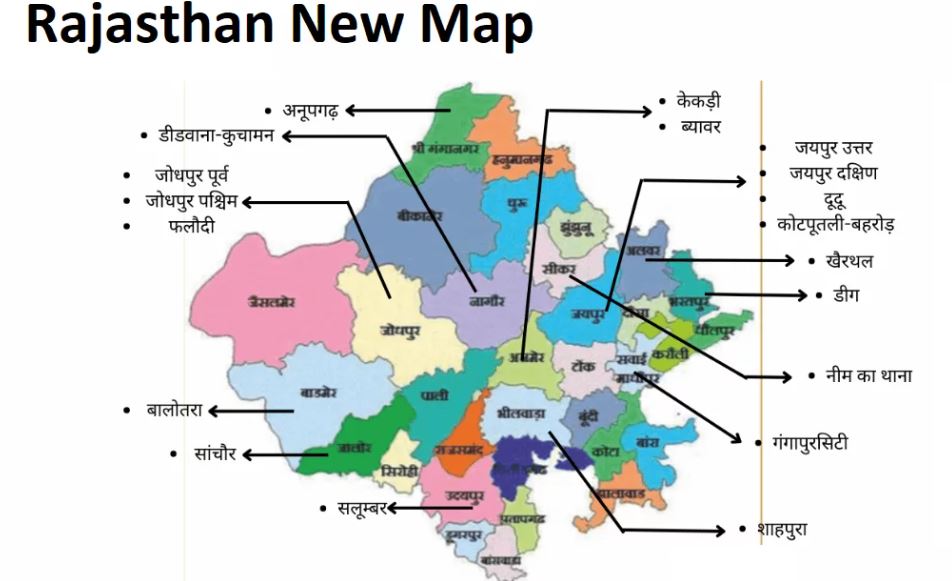
    Indus Valley (Harappan) Civilisation: Practice Set

    Qns 1 : The source of knowledge about Harappan culture is ?

    (a) rock edicts
    (b) writing in terracotta seals
    (c) archaeological excavations
    (d) All of the above

    Answer
    Ans : (d) All of the above

    Qns 2 : Which of the following is related to Harappa civilisation?

    (a) Sumerian Civilisation
    (b) Indus Valley Civilisation
    (c) Vedic Civilisation
    (d) Mesopotamian Civilisation

    Answer
    Ans : (b) Indus Valley Civilisation

    Qns 3: Which of the following statements about the Indus Civilisation is not true?

    (a) Accurate drainage system in cities.
    (b) Trade and commerce were in an advanced stage.
    (c) Worshipping of Mother Goddess.
    (d) People knew about iron.

    Answer
    Ans : (d) People knew about iron.

    Qns 4: Shortugai is located in which country?

    (a) Bharat
    (b) Pakistan
    (c) Tibet
    (d) Afghanistan

    Answer
    Ans : (d) Afghanistan

    Qns 5: Mohenjodaro is situated in which of the following?

    (a) Gujarat state of India
    (b) Punjab state of India
    (c) Sindh Province in Pakistan
    (d) Afghanistan

    Answer
    Ans : (c) Sindh Province in Pakistan

    Qns 6: Which of the following sites of Harappan culture are located in Sindh?
    I. Harappa II. Mohenjodaro
    III. Chanhudaro IV. Surkotada
    Indicate the correct answer from the codes given below.

    (a) I and II
    (b) II and III
    (c) II, III and IV
    (d) I, IV, III and IV

    Answer
    Ans : (b) II and III

    Qns 7: Which of the following is a Harappan site located in Rajasthan?

    (a) Mohenjo-Daro
    (b) Suktagen Dor
    (c) Kalibangan
    (d) Lothal

    Answer
    Ans : (c) Kalibangan

    Qns 8: A ploughed field was discovered at

    (a) Mohenjodaro
    (b) Kalibangan
    (c) Harappa
    (d) Lothal

    Answer
    Ans : (b) Kalibangan

    Qns 9: A horned deity engraved on a terracotta cake has been recovered from

    (a) Banawali
    (b) Kalibangan
    (c) Lothal
    (d) Surkotada

    Answer
    Ans : (b) Kalibangan

    Qns 10: Which one among the following Indus cities was known for water management?

    (a) Lothal
    (b) Mohenjodaro
    (c) Harappa
    (d) Dholavira

    Answer
    Ans : (d) Dholavira

    Qns 11: Which Harappan city is divided into three parts?

    (a) Lothal
    (b) Kalibangan
    (c) Dholavira
    (d) Sukotada

    Answer
    Ans : (c) Dholavira

    Qns 12: Dholavira is located in the state of

    (a) Gujarat
    (b) Haryana
    (c) Punjab
    (d) Rajasthan

    Answer
    Ans : (a) Gujarat

    Qns 13: From where the copper chariot of Harappan times was found?

    (a) Kunal
    (b) Rakhigarhi
    (c) Daimabad
    (d) Banawali

    Answer
    Ans : (c) Daimabad

    Qns 14: Which among the following Harappan sites is not located in Gujarat?

    (a) Surkotada
    (b) Lothal
    (c) Dholavira
    (d) Banawali

    Answer
    Ans : (d) Banawali

    Qns 15: Which one among the following sites is located in the valley of Ghaggar and its associated rivers?

    (a) Alamgirpur
    (b) Lothal
    (c) Mohenjodaro
    (d) Banawali

    Answer
    Ans : (d) Banawali

    Qns 16: Which among the following pairs is not correctly matched?

    (a) Alamgipur – Uttar Pradesh
    (b) Banawali – Haryana
    (c) Daimabad – Maharashtra
    (d) Rakhigarhi – Rajasthan

    Answer
    Ans : (d) Rakhigarhi – Rajasthan

    Qns 17: Which place of Harappan civilisation is located in Maharashtra?
    I. Harappan
    II. Mohenjodaro
    III. Diamabad
    IV. Surkotda
    Select the correct answer using codes
    given below.

    (a) I and II
    (b) Only III
    (c) II, III and
    IV (d) All of these

    Answer
    Ans : (b) Only III

    Qns 18: The Harappan city represented by the archaeological site of Lothal was situated on the river

    (a) Narmada
    (b) Mahi
    (c) Bhogava
    (d) Bhima

    Answer
    Ans : (c) Bhogava

    Qns 19: An ivory scale in Harappan context was found at

    (a) Kalibangan
    (b) Lothal
    (c) Dholavira
    (d) Banawal

    Answer
    Ans : (b) Lothal

    Qns 20: Which of the following is a Harappan port?

    (a) Alexandria
    (b) Lothal
    (c) Mahasthangarh
    (d) Nagapattinam

    Answer
    Ans : (b) Lothal

    Qns 21: Indus Valley Civilisation was non-Aryan because

    (a) it was an Urban Civilisation.
    (b) it has its own script.
    (c) it has an agricultural economy.
    (d) it extended up to the Narmada valley.

    Answer
    Ans : (a) it was an Urban Civilisation.

    Qns 22: What is the most significant feature of the Indus Valley Civilisation?

    (a) Burnt brick buildings
    (b) First true arches
    (c) Buildings of worship
    (d) Art and architecture

    Answer
    Ans : (a) Burnt brick buildings

    Qns 23: How were the street of cities of Indus Valley Civilisation?

    (a) Broad and straight
    (b) Narrow and zig-zag
    (c) Slippery
    (d) Narrow and dirty

    Answer
    Ans : (a) Broad and straight

    Qns 24: The ‘Great Bath’ was found at the archaeological site of

    (a) Ropar
    (b) Harappa
    (c) Mohenjodaro
    (d) Kalibangan

    Answer
    Ans : (c) Mohenjodaro

    Qns 25: Which among the following pairs is not correct?

    (a) Labour Residence – Harappa
    (b) Granary – Mohenjodaro
    (c) Assembly Hall – Kalibangan
    (d) Copper axe – Ropad

    Answer
    Ans : (c) Assembly Hall – Kalibangan

    Qns 26: Remains of which animal have not been discovered in the Indus Valley Civilisation?

    (a) Lion
    (b) Horse
    (c) Cow
    (d) Elephant

    Answer
    Ans : (a) Lion

    Qns 27: One of the following sites from where the famous Bull-seal of Indus Valley Civilisation was found

    (a) Harappa
    (b) Chanhudaro
    (c) Lothal
    (d) Mohenjodaro

    Answer
    Ans : (a) Harappa

    Qns 28: Harappan people were first in which production?

    (a) Coins
    (b) Cotton
    (c) Copper tools
    (d) Wheat

    Answer
    Ans : (b) Cotton

    Qns 29: The earliest evidence of silver in India is found in the

    (a) Harappan culture
    (b) Chalcolithic cultures of Western India
    (c) Vedic texts
    (d) Silver Punch-marked coin

    Answer
    Ans : (a) Harappan culture

    Qns 30: The Indus valley people worshipped

    (a) Shiva
    (b) Indra and Varun
    (c) Brahma
    (d) Vishnu

    Answer
    Ans : (a) Shiva

    Qns 31: The first ancient Civilisation to develop the art of writing in a proper system was

    (a) Indus
    (b) Egypt
    (c) Sumerian
    (d) China

    Answer
    Ans : (c) Sumerian

    Qns 32: Which of the following is not an Indus Valley Civilisation site?

    (a) Kalibangan
    (b) Ropar
    (c) Patliputra
    (d) Lothal

    Answer
    Ans : (c) Patliputra

    Qns 33: The largest site of Harappan in India is

    (a) Alamgirpur
    (b) Kalibangan
    (c) Lothal
    (d) Rakhigarhi

    Answer
    Ans : (d) Rakhigarhi

    Qns 34: Which of the following is not correctly matched?

    (a) Alamgirpur – Uttar Pradesh
    (b) Lothal – Gujarat
    (c) Kalibangan – Haryana
    (d) Ropar – Punjab

    Answer
    Ans : (c) Kalibangan – Haryana

    Qns 35: Which of the following Civilisations flourished on the bank of River Nile?

    (a) Roman Civilisation
    (b) Indus Valley Civilisation
    (c) Greak Civilisation
    (d) Egyptian Civilisation

    Answer
    Ans : (d) Egyptian Civilisation
  • ऐतिहासिक स्रोत और पूर्व-ऐतिहासिक काल (हिंदी)

    Historical Sources and Pre-Historic Period Question in Hindi for UPSC, SSC CGL Competitive Exams. पिछले वर्ष के क्वेश्चन पेपर से लिए गए ऐतिहासिक स्रोत और पूर्व-ऐतिहासिक काल के प्रश्न आने वाली परीक्षा के लिए बहुत उपयोगी है l

    Historical Sources and Pre-Historic Period Question in Hindi

    Qns 1: निम्नलिखित में से कौन सा सबसे पुराना वेद है?

    (a) यजुर्वेद
    (b) ऋग्वेद
    (c) सामवेद
    (d) अथर्ववेद

    Answer
    Ans : (b) ऋग्वेद

    Qns 2 : ऋग्वेद है?

    (a) भजनों का संग्रह।
    (b) कहानियों का संग्रह।
    (c) शब्दों का संग्रह।
    (d)युद्ध का पाठ।

    Answer
    Ans : (a) भजनों का संग्रह।

    Qns 3 : ‘आयुर्वेद’ जो कि ‘जीवन का विज्ञान’ है, सबसे पहले प्रकट हुआ था ?

    (a) अरण्यक
    (b) सूर्यवेद
    (c) यजुर्वेद
    (d) अथर्ववेद

    Answer
    Ans : (d) अथर्ववेद

    Qns 4 : उपनिषद काल के राजा अश्वपति के शासक निम्नलिखित से कौन थे ?

    (a) काशी
    (b) केकया
    (c)पांचाल
    (d) विदेह

    Answer
    Ans : (b) केकया

    Qns 5 : ‘मनुस्मृति’ मुख्य रूप से संबंधित है?

    (a) सामाजिक व्यवस्था
    (b) कानून
    (c) अर्थशास्त्र
    (d) राज्य-शिल्प

    Answer
    Ans : (b) कानून

    Qns 6 : मूल रूप से ‘श्रीमद भगवद गीता’ किस भाषा में लिखी गई थी?

    (a) संस्कृत
    (b) उर्दू
    (c) पाली
    (d) हिंदी

    Answer
    Ans : (a) संस्कृत

    Qns 7 : मूल रूप से महाभारत को किस रूप में जाना जाता था?

    (a) बृहत्कथा
    (b) ब्राह्मण
    (c) बृहत्संहिता
    (d) जयसंहिता

    Answer
    Ans : (d) जयसंहिता

    Qns 8 : पुराणों की संख्या कितनी है?

    (a) 16
    (b) 18
    (c) 19
    (d) 21

    Answer
    Ans : (b) 18

    Qns 9: भारत में मनुष्य का सबसे पुराना प्रमाण कहां पाया गया था?

    (a) नीलगिरी हिल्स
    (b) शिवालिक पहाड़ियाँ
    (c) नल्लामाला हिल्स
    (d) नर्मदा घाटी

    Answer
    Ans : (d) नर्मदा घाटी

    Qns 10 : निम्नलिखित में से कौन सा स्थान पूर्व-ऐतिहासिक चित्रों के लिए प्रसिद्ध है?

    (a) अजंता
    (b) भीमबेटका
    (c) बाग
    (d) अमरावती

    Answer
    Ans : (b) भीमबेटका

    Qns 11: निम्नलिखित में से किस स्थल से कुत्ते के कंकाल के साथ-साथ मानव कंकाल भी मिले हैं?

    (a) ब्रह्मगिरी
    (b) बुर्जहोम
    (c) चिरंद
    (d) मस्की

    Answer
    Ans : (b) बुर्जहोम

    Qns 12 : निम्नलिखित में से किस अवधि को चालकोलिथिक युग के रूप में भी जाना जाता है?

    (a) पुरानी पाषाण युग
    (b) नई पाषाण युग
    (c) ताम्र युग
    (d) लौह युग

    Answer
    Ans : (c) ताम्र युग

    Qns 13: ताम्रपाषाण काल ​​में महाराष्ट्र के लोग अपने मृतकों को अपने घरों के फर्श के नीचे निम्नलिखित दिशा में गाड़ते थे ?

    (a) उत्तर से दक्षिण की स्थिति
    (b) दक्षिण से उत्तर की स्थिति
    (c) दक्षिण से उत्तर की स्थिति
    (d) पश्चिम से पूर्व की स्थिति

    Answer
    Ans : (a) उत्तर से दक्षिण की स्थिति

    Qns 14: गेरुआ रंग के बर्तनों का नामकरण कहां किया गया था?

    (a) हस्तिनापुर
    (b) अहिछत्र
    (c) नूह
    (d) लाल किला

    Answer
    Ans : (a) हस्तिनापुर
  • Historical Sources and Pre-Historic Period (English)

    Historical Sources and Pre-Historic Period General Knowledge MCQ Questions Answers in English for SSC CGL, CPO, CHSL, UPSC and all competitive exams. Selected from previous year exam question paper for free online practice.

    Historical Sources and Pre-Historic Period

    Qns 1 : Which one of the following is oldest Veda?

    (a) Yajurveda
    (b) Rigveda
    (c) Samaveda
    (d) Atharvaveda

    Answer
    Ans : (b) Rigveda

    Qns.2 : The Rigveda is the

    (a) collection of hymns.
    (b) collection of stories.
    (c) collection of words.
    (d) text of war.

    Answer
    Ans : (a) collection of hymns.

    Qns 3: ‘Ayurveda’ that is ‘Science of Life’ appeared first in

    (a) Aranyaka
    (b) Sunyaveda
    (c) Yajurveda
    (d) Atharvaveda

    Answer
    Ans : (d) Atharvaveda

    Qns 4: King Aswapati of the Upanishadic period was the ruler of

    (a) Kashi
    (b) Kekaya
    (c) Panchala
    (d) Videha

    Answer
    Ans : (b) Kekaya

    Qns 5: The ‘Manusmriti’ mainly deals with

    (a) social order
    (b) laws
    (c) economics
    (d) state-craft

    Answer
    Ans : (b) laws

    Qns 6: In which language was the ‘Shrimad Bhagavad Gita’ originally written?

    (a) Sanskrit
    (b) Urdu
    (c) Pali
    (d) Hindi

    Answer
    Ans : (a) Sanskrit

    Qns 7: Originally the Mahabharata was known as

    (a) Brihatkatha
    (b) Brahmins
    (c) Brihatsamhita
    (d) Jayasamhita

    Answer
    Ans : (d) Jayasamhita

    Qns 8 : The number of Puranas is

    (a) 16
    (b) 18
    (c) 19
    (d) 21

    Answer
    Ans : (b) 18

    Qns 9 : The earliest evidence of man in India is found in

    (a) Nilgiri Hills
    (b) Shiwalik Hills
    (c) Nallamala Hills
    (d) Narmada Valley

    Answer
    Ans : (d) Narmada Valley

    Qns 10 : Which one of the following places is famous for pre-historic paintings?

    (a) Ajanta
    (b) Bhimbetka
    (c) Bagh
    (d) Amravati

    Answer
    Ans : (b) Bhimbetka

    Qns 11 : Which of the following sites has yielded skeleton of the dog along with human skeleton in burial?

    (a) Brahmagiri
    (b) Burzahom
    (c) Chirand
    (d) Maski

    Answer
    Ans : (b) Burzahom

    Qns 12 : Which one of the following periods is also known as Chalcolithic age?

    (a) Old stone age
    (b) New stone age
    (c) Copper age
    (d) Iron age

    Answer
    Ans : (c) Copper age

    Qns 13 : In the Chalcolithic period people of Maharashtra buried their dead under the floor of their houses in the following orientation

    (a) North to South position
    (b) South to North position
    (c) South to North position
    (d) West to East position

    Answer
    Ans : (a) North to South position

    Qns 14 : The ochre-coloured pottery was christened in

    (a) Hastinapur
    (b) Ahichatra
    (c) Nuh
    (d) Red Fort

    Answer
    Ans : (a) Hastinapur
  • First in World GK PDF

    First in World GK PDF for Competitive Exams for free download. List of 1st Male and Female achieved any thing specific important for Static General Knowledge / Studies are provided below:

    First in World Male 

    S.NoFirst in World Male Names 
     1First Amercian President to visit IndiaDwight David Eisenhower
     2First blind man to scale Mount EverestEric Weihenmayer
     3First Chief of Air StaffAir Marshal Sir Thomas Elmhirst
     4First Chief of Army StaffGeneral Maharaj Rajendra Singh Ji
     5First country to win football World cupUruguay
     6First Cricketer to get Padma BhushanC Naidu
     7First Ethnic-Indian Prime Minister of Fiji Mahendra Choudhary
    First European invader of Indian soilAlexander, The Great
     9First European to visit chinaMarcopolo
     10First Field Marshal of India SHFJ Manekshaw
    11 First Governor-General of IndiaWilliam Bentinck
     12First Home Minister of IndiaSardar Vallabhbhai Patel
     13First Indian Air Chief MarshalAir Marshal Subroto Mukerjee OBE
     14First Indian Air Chief MarshalSubroto Mukherjee
    15 First Indian Commander-in-Chief of IndiaGeneral Cariappa
     16First Indian Naval ChiefVice Admiral R D Katari
     17First Indian Pilot JRD Tata
     18First Indian to get Grammy Award Pandit Ravishankar
     19First Indian to get Nobel Prize in Physics CV Raman
     20First Indian to Receive Bharat Ratna AwardDr Radhakrishnan
    21 First Indian to score triple century in Test CricketVirendra Sehwag
     22First Indian to swim across the English Channel Mihir Sen
     23First Indian to win Nobel PrizeRabindranath Tagore
     24First Judge of International Court of JusticeDr Nagendra Singh
     25First man to climb Mount Everest twiceNawang gombu
     26First man to climb Mt. EverestSherpa Tenzing, Edmund Hillary
     27First man to draw the map on earthAnexemander
     28First man to fly an aeroplaneWrite Brothers
     29First man to go into space Major Yuri Gagarin
     30First man to hit double century in One Day International MatchSachin Tendulkar
     31First man to reach north poleRobert Peary
     32First man to reach south pole Ronald Amundsen
     33First man to set foot on the moon Neil Armstrong
     34First man to walk in spaceAlexia Leonov
     35First man to win Nobel prize for ChemistryJacobus Henricus van ‘t Hoff
     36First man to win Nobel prize for EconomicsRagnar Frisch and Jan Tinbergen (Neth
     37First man to win Nobel prize for LiteratureSully Prudhomme
     38First man to win Nobel prize for MedicalEmil von Behring
     39First man to win Nobel Prize for PhysicsWilhelm Röntgen (Germany)
     40First Muslim President of IndiaDr Zakir Hussain
     41First person of Indian origin to get Nobel Prize in MedicineHargobind Khurana
     42First Person to get Param Vir ChakraMajor Somnath Sharma
     43First person to reach Mountt Everest without oxygenSherpa Anga Dorjee
     44First person to receive Jnanpith AwardG. Sankara Kurup
     45First person to receive Jnanpith AwardSir Shankar Kurup
     46First person to receive Magsaysay AwardAcharya Vinoba Bhave
     47First person to receive Stalin PrizeSaifuddin Kitchlew
     48First person to sail around the worldFerdinand Magellan
     49First person to stay in Rashtrapati BhawanLord Ircoin
     50First President of Indian RepublicDr. Rajendra Prasad
     51First President of the Republic of ChinaDr Sun Yat-Sen
     52First President of the U.S.A.George Washington
    53 First Prime Minister of Great Britain Sir Robert Walpole
     54First Prime Minister of India who resigned before the full term Morarji Desai
     55First Russian (Soviet) Prime Minister tovisit IndiaNikolai Bulganin
     56First secretary general of United Nations Trygve Lie 
     57First UN Deputy Secretary GeneralLouise Frechette
     58Governor of Reserve Bank of India Sir Osborne smith
     59Governor-General of independent IndiaLord Lewis Mountbatten
     60India’s first man in spaceRakesh Sharma
     61Pakistan’s first Governor GeneralMahammed Ali Jinnah
     62President of National CongressVyomesh Chand Bannerjee
     63Sports person to receive Bhatat RatnaSachin Tendulkar
     64The First Indian to join ICSStyandra Nath Tagore
     65The First man to introduce printing press in indiaJames Hicky

    List : First in World (Female) 

    S.No    First in World FemaleName
     1First woman Air Vice MarshalP Bandopadhyaya
     2First woman Airline Pilot Durga Banerjee
     3First woman Ambassador CB Muthamma
     4First woman Asian Games Gold Medal WinnerKamaljit Sandhu
     5First woman chairman of Union Public Service CommissionRose Millian Bethew
     6First woman Chairperson of Indian Air LinesSushma Chawla
     7First woman Chief Minister of an Indian State Sucheta Kripalani
    8First woman cosmonaut in spaceValentina Tereshkova (USSR)
     9First woman Director General of PoliceKanchan C Bhattacharya
     10First woman Director General of PoliceKanchan C Bhattacharya
     11First woman Governor of a State in free IndiaSarojini Naidu
     12First woman Honours GraduateKamini Roy
     13First woman in the world to cross the Strait of GibralterArti Pradhan
     14First woman IPS Officer Kiran Bedi
     15First woman JudgeAnna Chandy
     16First woman Judge in Supreme CourtFatima Beevi
     17First woman Lawyer Cornelia Sorabjee
     18First woman lieutenant GenaralPuneeta Arora
     19First woman Minister in GovernmentRajkumari Amrit Kaur
     20First woman Olympic Medal winnerKarnaam Malleshwari
     21First woman Pilot in Indian Air ForceHarita Kaur dayal
     22First woman President of a countryMaria Estela Peron
     23First woman President of Indian National CongressMrs Annie Besant
     24First woman President of UN General Assembly Vijaya Laxmi Pandit 
     25First woman Prime MinisterIndira Gandhi
     26First woman Prime Minister in the worldS Bhandar nayake 
     27First woman Prime Minister of any Muslim countryBenazir Bhutto (Pakistan)
     28First woman Prime Minister of England Margaret Thatcher
     29First woman space touristMrs Anousheh Ansari
     30First woman Speaker of a state AssemblyShanno Devi
     31First woman to become Miss WorldReita Faria
     32First woman to chair US Central Bank ‘ Federal Reserve’Janet Yellen
     33First woman to climb Mount EverestJunko Tabei (Japan)
     34First woman to climb Mount Everest twiceSantosh Yadav
     35First woman to cross English channelAarti Saha
     36First woman to reach Antarctica Caroline Michaelson
     37First woman to reach the North pole Mrs Fran Phipps
     38First woman to receive Ashoka ChakraNirja Bhanot
     39First woman to receive Bharat RatnaMrs Indira Gandhi
     40First woman to receive Jnanpith AwardAshapurna Devi
     41First woman to receive Noble PrizeMother Teresa
     42First woman to set foot on North pole Ann Bancroft, USA
     43First women chief Justice of High CourtLeela Seth

    List of First in World (Other Categories) 

    S.NoFirst in World Country 
    1First City to be attacked with atom bomb Heroshima 
    2First country to host the modern Olympic gamesGreece
    3First Country to issue paper currency China
    4First country to launch Artificial satellite in the spaceRussia
    5First Country to make a constitutionUnited States of America
    6First Country to make education compulsory Prussia
    7First Country to Print BooksChina
    8First country to send a man to the moonU.S.A.
    9First country to send human to MoonUnited States of America
    10First Country to Start Civil Services CompetitionChina
    11First country to win the World Cup FootballUruguay (1930)
    12First Space Ship landed on MarsViking-I (July.1976)
    13First Space shuttle launched Columbia 
    14The first country to host NAM summitBelgrade (Yugoslavia)

    Download : First in World GK PDF

    List of Male, Female and other categories
    Publisher : gknow.in
    Medium : English
    PDF Pages : 4

  • Rajasthan GK PDF Download

    Rajasthan GK PDF : General Knowledge in Hindi and English for free download. Updated GK notes with new District Map for competitive exam.

    Rajasthan New District 2023 Map

    Maps of Rajasthan : All 50 District with 19 new
    Medium : Hindi

    Rajasthan Map 2023 : All 50 District
    Medium : English

    Rajasthan General Knowledge PDF

    Name : Rajasthan General Knowledge
    Medium : Hindi
    Number of pages : 201

    Download : Rajasthan District

    Name : Rajasthan District GK Notes
    Medium : Hindi
    Number of pages : 49

    Download : Rajasthan General Knowledge PDF Notes

    राजस्थान एक परिचय
    Medium : Hindi
    Number of pages : 49

    Download : Rajasthan Notes PDF By NIRMAN IAS

    Name : Rajasthan (GK) NIRMAN IAS
    Medium : Hindi
    Number of pages : 19

    Download : Rajasthan Update Complete (GK) PDF

    Name : Rajasthan Update (GK) Complete
    Medium : Hindi
    Number of pages : 310

    Download : Rajasthan General Knowledge PDF By Geetanjali

    Name : Rajasthan (GK) Geetanjali PDF
    Medium : Hindi
    Number of pages : 87

    Download : Rajasthan (GK) PDF By Sikhwal Publication

    Name : Rajasthan (GK) Sikhwal Publication
    Medium : Hindi
    Number of pages : 98

    Download : Rajasthan History, Art & Culture (GK) PDF

    Name : Rajasthan (GK) History, Art & Culture
    Medium : Hindi
    Number of pages : 116

    Download : Rajasthan History Complete Notes (GK) PDF

    Name : Rajasthan (GK) History Complete Notes
    Medium : Hindi
    Number of pages : 80

    Download : Rajasthan History Art & Culture (GK) in English PDF

    Name : Rajasthan (GK) History Art & Culture
    Medium : English
    Number of pages : 142

  • List of Sports Stadiums in India PDF

    List of Sports Stadiums in India PDF for free download. State wise details of existing stadium name with, city, state, games and capacity are very important for competitive exams.

    List of Sports Stadiums in India

    Stadium nameCityStateGamesCapacity
    Dr. Y.S. Rajasekhara Reddy ACA-VDCA Cricket StadiumVisakhapatnamAndhra PradeshCricket26,736
    Indira Gandhi Stadium, VijayawadaVijayawadaAndhra PradeshCricket25,000
    NTR StadiumGudivadaAndhra PradeshMulti-purpose stadium20,000
    YS Raja Reddy StadiumKadapaAndhra PradeshCricket15,000
    Dr. Bhupen Hazarika Cricket StadiumGuwahatiAssamCricket40,000
    Indira Gandhi Athletic StadiumGuwahatiAssamAthletics, Football30,737
    Jawaharlal Nehru StadiumGuwahatiAssamSports complex15,000
    Satindra Mohan Dev StadiumSilcharAssamFootball22,000
    Moin-ul-Haq StadiumPatnaBiharCricket25,000
    Patliputra Sports ComplexPatnaBiharFootball20,000
    Rajendra StadiumSiwanBiharFootball15,000
    International Hockey StadiumRajnandgaonChhattisgarhHockey30,000
    Shaheed Veer Narayan Singh International Cricket StadiumRaipurChhattisgarhCricket65,000
    Ambedkar StadiumDelhiDelhi NCRFootball35,000
    Arun Jaitley StadiumDelhiDelhi NCRCricket41,820
    Dhyan Chand National StadiumDelhiDelhi NCRHockey20,000
    Jawaharlal Nehru StadiumDelhiDelhi NCRAthletics, Football60,000
    Chhatrasal Stadium Chennai Jawaharlal Nehru StadiumDelhi ChennaiDelhi NCR Tamil NaduSports complex Athletics,  Football16,000
    40,000
    Bhausaheb Bandodkar GroundPanajiGoaCricket10,000
    Campal Indoor ComplexCampalGoaSports complex4,000
    Dr Shyama Prasad Mukherjee Indoor StadiumTaleigãoGoaMulti-purpose stadium4,000
    Dr. Rajendra Prasad StadiumMargaoGoaCricket5,000
    Duler StadiumMapusaGoaFootball10,000
    Fatorda StadiumMargaoGoaFootball19,000
    Tilak Maidan StadiumVasco da GamaGoaFootball12,000
    CB Patel International Cricket StadiumSuratGujaratCricket35,000
    IPCL Sports Complex GroundBarodaGujaratCricket15,000
    Madhavrao Scindia Cricket GroundRajkotGujaratCricket15,000
    Moti Bagh StadiumBarodaGujaratCricket18,000
    Narendra Modi StadiumAhmedabadGujaratCricket132,000
    Sardar Vallabhbhai Patel StadiumAhmedabadGujaratCricket50,000
    Saurashtra Cricket Association StadiumRajkotGujaratCricket33,000
    The ArenaAhmedabadGujaratmulti-purpose stadium20,000
    Chaudhary Bansi Lal Cricket StadiumRohtakHaryanaCricket10,000
    Mahabir StadiumHisarHaryanaSports complex25,000
      Tau Devi Lal Stadium  Gurgaon  Haryana  Football, Cricket12,000(Football),
    7,000 (Cricket)
    HPCA Cricket StadiumDharamshalaHimachal PradeshCricket25,000
    Bakhshi StadiumSrinagarJammu and KashmirFootball30,000
    Sher-i-Kashmir StadiumSri NagarJammu and KashmirCricket12,000
    Birsa Munda Athletics StadiumRanchiJharkhandAthletics35,000
    Birsa Munda Football StadiumRanchiJharkhandCricket10,000
    JRD Tata Sports ComplexJamshedpurJharkhandAthletics, Football40,000
    JSCA International Cricket StadiumRanchiJharkhandCricket39,000
    Keenan StadiumJamshedpurJharkhandCricket19,000
    Gangotri Glades Cricket GroundMysoreKarnatakaCricket15,000
    M. Chinnaswamy StadiumBengaluruKarnatakaCricket40,000
    Mangala StadiumMangaloreKarnatakaFootball20,000
    Sree Kanteerava StadiumBengaluruKarnatakaAthletics, Football24,000
    Visvesvaraya StadiumMandyaKarnatakaFootball20,000
    Calicut Medical College StadiumKozhikodeKeralaFootball12,000
    Chandrasekharan Nair StadiumThiruvananthapuramKeralaAthletics,  Football25,000
    EMS StadiumKozhikodeKeralaAssociation, football50,000
    Fort MaidanPalakkadKeralaFootball10,000
    Greenfield International StadiumThiruvananthapuramKeralaSports complex55,000
    Jawaharlal Nehru StadiumKochiKeralaCricket, Football40,000
    Lal Bahadur Shastri StadiumKollamKeralaAthletics, Football40,000
    Maharaja’s College StadiumKochiKeralaAthletics, Football15,000
    Rajiv Gandhi Indoor StadiumKochiKeralaMulti-purpose10,000
    Thrissur Municipal Corporation  StadiumThrissurKeralaFootball15,000
    Aishbagh StadiumBhopalMadhya PradeshHockey10,000
    Captain Roop Singh StadiumGwaliorMadhya PradeshCricket18,000
    Dr. Rajendra Prasad Football StadiumNeemuchMadhya PradeshFootball10,000
    Holkar Cricket StadiumIndoreMadhya PradeshCricket30,000
    Nehru StadiumIndoreMadhya PradeshCricket25,000
    TT Nagar StadiumBhopalMadhya PradeshFootball20,000
    Ravi Shankar Shukla Stadium Rajiv Gandhi International StadiumJabalpur HyderabadMadhya Pradesh TelanganaFootball Cricket15,000
    55,000
    Brabourne StadiumMumbaiMaharashtraCricket50,000
    Dadaji Kondadev StadiumThaneMaharashtraFootball30,000
    Guru Gobind Singh StadiumNandedMaharashtraCricket30,000
    Indira Gandhi StadiumSolapurMaharashtraCricket30,000
    Jawaharlal Nehru StadiumPuneMaharashtraCricket25,000
    Maharashtra Cricket Association StadiumGahunje, Pune districtMaharashtraCricket37,406
    Vidarbha Cricket Association StadiumNagpurMaharashtraCricket45,000
    Vivekananda Nagar Indoor Sports ComplexNagpurMaharashtraSports complex5,000
    Wankhede StadiumMumbaiMaharashtraCricket33,108
    Yashwant StadiumNagpurMaharashtraFootball50,000
    Khuman Lampak Main StadiumImphalManipurFootball30,000
    Indira Gandhi Stadium, KohimaKohimaNagalandFootball20,000
    Nagaland Cricket Association StadiumChümoukedimaNagalandCricket10,000
    Indira Gandhi ArenaDelhiNCRSports complex14,348
    Barabati StadiumCuttackOdishaCricket45,000
    Biju Patnaik Hockey StadiumBhubaneswarOdishaSports complex15,000
    East Coast Railway StadiumBhubaneswarOdishaCricket1,720
    Jawaharlal Nehru Indoor StadiumCuttackOdishaGymnastics10,000
    Veer Surendra Sai StadiumSambalpurOdishaCricket20,000
    Dhruv Pandove Cricket StadiumPatialaPunjabCricket10,000
    Guru Gobind Singh StadiumJalandharPunjabFootball22,000
    Guru Nanak StadiumLudhianaPunjabFootball30,000
    Guru Nanak StadiumKapurthalaPunjabHockey10,000
    International Hockey StadiumAjitgarhPunjabHockey13,648
    Lajwanti StadiumHoshiarpurPunjabFootball20,000
    Punjab Cricket Association IS Bindra StadiumMohaliPunjabCricket26,000
    Sector 42 StadiumChandigarhPunjabHockey30,000
    War Heroes StadiumSangrurPunjabHockey10,000
    Gandhi GroundUdaipurRajasthanMulti-purpose10,000
    Sawai Mansingh StadiumJaipurRajasthanCricket23,185
    Barkatullah Khan StadiumJodhpurRajiasthanCricket40,000
    Baichung StadiumNamchiSikkimFootball30,000
    Jorethang GroundJorethangSikkimFootball10,000
    Paljor StadiumGangtokSikkimFootball30,000
    Anna StadiumTiruchirappalliTamil NaduSports Complex20,000
    Jawaharlal Nehru StadiumCoimbatoreTamil NaduCricket30,000
    MA Chidambaram StadiumChennaiTamil NaduCricket50,000
    Mahatma Gandhi stadiumSalemTamil NaduCricket35,000
    MGR Race Course StadiumMaduraiTamil NaduHorse racing, Kabaddi10,000
    Salem Cricket Foundation StadiumSalemTamil NaduCricket5,000
    GMC Athletic StadiumHyderabadTelanganaAthletics, Cricket30,000
    Lal Bahadur Shastri StadiumHyderabadTelanganaCricket30,000
    Maharaja Bir Bikram College StadiumAgartalaTripuraCricket30,000
    Dr Sampurnanda StadiumVaranasiUttar PradeshCricket, Hockey, Football10,000
    Dr. Akhilesh Das StadiumLucknowUttar PradeshCricket20,000
    Ekana International Cricket StadiumLucknowUttar PradeshCricket50,000
    Green Park StadiumKanpurUttar PradeshCricket33,000
    KD Singh Babu StadiumLucknowUttar PradeshCricket50,000
    Major Dhyanchand Hockey Stadium, LucknowLucknowUttar PradeshHockey10,000
    Saifai International Cricket StadiumSaifaiUttar PradeshCricket43,000
    Rajiv Gandhi International Cricket StadiumDehradunUttarakhandCricket25,000
    DY Patil StadiumKolkataWest BengalFootball40,000
    Eden GardensKolkataWest BengalCricket66,000
    Jadavpur StadiumKolkataWest BengalFootball12,000
    Kalyani StadiumKalyaniWest BengalFootball20,000
    Kanchenjunga StadiumSiliguriWest BengalFootball40,000
    Kishore Bharati KriranganKolkataWest BengalFootball12,000
    Mela GroundKalimpongWest BengalFootball10,000
    Mohammedan Sporting GroundKolkataWest BengalFootball15,000
    Mohun Bagan GroundKolkataWest BengalFootball22,000
    Netaji Indoor StadiumKolkataWest BengalIndoor sports12,000
    Rabindra Sarobar StadiumKolkataWest BengalAthletics, Football18,000
    Vidyasagar KriranganBarasatWest BengalFootball15,000
    Vivekananda Yuba Bharati KriranganKolkataWest BengalAthletics, Football85,000

    Download : List of Sports Stadiums in India

    Name : SPORTS STADIUMS IN INDIA
    Compiled by : gknow.in
    Medium : English
    Number of pages : 07

  • Important cities on river banks in India PDF

    List of important cites located in rivers banks in India PDF in Hindi and English for free download. Riverside cities with state are compiled for preparation of competitive exams.

    भारत में नदी किनारे के महत्वपूर्ण शहर

    शहरनदीराज्य
    नयी दिल्लीयमुनादिल्ली
    श्रीनगरझेलमजम्मू और कश्मीर
    फिरोजपुरसतलुजपंजाब 
    अहमदाबादसाबरमतीगुजरात
    सूरततापीगुजरात
    वडोदराविश्वामित्री, माही, नर्मदागुजरात
    भरूचनर्मदागुजरात
    कोटाचंबलराजस्थान 
    ऋषिकेशगंगाउत्तराखंड
    हरिद्वारगंगाउत्तराखंड
    बद्रीनाथअलकनंदाउत्तराखंड
    इलाहाबादगंगा, यमुना और सरस्वती के संगम परउत्तर प्रदेश
    कानपुरगंगाउत्तर प्रदेश
    कानपुर छावनीगंगाउत्तर प्रदेश
    वाराणसीगंगाउत्तर प्रदेश
    मिर्जापुरगंगाउत्तर प्रदेश
    फतेहगढ़गंगाउत्तर प्रदेश
    फर्रुखाबादगंगाउत्तर प्रदेश
    कन्नौजगंगाउत्तर प्रदेश
    शुक्लगंजगंगाउत्तर प्रदेश
    चकेरीगंगाउत्तर प्रदेश
    मथुरायमुनाउत्तर प्रदेश
    आगरायमुनाउत्तर प्रदेश
    औरैयायमुनाउत्तर प्रदेश
    इटावायमुनाउत्तर प्रदेश
    जौनपुरगोमतीउत्तर प्रदेश
    लखनऊगोमतीउत्तर प्रदेश
    अयोध्यासरयूउत्तर प्रदेश
    गोरखपुरराप्तीउत्तर प्रदेश
    भागलपुरगंगाबिहार
    पटनागंगाबिहार
    हाजीपुरगंगाबिहार
    गयाफल्गु (नीरंजना)बिहार
    ग्वालियरचंबलमध्य प्रदेश
    उज्जैनशिप्रामध्य प्रदेश
    अष्टपार्वतीमध्य प्रदेश
    जबलपुरनर्मदामध्य प्रदेश
    कोलकाताहुगलीपश्चिम बंगाल
    बांकीमहानदीओडिशा
    कटकमहानदीओडिशा
    संबलपुरमहानदीओडिशा
    राउरकेलाब्राह्मणीओडिशा
    ब्रह्मपुररुशिकुल्याओडिशा
    छत्रपुररुशिकुल्याओडिशा
    हैदराबादमूसीतेलंगाना
    निजामाबादगोदावरीतेलंगाना
    राजमुंदरीगोदावरीआंध्र प्रदेश
    कुरनूलतुंगभद्राआंध्र प्रदेश
    विजयवाड़ाकृष्णाआंध्र प्रदेश
    नेल्लोरपेन्नारआंध्र प्रदेश
    बैंगलोरवृषभावतीकर्नाटक 
    मंगलौरनेत्रावती, गुरुपुराकर्नाटक 
    शिमोगातुंगा नदीकर्नाटक 
    भद्रावतीभद्रकर्नाटक 
    होसपेटतुंगभद्राकर्नाटक 
    कारवारकालीकर्नाटक 
    बागलकोटघटप्रभाकर्नाटक 
    होनावरशरावतीकर्नाटक 
    नासिकगोदावरीमहाराष्ट्र
    नांदेड़गोदावरीमहाराष्ट्र
    सांगलीकृष्णामहाराष्ट्र
    कराडकूम, अडयारमहाराष्ट्र
    पुणेमुला, मुथामहाराष्ट्र
    कर्जतउल्हासमहाराष्ट्र
    महाडसावित्रीमहाराष्ट्र
    कोल्हापुरपंचगंगामहाराष्ट्र
    मालेगांवगिरना नदीमहाराष्ट्र
    तिरुचिरापल्लीकावेरीतमिलनाडु
    इरोडकावेरीतमिलनाडु
    चेन्नईकूम, अडयारतमिलनाडु
    मदुरैवैगईतमिलनाडु
    कोयंबटूरनोयलतमिलनाडु
    तिरुनेलवेली थामिराबरानी तमिलनाडु
    कोट्टायममीनाचिलकेरल
    डिब्रूगढ़ब्रह्मपुत्रअसम
    गुवाहाटीब्रह्मपुत्रअसम
    रांगपोतीस्तासिक्किम
    दमनदमन गंगा नदीदमन

    RIVER SIDE CITES IN INDIA HINDI PDF Download

    Name : भारत में नदी किनारे के महत्वपूर्ण शहर
    Compiled by : gknow.in
    Medium : Hindi
    Number of pages : 3

    Important cities on river banks in India

    CityRiverState
    New DelhiYamunaDelhi
    SrinagarJhelumJammu and Kashmir
    FirozpurSutlejPunjab
    AhmedabadSabarmatiGujarat
    SurattapiGujarat
    VadodaraVishwamitri, Mahi, NarmadaGujarat
    BharuchNarmadaGujarat
    quotaChambalRajasthan
    RishikeshGangesUttarakhand
    HaridwarGangesUttarakhand
    BadrinathAlaknandaUttarakhand
    AllahabadAt the confluence of Ganga, Yamuna and SaraswatiUttar Pradesh
    KanpurGangesUttar Pradesh
    Kanpur CantonmentGangesUttar Pradesh
    VaranasiGangesUttar Pradesh
    MirzapurGangesUttar Pradesh
    FatehgarhGangesUttar Pradesh
    FarrukhabadGangesUttar Pradesh
    kannaujGangesUttar Pradesh
    ShuklaganjGangesUttar Pradesh
    ChakeriGangesUttar Pradesh
    MathuraYamunaUttar Pradesh
    AgraYamunaUttar Pradesh
    AuraiyaYamunaUttar Pradesh
    etawahYamunaUttar Pradesh
    JaunpurGomtiUttar Pradesh
    LucknowGomtiUttar Pradesh
    AyodhyaSarayuUttar Pradesh
    GorakhpurRaptiUttar Pradesh
    BhagalpurGangesBihar
    PatnaGangesBihar
    HajipurGangesBihar
    GayaFalgu (Niranjana)Bihar
    GwaliorChambalMadhya Pradesh
    UjjainShipraMadhya Pradesh
    AshtaParvatiMadhya Pradesh
    JabalpurNarmadaMadhya Pradesh
    KolkataHooghlyWest Bengal
    BankiMahanadiOdisha
    CuttackMahanadiOdisha
    SambalpurMahanadiOdisha
    RourkelaBrahmaniOdisha
    BrahmapurRushikulyaOdisha
    ChhatrapurRushikulyaOdisha
    HyderabadMusiTelangana
    NizamabadGodavariTelangana
    rajahmundryGodavariAndhra Pradesh
    KurnoolTungabhadraAndhra Pradesh
    VijayawadaKrishnaAndhra Pradesh
    NellorePennarAndhra Pradesh
    BangaloreVrishabhavathiKarnataka
    MangaloreNetravati, GurupuraKarnataka
    ShimogaTunga RiverKarnataka
    BhadravatiBhadraKarnataka
    HospetTungabhadraKarnataka
    KarwarKaliKarnataka
    BagalkotGhataprabhaKarnataka
    HonnavarSharavathiKarnataka
    NashikGodavariMaharashtra
    NandedGodavariMaharashtra
    SangliKrishnaMaharashtra
    KaradKrishna, KoynaMaharashtra
    PuneMula, MuthaMaharashtra
    KarjatUlhasMaharashtra
    MahadSavitriMaharashtra
    KolhapurPanchagangaMaharashtra
    MalegaonGirna RiverMaharashtra
    TiruchirappalliKaveriTamil Nadu
    ErodeKaveriTamil Nadu
    ChennaiCooum, AdyarTamil Nadu
    MaduraiVaigaiTamil Nadu
    CoimbatoreNoyyalTamil Nadu
    tirunelveliThamirabaraniTamil Nadu
    KottayamMeenachilKerala
    DibrugarhBrahmaputraAssam
    GuwahatiBrahmaputraAssam
    RangpoTeestaSikkim
    DamanDaman Ganga RiverDaman

    Download : List of important cities on River Banks

    Name : RIVER SIDE CITES IN INDIA
    Compiled by : gknow.in
    Medium : English
    Number of pages : 3

  • Punjab GK PDF Download

    Punjab General Knowledge (GK) Notes, Questions and MCQs for Competitive Exams, PDF for free download. We have compiled the study material PDF for the preparation of Punjab Government jobs examinations.

    Punjab General Knowledge

    Here are some important points about the General Knowledge of Punjab that might be helpful for competitive exams:

    Location:

    Punjab is a state located in the northern part of India. It shares borders with the states of Haryana, Rajasthan, and Himachal Pradesh, as well as the country of Pakistan.

    Language:

    Punjabi is the official language of the state.

    Capital:

    The capital of Punjab is Chandigarh, which is a Union Territory and also serves as the capital of Haryana.

    Rivers:

    The state is known for its five rivers: Sutlej, Beas, Ravi, Chenab, and Jhelum.

    Agriculture:

    Punjab is known as the ‘Granary of India’ due to its high agricultural production. The state is a major producer of wheat, rice, and other crops.

    Industry:

    Punjab has a growing industrial sector with a focus on textiles, food processing, and engineering goods.

    Sikhism:

    Punjab is the birthplace of Sikhism and is home to many important Sikh shrines, including the Golden Temple in Amritsar.

    Festivals:

    Some of the major festivals celebrated in Punjab include Baisakhi, Lohri, and Diwali.

    History:

    Punjab has a rich history, with a legacy of ancient civilizations like the Indus Valley Civilization and the Vedic period. The state has also played an important role in India’s struggle for independence.

    Sports:

    Punjab has produced many famous athletes, including Milkha Singh, the Flying Sikh, and Harbhajan Singh, a famous cricketer.

    This is just a brief overview of some important points about the General Knowledge of Punjab. However, to prepare for competitive exams, you should also study in depth about the state’s economy, geography, politics, culture, and current affairs. Further, we are providing the Punjab GK PDF download links for free download from google drive.

    Punjab General Knowledge (GK) PDF

    Name : Punjab General Knowledge
    Source : https://punjab.gov.in/know-punjab/
    Compiled by : gknow.in
    Medium : English
    Number of pages : 6

    Download : Punjab GK Notes

    Name : Punjab GK Notes
    Medium : English
    Number of pages : 17

    Download : Punjab GK Question Answers

    Name : Punjab GK Question Answers
    Medium : English
    Number of pages : 6

    Download : Punjab General Knowledge Questions

    Name : Punjab General Knowledge Questions
    Medium : English
    Number of pages : 4

    Download : Punjab General Knowledge MCQs

    Name : Punjab General Knowledge MCQs
    Medium : English
    Number of pages : 5

    Download : Punjab General Knowledge Questions

    Name : Punjab General Knowledge
    Medium : English
    Number of pages : 5

  • Himachal Pradesh GK PDF

    Himachal Pradesh GK PDF : General Knowledge, Books, Notes and MCQ Questions Answers PDF for competitive exams in Hindi and English for free download.

    Important GK facts about Himachal Pradesh

    Here are some important General Knowledge facts about Himachal Pradesh:

    1. Himachal Pradesh is a state in northern India, bordered by Jammu and Kashmir to the north, Punjab to the west, Haryana to the south-west, Uttarakhand to the south-east, and Tibet to the east.
    2. The capital of Himachal Pradesh is Shimla, which was the summer capital of British India.
    3. Himachal Pradesh is known for its scenic beauty, as it is home to the Himalayas, lush valleys, and picturesque lakes.
    4. Himachal Pradesh has 12 districts, which are further divided into sub-divisions, tehsils, and blocks.
    5. The state has a population of around 7 million people, with a literacy rate of 83.8%.
    6. The official language of Himachal Pradesh is Hindi, but other languages such as Punjabi, Pahari, and English are also spoken.
    7. Himachal Pradesh has a strong economy, with tourism, agriculture, and horticulture being the major contributors.
    8. The state is famous for its handicrafts, including shawls, carpets, and woodcarvings.
    9. Himachal Pradesh has a number of famous tourist destinations, including Shimla, Manali, Dharamshala, and Dalhousie.
    10. Himachal Pradesh has several important wildlife reserves, including the Great Himalayan National Park, Pin Valley National Park, and Renuka Wildlife Sanctuary.
    11. The state has several famous temples, including the Jwalamukhi Temple, the Chamunda Devi Temple, and the Hadimba Temple.
    12. The highest peak in Himachal Pradesh is the Reo Purgyil, which has an elevation of 6,816 meters.
    13. The state is also known for its colorful festivals, including the Kullu Dussehra, the Shimla Summer Festival, and the Minjar Fair.
    14. Himachal Pradesh is also home to several notable personalities, including the Nobel laureate Rabindranath Tagore, who wrote several poems and plays while staying in the state.
    15. Himachal Pradesh was formed as a separate state on 25th January 1971, after being carved out of the state of Punjab.

    डाउनलोड : हिमाचल सामान्य ज्ञान बुक पीडीऍफ़

    बुक का नाम : हिमाचल सामान्य ज्ञान – एक परिचय
    लेखक : आर गुप्ता
    पब्लिकेशन : रमेश पब्लिकेशन
    हिंदी माध्यम छात्रों के लिए
    पीडीऍफ़ पेज : 151

    Download : Himachal GK Book PDF

    Book Name : Himachal Pradesh General Knowledge
    Writer : R Gupta and Dr Syed
    Publication : Ramesh
    Medium : English
    PDF Pages : 263

    MCQ Questions in Hindi

    PDF Name : Himachal GK Important questions
    Medium : Hindi
    PDF Pages : 41

    One Liner PDF in Hindi

    PDF Name : हिमाचल प्रदेश सामान्य ज्ञान महत्वपूर्ण प्रश्न
    Medium : Hindi
    PDF Pages : 12

    Himachal GK Question Answer PDF

    PDF Name : Questions for Competitive Exams
    Medium : Hindi
    Number of PDF Pages : 12

    HP GK MCQ for Competitive Exams

    PDF Name : Himachal Pradesh GK MCQs
    Medium : Hindi
    PDF Pages : 59

    Thanks for visit and download the Himachal Pradesh GK PDF for Competitive Exams.

  • Ancient History GK Questions in English

    Ancient Indian History GK objective questions in English for competitive exams. The online practice set of Ancient History MCQs are very useful for UPSC, SSC CGL, Bank, RRB and all govt jobs and entrance examinations.

    Test Name : Ancient Indian History
    Number of Questions : 20
    Medium : English
    Mode : Online Quiz
    Daily new practice set

    Press Start button for practice test.

    Press Submit button for the result of test.

    Looking for Ancient History GK Questions in Hindi

  • Ancient History GK Questions in Hindi

    General knowledge (GK) questions on ancient Indian history (प्राचीन भारतीय इतिहास) are a common feature in UPSC, SSC and all competitive exams, and this post aims to provide a comprehensive collection of such objective MCQ in Hindi. All the objective are taken from the previous year question bank for preparation of examination.

    Ancient Indian History GK Questions Test

    Topic : Ancient Indian History
    Medium : Hindi Language
    Mode of test : Online
    Number of Questions : 20
    Daily New Practice set

    Press the below Start Test button for Ancient Indian History GK Questions :

    Please Submit the Test after completion to see the correct answers.

    Ancient history is a fascinating subject that covers the events, cultures, and civilizations of that existed thousands of years ago. It provides an in-depth understanding of the past and how it has shaped the present. These questions will not only help you prepare for exams but also increase your knowledge about ancient history.

    This online practice set includes the questions from the period of ancient Indian history from the earliest civilizations in the Indus Valley around 3300 BCE up to the arrival of Islamic invaders in the 12th century BC. This period is characterized by the development of early Indian civilizations such as the Indus Valley Civilization and the Vedic Civilization, as well as the emergence of major Indian religions such as Hinduism and Buddhism. It also includes the reigns of powerful empires such as the Maurya and Gupta Empires, and the rise of regional kingdoms during the post-Gupta period.

  • Country, Currency, and Capital PDF Download

    List of all Country, Currency, and Capital PDF for free Download. The alphabetical list of all countries of world, their capital and Currency with ISO Code are very useful for competitive exams. The PDF is given after table.
    Country, Currency, and Capital

    List of Country, Capital and Currency

    CountryCapitalCurrencyISO Code
    AfghanistanKabulAfghaniAFN
    AlbaniaTiraneLekALL
    AlgeriaAlgiersDinarDZD
    AndorraAndorra la VellaEuroEUR
    AngolaLuandaNew KwanzaAOA
    Antigua and BarbudaSaint John’sEast Caribbean dollarXCD
    ArgentinaBuenos AiresPesoARS
    ArmeniaYerevanDramAMD
    AustraliaCanberraAustralian dollarAUD
    AustriaViennaEuro (formerly schilling)EUR
    AzerbaijanBakuManatAZN
    The BahamasNassauBahamian dollarBSD
    BahrainManamaBahrain dinarBHD
    BangladeshDhakaTakaBDT
    BarbadosBridgetownBarbados dollarBBD
    BelarusMinskBelorussian rubleBYN
    BelgiumBrusselsEuro (formerly Belgian franc)EUR
    BelizeBelmopanBelize dollarBZD
    BeninPorto-NovoCFA FrancXOF
    BhutanThimphuNgultrumBTN
    BoliviaLa Paz (administrative); Sucre (judicial)BolivianoBOB
    Bosnia and HerzegovinaSarajevoConvertible MarkBAM
    BotswanaGaboronePulaBWP
    BrazilBrasiliaRealBRL
    BruneiBandar Seri BegawanBrunei dollarBND
    BulgariaSofiaLevBGN
    Burkina FasoOuagadougouCFA FrancXOF
    BurundiGitegaBurundi francBIF
    CambodiaPhnom PenhRielKHR
    CameroonYaoundeCFA FrancXAF
    CanadaOttawaCanadian dollarCAD
    Cape VerdePraiaCape Verdean escudoCVE
    Central African RepublicBanguiCFA FrancXAF
    ChadN’DjamenaCFA FrancXAF
    ChileSantiagoChilean PesoCLP
    ChinaBeijingChinese YuanCNY
    ColombiaBogotaColombian PesoCOP
    ComorosMoroniFrancKMF
    Costa RicaSan JoseColónCRC
    Cote d’IvoireYamoussoukro (official); Abidjan (de facto)CFA FrancXOF
    CroatiaZagrebCroatianHRK
    CubaHavanaCuban PesoCUP
    CyprusNicosiaEuroEUR
    Czech RepublicPragueKorunaCZK
    DenmarkCopenhagenDanish KroneDKK
    DjiboutiDjiboutiDjiboutian francDJF
    DominicaRoseauEast Caribbean dollarXCD
    Dominican RepublicSanto DomingoDominican PesoDOP
    East Timor (Timor-Leste)DiliU.S. dollarUSD
    EcuadorQuitoU.S. dollarUSD
    EgyptCairoEgyptian poundEGP
    El SalvadorSan SalvadorColón; U.S. dollarUSD
    Equatorial GuineaMalaboCFA FrancXAF
    EritreaAsmaraNakfaERN
    EstoniaTallinnEstonia Kroon; EuroEUR
    EthiopiaAddis AbabaBirrETB
    FijiSuvaFiji dollarFJD
    FinlandHelsinkiEuro (formerly markka)EUR
    FranceParisEuro (formerly French franc)EUR
    GabonLibrevilleCFA FrancXAF
    The GambiaBanjuDalasiGMD
    GeorgiaTbilisiLariGEL
    GermanyBerlinEuro (formerly Deutsche mark)EUR
    GhanaAccraCediGHS
    GreeceAthensEuro (formerly drachma)EUR
    GrenadaSaint George’sEast Caribbean dollarXCD
    GuatemalaGuatemala CityQuetzalGTQ
    GuineaConakryGuinean francGNF
    Guinea-BissauBissauCFA FrancXOF
    GuyanaGeorgetownGuyanese dollarGYD
    HaitiPort-au-PrinceGourdeHTG
    HondurasTegucigalpaLempiraHNL
    HungaryBudapestForintHUF
    IcelandReykjavikIcelandic krónaISK
    IndiaNew DelhiIndian RupeeINR
    IndonesiaJakartaRupiahIDR
    IranTehranRialIRR
    IraqBaghdadIraqi DinarIQD
    IrelandDublinEuro (formerly Irish pound [punt])EUR
    IsraelJerusalem*ShekelILS
    ItalyRomeEuro (formerly lira)EUR
    JamaicaKingstonJamaican dollarJMD
    JapanTokyoYenJPY
    JordanAmmanJordanian dinarJOD
    KazakhstanNur SultanTengeKZT
    KenyaNairobiKenya shillingKES
    KiribatiTarawa AtollKiribati dollarKIR
    North KoreaPyongyangWonKPW
    South KoreaSeoulWonKRW
    KuwaitKuwait CityKuwaiti DinarKWD
    KyrgyzstanBishkekSomKGS
    LaosVientianeNew KipLAK
    LatviaRigaLatsLVA
    LebanonBeirutLebanese poundLBP
    LesothoMaseruMalutiLSL
    LiberiaMonroviaLiberian dollarLRD
    LibyaTripoliLibyan dinarLYD
    LiechtensteinVaduzSwiss francCHF
    LithuaniaVilniusLitasLTL
    LuxembourgLuxembourgEuro (formerly Luxembourg franc)EUR
    MacedoniaSkopjeDenarMKD
    MadagascarAntananarivoMalagasy AriaryMGA
    MalawiLilongweKwachaMWK
    MalaysiaKuala LumpurRinggitMYR
    MaldivesMaleRufiyaaMVR
    MaliBamakoCFA FrancXOF
    MaltaVallettaEuroEUR
    Marshall IslandsMajuroU.S. DollarUSD
    MauritaniaNouakchottOuguiyaMRU
    MauritiusPort LouisMauritian rupeeMUR
    MexicoMexico CityMexican pesoMXN
    Federated States of MicronesiaPalikirU.S. DollarUSD
    MoldovaChisinauLeuMDL
    MonacoMonte CarloEuroEUR
    MongoliaUlaanbaatarTogrogMNT
    MontenegroPodgoricaEuroEUR
    MoroccoRabatDirhamMAD
    MozambiqueMaputoMeticalMZN
    Myanmar (Burma)Nay Pyi TawKyatMMK
    NamibiaWindhoekNamibian dollarNAD
    Nauruno official capital; government offices in Yaren DistrictAustralian dollarAUD
    NepalKathmanduNepalese rupeeNPR
    NetherlandsAmsterdam; The Hague (seat of government)Euro (formerly guilder)EUR
    New ZealandWellingtonNew Zealand dollarNZD
    NicaraguaManaguaNicaraguan córdobaNIO
    NigerNiameyCFA FrancXOF
    NigeriaAbujaNairaNGN
    NorwayOsloNorwegian kroneNOK
    OmanMuscatOmani rialOMR
    PakistanIslamabadPakistani rupeePKR
    PalauMelekeokU.S. dollarUSD
    PalestineRamallah, East JerusalemIsraeli new shekelILS
    PanamaPanama CityBalboa; U.S. dollarUSD
    Papua New GuineaPort MoresbyPapua New Guinean kinaPGK
    ParaguayAsuncionParaguayan GuaraníPYG
    PeruLimaNuevo sol (1991)PEN
    PhilippinesManilaPesoPHP
    PolandWarsawZlotyPLN
    PortugalLisbonEuro (formerly escudo)EUR
    QatarDohaQatari riyalQAR
    Republic of the CongoBrazzavilleCFA FrancXAF
    RomaniaBucharestRomanian LeuRON
    RussiaMoscowRussian rubleRUB
    RwandaKigaliRwandan francRWF
    Saint Kitts and NevisBasseterreEast Caribbean dollarXCD
    Saint LuciaCastriesEast Caribbean dollarXCD
    Saint Vincent and the GrenadinesKingstownEast Caribbean dollarXCD
    SamoaApiaTalaWST
    San MarinoSan MarinoEuroEUR
    Sao Tome and PrincipeSao TomeDobraSTD
    Saudi ArabiaRiyadhRiyalSAR
    SenegalDakarCFA FrancXOF
    SerbiaBelgradeSerbian DinarRSD
    SeychellesVictoriaSeychelles rupeeSCR
    Sierra LeoneFreetownLeoneSLL
    SingaporeSingaporeSingapore dollarSGD
    SlovakiaBratislavaEuroEUR
    SloveniaLjubljanaSlovenian tolar; euro (as of 1/1/07)EUR
    Solomon IslandsHoniaraSolomon Islands dollarSBD
    SomaliaMogadishuSomali shillingSOS
    South AfricaPretoria (administrative); Cape Town (legislative); Bloemfontein (judiciary)RandZAR
    South SudanJubaSudanese PoundSSP
    SpainMadridEuro (formerly peseta)EUR
    Sri LankaColombo; Sri Jayewardenepura Kotte (legislative)Sri Lankan rupeeLKR
    SudanKhartoumSudanese PoundSDG
    SurinameParamariboSurinamese dollarSRD
    SwazilandMbabaneLilangeniSZL
    SwedenStockholmKronaSEK
    SwitzerlandBerneSwiss francCHF
    SyriaDamascusSyrian poundSYP
    TaiwanTaipeiTaiwan dollarTWD
    TajikistanDushanbesomoniTJS
    TanzaniaDar es Salaam; Dodoma (legislative)Tanzanian shillingTZS
    ThailandBangkokBahtTHB
    TogoLomeCFA FrancXOF
    TongaNuku’alofaPa’angaTOP
    Trinidad and TobagoPort-of-SpainTrinidad and Tobago dollarTTD
    TunisiaTunisTunisian dinarTND
    TurkeyAnkaraTurkish lira (YTL)TRY
    TurkmenistanAshgabatManatTMT
    TuvaluVaiaku village, Funafuti provinceTuvaluan DollarTVD
    UgandaKampalaUgandan new shillingUGX
    UkraineKievHryvniaUAH
    United Arab EmiratesAbu DhabiU.A.E. DirhamAED
    United KingdomLondonPound sterlingGBP
    United States of AmericaWashington D.C.DollarUSD
    UruguayMontevideoUruguay pesoUYU
    UzbekistanTashkentUzbekistani sumUZS
    VanuatuPort-VilaVatuVUV
    Vatican City (Holy See)Vatican CityEuroEUR
    VenezuelaCaracasBolivarVEF
    VietnamHanoiDongVND
    YemenSanaaRialYER
    ZambiaLusakakwachaZMW
    ZimbabweHarareUnited States dollarUSD

    Download : Country, Capital and Currency PDF

    Compiled by : GK Now
    PDF Pages : 6
    Download from the below download button.

    Thanks for the visit and free download Download : Country, Capital and Currency PDF for competitive exams.

  • Nobel Prize 2022 Winner List PDF

    The Nobel Prize 2022 was announced on 3rd October 2022 and continued till 10th October 2022. The Nobel Prize 2022 is awarded by the Nobel Assembly of Sweden’s Karolinska Institute and is worth 10 million Swedish crowns ($900,357). The first award ceremony for the Nobel Prize was held in 1901, and since then it has been awarded 609 times to 975 individuals and organizations. We are compiled the list of Nobel Prize winner 2022 and PDF is given for free download.

    Nobel Prize 2022 in Physiology or Medicine

    Nobel  Prize 2022 in Physiology or Medicine

    Svante Pbo won the 2022 Nobel Prize in Physiology or Medicine for discoveries related to the genome of the extinct hominin and human evolution.

    Nobel Prize 2022 in Chemistry

    The Nobel Prize 2022 in Chemistry has been awarded jointly to Caroline Bertozzi, Morten Medel and Barry Sharpless for their work on snipping molecules together, which is known as click chemistry.

    Nobel Prize 2022 in Physics

    Nobel Prize in Physics 2022 has been awarded to Alain Aspect (France), John F Clauser (USA) and Anton Zeilinger (Austria) for their work on quantum mechanics.

    Nobel Prize 2022 for Literature

    The Nobel Prize for Literature for 2022 at the Swedish Academy in Stockholm is awarded to French author Annie Arnoux “for the courage and clinical acuity with which she uncovers the roots, arrangements and collective restraint of individual memory”.

    Nobel Peace Prize 2022

    Nobel Peace Prize 2022 was awarded to Belarusian human rights advocate Ales Bilyatsky, the Russian human rights organization Memorial and Ukraine’s human rights organization Center for Civil Liberties.

    Nobel Prize 2022 in Economics

    Nobel Prize 2022 Winner List PDF

    The Sveriges Riksbank Prize in Economic Sciences for 2022 was presented on 10th October by three US economists : Ben S Bernanke, Douglas W Diamond and Philip H Dybvig.

    Download : Nobel Prize 2022 Winner List PDF

    PDF Name : Nobel Prize 2022
    Compiled by : GK Now
    Number of PDF Pages : 4

    The Google drive download link of PDF is given below:

  • Important Days for Competitive Exams PDF

    The List of Important National and International Days and Dates for Competitive Exams, PDF for free download. Every exam consist questions of General Awareness from this topic. Therefore, all government jobs aspirants must remember all the important days and dates. We compiled the data month-wise for easy to learn.

    Important Days of January

    DaysDate
    English New Year, Global family day1st January
    World Introvert Day2nd January
    World Braille Day4th January
    National Bird Day5th January
    World Day of War Orphans6th January
    African National Congress Foundation Day8th January
    Pravasi Bharatiya Divas or NRI Day9th January
    World Hindi Day10th January
    Death anniversary of Lal Bahadur Shastri11th January
    National Youth Day12th January
    Indian Army Day15th January
    Tripura, Manipur and Meghalaya Foundation Day21st January
    Netaji Subhash Chandra Bose birthday23rd January
    National Girl Child day 24th January
    National Tourism Day, National Voters Day25th January
    Republic Day of India, International Customs day26th January
    International Day of Commemoration27th January
    Birth Anniversary of Lala Lajpat Rai, Data Privacy Day28th January
    Mahatma Gandhi’s Martyrdom Day30th January

    Important Days of February

    DaysDate
    Indian Coast Guard Day1st February
    World Wetlands Day2nd February
    World Cancer Day, Independence Day of Sri Lanka4th February
    International Day of Zero Tolerance for Female Genital Mutilation6th February
    National Deworming Day10th February
    World Day of the Sick11th February
    World Marriage Day2nd Sunday of February
    Birthday of Abraham Lincoln’s 12th February
    Sarojini Naidu’s Birth Anniversary13th February
    Valentine’s Day14th February
    National Almond Day16th February
    World Human Spirit Day, National Random Acts of Kindness Day17th February
    National Drink Wine Day18th February
    World Whale Day3rd Sunday in February
    International Tug of War Day 19th February
    World Day of Social Justice20th February
    International Mother Language Day21st February
    World Scout Day22nd February
    World peace and understanding day23rd February
    Central Excise Day24th February
    National Pistachio Day26th February
    World Sustainable Energy Day27th February
    National Science Day28th February

    Important Days of March

    DaysDate
    Zero Discrimination Day, World Civil Defense Day1st March
    National Old Stuff Day2nd March
    World Wildlife Day, World Hearing Day3rd March
    National Safety Day4th March
    International Women’s Day8th March
    CISF Raising Day10th March
    Mauritius Day12th March
    No Smoking Day  (2nd Wednesday of March)
    International Day of Action for Rivers14th March
    World Consumer Rights Day15th March
    National Vaccination Day16th March
    Ordnance Factories Day (India)18th March
    International Day of Happiness, World Sparrow Day20th March
    International Day of Forests, World Poetry Day21st March
    World Water Day22nd March
    World Meteorological Day23rd March
    World Tuberculosis (TB) Day24th March
    World Theatre Day27th March

    Important Days of April

    DaysDate
    April Fool’s Day, Odisha Foundation Day1st April
    World Autism Awareness Day2nd April
    International Day for Mine Awareness4th April
    National Maritime Day5th April
    World Health Day7th April
    World Homeopathy Day10th April
    National Safe Motherhood Day, National Pet Day11th April
    Jallianwallah Bagh Massacre Day 13th April
    B.R. Ambedkar Remembrance Day14th April
    World Haemophilia Day17th April
    National Civil Service Day21st April
    World Earth Day22nd April
    World Book and Copyright Day23rd April
    National Panchayati Day24th April
    World Malaria Day25th April
    World Intellectual Property Day26th April
    World Day for Safety and Health at Work28th April
    International Dance Day29th April

    Important Days of May

    DaysDate
    International Labour Day1st May
    World Press Freedom Day3rd May
    Coal miner’s day in India4th May
    World Laughter Day1st Sunday of May
    Mother’s Day2nd Sunday of May
    World Athletics Day7th May
    World Red Cross Day8th May
    Victory day9th May
    National Technology Day11th May
    International Nurses Day12th May
    World Migratory Bird Day2nd Saturday of May
    International Day of the Family15th May
    World Telecommunication Day, World Hypertension Day17th May
    World AIDS Vaccine Day, International Museum Day18th May
    National Anti-terrorism Day 21st May
    International Day for Biological Diversity22nd May
    National Commonwealth Day24th May
    Anti-Tobacco Day31th May

    Important Days of June

    DaysDate
    World Milk Day1st June
    World Bicycle Day3rd June
    International Day of Innocent Children Victims of Aggression4th June
    World Environment Day5th June
    World Food Safety Day, 7th June
    World Ocean Day, World Brain Tumour Day8th June
    World Day Against Child Labour12th June
    World Blood Donor Day14th June
    Global Wind Day, World Elder Abuse Awareness Day15th June
    World Day to Combat Desertification and Drought17th June
    Autistic Pride Day18th June
    World Sauntering Day19th June
    World Refugee Day20th June
    International Yoga Day, World Hydrography Day, World Music day21st June
    Father’s Day3rd Sunday in June
    International Olympic Day, International Widow’s day23rd June
    International Day against Drug Abuse & Illicit Trafficking26th June
    World Diabetes Day27th June
    World Asteroid Day30th June

    Important Days of July

    DaysDate
    National Doctor’s day, Chartered Accountants Day1st July
    World Sports Journalists Day, World UFO day,2nd July
    International Day of Cooperatives 1st Saturday of July
    Independence Day of USA4th July
    World Zoonoses Day6th July
    World Population Day11th July
    World Malala day12th July
    World Day for International Justice17th July
    International Nelson Mandela Day18th July
    World Nature conservation day, World Hepatitis Day28th July
    International Tiger Day29th July

    Important Days of August

    DaysDate
    Friendship Day1st Sunday of August
    Independence day of Niger3rd August
    Independence day of upper Volta5th August
    Hiroshima Day6th August
    International day of World’s indigenous people, Quit India Day and Nagasaki Day9th August
    International Youth day12th August
    Independence Day of Pakistan14th August
    Independence Day of India15th August
    World Photography day19th August
    World Mosquito Day20th August
    International Day for the remembrance of the slave trade and its abolition23rd August
    National Sports Day29th August
    Small Industry Day30th August

    Important Days of September

    DaysDate
    Coconut Day2nd September
    National Teachers’ Day5th September
    International Literacy Day8th September
    Hindi day, World First Air Day14th September
    Engineer’s day in India15th September
    World Ozone Day16th September
    Alzheimer’s Day, International day of peace21st September
    Rose Day22nd September
    International Day of Sign Languages23rd September
    Day of the Deaf, World Contraception Day26th September
    World Tourism Day27th September
    World Maritime Daylast Thursday of September
    International Translation Day30th September
    World Rivers Day4th Sunday of September

    Important Days of October

    DaysDate
    International day of the Older person1st October
    Mahatma Gandhi’s birthday2nd October
    World Habitat Day3rd October
    World Animal Welfare Day4th October
    World Teacher’s day5th October
    Indian Air Force Day8th October
    World Post Office day9th October
    World Mental Health Day, National Post Day10th October
    International Girl Child Day11th October
    World Arthritis Day12th October
    UN International Day for National disaster reduction13th October
    World Standards Day14th October
    World White Cane Day, World Students Day15th October
    World Food Day16th October
    World Statistics Day20th October
    World Development Information Day, UN Day24th October
    World Thrift Day in India30th October
    National Unity Day31st October

    Important Days of November

    DaysDate
    World Vegan Day1st November
    World Tsunami Day5th November
    National Cancer Awareness Day, Infant Protection Day7th November
    World Radiography day8th November
    Legal Services Day9th November
    Transport Day10th November
    National Children’s Day14th November
    World Student day15th November
    International day for Endurance16th November
    National Epilepsy Day17th November
    World Adult Day18th November
    World Citizen day19th November
    Africa Industrialization Day20th November
    World Television day, World Fisheries day21st November
    World Non-veg day25th November
    National Law day26th November
    International Day of Solidarity with Palestinian People29th November

    Important Days of December

    DaysDate
    World Aids Day1st December
    World Computer Literacy Day, National Pollution Control Day2nd December
    International Day of People with disabilities3rd December
    Navy Day4th December
    International volunteer day for economic and social development5th December
    Armed Forces Flag Day, International Civil Aviation Day7th December
    International day against corruption9th December
    Human Right Day10th December
    International Mountain day11th December
    World Energy Conservation Day14th December
    Minorities Rights Day in India, International Migrants Day18th December
    Goa’s Liberation Day19th December
    International Human solidarity20th December
    National Mathematics Day22nd December
    Kisan Divas23rd December

    Download : Important Days for Competitive Exams PDFPDF

    PDF Name : Important Days for Competitive Exams
    Compiled by : GK Now
    Number of PDF Pages : 13

    The Google drive download link of PDF is given below:

    Thanks for the visit and free download Important Days for Competitive Exams PDF.