Current Affairs

Current Affairs is the most important part of every competitive exam in India. At gknow.in, we provide accurate, exam-focused, and easy-to-read current affairs to help aspirants prepare confidently for SSC, UPSC, Banking, Railways, Defence, State PCS, and other government exams.

This parent category covers all major current affairs topics, including:

  • National Current Affairs – Government updates, policies, bills, and major developments

  • International Affairs – Global events, agreements, and geopolitical updates

  • Awards & Honours – National and international recognitions

  • Culture & Heritage – Festivals, traditions, and notable cultural events

  • Science & Technology – ISRO, DRDO, space missions, innovations, discoveries

  • Polity & Governance – Constitutional amendments, committees, judicial updates

  • Important Days & Themes – Monthly observances and exam-relevant themes

  • Government Schemes – New initiatives, updates, launches, and budgets

Our content is:
Daily updated
Exam-oriented
Available in simple language

Khelo India Tribal Games 2026 Concludes: Karnataka Tops Medal Tally

The Khelo India Tribal Games 2026 concluded on April 3, 2026 in Raipur, with Vishnu Deo Sai (Chief Minister of Chhattisgarh) attending the closing ceremony as Chief Guest. Prominent sports personalities like Mary Kom and Bhaichung Bhutia were present.


🥇 Medal Tally (Top 3)

  1. Karnataka – 23 Gold, 8 Silver, 7 Bronze (Champion)
  2. Odisha – 21 Gold, 15 Silver, 21 Bronze
  3. Jharkhand – 16 Gold, 8 Silver, 11 Bronze
  • Host Chhattisgarh finished 9th.

🎯 Participation & Events

  • Around 3,800 athletes from 30 states/UTs participated.
  • Competitions held in 7 sports: Archery, Athletics, Football, Hockey, Swimming, Weightlifting, Wrestling.
  • Mallakhamb and Kabaddi featured as demonstration sports.

Central Armed Police Forces (General Administration) Bill 2026: Highlights

The Central Armed Police Forces (General Administration) Bill, 2026 was passed by Parliament in April 2026 to establish a comprehensive framework for recruitment, service conditions, and leadership structure of officers in India’s Central Armed Police Forces (CAPFs). The Bill emphasizes greater deputation of IPS officers to senior positions, aiming to ensure uniformity and administrative efficiency.


🛡️ About CAPFs (Central Armed Police Forces)

CAPFs are paramilitary forces under the Ministry of Home Affairs, responsible for internal security, border guarding, and critical infrastructure protection. Major CAPFs include:

  • CRPF (Central Reserve Police Force): Internal security, counter-insurgency
  • BSF (Border Security Force): Guarding India’s borders (Pakistan & Bangladesh)
  • ITBP (Indo-Tibetan Border Police): Border security along China border
  • CISF (Central Industrial Security Force): Security of airports & critical infrastructure
  • SSB (Sashastra Seema Bal): Guarding Nepal & Bhutan borders
  • Assam Rifles: Oldest paramilitary force, operates in Northeast (under MHA operationally with Army role)

⚖️ Key Features of the Bill

  • Deputation Policy:
    • 50% of Inspector General (IG) posts
    • Minimum 67% of Additional Director General (ADG) posts
    • 100% of Special DG and DG posts
      → To be filled through deputation (mainly from IPS)
  • Covers Group A General Duty Officers.
  • Brings uniform rules for recruitment, promotions, and service conditions across CAPFs.

🔍 SEO-Optimized Headings (choose one)

  1. CAPF Bill 2026 Explained: Key Features, IPS Deputation & Impact on Paramilitary Forces
  2. Central Armed Police Forces Bill 2026: Rules, Leadership Changes & Full Details
  3. What is CAPF Bill 2026? Deputation Policy, Objectives & Impact on CAPFs
  4. CAPF Reform 2026: IPS Role, Service Rules & Challenges Explained
  5. Central Armed Police Forces (General Administration) Bill 2026: Highlights & Analysis

Q. With reference to the Central Armed Police Forces (General Administration) Bill, 2026, consider the following statements:

  1. It provides a uniform framework for recruitment and service conditions of officers in CAPFs.
  2. All Director General (DG) and Special DG posts in CAPFs are to be filled through deputation.
  3. It completely abolishes deputation of officers from the Indian Police Service to CAPFs.

Select the correct answer:

A. 1 and 2 only
B. 2 and 3 only
C. 1 and 3 only
D. 1, 2 and 3


Correct Answer: A

Statements 1 and 2 are correct. The Bill introduces a standardized administrative framework and mandates full deputation for top posts (DG & Special DG). Statement 3 is incorrect because the Bill actually increases reliance on IPS deputation, rather than abolishing it.

Good Friday : Crucifixion of Jesus Christ

Good Friday is a significant Christian observance commemorating the crucifixion of Jesus Christ and his death at Calvary. It is observed during Holy Week, two days before Easter Sunday, and is considered a day of mourning, reflection, and prayer.


Significance

  • Marks the sacrifice of Jesus Christ for humanity’s sins.
  • Symbolizes love, forgiveness, and redemption in Christianity.
  • Considered a solemn day, despite being called “Good,” as it led to the hope of resurrection on Easter.

Amaravati Declared Permanent Capital of Andhra Pradesh

Amaravati has officially been declared the permanent capital of Andhra Pradesh after Parliament passed the Andhra Pradesh Reorganisation (Amendment) Bill, 2026 on April 2, 2026. This historic decision ends over a decade of uncertainty since the state’s bifurcation in 2014.


Background

  • 2014: Andhra Pradesh was bifurcated, creating Telangana. Hyderabad was retained as Telangana’s capital, while Andhra Pradesh needed a new capital.
  • 2015: Amaravati was proposed as the capital by then CM N. Chandrababu Naidu, envisioned as a modern, riverfront city.
  • 2019–2024: Political shifts led to proposals for three capitals (Visakhapatnam, Amaravati, and Kurnool), sparking protests and legal battles.
  • 2024: The Amaravati project was revived after TDP returned to power.
  • 2026: Parliament passed the Amendment Bill, giving Amaravati exclusive and permanent capital status.

What Changed from April 1, 2026? Tax Rules, 2FA for Payments & PAN Card Reforms

From April 1, 2026, India introduced three major financial and compliance reforms—the Income Tax Act, 2025, mandatory two-factor authentication for digital payments, and revised PAN application rules—to simplify taxation, enhance security, and strengthen identity verification.


1. 🧾 New Income Tax System

  • Replaces the old Income Tax Act, 1961.
  • Features simplified tax slabs, higher deductions, and streamlined capital gains rules.
  • Revised TDS/TCS norms and ITR deadlines for better compliance.
  • Objective: Make taxation simpler and modern.

2. 🔐 Secure Digital Payments

  • Mandated by the Reserve Bank of India.
  • Two-factor authentication (2FA) required for all transactions (UPI, cards, net banking).
  • Enhances protection against fraud and boosts trust in digital systems.

3. 🆔 New PAN Card Rules

  • Aadhaar linkage mandatory for new PAN applications.
  • Fully digital application and e-verification process.
  • Stricter KYC norms to prevent misuse.
  • Faster PAN issuance.

Jan Vishwas (Amendment) Bill 2026: 717 Provisions Decriminalized

The Jan Vishwas Bill, 2026 is a major legal reform passed by the Lok Sabha on April 1, 2026, aimed at decriminalizing minor offences and replacing them with civil penalties. Introduced by Jitin Prasada, the bill amends 79 central laws across 23 ministries.

Out of 784 provisions amended, 717 provisions have been decriminalized, removing jail terms for minor, technical, and procedural violations.


  • Minor offences will now attract fines, penalties, or warnings instead of imprisonment.
  • Outdated and irrelevant provisions (e.g., under the Cattle Trespass Act, 1871) have been rationalized.
  • Focus on trust-based governance and reducing unnecessary legal burden.

Census 2027: India’s First Digital Census from 1 April 2026

India will begin its first fully digital population census with Phase I starting on April 1, 2026. Announced by Mritunjay Kumar Narayan, this will be India’s 16th Census and the largest enumeration exercise globally, involving over 3 million officials.

Key Highlights:

  • Digital Census: Data will be collected through mobile apps for the first time.
  • Self-Enumeration: Citizens can fill their details online via a secure portal (in 16 languages) and generate a Self-Enumeration ID (SE ID) for verification.
  • Legal Framework: Conducted under the Census Act, 1948 and Census Rules, 1990.

Timeline:

  • Reference Date: March 1, 2027
    (October 1, 2026 for snow-bound regions like Ladakh, J&K, Himachal Pradesh, Uttarakhand)

Two Phases:

  1. Phase I (April–September 2026):
    House listing, housing conditions, amenities, and assets
  2. Phase II (February 2027):
    Population data including demographic, socio-economic, education, and caste enumeration

Scale & Infrastructure:

  • Budget: ₹11,718 crore
  • Coverage: 36 States/UTs, ~6.4 lakh villages, 5,000+ towns
  • Digital tools: Mobile apps, self-enumeration portal, real-time monitoring dashboards
  • Extensive training system for 31 lakh enumerators and supervisors

30 March – International Day of Zero Waste

The International Day of Zero Waste is observed annually on 30 March to promote sustainable consumption and reduce waste generation. Established by the United Nations in 2022, the day highlights the importance of the 3Rs—Reduce, Reuse, Recycle and encourages a shift towards a circular economy.

It aims to raise awareness about the environmental, economic, and health impacts of waste while motivating individuals and communities to adopt eco-friendly practices such as minimizing plastic use, recycling, and composting. Overall, the day emphasizes that responsible waste management is essential for environmental protection and sustainable development.

Tejaswin Shankar Wins 2026 David Noble Relays

Tejaswin Shankar began his 2026 decathlon season on a strong note by winning the David Noble Relays in San Angelo, Texas, USA, with an impressive 7947 points.


📊 Key Highlights

  • His score of 7947 points exceeded his previous national record of 7826 points (set in Poland).
  • However, the mark will not be recognised as a national record due to excessive tailwinds, as per World Athletics rules followed by the National Collegiate Athletic Association.

🏃‍♂️ Performance Highlights

Tejaswin delivered multiple personal bests during the event:

  • 100m: 10.59 seconds
  • Long Jump: 7.66 meters
  • Shot Put: 13.98 meters
  • Pole Vault: 4.35 meters

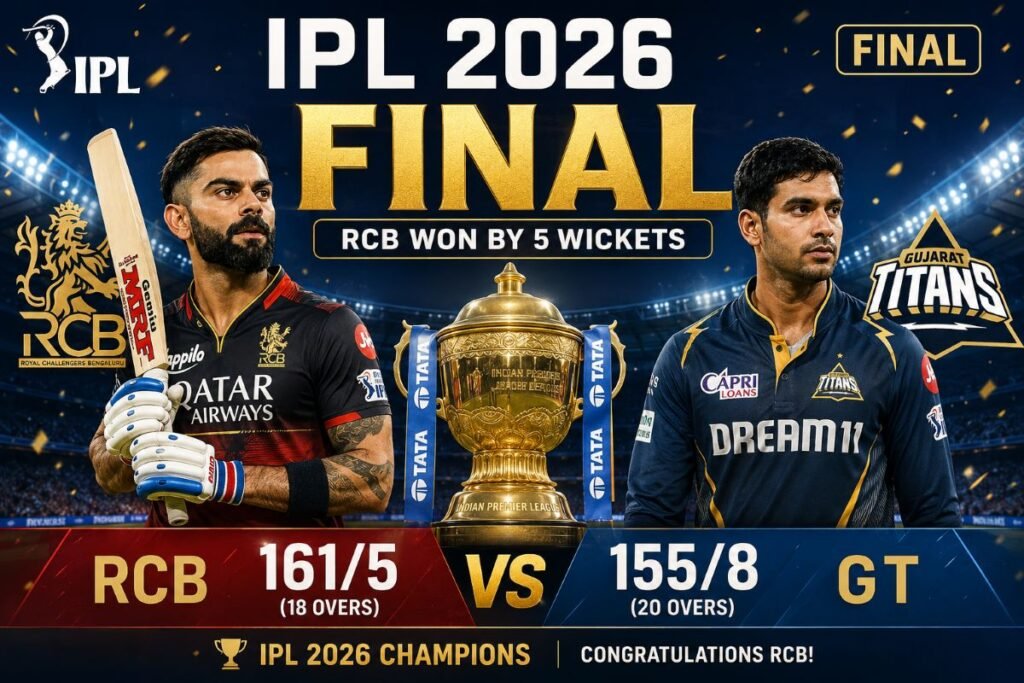
Indian Premier League (IPL 2026) : Opening Match, Groups, Format

The 19th edition of the Indian Premier League (IPL 2026) began on 28 March 2026, with Royal Challengers Bengaluru (RCB) facing Sunrisers Hyderabad (SRH) at the M. Chinnaswamy Stadium. The tournament will continue until 31 May 2026.


📊 Tournament Overview

  • Edition: 19th
  • Duration: 28 March – 31 May 2026
  • Teams: 10 franchises
  • Matches: 70 league matches followed by playoffs
  • Venues: Matches scheduled across 12–13 cities in India

📋 Format & Groups

The tournament follows a two-group format with a round-robin league stage and playoffs.

  • Group A: Mumbai Indians, Kolkata Knight Riders, Rajasthan Royals, Delhi Capitals, Lucknow Super Giants
  • Group B: Chennai Super Kings, Royal Challengers Bengaluru, Sunrisers Hyderabad, Punjab Kings, Gujarat Titans

🔑 Key Highlights

  • Opening match featured RCB vs SRH in Bengaluru.
  • RCB entered the season as the defending champions.
  • The playoffs will include Qualifier 1, Eliminator, Qualifier 2, and the Final.

Noida International Airport Inaugurated

Narendra Modi inaugurated Phase I of the Noida International Airport at Jewar, Gautam Buddha Nagar on 28 March 2026. Built at an estimated cost of ₹11,200 crore under the PPP model, the airport is set to emerge as a major international gateway for the NCR, with an initial capacity of 12 million passengers annually and future expansion up to 70 million.


📊 Key Highlights

  • The inauguration ceremony took place around 11:30 AM at Jewar, Uttar Pradesh.
  • The Prime Minister conducted a walkthrough of the terminal and addressed a public gathering.
  • The airport has been developed as a modern aviation hub with advanced infrastructure.

🏗️ Project Features

  • Phase I capacity: 12 million passengers per annum, scalable to 70 million.
  • Cargo handling: Initially 2.5 lakh metric tonnes, expandable to 18 lakh metric tonnes.
  • Developed as a multi-modal transport hub integrating road, rail, metro, and regional transit.

Balendra Shah Sworn in as Nepal Prime Minister

Balendra Shah was sworn in as the Prime Minister of Nepal on 27 March 2026 at the President’s Office, Sheetal Niwas, Kathmandu. He is the leader of the Rastriya Swatantra Party (RSP) and was elected as the party’s parliamentary leader before assuming office. At 35 years, he became Nepal’s youngest elected Prime Minister and the first from the Madhes region to hold the post.

His party, RSP, achieved a landslide victory in the March 5, 2026 parliamentary elections, winning 182 out of 275 seats in the House of Representatives. The elections marked a major political shift, with voters favoring new leadership after Gen Z-led protests demanding change and anti-corruption reforms.

Balendra Shah, a rapper-turned-politician and former Kathmandu mayor, defeated former PM K. P. Sharma Oli in Jhapa-5 constituency, a traditional stronghold of the Communist Party of Nepal (UML).

OECD Report: India World’s Fastest-Growing Major Economy

The Organisation for Economic Co-operation and Development (OECD) released its Interim Economic Outlook on 26 March 2026. India remains the fastest-growing major economy globally.


🇮🇳 India Growth Projections

  • FY 2025–26: 7.6%
  • FY 2026–27: 6.1%
  • FY 2027–28: 6.4%

👉 India continues to lead global growth despite global uncertainties.


🌍 Global Economic Outlook

  • Global GDP Growth:
    • 2026: 2.9%
    • 2027: 3.0%
  • Growth supported by:
    • Technology investments
    • Lower tariff rates

⚠️ Key Global Challenges

  • Middle East conflict impacting global economy
  • Disruptions in the Strait of Hormuz affecting energy supply
  • Rising energy prices and inflation
  • Supply chain disruptions (including fertilisers)

Finance Bill 2026 Passed in Lok Sabha: Meaning, Features, Constitutional Provisions

  • On 25 March 2026, the Finance Bill, 2026 was passed in the Lok Sabha with 32 amendments.
  • It is a Money Bill that gives legal effect to the Union Budget 2026–27.
  • The Bill will now go to the Rajya Sabha, which can only recommend changes, after which it becomes the Finance Act.

📖 What is the Finance Bill?

  • Annual Money Bill presented with the Union Budget.
  • Provides legal backing to taxation and expenditure proposals.
  • Covers direct & indirect taxes and amendments to tax laws.

🔑 Key Highlights

  • Budget Size: ₹53.47 lakh crore
  • Capital Expenditure: ₹12.2 lakh crore
  • Fiscal Deficit Target: 4.3% of GDP
  • Focus on:
    • MSMEs, farmers, cooperatives
    • Digital infrastructure & manufacturing sectors
    • Job creation & inclusive growth
  • No major new taxes; promotes trust-based tax system

⚖️ Constitutional Features

  • Defined as a Money Bill under Article 110.
  • Introduced only in Lok Sabha.
  • Rajya Sabha cannot amend or reject, only recommend.
  • Must be passed within 75 days.
  • Essential for legal tax collection and government spending.

Gujarat Passes Uniform Civil Code (UCC) Bill 2026

On 24 March 2026, the Gujarat Assembly passed the Uniform Civil Code (UCC) Bill through a majority voice vote after an extensive debate lasting over seven hours. The bill was introduced by Chief Minister Bhupendra Patel, following the submission of a report by a state-appointed panel.

With this, Gujarat became the second state in India after Uttarakhand (2024) to adopt a Uniform Civil Code.

Key Provisions of the Bill

  • Establishes a common legal framework for marriage, divorce, succession, and live-in relationships, irrespective of religion
  • Makes registration of live-in relationships mandatory, along with provisions for their termination
  • Prohibits bigamy, allowing marriage only if neither party has a living spouse
  • Applies to residents of Gujarat, including those living outside the state
  • The law will not apply to Scheduled Tribes (STs) and certain groups whose customary rights are constitutionally protected

PM Modi Announces 7 Empowered Groups to Address West Asia Conflict Impact

On 24 March 2025, Prime Minister Narendra Modi announced the formation of seven empowered groups to tackle the potential long-term impacts of the West Asia conflict on India. The move aims to address challenges related to fuel, fertilisers, gas supply, supply chains, and inflation.

Speaking in the Rajya Sabha, the Prime Minister emphasized a “Team India” approach, urging both the Centre and states to work together to manage the crisis effectively. He highlighted the serious side effects of the conflict, particularly on the availability of essential commodities such as crude oil, gas, and fertilisers.

Key Focus Areas

  • Ensuring stable supply of energy resources like crude oil and gas
  • Managing fertiliser availability for agriculture
  • Strengthening supply chains
  • Controlling inflation and price rise

Government’s Strategy

PM Modi reiterated that dialogue and diplomacy are the only solutions for restoring peace in West Asia. He stated that India is in constant contact with major global players, including Iran, Israel, and the United States, to promote de-escalation.

The government is also working to diversify energy sources and ensure uninterrupted supply to protect citizens from the crisis. At the same time, states have been directed to prevent black marketing and hoarding of essential goods.

Women’s Reservation Act: Implementation Likely by 2029

The Women’s Reservation Act (106th Constitutional Amendment, 2023) is being fast-tracked for implementation by 2029, aiming to ensure greater representation of women in Indian legislatures. The government is considering using 2011 Census data for delimitation, instead of waiting for the next Census, to avoid delays.

Key Provisions

  • Provides 33% reservation for women in the Lok Sabha and State Legislative Assemblies
  • Does not apply to Rajya Sabha and State Legislative Councils
  • Popularly known as Nari Shakti Vandan Adhiniyam

Proposed Changes

  • Lok Sabha strength may increase from 543 to 816 seats
  • Around 273 seats could be reserved for women
  • Target implementation by the 2029 Lok Sabha elections

Reason for Fast-Tracking

Originally, the Act’s implementation was linked to the first Census after 2026, which could delay it until around 2034. To avoid this, the government plans to:

  • Use 2011 Census data
  • Amend provisions related to delimitation
  • Enable earlier rollout of reservation

World Tuberculosis Day – 24 March

World Tuberculosis (TB) Day is observed every year on 24 March to raise awareness about the global burden of tuberculosis and efforts to eliminate the disease. The day is marked by the World Health Organization (WHO) and commemorates the discovery of the TB-causing bacterium Mycobacterium tuberculosis by Dr. Robert Koch in 1882.

Key Facts about Tuberculosis

  • TB mainly affects the lungs (pulmonary TB) but can also affect other parts of the body.
  • It spreads through the air when an infected person coughs or sneezes.
  • TB is curable and preventable, yet millions are affected globally every year.

Global & India Initiatives

  • WHO’s End TB Strategy aims to eliminate TB by 2030.
  • India has set an ambitious target to eliminate TB by 2025 under the National TB Elimination Programme (NTEP).
  • Campaigns focus on free diagnosis, treatment, and awareness.

Parsi New Year Navroz 2026 Celebrated: Festival of Renewal and Prosperity

Parsi New Year, or Navroz, was celebrated on Saturday, 21 March 2026, marking the spring equinox and symbolizing renewal, prosperity, and new beginnings. In India, especially in Mumbai and Gujarat, the Parsi community celebrated the festival with prayers, festive meals, and cultural gatherings.

Significance of Navroz

Navroz, meaning “new day” (from Persian nav – new, roz – day), is rooted in Zoroastrian tradition and has been celebrated for over 3,000 years. It marks the beginning of the Iranian calendar year and is recognized globally, including by the United Nations as International Nowruz Day.

PM Narendra Modi Becomes Longest-Serving Head of Elected Government in India

On 22 March 2026, Prime Minister Narendra Modi achieved a historic milestone by becoming the longest-serving head of an elected government in India. He completed 8,931 days in office, surpassing Pawan Kumar Chamling, the former Chief Minister of Sikkim, who held the record with 8,930 days.

This achievement combines PM Modi’s tenure as Chief Minister of Gujarat (2001–2014) and as Prime Minister of India (since 2014), marking his entry into the 25th year of continuous leadership. The milestone reflects his long-standing political career and sustained public mandate.

PM Modi was sworn in as the 14th Prime Minister of India on 26 May 2014, becoming the first non-Congress leader to secure a full majority. He later became the first non-Congress PM to complete two full terms and return for a third consecutive term.

Eid-ul-Fitr 2026 : Marks End of Ramadan

Eid-ul-Fitr 2026 was celebrated in India on 21 March 2026, following the sighting of the crescent moon on 20 March in Mumbai. In Saudi Arabia and several Gulf countries, the festival was observed earlier on 20 March 2026. The occasion marked the end of the holy month of Ramadan and the beginning of Shawwal (1447 AH).

Eid-ul-Fitr marked the completion of a month of fasting, prayer, and reflection. Known as the festival of breaking the fast, it symbolized spiritual renewal, gratitude, and joy. A key aspect of the celebration was Zakat al-Fitr, a form of charity given to the needy before the Eid prayers, ensuring inclusivity in the festivities.

The day began with special Eid prayers (Salat al-Eid) performed in mosques and open grounds. People wore new clothes, exchanged greetings of “Eid Mubarak”, and visited relatives and friends. Traditional dishes like Sheer Khurma and other sweets were prepared, adding to the festive spirit.

Income Tax Rules 2026 Notified: Major Changes from April 1

The Government of India has notified the Income Tax Rules, 2026, which will come into effect from 1 April 2026. These rules introduce a major overhaul in procedural and compliance systems under direct taxation and implement provisions of the Income-tax Act, 2025.

Key Highlights

  • Stronger Compliance Framework: Updated definitions, reporting systems, and compliance structures to improve transparency.
  • Dividend Regulations Tightened: Companies must maintain proper share registers, hold general meetings, and distribute dividends only within India.
  • Stock Market Reforms: Stock exchanges must maintain audit trails for 7 years, prevent record deletion, and submit monthly reports on transaction modifications.

Capital Gains & Investment Reforms

  • Clear rules introduced for complex capital gains cases like debenture conversions and cross-border restructuring.
  • A new zero coupon bond framework requires prior approvals, investment-grade ratings, and defined fund usage timelines.
  • Standardized fair market value (FMV) rules for listed/unlisted shares, foreign entities, and partnerships.

Cross-Border & Digital Taxation

  • Tax authorities get enhanced powers to estimate non-resident income using global profit ratios or reasonable methods.
  • Significant Economic Presence (SEP) threshold fixed at ₹2 crore transactions or 3 lakh users for digital businesses.
  • A formula-based system introduced to calculate income linked to Indian assets in offshore deals.

Other Changes

  • Simplified and capped expense exemptions (including 1% of investment value).
  • Revised rules for employer-provided accommodation, based on salary, city population, and property status.

India to Host World Indoor Athletics Championships 2028 in Bhubaneswar

India has been awarded the hosting rights for the World Indoor Athletics Championships 2028, marking the first time the country will host this prestigious global event. The championship will be held at the state-of-the-art indoor facility at Kalinga Stadium in Bhubaneswar, Odisha.

The decision was taken by World Athletics during its Council meeting held in Torun, Poland. Welcoming the announcement, Athletics Federation of India (AFI) President Bahadur Singh Sagoo said that this achievement reflects the growing stature of Indian athletics on the global stage.

The World Indoor Athletics Championships is a major international event featuring top athletes from across the world. It typically includes 26 events, with 13 events each for men and women, conducted over three days.

Meanwhile, the 2026 edition of the championship is being held in Torun, Poland, from 19 to 22 March 2026. Notably, the 4x400m mixed relay is being introduced for the first time in this edition, adding a new dimension to the competition.

Hindu New Year 2026 Begins: Vikram Samvat 2083 Starts on 19 March

The Hindu New Year 2026 began on 19 March 2026, marking the start of Vikram Samvat 2083. This auspicious occasion is celebrated across India with great enthusiasm under different regional names such as Gudi Padwa, Ugadi, Puthandu, and Poila Baisakh. Despite regional variations, the festival symbolizes new beginnings, prosperity, and spiritual renewal.

The Hindu New Year is observed on Chaitra Shukla Pratipada, the first day of the Chaitra month in the Hindu lunisolar calendar. It holds deep religious and cultural significance, representing the start of a new cycle of time and life.

Key Highlights

  • Celebrated across India with diverse traditions and names
  • Marks the beginning of Vikram Samvat 2083
  • Symbolizes fresh start, happiness, and prosperity
  • Associated with religious rituals, cultural events, and festive foods

Regional Celebrations

Different parts of India celebrate the day uniquely:

  • Maharashtra: Gudi Padwa with Gudi hoisting and rangoli
  • Karnataka & Andhra Pradesh: Ugadi with Panchanga reading and Ugadi Pachadi
  • Tamil Nadu: Puthandu with temple visits and kolam decorations
  • West Bengal: Poila Baisakh with cultural programs and new business accounts
  • North India: Observed as Hindu Nav Varsh with पूजा and fasting

BHAVYA Scheme 2026: ₹33,660 Crore Plan to Develop 100 Industrial Parks in India

On 18 March 2026, the Union Cabinet approved the Bharat Audyogik Vikas Yojna (BHAVYA), a major step to boost India’s manufacturing sector. With a total outlay of ₹33,660 crore, the scheme focuses on developing 100 plug-and-play industrial parks across the country.

Announcing the decision in New Delhi, Information and Broadcasting Minister Ashwini Vaishnaw said the initiative will create world-class industrial infrastructure and unlock India’s manufacturing potential. The industrial parks will range from 100 to 1000 acres, with government support of up to ₹1 crore per acre for infrastructure development.

Key Features of BHAVYA Scheme

  • Development of 100 industrial parks across India
  • Plug-and-play model for faster industrial setup
  • Financial assistance up to ₹1 crore per acre
  • Focus on core, value-added, and social infrastructure
  • Designed to attract domestic and foreign investment

Objectives of BHAVYA

The BHAVYA scheme aims to:

  • Boost India’s manufacturing sector
  • Promote ease of doing business
  • Generate around 15 lakh direct jobs
  • Support MSMEs and local industries
  • Strengthen the vision of Atmanirbhar Bharat

Aadhaar Becomes World’s Largest Biometric ID System

On 18 March 2026, the government informed Parliament that Aadhaar has become the world’s largest biometric identity system, with nearly 134 crore active users. Over 17,000 crore authentication transactions have been completed so far, highlighting its massive scale and widespread usage across India.

Union Minister of State for Electronics and IT Jitin Prasada, in a written reply in the Lok Sabha, stated that the Aadhaar ecosystem—managed by the Unique Identification Authority of India (UIDAI)—plays a crucial role in enabling seamless identity verification for various services.

Key Features of Aadhaar System

Aadhaar authentication allows identity verification through:

  • OTP-based authentication
  • Biometric methods (fingerprint, iris, face recognition)
  • Demographic details

Notably, face authentication powered by Artificial Intelligence (AI) and Machine Learning (ML) is being increasingly used for accurate and secure verification.

Data Security & Privacy Measures

The government emphasized strong privacy safeguards in the Aadhaar ecosystem:

  • Data is encrypted both at rest and during transmission
  • Authentication logs are stored for 2 years, then archived for 5 years before deletion
  • Aadhaar data is stored within India only
  • Strict legal provisions regulate data usage and access

Regulatory Framework

Entities using Aadhaar services must be registered as:

  • Authentication User Agencies (AUA)
  • KYC User Agencies (KUA)

UIDAI also follows a three-tier audit system, including security and compliance audits, to ensure system integrity.

Strait of Hormuz Crisis: Nanda Devi LPG Tanker Reaches Gujarat

The Indian-flagged LPG tanker Nanda Devi safely reached Kandla and Vadinar ports in Gujarat on 17 March 2026, carrying around 46,500 metric tons of LPG from Qatar via the Strait of Hormuz, despite ongoing tensions in West Asia.

This marks the second successful LPG shipment (after Shivalik) within a week, highlighting India’s ability to maintain energy supplies during geopolitical uncertainty.


🔑 Key Points

  • Safe navigation through the conflict-prone Strait of Hormuz
  • Strengthens India’s energy security
  • Helps ease domestic LPG shortages
  • Reflects effective diplomacy and logistics coordination

🌍 Significance

  • The Strait of Hormuz is a vital global energy route, handling about 20% of oil and gas trade
  • Ensures continuous LPG supply for households in India
  • Demonstrates India’s resilience in managing energy imports during crises

Sahitya Akademi Awards 2025 Winners List

The Sahitya Akademi announced the Sahitya Akademi Awards 2025 on 16 March 2026, honoring outstanding literary works across 24 Indian languages. The awards cover diverse genres such as poetry, novels, short stories, essays, literary criticism, autobiography, and memoirs.

This year’s selections include 8 poetry collections, 4 novels, 6 short story collections, 2 essay volumes, 1 literary criticism work, 1 autobiography, and 2 memoirs. The winners were chosen through a rigorous process involving expert jury recommendations.

Notable awardees include Navtej Sarna (English novel Crimson Spring), Mamta Kalia (Hindi memoir Jeete Jee Allahabad), and N. Prabhakaran (Malayalam novel Maayaamanushyar).

Each award carries a copper plaque, shawl, and ₹1 lakh cash prize, and the ceremony will be held in New Delhi on March 31, 2026.

Indira Gandhi Memorial Tulip Garden Srinagar 2026: Asia’s Largest Tulip Garden Opens with 1.8 Million Flowers

The Indira Gandhi Memorial Tulip Garden in Srinagar, Asia’s largest tulip garden, opened on March 16, 2026, marking the beginning of the Kashmir Tulip Festival 2026. Spread across 74 acres at the foothills of the Zabarwan Range overlooking Dal Lake, the garden features over 1.8 million tulips in 70–75 varieties, creating a vibrant spring attraction.

The festival showcases Kashmiri culture, music, handicrafts, and cuisine, and signals the start of the tourist season in Kashmir. Established in 2007, the garden plays a key role in boosting tourism and the local economy, attracting visitors from across India and abroad.

Oscars 2026 Winners: Best Actor, Actress & Best Picture (98th Academy Awards)

The 98th Academy Awards were held on March 15, 2026, at the Dolby Theatre in Los Angeles, hosted by Conan O’Brien. The film One Battle After Another dominated the ceremony, winning Best Picture and six awards overall.

Michael B. Jordan (Sinners) won Best Actor, while Jessie Buckley (One Battle After Another) won Best Actress, and Ryan Coogler took Best Director.

Other notable films included Sinners (4 awards) and Frankenstein (3 awards). The event highlighted strong competition, diversity in winners, and global engagement, with Priyanka Chopra Jonas representing India as a presenter.

Scroll to Top